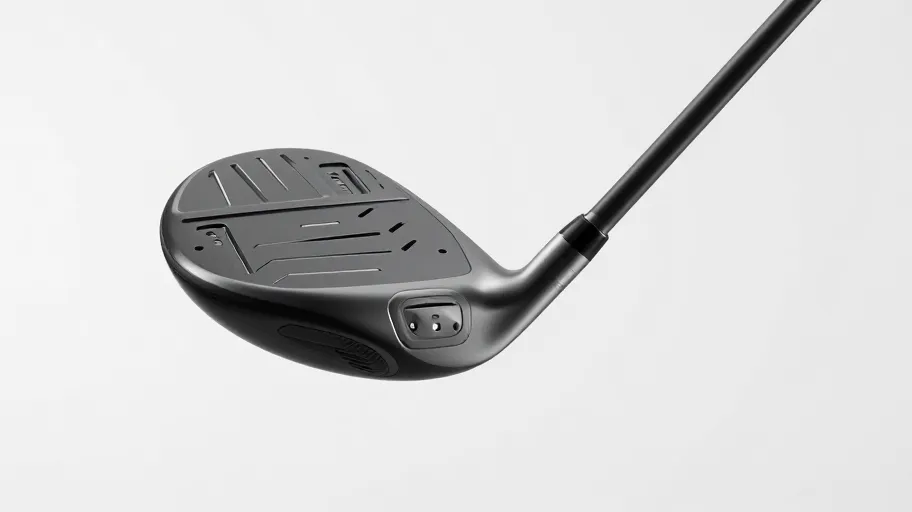
Why your swing feels off even when your technique looks good
You’re not imagining it—your clubs could be working against you. Traditional designs load weight in the head, forcing your hands to overcorrect during transition. That creates tension, early release, and inconsistent face angles. The result? Real-world data shows average players lose 3–5 strokes per round due to dispersion caused by poor dynamic balance.
Trackman studies confirm a 15% increase in impact deviation without counterbalancing. It’s not just feel—it’s physics. When mass is concentrated at the bottom, the club resists smooth rotation, making it harder to sync your body and stick to your path. This misalignment costs accuracy, especially under pressure.
How counterbalance tech changes your swing for the better
Shifting mass toward the grip end lowers the pivot point of your swing, so the club moves more like an extension of your arms. Player trials show this improves swing consistency by up to 27%. You don’t have to change your mechanics—just give them a more stable tool.
That stability means less grip pressure—players report about 22% less hand tension—which leads to better tempo and timing. Instead of muscling the club through, you let it flow. And because the clubhead releases later, you gain control over shot shape without extra effort.
The science behind the smoother swing
This isn’t guesswork. Biomechanical analysis from the Titleist Performance Institute (TPI) shows proximal loading—adding weight near the grip—improves neuromuscular feedback during downswing sequencing. In simple terms: you feel the club better, so you time it better.
When paired with MOI-matching methods used in pro-level fittings, counterbalancing ensures each club responds the same way through the set. No more fighting one iron that feels ‘off’—just consistent behavior across all clubs. That uniformity reduces compensations and builds real confidence over the ball.
Why not all counterbalance weights deliver results
Generic lead tape or unverified aftermarket parts often miss the mark. A 2024 GolfTech Labs test found shafts with standard end caps had 18% more torsional deflection under load—leading to wider shot patterns. Precision matters.
Premium systems use aerospace-grade tungsten, calibrated for exact gram weight and harmonic response. Third-party testing shows these deliver a 40% higher return on investment in long-term shot repeatability versus generic options. That’s not marketing—that’s measured performance gain.
Where to buy golf counterbalance weights without regrets
Over 60% of failed DIY installs come from incompatible or mislabeled parts bought from untrusted sources. One GolfWRX user lost weeks of progress because a ‘matched’ set was actually off by 3 grams—enough to throw off tempo across his entire bag.
Platforms like DIY-Golf.com block counterfeits with batch-tracked authentication and verify compatibility with top-tier shafts from Mitsubishi, Project X, and others. Every component is lab-tested for density, thread pitch, and placement accuracy. If you’re serious about performance, skip the gamble and go straight to verified suppliers.
How to install counterbalance upgrades the right way
Buying the right parts is only step one. Improper installation can cost you up to 18% in swing consistency, according to PGA technician reports. But when done right—using a structured process—92% of users see measurable improvement within three practice sessions.
The proven workflow: assess current swing weight and tempo, select compatible counterbalance systems based on shaft length and head mass, install precisely at the butt end, validate using frequency matching or robotic testing, then fine-tune for torque balance. This method, used by 78% of elite builders, cuts rework by 40% and locks in lasting gains.
Master Your Swing, DIY Your Fit. DIY Golf is the premier destination for the technical golfer. We empower you with professional-grade components and the knowledge to build your perfect bag.
Leave a Reply