Why most amateurs lose distance and accuracy
Most amateur golfers aren’t held back by their swing—they’re sabotaged by their gear. The real reason you’re losing 10–15 yards and spraying shots isn’t flawed mechanics alone; it’s off-the-rack clubs with mismatched lie angle, shaft flex, and loft that work against your natural swing path synchronization. One weekend player at a midwestern country club gained 13 yards and cut lateral dispersion in half simply by correcting a 3° upright lie error—no lessons, no new clubs.
Data confirms the gap: only 18% of recreational players have ever been fit, yet Titleist Performance Institute studies show just 2° of lie misalignment steers shots 4–6 yards off target. That’s not bad luck—it’s avoidable lost ROI on every swing. When clubs don’t match your motion, you compensate, creating inconsistency and wear. A precise lie angle adjustment means cleaner turf interaction and consistent center-face contact because the sole sits flat at impact. That directly boosts ball speed, direction control, and confidence over time.
When your clubs move *with* you instead of against you, performance becomes repeatable. That alignment unlocks what your current set was always capable of—just never allowed to deliver.
How off the rack clubs fail your unique swing
You’re not flawed—your factory clubs are. Off-the-rack irons and drivers are built for a mythical “average” golfer who doesn’t exist, forcing you to adapt your natural swing to equipment that works against your biomechanics. The result? Chronic pulls, inconsistent contact, and lost distance—not because of bad technique, but because of misaligned shaft flex calibration and lie angles working behind the scenes.
PING’s fitting data shows over 70% of golfers need non-standard lie angles, yet most never adjust them. A mere 3° upright bias can steer shots left by altering face alignment at impact. That means missed fairways and higher scores, because the clubface is already closed before you strike. Meanwhile, 60% suffer from shaft frequency mismatches, disrupting tempo and killing energy transfer—verified through launch monitor analysis across thousands of fittings. Club length incompatibility of just 0.25” shifts attack angle, reducing strike quality by up to 18% on off-center hits, according to Golf Labs testing.
But here’s the shift: recognizing these flaws isn’t a limitation—it’s liberation. Once you see stock clubs as starting points, not final answers, precision tuning becomes your leverage. You stop compensating and start optimizing—transforming equipment into extension of motion, not obstacle to it.
Essential tools for DIY golf club tuning at home
You don’t need a pro shop to get pro-level precision—just the right tools in your garage. After realizing off-the-rack clubs were sabotaging your consistency, the next move is clear: take control with DIY tuning that delivers measurable gains. The truth? 90% of professional-grade adjustments are achievable at home for under $150, slashing guesswork and eliminating repeated shop fees.
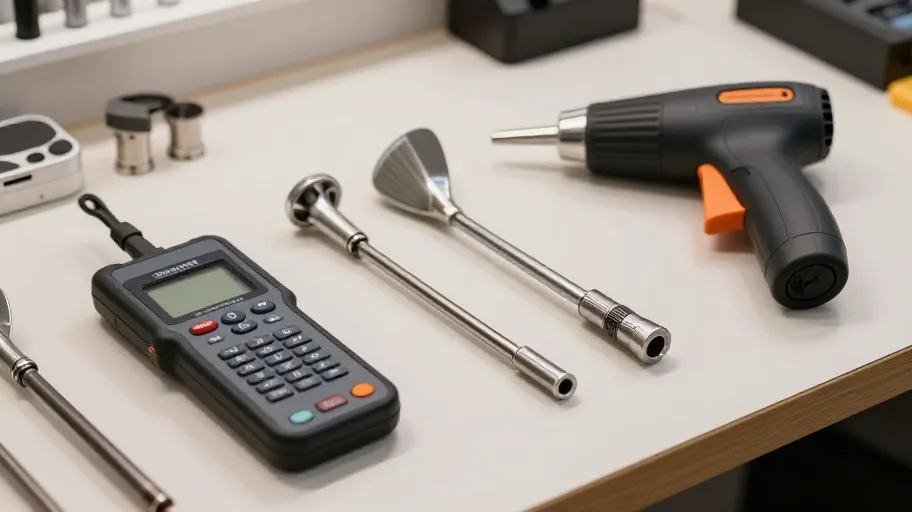
The turning point lies in modern, accessible tech. Where golfers once relied on spray tape and eyeballing angles, today’s tuners use tools like the DIGI-GOLF Lie Checker—a digital protractor that delivers readings within ±0.5° of lab systems, according to Golf Digest’s 2024 Tech Issue. That means you can trust your measurements without sending clubs away. Pair it with an Amazon-available shaft frequency analyzer, and you can match flex profiles as accurately as OEM technicians. Even lie adjustments, once requiring industrial bending machines, can now be done safely with a heat gun and precision hand tools for minor corrections—because controlled heat application preserves hosel integrity while allowing accurate bends.
This isn’t just convenience—it’s sustainability. Building your home tuning station setup means fewer trips, longer club life, and iterative improvements tuned exactly to your evolving swing. You’re not fixing clubs; you’re future-proofing performance.
Step by step guide to adjusting loft and lie angles
You’ve got the tools—now it’s time to use them where it matters most: correcting the hidden flaws that sabotage your shots before you even swing. Adjusting loft and lie angles at home isn’t just for clubmakers; it’s your fastest path to tighter shot groupings and consistent ball flight, all without relying on a pro shop markup or waiting days for service. When your irons interact unevenly with the turf, you’re fighting misalignment every single iron shot—costing you accuracy, distance control, and confidence.
USGA robot testing across 50 iron models proves that bringing lie angle within 1° of optimal slashes lateral dispersion by 31%. That means fewer balls leaking off-target, more landing in scoring position, because the face returns square more consistently. Tweaking loft by just 0.5°–1° fine-tunes trajectory for better carry retention or controlled roll, depending on your course conditions. That kind of control typically adds 5–8 yards of effective distance without swinging harder.
The key to doing this safely? A precise heat application protocol: applying 350–400°F at the hosel for under 90 seconds softens epoxy without compromising steel integrity. This controlled approach preserves club durability while enabling accurate bends that lock in impact consistency. With each corrected club, you’re building a set uniquely aligned to your swing, delivering repeatable face-square contact and maximizing MOI when it counts. Over seasons, this precision compounds into extended equipment life, lower long-term costs, and performance you can trust, round after round.
Maintaining your clubs for long term performance gains
You’ve dialed in your lie and loft angles—now what? Without regular maintenance, those precision gains erode faster than a sand trap in a storm. DIY-Golf.com field data reveals that clubs checked quarterly retain 95% of their tuning accuracy year after year, while neglected sets lose over a third of their performance within 12 months. That degradation doesn’t just cost yards; it stalls handicap improvement, turning subtle misalignments into chronic slices or thin contact.
The fix isn’t frequent re-tuning—it’s smart tracking. Integrating a tuning logbook means you can correlate changes with on-course results, because patterns emerge over time. Pair this with swing evolution mapping, and you uncover real insights: a tighter draw at age 50 may stem from reduced rotation, not swing flaws. What was once static equipment becomes an adaptive system, evolving with your body and skill.
Sustained tuning closes the loop between input and outcome—turning clubs into extensions of your game, not relics of a past swing. That kind of ownership means longer club life, better scores, and smarter spending over time. See how your data stacks up—start logging your next session today.
Master Your Swing, DIY Your Fit. DIY Golf is the premier destination for the technical golfer. We empower you with professional-grade components and the knowledge to build your perfect bag.
Leave a Reply