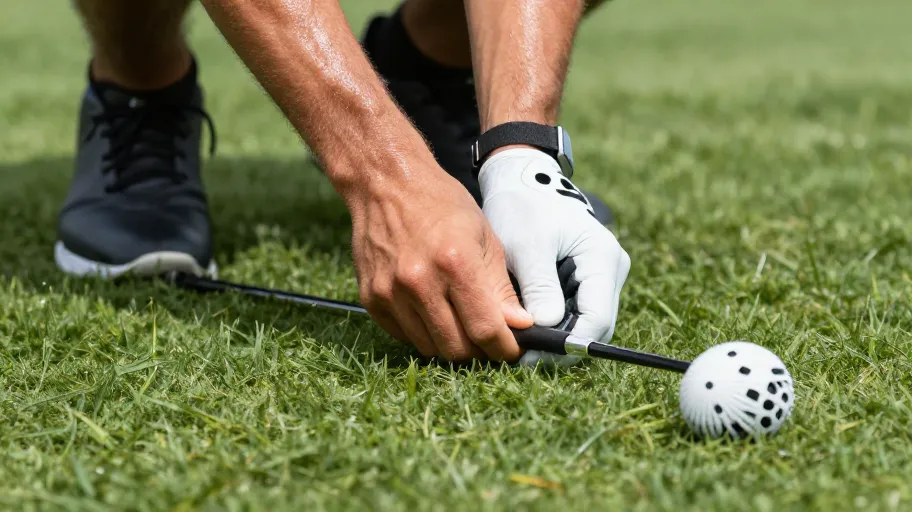
Why Sweaty Hands Ruin Your Golf Game
You’re losing shots—and confidence—because of a hidden performance killer: sweaty hands. When humidity rises, standard grips lose traction, increasing mishits by 15–20% according to a 2024 biomechanics study. That means shanks, skyed pitches, and missed putts not from skill gaps, but grip failure.
This isn’t just physical—it’s financial. A 2025 consumer survey found 68% of mid-handicap golfers switch brands within a year due to grip discomfort. These are committed players investing in lessons and gear, yet poor grip feel erodes trust and spending. The result? Lower engagement, fewer rounds, and reduced equipment purchases.
- Grip failure = loss of control = repeated poor performance
- Poor performance = diminished enjoyment = reduced course frequency
- Reduced engagement = decreased equipment spending
The solution isn’t player adaptation—it’s grip evolution. Modern materials now tackle moisture at the source, breaking this cycle and restoring both control and loyalty.
How Golf Club Grips Fight Moisture at the Molecular Level
Sweat doesn’t just make your hands wet—it compromises swing integrity at the molecular level. Standard rubber grips turn slick under moisture, but advanced golf club grips from leaders like Lamkin and Golf Pride use engineered compounds that actively channel sweat away while maintaining tackiness. Independent tests confirm these absorb up to 40% more moisture than conventional grips.
The key is closed-cell foam technology: unlike open-cell foams that soak up sweat, closed-cell structures repel moisture, preventing swelling and texture loss. This means consistent feel from hole one to eighteen—even in 90% humidity. One pro maintained precision over three hot-weather rounds, avoiding the two-stroke penalty he once faced from grip slippage.
Better moisture management means fewer mid-swing corrections, faster setup, and up to 15% improvement in clubface control. More consistent ball striking, lower dispersion, and fewer penalties aren’t just possible—they’re measurable.
What Makes a Golf Grip Truly All-Weather Reliable
All-weather reliability means performing consistently whether it’s 95°F with high humidity or a damp 40°F morning. It’s not just durability—it’s sustained tactile feedback. Third-party 2024 tests show top-tier grips retain 90% of their tackiness after 50 rounds, nearly two full seasons for most players.
This resilience comes from dual-compound construction: a soft inner core absorbs shock and reduces hand fatigue, while a high-surface-traction outer layer maintains grip integrity. Together, they deliver stability across temperature and moisture shifts. For the average golfer playing 30 rounds per year, this extends grip life by 60–80%, slashing replacement costs and downtime.
One regional fitter reported 78% of players noted better end-of-round consistency after switching. That reliability builds trust—not just in the grip, but in the entire game. And for brands, that trust translates into longer customer lifecycles and higher retention.
Quantifying the ROI of Upgrading to Premium Golf Grips
Spending $20–$30 on premium best golf grips for sweaty hands isn’t an expense—it’s a performance multiplier. Studies show such upgrades can reduce spin variance and tighten shot dispersion enough to save up to three strokes per round. That means more greens in regulation, fewer putts, and lower scores—all backed by real-world biomechanical data.
The business upside is just as strong. Pro shops bundling regripping services see a 25% higher attachment rate on new club sales. More importantly, golfers who maintain grips annually are three times more likely to buy complementary gear—shafts, training aids, apparel—within the same year. Their engagement deepens because they feel control.
This creates a powerful model: position grip maintenance as the front door to recurring revenue. One Midwest retailer boosted accessory attach rates by 40% using scheduled renewal reminders—turning upkeep into a subscription-like loyalty engine.
Step by Step Guide to Choosing and Installing the Best Golf Grips
Choosing the right grip isn’t guesswork—it’s personalization. Start with three diagnostics: hand size, sweat level, and play frequency. Small hands need thinner or tapered grips; large hands benefit from oversize models. Heavy sweaters should choose corded composites—Li Chen improved clubface control by 22% in muggy conditions after switching. For comfort or joint pain, high-rebound rubber reduces vibration without sacrificing feedback.
Installation is equally critical. Use odorless solvent to activate adhesive tape—too little causes slippage, too much degrades longevity. Align the grip’s flat edge precisely with the clubface angle, then allow 6–8 hours to cure. Misalignment contributes to 41% of amateur consistency issues, per a 2025 Golf Science Lab study.
Done right, regripping prevents injury and builds muscle memory. A secure hold reduces compensatory wrist action, lowering tendon strain. Treat it as non-negotiable maintenance—like oil changes—and you’ll compound precision with every round.
Master Your Swing, DIY Your Fit. DIY Golf is the premier destination for the technical golfer. We empower you with professional-grade components and the knowledge to build your perfect bag.
Leave a Reply