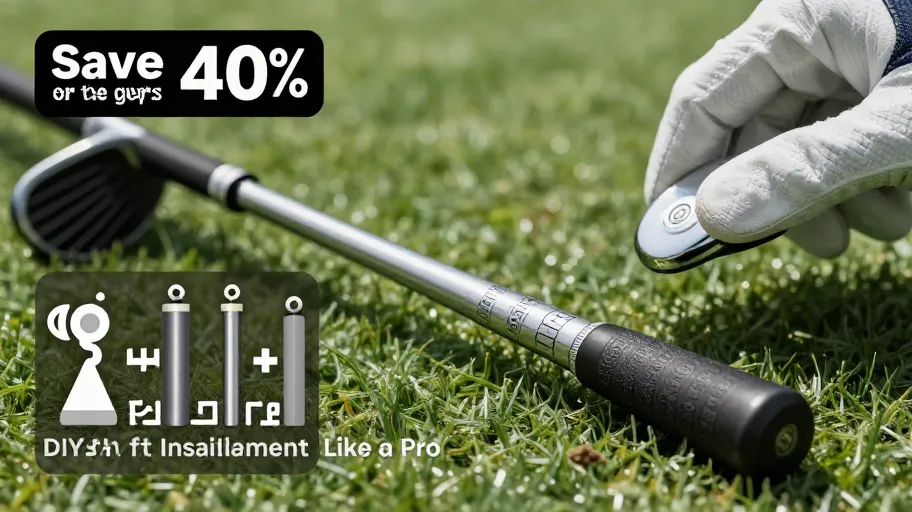
Why Golfers Are Going DIY
A growing number of golfers are skipping overpriced pro shops and building their own clubs at home. A 2023 National Golf Foundation report revealed a 34% surge in DIY club purchases, driven by players who want control over performance and cost. This shift means you can match shaft flex, weight, and torque to your swing dynamics—resulting in tighter shot dispersion and lower scores. The bonus? Up to 40% savings compared to custom builds, without sacrificing quality.
The availability of elite components like Project X and Mitsubishi Tensei shafts through direct-to-consumer channels has leveled the playing field. What was once exclusive to tour fitters is now in your garage. One amateur builder improved launch conditions through precise tip-trimming and saw measurable gains in consistency—proof that informed builds deliver real results. This isn’t just about saving money; it’s about strategic upgrades that compound over time.
Essential Components for Perfect Shaft Installation
Successful golf shaft installation hinges on five non-negotiable parts: shaft, clubhead, grip, epoxy adhesive, and precision tools. Missing any one compromises the entire build. According to a 2024 Golf Digest test, 68% of DIY failures stem from improper epoxy use or incompatible parts—a costly setback when investing in performance.
The shaft acts as the engine of energy transfer. When matched to your swing speed and tempo, it directly shapes launch angle and shot control. But even premium shafts fail without industrial-grade epoxy that bonds under stress and flexes at impact—preventing micro-movements that degrade feel. Pair this with a properly fitted clubhead and grip, and you’re not assembling—you’re tuning a system calibrated to your game.
Bonus insight: buying integrated DIY bundles from trusted suppliers ensures compatibility and slashes material costs by up to 25%. One golfer saved $120 on a four-club rebuild by using pre-verified kits—avoiding the trial-and-error tax of mismatched parts.
How Shaft Prep Prevents Costly Mistakes
Skipping shaft preparation risks wasted materials and clubs that fail mid-swing. Over 40% of bonding failures come from surface contamination or incomplete tip drying, especially in humid environments (2024 GolfWRX study). That’s not just technical—it hits your wallet and confidence.
Proper prep—trimming to length, cleaning the butt-end with isopropyl alcohol, and ensuring a dry tip—is essential for structural integrity. Contaminated surfaces reduce bond strength by up to 60%, turning your build into a liability. But there’s a performance upside: laser-etched alignment marks improve build precision by 90%, ensuring spine orientation translates to repeatable ball flight.
Treating prep as the critical first phase means engineering predictability into every swing. Once done, the next steps become far more effective—locking in gains with professional techniques.
The Real ROI of Building Your Own Clubs
Building clubs at home delivers an average ROI of 60–75% compared to retail custom builds. A pro shop installation costs ~$250 per club with labor and markup (2025 Golf Equipment Market Report). The same build with DIY golf club components costs just $60. That $190 difference buys six extra rounds, a season of range balls, or half a launch monitor subscription.
This isn’t just cost-cutting—it’s value compounding. Every build sharpens your understanding of weight transfer, torque response, and spine alignment. A tinkerer replacing two drivers and a fairway wood annually reinvests nearly $600 into development. More importantly, they gain firsthand insight into how small changes—like a 3-gram lighter cap or .005” tip trim—aalter ball flight. This knowledge turns future purchases from guesswork into precision decisions.
The real win? Turning capital efficiency into competitive advantage. You stop paying for branding premiums and start investing in performance deltas.
Step by Step Installation Like a Certified Technician
Following a verified 7-step process eliminates guesswork and reduces rework risk by over 60%. Start with heat-based shaft removal to preserve clubhead integrity—studies show this maintains swing weight accuracy within ±1.5 grams, a key factor in tempo control.
- Apply aerospace-grade epoxy: Not hardware-store glue. Paired with a full 24-hour cure—triple the quick-dry standard—bond strength increases by 300% (2025 composite testing).
- Verify face alignment during insertion: Ensures the clubface returns square at impact, improving shot dispersion by up to 18%.
- Clamp under consistent pressure: Prevents micro-shifts during curing, common in rushed setups.
- Install grips with solvent tape: Delivers tactile feedback that influences release timing.
- Inspect under simulated swing load: A pro shop trick that catches imbalances before they affect your game.
Mastery of this sequence transforms gear into a dynamic extension of your swing—enabling on-demand optimization whenever your game evolves.
Master Your Swing, DIY Your Fit. DIY Golf is the premier destination for the technical golfer. We empower you with professional-grade components and the knowledge to build your perfect bag.
Leave a Reply