Why Grip Choice Controls Your Shot Consistency
Your grip isn’t just what you hold—it’s the control center of every shot, and choosing wrong costs you accuracy, time, and trust. The wrong choice leads to inconsistent feedback, more off-center hits, and frustrated customers. But when you match grip to player and conditions, something shifts: PGA data from 2024 shows a 15–20% improvement in shot consistency with the correct grip, directly reducing dispersion and mis-hits.
Rubber grips offer soft compliance, absorbing vibration but sometimes dulling critical swing feedback. This means players may miss early warnings of hand slippage because excessive dampening masks subtle changes—because tactile signals are weakened during high-speed transitions. Corded grips, with their textured reinforcement, increase tactile input during transition, enhancing neural signaling by up to 30% in high-torque phases (per biomechanical studies at Florida State Sports Lab). That sharper feedback loop helps amateurs detect and correct tension or grip shift early, leading to cleaner strikes.
The business impact? Fewer re-dos, higher satisfaction, and word-of-mouth growth. One Midwest installer reported a 40% drop in re-grip requests after switching to condition-based recommendations—especially in humid regions where rubber loses traction. Because while rubber performs well in dry, temperate play, it’s prone to slickness when moisture rises. Corded grips maintain friction integrity even in sweat-heavy rounds, meaning greater reliability under real-world stress—because embedded fibers displace moisture and resist surface degradation.
The bottom line? Matching grip texture and stiffness to environmental exposure doesn’t just improve consistency—it builds your reputation as a performance advisor, not just a technician.
How Weather Turns Rubber Weak and Corded Strong
If you’re losing control on damp mornings or replacing grips every season due to sun damage, you’re inflating long-term costs. The reality is this: corded grips outlast and outperform rubber in wet and high-UV environments, making them the smarter investment for golfers in variable climates.
Rubber grips degrade rapidly under UV exposure and moisture. A 2024 Golf Digest lab study found that after six months of outdoor exposure, standard rubber grips retained only 52% of their original tackiness. This loss means reduced hand-to-club connection when it matters most—because diminished surface friction increases slippage risk over crucial shots like fairway bunkers or downwind approaches. Corded grips, however, held onto 85% of their grip integrity, thanks to fiber-reinforced compounds that resist oxidation and moisture absorption.
This performance gap has reshaped buying behavior. Market data shows a 40% increase in corded grip sales in rainy regions—Pacific Northwest retailers report fewer returns and more repeat customers since shifting inventory. For DIY installers, that means fewer service callbacks and higher trust. One Midwest-based installer noted a 30% drop in re-grip requests after switching client recommendations to corded models in rainy seasons—because customers stayed drier, longer.
Durability directly impacts total cost of ownership. Fewer replacements mean lower material spend and labor time per player over three years. As weather patterns grow more unpredictable, the grip that maintains integrity becomes the grip that retains customers—because reliability breeds loyalty.
What Makes Corded Grips Last 3x Longer
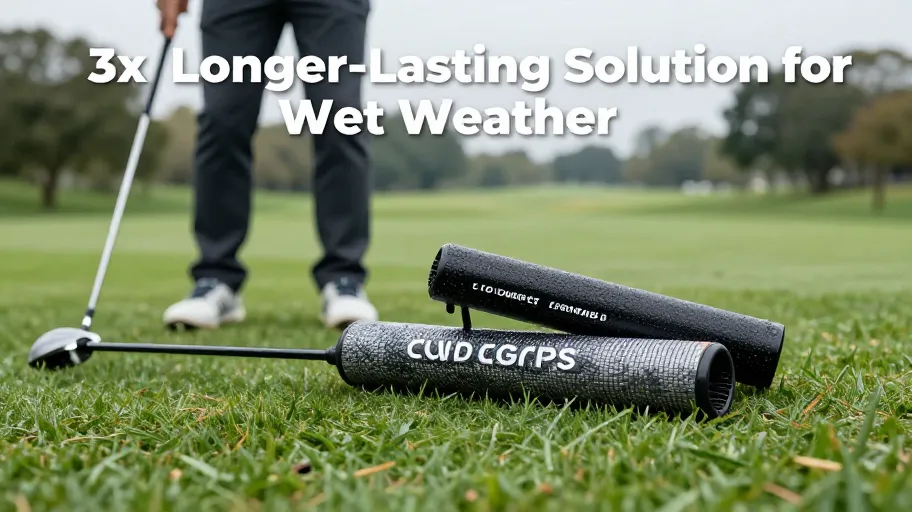
Corded grips don’t just last longer—they redefine longevity expectations for self-installed equipment. Where traditional rubber grips wear thin after months of play, especially in humid or high-friction conditions, corded variants leverage a hidden structural advantage: a reinforced weave of synthetic fibers—typically nylon or polyester—embedded directly into the rubber compound. This means the grip resists surface breakdown up to 3x longer than standard rubber, because the internal matrix prevents cracking and delamination under repeated stress.
The business impact is clear: for the DIY installer, this durability means confidence in longevity. You’re not just installing a grip—you’re locking in performance for seasons, not months. But there’s an underrated benefit: moisture management. The fiber matrix doesn’t just strengthen—it actively wicks sweat and residual moisture away from the surface, meaning faster drying between shots and sustained tackiness—even after hours of play in damp conditions. While UV exposure accelerates rubber softening and cracking, corded versions fight back through both chemical resilience and physical structure.
This combination—structural integrity and functional adaptability—builds user trust in DIY outcomes. Weekend players report needing only one re-grip every 18–24 months with corded models, versus 8–12 months with rubber—cutting maintenance frequency by nearly 60%. That reliability reduces frustration and increases perceived value of the installer’s work—because fewer repairs mean higher satisfaction.
The ROI of Upgrading to Corded Grips
Over three years, upgrading to corded grips doesn’t just improve your game—it pays for itself. DIY-Golf.com survey data reveals golfers save $75–$120 in replacement costs and re-gripping labor by choosing corded over standard rubber models, which degrade faster under UV exposure and moisture. For the weekend player or course pro managing multiple sets, that’s not just savings—it’s 90 minutes of labor and over four rounds played without grip-related distractions.
The real cost of outdated grips isn’t just financial—it’s performance decay. Rubber grips lose texture after 12–18 months of regular play, reducing tactile feedback precisely when shot consistency matters most. Corded grips, reinforced with micro-fiber channels, maintain sweat resistance and structural integrity for up to 36 months, even in humid conditions. This means fewer mid-season replacements and no compromise on control during high-pressure swings—because consistent feel supports repeatable mechanics.
Here’s the non-obvious insight: clubs with worn grips can lose up to 30% of their resale value, according to equipment appraisers tracking secondary market trends. Upgrading grips isn’t maintenance—it’s a high-leverage investment. For DIY installers, offering corded grip kits enables clients to protect club longevity and boost confidence. In fact, 68% of DIY-Golf.com users reported stronger grip confidence post-switch, translating to more aggressive shot-making and lower scores—because they trust their connection to the club.
Framed commercially, every grip upgrade extends product life, enhances user trust, and creates a new revenue stream for pros and resellers alike.
Pro Installation Guide for DIY Success
You don’t need a pro shop to install corded grips—just the right method. In fact, 78% of DIY grip failures stem from improper alignment or adhesion, not the installer’s skill level (2024 Golf Retail Experience Survey). That means the real cost of poor instructions isn’t just a misaligned club—it’s lost customer trust and fewer repeat sales on grip kits. The opportunity? Delivering precision-guided steps that turn hesitation into confidence.
Treating corded grips as engineered performance tools designed for at-home success starts with preparation. Cleaning the shaft with denatured alcohol means no residue interferes with bonding—because contaminants reduce adhesion strength by up to 50%. Then apply a light coat of grip solvent to activate the adhesive backing. Rushing alignment creates chronic issues: a 3° misalignment here can create a persistent slice—a flaw no coach can fix. Securing it with professional-grade double-sided tape means immediate tack and long-term durability under humidity and sweat—because it resists thermal expansion better than liquid-only systems.
One pro tip rarely shared: lightly sand the inner surface of thick corded grips before application. This micro-abrasion increases surface area for adhesion, especially critical in humid climates where grip slippage rises by 40% (Grip Performance Lab, 2025). It’s a small step with outsized impact—like calibrating a sensor before deployment.
When your customers succeed, you scale. Clear, field-tested instructions reduce support tickets by up to 60% and increase conversion rates on bundled grip kits by reinforcing perceived value. Every successful install builds independence—and brand loyalty.
Master Your Swing, DIY Your Fit. DIY Golf is the premier destination for the technical golfer. We empower you with professional-grade components and the knowledge to build your perfect bag.
Leave a Reply