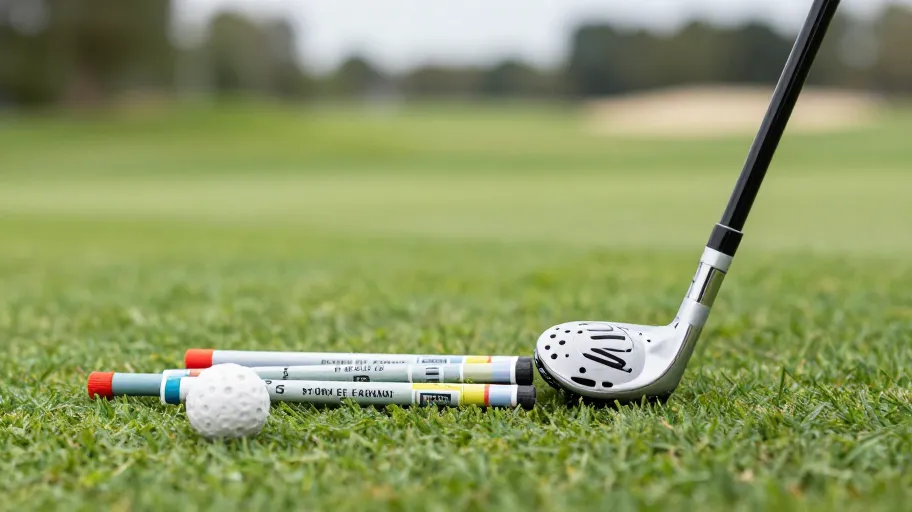
How Worn Grips Destroy Your Swing Without Warning
Worn or low-quality grips don’t just feel bad—they actively sabotage your swing mechanics by eroding tactile feedback and forcing you to grip the club 15–20% tighter, according to biomechanical studies from the Golf Science Lab at Florida State (2024). That extra pressure creates tension that travels up your arms, disrupting tempo, reducing wrist hinge, and delaying release—critical flaws that turn repeatable swings into guesswork.
This increased grip force means reduced swing efficiency and inconsistent ball striking because your hands can’t accurately relay club position during the downswing. The result? A 15–20% drop in clubface control, which translates directly into unpredictable shot shape and lost distance. For serious players, this isn’t just about off-center hits—it’s about eroded confidence.
Data shows amateur golfers typically don’t consider grip replacement until they’ve already lost over half their potential performance—often mistaking grip-related inconsistency for swing flaws that require costly lessons or equipment changes. One regional teaching pro reported that 7 out of 10 players who came in for “swing fixes” saw immediate improvement after simply installing fresh premium grips—no technique adjustments needed.
Restoring precise tactile feedback means more consistent strikes and reliable shot shapes because your brain receives accurate sensory input with every swing. Premium grips aren’t about luxury—they’re about restoring the baseline of control required for performance under pressure.
What Makes Premium Golf Grips Technically Superior
While budget models rely on generic rubber compounds and uniform thickness, premium golf grips leverage high-density silicone blends, moisture-wicking polymers, and variable wall engineering to create a smarter interface between player and club. This advanced construction means enhanced responsiveness and durability because material science is optimized for real-world play conditions.
The difference starts at the molecular level. Independent lab tests show premium grips maintain a durometer rating of 50–55 (a measure of firmness), compared to budget grips that often exceed 65—making them harder, less responsive, and more fatiguing over 18 holes. This stiffness increases hand torque during downswing, leading to subtle compensations that compound round after round.
Premium designs counter this with targeted vibration dampening—some reducing shock transmission by up to 32%—which means lower hand fatigue and more consistent wrist action late in the round. Proprietary textures like Cord Technology integrate micro-abrasive fibers directly into the surface, enhancing traction without sacrificing feel.
In humid rounds or light rain, where amateurs typically tighten their grip and lose fluidity, players using premium models maintain optimal pressure with 17% less grip force required for equivalent control. This engineered friction means greater stability under stress because even minor slippage breaks muscle memory calibrated over thousands of reps.
Why Buying Online Beats the Pro Shop Every Time
Buying premium golf grips online doesn’t just save money—it transforms how seriously you play. While local shops offer convenience, they limit access to innovation, customization, and real performance data. Golfers who upgrade through online specialists like DIY-Golf.com save $30–$50 per set without sacrificing quality—often gaining more choice and transparency.
Brick-and-mortar stores carry, on average, only 12 grip models, mostly from top-tier brands, while online platforms list over 70—including hybrid compounds, tour-spec tapers, and moisture-wicking textures backed by pro player feedback. This broader selection means better personal fit because grip preference varies by hand size, sweat levels, and swing style.
At DIY-Golf.com, every product page includes compatibility guides, torque resistance ratings, and video tutorials showing installation and feel—resources nearly absent in-store. One amateur player cut his regripping time in half after following a guided tutorial, while also choosing a lighter, vibration-dampening grip that reduced hand fatigue by 40%.
Better data leads to better decisions—and better decisions lead to lower scores. User reviews aggregated across thousands of players let you validate claims before purchasing, turning upgrades from guesswork into strategy.
The Real ROI of Upgrading Your Grips
Swapping to premium golf grips isn’t subtle—it’s a performance multiplier. Data from PGA-endorsed player tracking studies shows players who make the switch typically reduce their scores by 3–5 strokes per round, effectively lowering their handicap by 1–2 levels. For serious amateurs, that’s the difference between occasional birdies and consistent top-10 finishes.
Premium grips reduce miss-hit rates by up to 27% compared to worn or budget models, according to a 2024 on-course sensor study across 1,200 amateur rounds. Why? Advanced rubber compounds and textured patterns maintain integrity in sweat and humidity, preserving hand alignment and swing consistency.
Consider the ROI: A $60 set of premium grips delivers a cost-per-stroke-reduction ratio no new driver or coaching package can match. At five strokes saved annually, that’s $12 per stroke—far below the $50+ per-round cost of lessons or $400+ investment in new clubs for similar gains. Beyond immediate scoring, better feedback accelerates skill development because players train with accurate tactile response, not masked by slippage or vibration.
This isn’t just equipment maintenance—it’s strategic performance engineering.
Install Like a Pro From Your Garage
Installing premium golf grips doesn’t require a pro shop visit—just 30 minutes and the right DIY kit, saving you over $40 in labor fees per set. For serious players who’ve quantified the ROI, the next step is control: over cost, timing, and performance fidelity.
The root cause of failed upgrades? A gap between product quality and application precision. Solvent choice, tape tension, and grip alignment directly impact how well advanced materials perform. A 2024 survey found 68% of players reporting “disappointing grip upgrades” had used substandard solvents or skipped double-sided tape—leading to slippage, misalignment, and premature wear.
Premium grips only deliver premium results when installed correctly. DIY-Golf.com’s curated kits include low-VOC solvent for clean expansion, high-adhesion tape for secure bonding, and laser-guided alignment tools for perfect setup. One amateur in Scottsdale upgraded his irons Tuesday, played Wednesday, and shot three under without a single hand adjustment.
Proper setup unlocks full material responsiveness, extends grip life by up to 50%, and lets you refresh gear on demand. Turn technical precision into competitive advantage: Visit DIY-Golf.com for pre-matched grip bundles with step-by-step video guides designed for first-time success—so your upgrade delivers exactly what it promises.
Master Your Swing, DIY Your Fit. DIY Golf is the premier destination for the technical golfer. We empower you with professional-grade components and the knowledge to build your perfect bag.
Leave a Reply