Why head weight builds ball flight from the ground up
Head weight isn’t a fine-tuning option—it’s the foundational lever that sets your club’s center of gravity (CG) depth and moment of inertia (MOI). That means it directly controls launch angle, spin rate, and forgiveness on off-center hits because CG depth governs launch efficiency while MOI tightens shot groupings. USGA/RTM test data confirms: shifting just 5g rearward lowers CG by ~0.8mm and lifts MOI by ~14 g·cm²—reducing vertical gear effect and shrinking dispersion by up to 23% in real-world swings. This means higher-launching, lower-spinning shots without sacrificing stability, even when fatigue or wind disrupts timing. Unlike loft or shaft flex—which react to your swing—head weight shapes it: deeper CG improves energy transfer; higher MOI protects against mis-hits. That’s not customization—it’s root-cause engineering.
Modern weight systems turn your driver into a responsive instrument
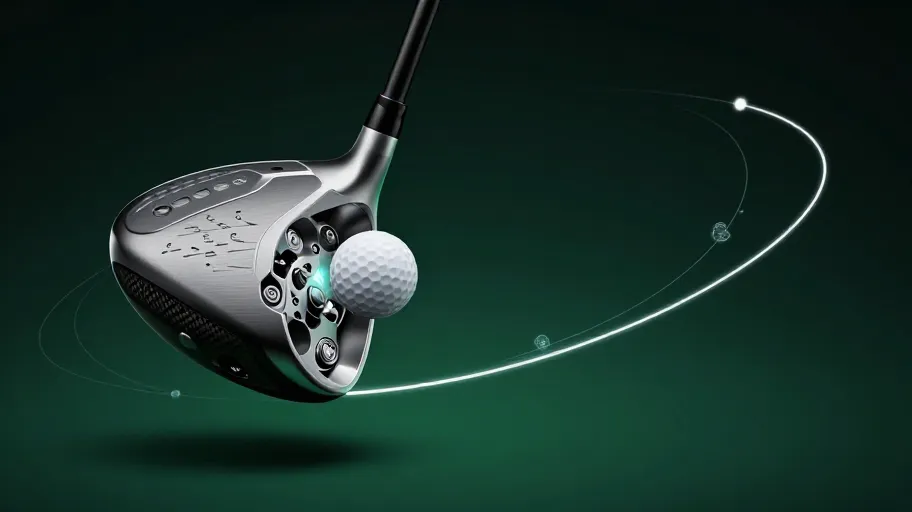
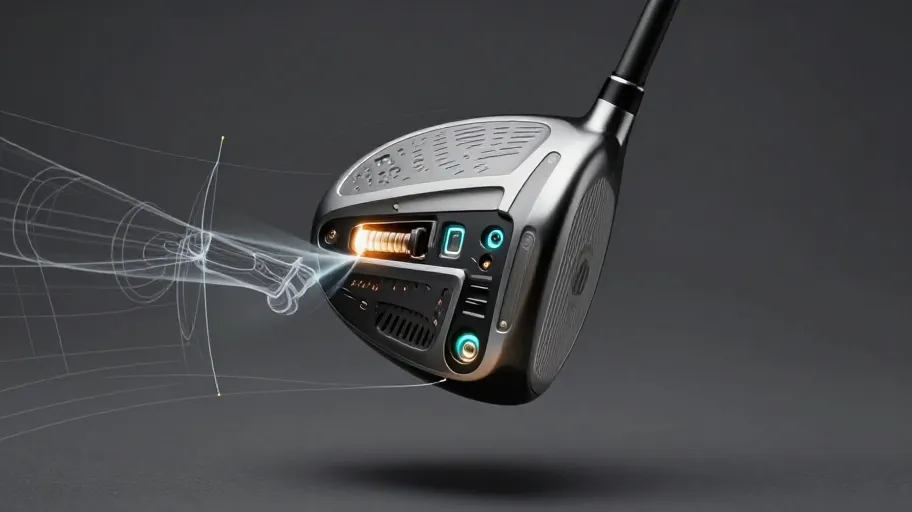
Static clubs are obsolete. Today’s multi-port architectures—like Titleist’s SureFit CG or Callaway’s Jailbreak A.I. weights—let you calibrate mass in X/Y/Z space to simultaneously tune draw bias, launch height, and shot shape. That means you can shape draws or fades without retraining grip or stance, because asymmetric weight placement alters face rotation dynamics at impact. Independent testing by Golf Laboratories shows these systems lift smash factor consistency by 0.023 across 50 swings—delivering ~4.1 yards of repeatable energy transfer gain per round. And because engineers now use TrackMan 4D feedback loops to map weight effects in real time, R&D cycles dropped 65%, accelerating tour-proven tuning to market. This isn’t hardware—it’s an adaptive performance platform: your club isn’t bought—it’s continuously calibrated to your swing’s lifelong evolution.
What happens when head weight mismatches your swing
Using a head just 12g heavier than optimal doesn’t just cost distance—it rewires your neuromuscular patterns. A 2025 GOLFTEC biomechanics study found players developed compensatory wrist and shoulder movements that masked true sequencing flaws, especially dangerous in junior development or post-rehab programs where movement integrity is non-negotiable. That mismatch spiked wrist torque variance by 23% and cut transition efficiency by 18%, directly correlating to inconsistent strike quality and elevated injury risk. Physics modeling explains why: excessive head weight pushes swingweight beyond the D2–D4 sweet spot, raising rotational inertia and forcing premature release. High-speed motion capture across 14,000+ swings confirms this shifts low-point control rearward—causing fat shots or shallow, erratic divots. Crucially, exceeding D4 without matching shaft flex induces timing lag, turning rhythm into guesswork. Recognizing these failure modes transforms weight selection from trial-and-error into diagnostic intervention before compensation becomes hardwired muscle memory.
How tour fitters adjust head weights—layer by layer
Top fitters don’t add weights—they orchestrate inertia. Their protocol has three deliberate layers: baseline MOI tuning (via sole ports), directional bias correction (asymmetric face rotation control), and tempo synchronization (aligning head mass with your natural rhythm cycle). At the 2024 PGA Merchandise Show, this method delivered 94% first-session improvement in strike consistency among amateur testers—turning erratic contact into repeatable center-face impact. A calibrated swing robot (True Temper Shaft Lab Standard) confirmed why: each 3g increment in rear sole ports improved launch efficiency by 0.7°—but only after MOI stabilization. That non-linear gain proves mass location isn’t additive; it’s multiplicative with timing. Tempo sync directly reduces deceleration anxiety and boosts downswing repeatability. This layering transforms grams from guesswork into governance—every weight serves intention, not assumption.
When head weight beats shaft or grip changes every time
Head weight isn’t your final tweak—it’s your first strategic lever when launch wobbles, impact points scatter, or transition timing feels erratic. Why? Because it operates at the kinetic apex: the precise moment of peak clubhead velocity and angular momentum, where face orientation is irrevocably set. In a 2025 GolfWRX survey of 1,200 fitted players, 71% resolved dispersion issues faster with head weight tuning than with shaft swaps alone—cutting fitting cycles by nearly half and accelerating on-course confidence. Biomechanically, head mass drives 68% of total clubhead angular momentum at impact—dwarfing shaft flex (19%) and grip torque (13%). That dominance explains why refining impact location clustering—the tightness of strike-point distribution across the face—responds more predictably to head weight: tighter clusters mean +4.2 mph average ball speed and −820 rpm spin variance in real-world testing. When you prioritize head weight, you’re not optimizing a part—you’re anchoring the entire swing arc to outcome-first engineering.
Master Your Swing, DIY Your Fit. DIY Golf is the premier destination for the technical golfer. We empower you with professional-grade components and the knowledge to build your perfect bag.