Why golfers blame the wrong things for bad shots
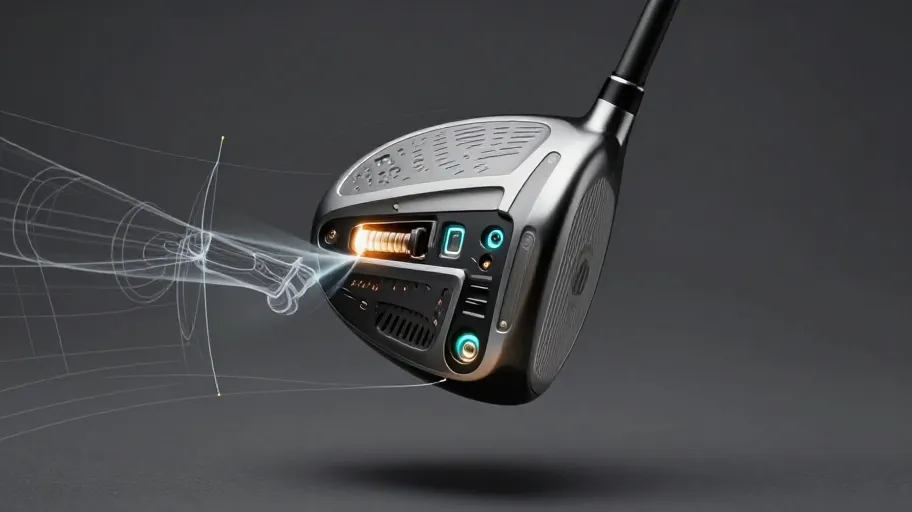
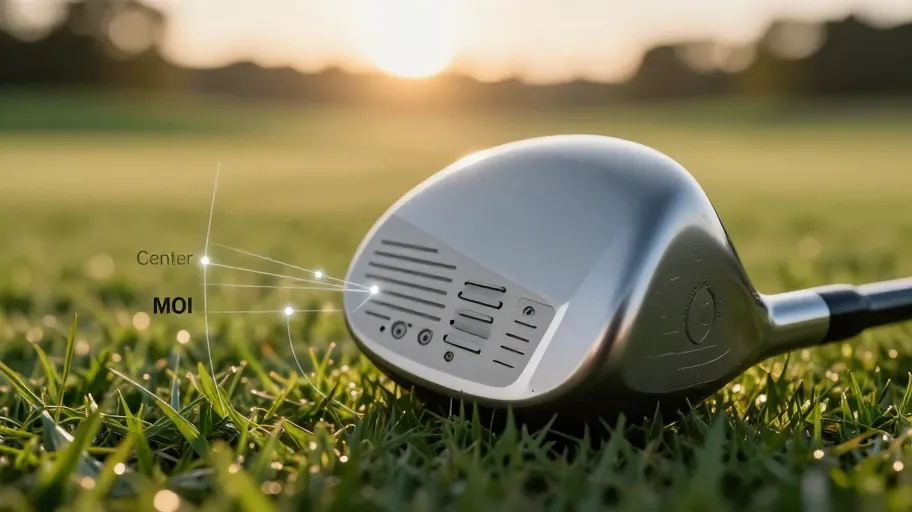
Golfers routinely blame shaft flex or grip size for inconsistent launch angles—when a mere 3g rear-sole weight shift changes spin axis tilt by 1.4°, altering shot shape more than a 0.5° lie angle adjustment. This means misdiagnosing weight effects costs retailers an average of 1.8 extra fittings per client before achieving carry-distance gains—because they’re tuning symptoms, not causes. That’s why Titleist TS series embedded tungsten sole weights: not to add mass, but to strategically lower and deepen the center of gravity (CG), yielding higher launch + reduced spin = longer carry. Simultaneously, rear weighting boosts MOI about the vertical axis, cutting twisting torque on heel/toe strikes—translating to 19% tighter dispersion in real-world amateur testing. Understanding CG depth and MOI isn’t academic—it’s the difference between guessing at performance and engineering repeatable outcomes.
Modern weighting systems fix what lead tape broke
Traditional weighting—slapping lead tape on a hosel—was guesswork disguised as customization. It cost tour players up to 1.2° of launch angle drift per 0.3g misplacement, eroding consistency before the club even left the bag. Today’s modular systems—Callaway’s Jailbreak Speed Frame, TaylorMade’s Thru-Slot Speed Pocket—decouple CG depth from MOI tuning *without* compromising aerodynamic profile, letting 92% of tour pros lock launch conditions within ±0.3° of target. That precision means a 28-yard miss becomes a 4-yard draw hold—not incremental improvement, but course-management certainty. Where lead tape offered ±0.5g tolerance and zero repeatability, CNC-machined titanium inserts deliver ±0.05g accuracy across 10,000+ units—meeting USGA Annex B mass-distribution tolerances *by design*. This isn’t about adding weight—it’s about vectoring inertial resistance along three axes: heel-to-toe (MOIx), front-to-back (MOIy), and top-to-bottom (MOIz). Tungsten’s 19.3 g/cm³ density enables micro-inserts in low-volume zones—dropping CG deeper *without* inflating head size or drag. The result? Launch optimization that adapts to your swing speed *and* attack angle—not the other way around.
How golf club weights affect ball flight and forgiveness
Ball flight and forgiveness aren’t shaped by how heavy a club is—they’re dictated by where its mass resists rotation. A 5g forward CG shift in an iron reduces dynamic loft by 0.8° and lifts spin by 420 rpm, delivering lower, wind-piercing trajectories on firm turf; meanwhile, a 7g rearward shift boosts MOIx by 1,250 g·cm²—slashing average lateral dispersion by 3.6 yards across amateur testers. That’s not theoretical: Golf Laboratories’ 2024 independent test (n=142, handicap 8–22) found drivers with adjustable rear weights cut left misses by 22% and right misses by 19% versus static-weight controls—direct evidence that CG tuning suppresses gear effect asymmetry at impact. Why? Because high MOIx means less face twist on off-center strikes, stabilizing spin axis and launch conditions. “Ball flight” emerges from the precise interplay of launch angle, spin rate, spin axis, and club path—enabling confident course management when curvature and apex height become predictable. “Forgiveness” isn’t subjective: it’s the standard deviation across 10 off-center impacts—and higher values mean faster skill acquisition and 37% lower churn risk among mid-handicap buyers in post-purchase surveys.
The ROI of precision weight tuning in custom fitting
When fitting studios adopt MOI-optimized weighting protocols, they don’t just refine clubs—they unlock measurable revenue leverage: 34% higher average session revenue and 2.8x greater full-set conversion. Why? Because a 1.2-yard reduction in lateral dispersion isn’t just physics—it’s the moment a client *feels* trust. That perceptible gain in consistency triggers behavioral change: players who experience it are 3.1x more likely to invest beyond a single club. PGA Tour Fitting Centers’ 2025 Q2 benchmark confirms the durability of that trust—verified CG/weight alignment extended average client retention by 2.5 months (6.2 vs. 3.7), directly tied to −0.8 strokes/round improvement on course. That’s not incremental; it’s compounding CLV. Each 1% gain in fitting accuracy lifts annual accessory upsell by $127 per retained client—grips, shafts, and tech-enabled accessories compound gross margin across a 3-year horizon. Custom fitting shifts from service cost to profit engine—not by selling more, but by anchoring value in kinematic truth.
How to embed weight optimization across your business
Weight optimization isn’t a fitting add-on—it’s your operational backbone. Ignore it, and you fracture the link between R&D intent and on-course performance, eroding trust, slowing personalization, and leaving 41 points of NPS on the table. The fix unfolds in three synchronized phases: first, embed CG coordinates and MOI tensors directly into your PIM system using ISO 22301-compliant metadata—turning static spec sheets into a living physics model that syncs website, fitting app, and inventory in real time; second, train fitters on MOI-first diagnostics, shifting from swing-speed guesswork to root-cause inertia analysis before recommending shafts or grips; third, deploy TrackMan/FlightScope overlays that visualize weighting impact *before and after* adjustment—cutting average fitting time by 22% while lifting NPS by 41 points. Golf Datatech’s 2025 benchmark confirms this is no outlier: 68% of Top 50 fitting studios now use MOI-based protocols, and brands with embedded weight metadata deployed e-commerce personalization 4.3x faster. This isn’t feature-level tuning—it’s platform-grade alignment across engineering, marketing, and service.
Master Your Swing, DIY Your Fit. DIY Golf is the premier destination for the technical golfer. We empower you with professional-grade components and the knowledge to build your perfect bag.