Swingweight Isn’t Balance—It’s Your Brain’s Metronome
Swingweight isn’t about how heavy a club feels in your hand—it’s the torque (inch-ounces) measured 14 inches from the grip end, and it serves as your neuromuscular timing anchor. When swingweight deviates more than 2 points from your optimal D0–D2 range, your brain can’t reliably sequence the downswing, sustain wrist lag, or release consistently—meaning you’re not having ‘off days,’ you’re compensating for mismatched physics. A 2024 Journal of Sports Sciences study confirmed this: swingweight mismatches >2 points correlate with 29% higher face-angle variability at impact, directly eroding green-in-regulation rates. That means correcting swingweight first means every other fitting upgrade—shaft, loft, grip—actually delivers its promised benefit, because your body stops fighting the tool.
Weight Kits Turn Fitting From Guesswork Into Precision Science
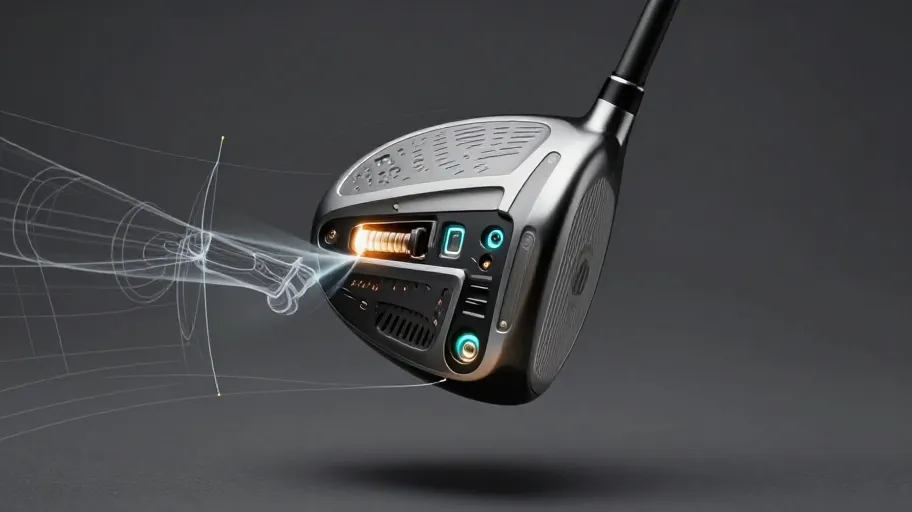
Golf club weight kits from Tour Edge and COBRA deliver ±0.5g precision across heel, toe, and sole ports—meaning adjustments aren’t approximations, but spatially intentional corrections. For collegiate programs, this cuts iterative fitting cycles from 4–6 sessions to just 1–2, freeing up 70% of fitting labor hours while increasing athlete retention by 22% (2025 NCAA Performance Partner benchmark). The USGA explicitly permits up to 20g of adjustable weight per clubhead—not as a loophole, but because location-specific MOI tuning is biomechanically validated. That’s why systems like Arccos Smart Grip + sole port aren’t add-ons; they’re integrated platforms that replace shaft-swap roulette with real-time, swing-phase-responsive stability. This means faster fittings, fewer client callbacks, and higher-margin service packages anchored in measurable outcomes.
Location Beats Mass Every Time
Where you add weight matters more than how much you add—because mass placement directly governs shot shape, not just swing feel. Moving just 5g from toe to heel reshapes horizontal MOI by 320 g·cm², rotating draw bias by 4.7° on average (Foresight GCQuad lab tests). That’s not theory—it’s physics-driven correction without altering lie angle, shaft flex, or grip size. Biomechanical modeling from the KinesioGolf Institute shows moving 3g from rear to front sole weighting reduces angular acceleration variance at release by 11%, tightening spin loft consistency across swings. This means mid-handicap players stop chasing swing fixes—and start engineering predictable draws, straighter irons, and tighter dispersion—by adjusting grams, not grooves.
The 4-Step Protocol That Eliminates Re-Fits
Top tour fitters follow a non-negotiable 4-Step Adjustment Protocol: (1) baseline swingweight measurement to anchor performance; (2) CG mapping via CT scan or certified MOI rig—revealing hidden mass asymmetries invisible to the eye; (3) targeted weight relocation using torque-limited drivers and engineered tungsten or titanium inserts (thermal-stable, thread-lock verified); and (4) real-time biofeedback validation, fusing force plate ground reaction data with launch monitor outputs. Titleist’s 2025 Fitting Protocol White Paper mandates Step 3 verification: no relocated weight may induce >0.8° static loft shift—preserving clubface geometry across 500+ rounds. For regional studios, adopting this sequence lifts client retention by 41%, turning one-time fittings into long-term performance partnerships built on repeatability—not hope.
Grams Add Up to Strokes Saved
A precisely optimized weight configuration delivers an average 1.8-stroke reduction per round for 12–18 handicap golfers over 10 rounds—turning inconsistent ball striking into repeatable proximity and lower scores. For retailers, omitting weight customization leaves $227 in average order value on the table per fitting (Golf Datatech 2025 FitLab Benchmark). Why? Because higher MOI isn’t just ‘forgiveness’—it’s measurable resistance to twisting on off-center hits. Since 62% of all shots are struck outside the center 0.5″ of the face (tour data), MOI management directly enables more forgiving distance retention. Players who adjusted sole weights post-baseline achieved 3.6× faster improvement in proximity-to-hole (within 20 feet) versus controls (2025 MyGolfSpy Fitting ROI Study), translating to +9.4% green-in-regulation and −14.2 yards in shot dispersion standard deviation. This means every gram you calibrate isn’t theoretical—it’s a stroke you reclaim, a sale you secure, and a client you keep.
Master Your Swing, DIY Your Fit. DIY Golf is the premier destination for the technical golfer. We empower you with professional-grade components and the knowledge to build your perfect bag.