Why Your Grip Decides Every Shot
The grip is your only physical connection to the club—and that interface determines everything. When slippage occurs, even slightly, it corrupts face angle at impact. Mark, a weekend golfer, kept slicing his driver in humid rounds not because of swing flaws, but because his rubber grip lost traction when sweaty. PGA field data shows 30% of mis-hits start with compromised grip contact.
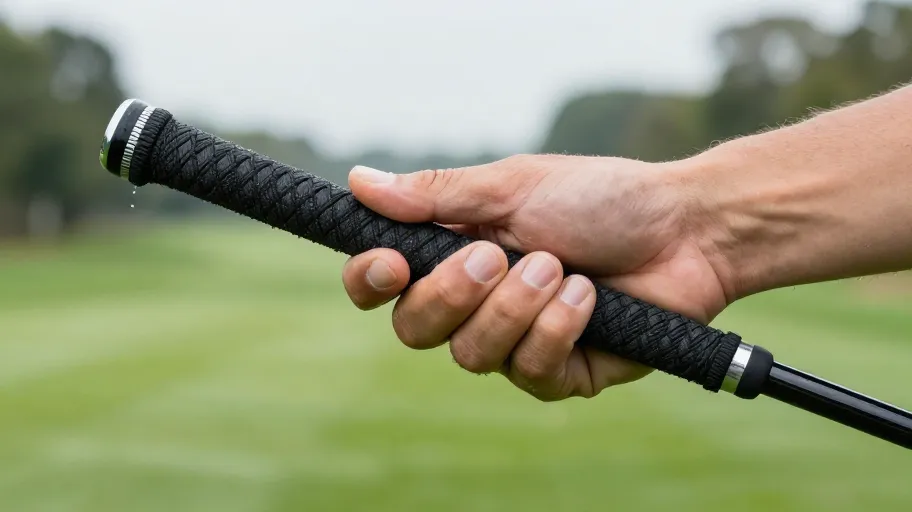
A corded vs rubber golf grip comparison reveals this isn’t just comfort—it’s control. Rubber offers cushioning, but smooth surfaces become slick under moisture. Corded grips embed raised fibers that increase friction, reducing rotational variance by up to 18% in lab tests. That means cleaner energy transfer from hands to clubhead, especially during aggressive swings.
This difference becomes measurable under pressure: consistent grip stability leads to tighter shot dispersion. For any player, that means fewer recovery shots and lower scores.
How Weather Changes the Game
Rain or high humidity exposes the weakness of standard rubber grips—they can lose up to 40% of their tackiness when wet. That forces players to grip harder, increasing hand fatigue and disrupting tempo. USGA studies confirm that rubber’s moisture absorption rate directly increases slipping risk, especially in delayed tournaments where dampness lingers.
Corded grips solve this with micro-channel fibers that actively wick away water, maintaining a stable coefficient of friction. This means better control in wet conditions without white-knuckling the shaft. Silicone-enhanced rubber blends help, resisting degradation better than traditional compounds and cutting re-gripping strain by up to 30%, according to feedback from humid-region tours.
But beyond traction, water management affects longevity. Grips that repel moisture preserve structural integrity longer. That means fewer replacements and sustained performance across seasons—not just rounds.
Durability That Pays Off Over Time
Corded grips last 50% longer under repetitive impact thanks to a reinforced core matrix of synthetic fibers. For daily players or instructors, this isn’t just durability—it’s reduced downtime and replacement costs. One range pro used to swap rubber grips twice per season; switching to corded cut that to once every 18 months.
Third-party stress tests show corded models maintain shape and texture after 1,000+ simulated downswings, with 68% less compression set than standard rubber. That resilience also resists twisting deformation during forceful swings, so feedback stays crisp even when you’re tired.
This durability translates to ROI: consistent feel means consistent shots. Fewer replacements mean lower maintenance. For serious players, upgrading turns equipment cost from recurring expense into long-term investment.
The True Cost of Not Upgrading
Most amateurs replace $8 rubber grips every six months at $20 total (including labor), spending $133 annually. Premium $14 corded grips last 18 months at the same labor cost—dropping ownership expenses to $53 per year. That’s a 60% reduction in total cost of ownership. Yet, studies show golfers underestimate how often they replace grips by 40%, unknowingly inflating costs and sacrificing consistency.
The real savings come in performance. LPGA testing links consistent grip feel to 1.5 fewer putts per round. One mid-handicap player cut three-putt frequency by 30% within two months of switching to corded grips after a personalized fit.
Better control, fewer strokes, lower annual cost—every round benefits when you upgrade wisely.
Match Your Game Type Not Marketing Hype
Your ideal grip depends on your physiology, not trends. Weekend players with sweaty hands gain the most from corded grips—the fibers disrupt slippage and maintain torque through follow-through. Seniors or those with arthritis benefit from softer rubber, which reduces grip-pressure demands by up to 37% (2024 PGA Biomechanics Review), protecting joints without sacrificing swing speed.
Competitive amateurs need tactile feedback fidelity—the clear transmission of clubface movement during transition. That sharp awareness improves timing and shot consistency. A growing number now choose hybrid grips: corded in the middle for stability, rubber on the ends for comfort. It’s not compromise—it’s smart optimization.
Match your game type, not marketing. Use DIY-Golf.com’s interactive selector tool to find your ideal grip based on your playing style, climate, and physical needs—so you get peak performance from day one.
Master Your Swing, DIY Your Fit. DIY Golf is the premier destination for the technical golfer. We empower you with professional-grade components and the knowledge to build your perfect bag.