Why Your Putting Stroke Feels Off and Putter Weight Is Usually the Culprit
Inconsistent putting almost always traces back to poorly matched mass distribution. Picture a mid-handicap golfer repeatedly missing six-footers despite flawless mechanics. The hidden cost is a shattered short game and lost weekend bets. This frustration stems from ignoring Swing Weight, the industry-standard C1 to D9 balance metric that governs face rotation. A mere two-point mismatch alters perceived head feel enough to disrupt tempo under pressure.
Your specific Stroke Type demands tailored profiles. Heavier heads promote smoother pendulum motion for arcing strokes, while lighter setups benefit straight-back mechanics. When properly aligned, you experience significantly reduced deceleration and tighter dispersion patterns. Many golfers think heavier putters universally improve lag putting. Excessive weight actually kills short-putt feel and increases physical fatigue over eighteen holes. Calibrating this exact balance turns three-putts into tap-ins, delivering the precise head feel required to convert measurable accuracy gains on the greens.
Debunking the Myths Around Putter Weight Selection and Stroke Matching
Moving beyond the initial feel of a flawed stroke, you will quickly find that retail fitters often recommend heavier putters for generic stability. This inadvertently destroys your distance sensitivity and tempo. This misguided approach relies on a few prevalent myths.
Adding mass does not universally boost MOI, which is the head's resistance to twisting. Perimeter placement actually dictates MOI, preserving ball speed on mishits to directly slash three-putt frequency. Toe-weighted designs are not exclusively for strong arcs. They determine Toe Hang, giving you a clear diagnostic to match face rotation to your unique stroke path. Modular systems are not gimmicks. They are essential tools for micro-adjustments that static heads cannot achieve. Recent biomechanical benchmarks reveal the optimal total head weight is a dynamic 320g to 370g range calibrated to green speed and stroke length. Mastering this precise calibration transforms generic equipment into a highly tuned accuracy engine.
How Adjustable Putter Weight Systems Engineer Better Putting Accuracy
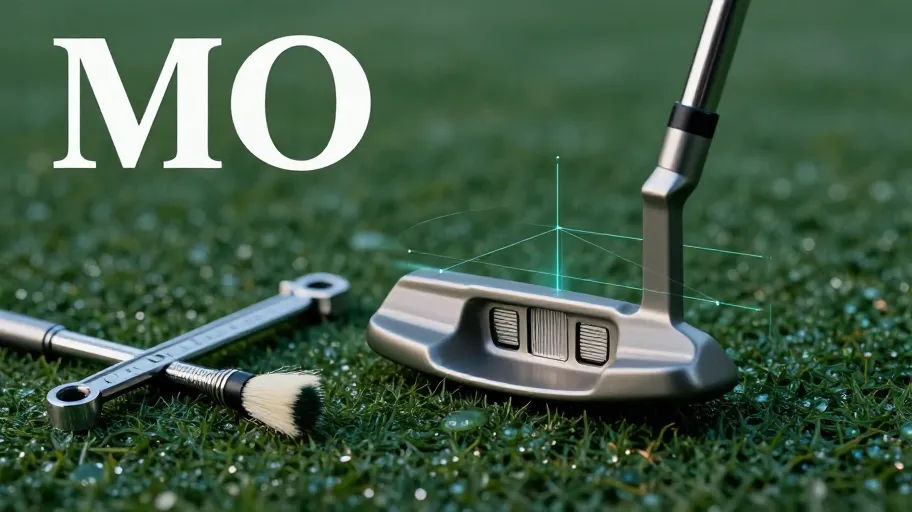
Modern golf putter weight kit systems transform a static club into a personalized instrument. They use precision-machined, swappable sole weights to fine-tune head mass and center of gravity. Consider a touring professional swapping 5g tungsten weights for 15g alternatives before a slow-green tournament. This increases momentum to eliminate costly three-putts.
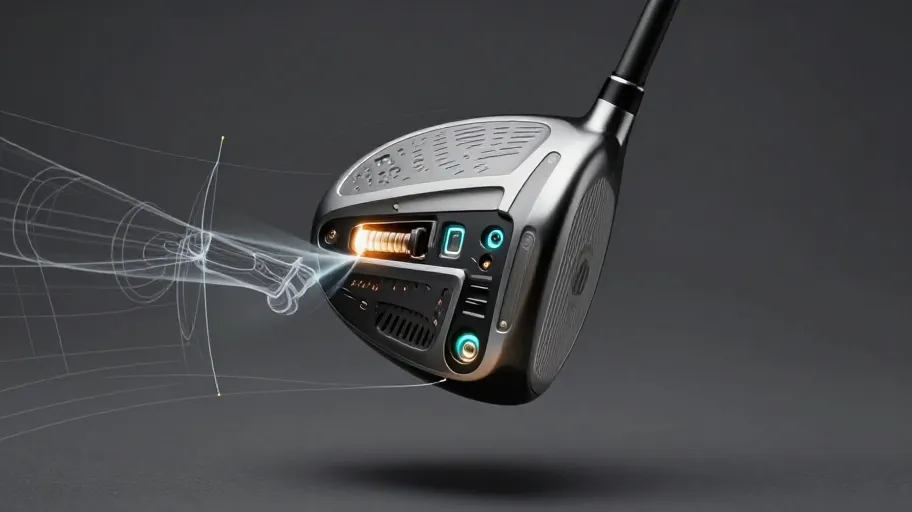
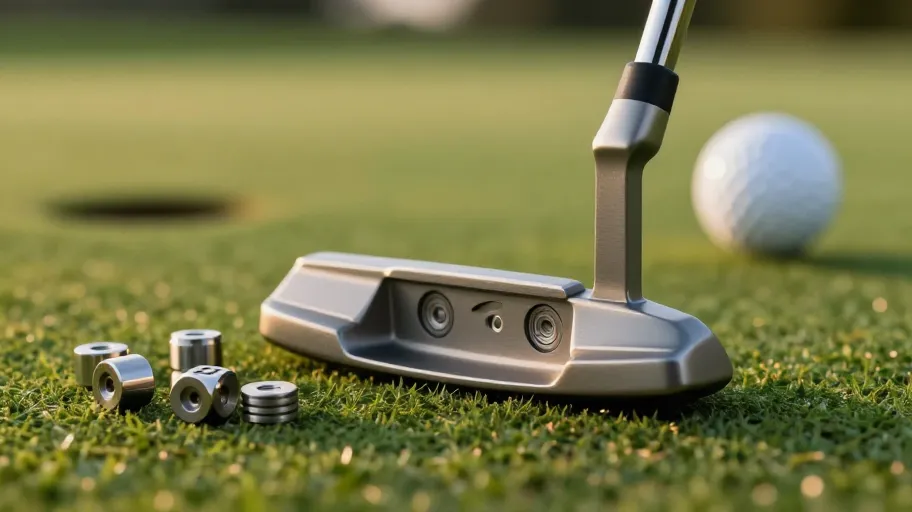
The Adjustable Weight System utilizes threaded sole ports accepting 2.5g to 15g increments. This enables up to 60g of total modification without altering head geometry. By shifting the foundational Putter Weight distribution from heel to toe, you independently manipulate moment of inertia. This modular platform eliminates the expensive cycle of purchasing new putters for varying course conditions. You get immediate ROI through consistent, on-the-fly customization. These adjustments alter dynamic impact behavior, not just static mass. Heavier configurations increase the coefficient of restitution for a truer roll on short putts. Lighter setups enhance mishit feedback. Mastering this mechanical tuning directly correlates to measurable accuracy gains, turning engineered advantages into lower scores.
Quantifying the Accuracy Gains from Optimized Putter Weight Configuration
A data-driven amateur who finally matched his Putter Weight to his natural stroke saw strokes-gained putting metrics surge by 22% in one season. The cost of ignoring this tuning is steep. Industry benchmarks show stock configurations cost you 1.5 to 2.5 strokes per round compared to a proper fit. Proper calibration minimizes the gap between intended and actual ball direction.
This accuracy leap relies on your unique weight-to-tempo ratio. The best putter weights for improved putting accuracy exist within an optimal temporal window, not at an absolute mass. When total mass aligns with your stroke rhythm, face angle variability drops. Strategic mass distribution maximizes MOI, shrinking dispersion and forgiving mishits. This converts practice time into predictable on-course ROI. Executing this advantage requires a systematic approach to selecting and installing the exact gram configurations that lock in your ideal tempo.
Your Step-by-Step Playbook for Choosing and Installing the Right Putter Weights
Translating quantified accuracy gains into a repeatable advantage requires moving from theory to execution. Selecting optimal weights demands a systematic process to eliminate costly three-putts. Picture yourself at home with a golf putter weight kit, transforming your mat into a performance lab. Your Stroke Type acts as the diagnostic foundation. Strong arcs need toe-weighted setups, moderate arcs suit balanced designs, and straight strokes require face-balanced heel-toe configurations.
Operationalize this through a precise sequence. Record video to classify arc degree. Measure baseline dispersion using stock weights. Use an Adjustable Weight System to test 5g increments at 6ft, 15ft, and 30ft. Lock in the tightest combined dispersion. This platform democratizes continuous optimization, removing the need for expensive fitters while boosting accuracy up to 30%. For a critical edge, test weights at the end of a practice session when fatigue sets in. The configuration maintaining consistency under fatigue is your true optimal setup. By logging these setups against green speeds, you establish a repeatable, data-backed system guaranteeing peak performance across any tournament condition. Ready to drop those three-putts and finally trust your stroke? Grab a weight kit and start tuning today.
Master Your Swing, DIY Your Fit. DIY Golf is the premier destination for the technical golfer. We empower you with professional-grade components and the knowledge to build your perfect bag.