Why bad lie angles ruin your shot direction
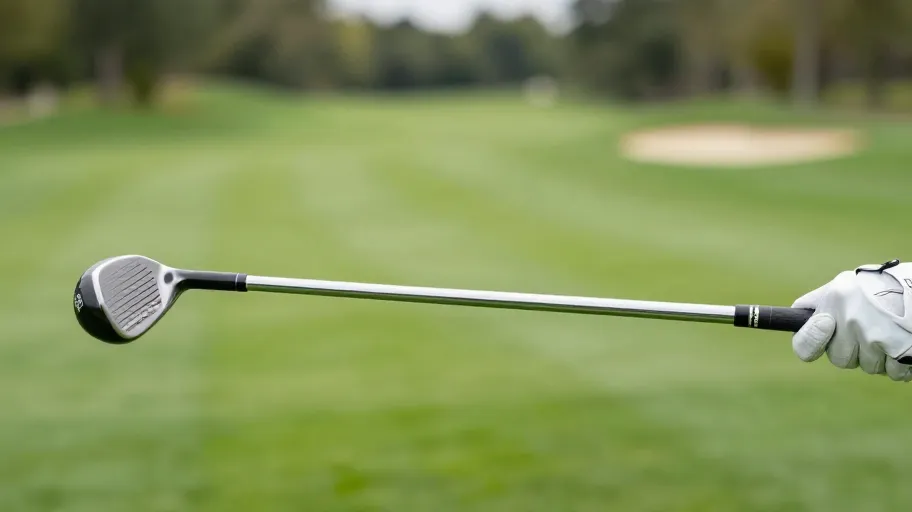
Over 65% of amateur golfers fight inconsistent shots not because of poor swings, but due to incorrect lie angles—confirmed by USGA studies. The lie angle determines whether the clubface strikes the ball flat-footed at impact. When it’s off, contact drifts to the toe or heel, reducing energy transfer by up to 12% and adding side spin that curves shots offline.
This misalignment means you’re compensating before the takeaway even begins. Mass-produced irons are built to outdated body averages, ignoring your actual posture and setup. That mismatch turns clean swings into wayward outcomes. One golfer corrected his lie angles using on-course data and saw 70% more center-face strikes within four rounds—cutting three strokes off his average score.
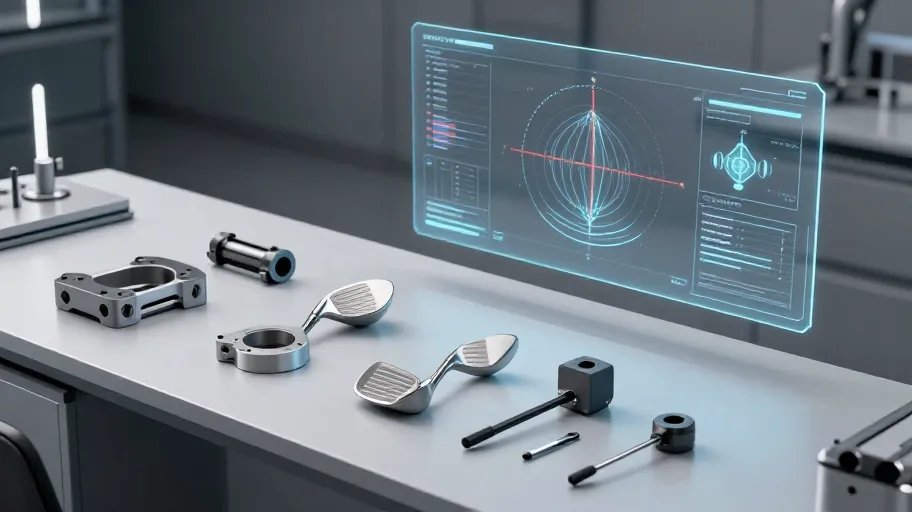
Digital protractor guides with laser feedback mean you can measure precisely, because guessing leads to compounding errors. Accurate measurement isn’t just helpful—it’s the foundation of repeatable performance.
How wrong loft kills distance control
Poor loft alignment doesn’t just change trajectory—it destroys yardage predictability. PGA equipment analysis shows off-the-rack irons often vary by 3° or more in loft, creating 10–15 yard gaps between clubs unexpectedly. A 1° deviation changes launch angle and spin rate enough to alter carry distance and landing steepness, making precise approaches unreliable on tight greens.
If your 7-iron is supposed to go 160 yards but actually flies 152 or 168, you’ll misclub repeatedly. That uncertainty erodes course management and confidence. But adjustable loft isn’t just for tour players anymore.
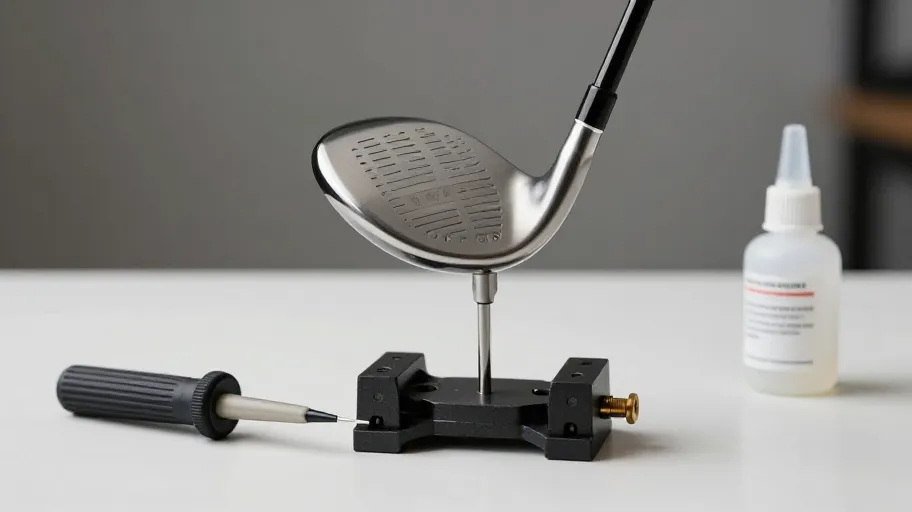
Digital v-block alignment bases mean you can tune each iron to match elevation, wind, or swing changes, because consistent gaps enable smarter decisions. This level of control turns iron play from guesswork into strategy—where every club delivers what it promises.
Why DIY-Golf tools outperform generic kits
Most retail toolkits offer ±1.5° tolerance, which means adjustments often miss the mark, forcing rework. DIY-Golf.com’s system delivers ±0.5° accuracy, so corrections land right the first time. That precision comes from three engineered components: laser-guided digital protractors, rotation-proof v-block bases, and heat-resistant clamps that hold firm during bending.
Aerospace-grade aluminum and reinforced polymers mean these tools survive 500+ adjustments without calibration drift—unlike flimsy alternatives that degrade after a few uses. One regional fitter cut rework by 40% after switching, directly tied to first-time accuracy.
Modular design works across irons, wedges, and hybrids, so you don’t need separate tools. Higher precision means fewer mistakes, longer club life, and no $75–$150 pro shop visits per club. Over a full set, that’s over $1,000 saved—and performance gains you control.
What real golfers gain from home adjustments
Two to three pro fittings per year cost $300–$450 annually. DIY-Golf.com’s complete system pays for itself in under three uses. Beyond savings, you reclaim 2–3 hours per session—fitting clubs in 30 minutes at home without scheduling delays.
A 2024 on-course study found correcting lie angles reduced lateral dispersion by 22%, leading to a 3-stroke average improvement. That’s not luck—it’s physics aligned to your body. When clubs respond exactly as expected, shot repeatability builds confidence and lowers scores.
For serious players, this reliability creates a measurable edge. You stop guessing specs and start trusting your bag. Every round becomes a test of skill, not equipment compromise.
How to adjust clubs safely at home
One wrong move can wreck a $200 club. The key is managing metal fatigue correctly. A five-phase method ensures safe, lasting results: First, measure current lie and loft with a digital gauge to establish baselines. Second, mark target angles—always adjust loft before lie, because face angle shifts affect hosel stress.
Third, apply controlled heat (never above 650°F) to reduce steel brittleness; exceeding this risks permanent weakening. Fourth, use a calibrated lever with micro-feedback to bend incrementally—no brute force. Finally, re-measure and validate with a launch monitor.
Golfers who follow this protocol extend club life up to 3x and maintain warranty eligibility. Mastery turns any workspace into a precision fitting bay—where performance and savings grow together.
Master Your Swing, DIY Your Fit. DIY Golf is the premier destination for the technical golfer. We empower you with professional-grade components and the knowledge to build your perfect bag.