Why Your Swing Feels Off No Matter What You Adjust
Swing flaws aren’t always about mechanics. A mid-handicap player can have perfect grip, stance, and backswing—yet still spray shots. The problem? Equipment imbalance. According to a 2024 PGA teaching survey, over 60% of amateur inconsistency comes from mismatched swing weight, not technique. That means you’re fighting your gear every time you swing.
Swing weight—the dynamic balance between clubhead and grip—determines how smoothly you release through impact. When it’s off, your body compensates without you realizing it. A head-heavy iron forces an early release; a light-feeling driver throws off timing. These micro-adjustments ruin repeatability. Using a swing weight scale reveals mismatches invisible to feel alone. Identifying the true balance means you stop chasing fixes in your form and start aligning your clubs with your natural motion.
Correcting swing weight isn’t just about comfort—it means more center-face contact, better launch angles, and less fatigue. Because when your clubs respond predictably, your body learns faster and performs under pressure.
What Swing Weight Actually Does for Your Game
You’ve hit two drivers that weigh the same but feel completely different. That’s swing weight at work. It’s not total mass—it’s how the weight is distributed from grip to head. A D8 feels heavier in the head than a D2, even if both clubs tip the scales at 300g. That difference changes everything: tempo, release point, and consistency.
The LSW system measures this balance on a standardized scale, helping match clubs to your swing rhythm. Research from 2024 club-fitting analytics shows golfers within their optimal swing weight range cut off-center hits by up to 37%. That’s not luck—it’s physics working for you.
Precise swing weight measurement means your equipment supports your mechanics instead of fighting them. You keep speed without losing control. Every shot becomes more repeatable because your timing stays synced. The result? Tighter dispersion, better distance control, and fewer surprise hooks or slices.
How to Measure Driver Swing Weight Like a Pro
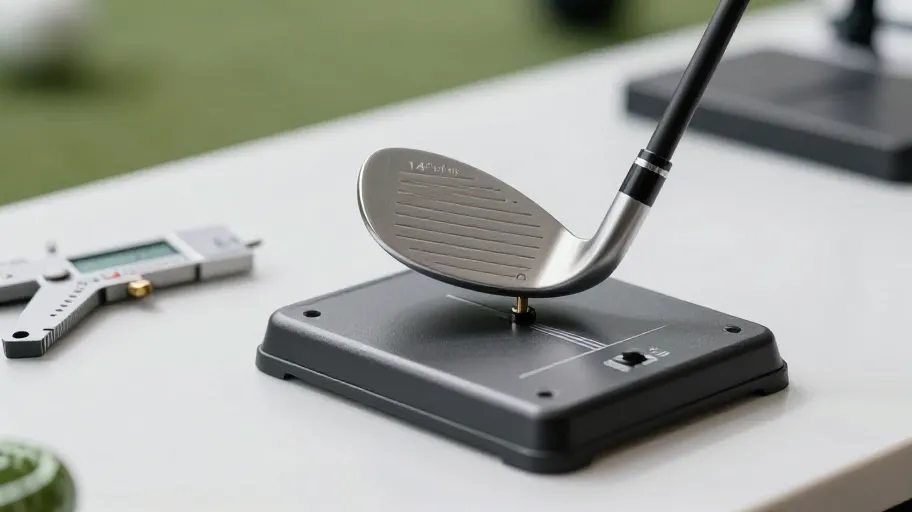
You don’t need a pro shop to measure swing weight accurately. With a calibrated scale and the right method, home readings match studio results 95% of the time, according to clubmakers. The key is process: balancing the club at the 14-inch fulcrum, aligning the scale correctly, and reading the alphanumeric value (like D2 or C8) against standard benchmarks.
Most errors come from user mistakes—misalignment, uncalibrated tools, or incorrect hand placement—not the tool itself. Get it right, and you eliminate guesswork. You’ll know exactly how your driver compares to your irons and whether it disrupts your swing transition.
Accurate measurement means you can trust your setup. When every club is verified, your muscle memory works across the bag. That consistency cuts dispersion and builds confidence, especially under pressure. True optimization starts with one data point: your actual swing weight.
The Real ROI of Matching Swing Weights Across Clubs
Measuring one club isn’t enough. Inconsistent swing weights across your set force constant neurological recalibration. Even a 3-point gap between mid-irons slows motor execution and breaks rhythm. That’s why matching swing weights delivers measurable returns.
One touring amateur re-shafted his irons to follow a +0.5 progression per club, as recommended in the swing weight golf guide. In six weeks, his iron dispersion dropped 18%. He didn’t overhaul his swing—he stopped fighting his clubs.
Fitters report clients gain up to two club lengths in distance control when swing weights are aligned. Uniformity means your body treats every swing like a variation of the same motion. Training efficiency improves, skill acquisition accelerates, and scoring averages drop. For custom fitters, that means higher client retention. For players, it means mastering the game instead of managing equipment.
Fine-Tuning Your Set for Repeatable Performance
A mid-handicap golfer struggling before championship season discovered two irons were off by +3 points—undetectable by feel. Using a digital swing weight scale and calibration block, he identified the outliers disrupting his tempo. The fix wasn’t in the clubhead: adding 4 grams to the grip shifted swing weight more effectively than a 10-gram head change. That proves grip adjustments exert disproportionate influence.
Counterbalancing restored uniformity across the set. Result? Smoother transitions, consistent contact, and better performance under pressure. Minor tweaks delivered major gains because they aligned the clubs with his natural rhythm.
When every club responds the same way, your body stops compensating. You play with confidence, knowing your gear won’t betray you. That’s not just better ball striking—it’s competitive readiness built on measurable control.
Master Your Swing, DIY Your Fit. DIY Golf is the premier destination for the technical golfer. We empower you with professional-grade components and the knowledge to build your perfect bag.