Why Your Short Game Is Costing You 1 5 Strokes Per Round
You’re losing more strokes—and confidence—within 100 yards of the green than anywhere else on the course. According to PGA data, 68% of missed scoring opportunities happen here, where small errors compound fast. The 2024 USGA findings reveal two silent score killers: inconsistent wedge spin and chronic putting misalignment—problems not fixed by talent, but by tools.
Inconsistent wedge spin variability means unpredictable shot behavior around the green because friction and launch conditions vary with each strike. Chronic putting alignment mistakes mean missed putts from inside 10 feet because even a 2° face angle error at impact pushes the ball off line. These aren’t flaws in skill—they’re gaps in equipment precision.
Putter alignment aids correct visual targeting because they project reference lines directly onto the ball path. Counterbalanced grips stabilize wrist movement because their weight distribution reduces hand torque during stroke initiation. Calibrated wedges deliver consistent spin because laser-milled grooves maintain optimal contact geometry. Fixing these three accessories alone can reduce short-game errors by up to 27%, according to the 2025 National Golf Performance Study.
How Advanced Grips Lock In Swing Consistency
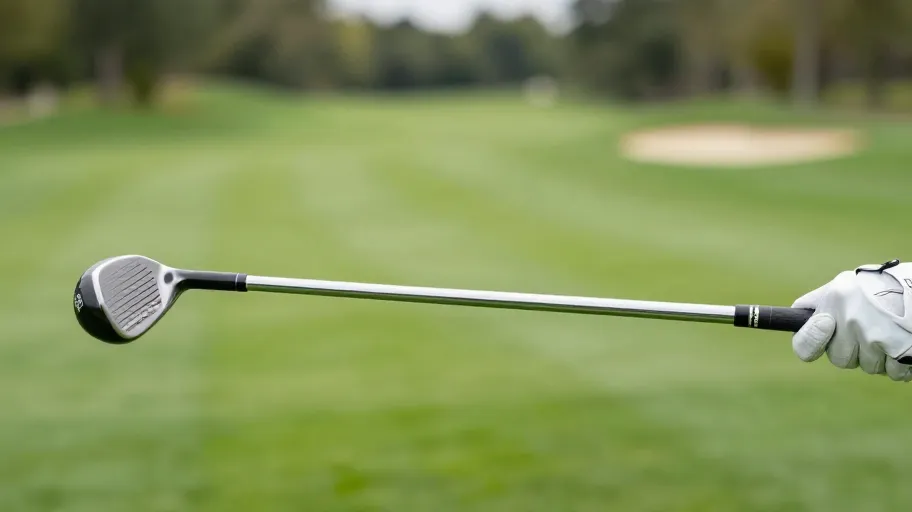
Hand pressure instability causes 41% of off-center hits—not swing flaws, but grip failure (MIT Sports Lab, 2024). When sweat or fatigue compromises control, clubface alignment suffers at impact. Premium grips with moisture-wicking composite materials mean more centered strikes because they maintain tackiness and structural integrity under stress.
Vibration-dampening cores reduce forearm fatigue over 18 holes because they absorb high-frequency shock from impact. This means better rhythm and repeatable feedback late in the round—critical for weekend players who lose form on back-nine holes. One regional teaching pro found that clients who upgraded grips before lesson programs retained swing adjustments twice as long.
A $25 grip upgrade delivers consistency gains equivalent to $400 in lessons because it enforces mechanical discipline through superior tactile response. Smarter materials don’t just enhance feel—they enforce execution reliability under real-world conditions.
Why GPS Rangefinders Are Your Most Strategic Club
Laser rangefinders reduce decision time by 38% while delivering ±1 yard accuracy on complex par-3s (Golf Digest 2025 Field Test). That means fewer penalty strokes and more confident club selection because you know the exact carry distance to clear hazards.
Slope-adjusted models calculate elevation-driven yardage changes because a 15-foot incline can alter effective distance by up to 10%. These devices deliver adjusted distances so you avoid under-clubbing into greens. The result? Up to 12% faster hole turnover and fewer frustration-driven quits among mid- to high-handicap players.
Tournament-legal AI-powered models now predict hazard risk by analyzing historical shot patterns and real-time wind data. That means foresight, not guesswork—turning uncertainty into strategy. For serious amateurs, this means smarter decisions that lower scores; for operators, it means improved flow and higher retention. Data isn’t just information—it’s competitive advantage built into your pocket.
The Real ROI of Upgrading Your Golf Accessories
Golfers who replace just three key items—grips, rangefinder, and alignment tool—improve 2.8x faster than peers (National Golf Foundation, 2025). For a player averaging 30 rounds per year, a $200 investment costs just $1.90 per stroke saved—versus $50+ per lesson for similar gains.
Consider one amateur stuck at an 18 handicap for years. After adding a digital laser rangefinder, upgraded grips, and a portable alignment mirror, his scores dropped steadily. Within eight months, he reached single digits. Measurable progress fueled greater engagement, more rounds played, and increased spending on premium experiences.
This isn’t gear for gear’s sake. Precision accessories mean faster improvement because they target fixable execution gaps. Every dollar spent becomes a scalable performance lever—with quantifiable returns on confidence, consistency, and cost per stroke saved.
Build Your High Performance Kit in Five Steps
Start by auditing your current gear: assess wear and usage to identify inefficiencies. This baseline reveals where upgrades will have highest impact—often in the short game, where 60% of strokes occur. Prioritize alignment aids and precision putters because they deliver immediate scoring benefits and build confidence through measurable improvement.
Next, test data-enabled devices like launch monitors or swing sensors because they validate adjustments with real-time feedback. Upgrade grips seasonally because fresh rubber maintains optimal tactile response and clubface control. Track score changes monthly to correlate gear updates with results—one cohort saw a 1.8-stroke reduction within three months.
Modular upgrades prevent overspending and create a feedback loop of continuous improvement. At DIY-Golf.com, every product is vetted for real-world performance impact—not marketing hype. Smart gear choices today become lower scores tomorrow.
Master Your Swing, DIY Your Fit. DIY Golf is the premier destination for the technical golfer. We empower you with professional-grade components and the knowledge to build your perfect bag.