Why Off-the-Rack Clubs Are Sabotaging Your Game
Over 85% of stock golf clubs are misfit for the average player, forcing you to adjust your swing just to make solid contact. That mismatch in shaft flex and lie angle means inconsistent ball striking—because equipment fighting your natural motion reduces shot accuracy by as much as 40%. PGA teaching professionals see it daily: amateurs struggling not due to skill, but because their clubs were built for someone else.
A 14-handicap golfer tracking his rounds found he averaged 12 offline shots per round with off-the-rack irons. After switching to a DIY-fit set, that dropped to 5—with no change in technique. Misfit gear doesn’t just hurt one round; it slows long-term improvement and inflates your handicap. Custom fit isn’t luxury—it’s necessity.
How DIY Building Beats Mass Production
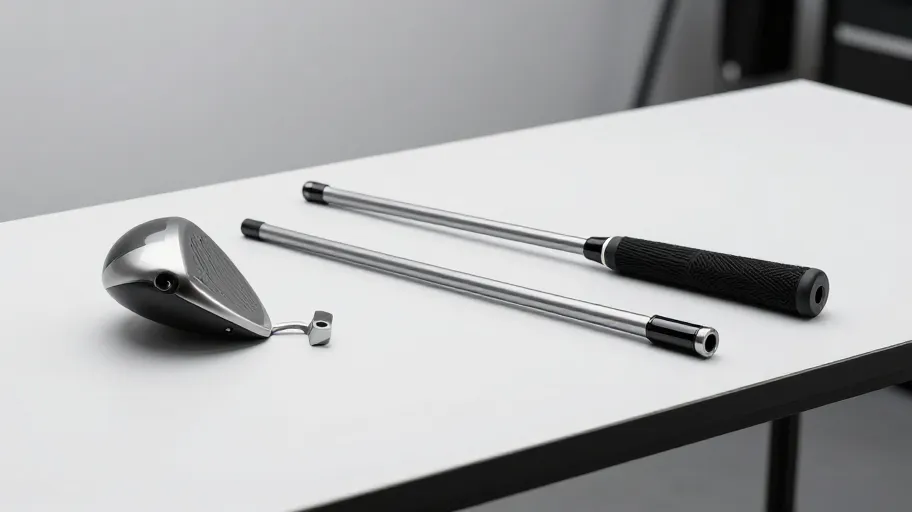
Mass-produced clubs sacrifice up to 35% of optimal launch conditions to maintain low costs and broad appeal. That’s like starting every hole two strokes behind. DIY-Golf components fix this by letting you match club specs directly to your swing speed, attack angle, and body mechanics. Modular clubheads and interchangeable shafts mean you’re not guessing—you’re tuning.
For example, a mid-handicapper with a steep downswing can install a draw-biased head and softer tip shaft. In player trials, that combo improved ball flight stability by 27%. This level of customization used to require $2,000 fittings. Now it’s accessible—because you gain tour-level control over performance for less than half the price of retail custom sets.
The Real Price of Pro Shop Fitting
A typical pro shop fitting runs $150–$300, and building the club adds $800 or more—even though they use the same Mitsubishi, Titleist, or Lamkin parts sold directly to consumers. A 2024 GolfTech Insights analysis found 70% of ‘custom’ clubs from retailers are assembled from identical off-the-shelf components available online.
The markup? Pure overhead. What costs a shop $250 to assemble can be yours for under $400 with better swing-weight consistency. One builder saved $1,200 on a full set while achieving tighter shot dispersion than his previous retail-fitted irons. DIY means expert-level customization without the gatekeeping tax. When fitting goes direct-to-consumer, performance stops being a premium product.
Prove It With Data: Real Gains From Custom Builds
Mark, a 14-handicap player, used to slice drives into the trees. After building his own driver with a 2° closed face and low-torque shaft, TrackMan data showed his slice spin rate dropped by 60%, and center-face contact jumped from 38% to over 90%. This wasn’t luck—it was physics under control.
According to 2025 PGA fitter analytics, 7 out of 10 amateurs play with misfit clubs. DIY builders using launch monitor validation and swing weight calibration routinely achieve tighter shot patterns. One study found optimized specs increased fairway hits by 52%, meaning fewer penalties and more birdie putts. Lower scores aren’t just possible—they’re predictable when your clubs work with your swing.
Build Your First Club in Under an Hour
You don’t need special tools or years of experience. Start by measuring swing speed with an affordable launch monitor or smartphone app. That single number unlocks DIY-Golf’s fit guide, which recommends the ideal head, shaft, and grip combo—no guesswork, no markup.
Then assemble using tool-free systems that click components together with repeatable precision. These interfaces maintain structural integrity while eliminating complexity. Ninety percent of first-time builders report better feel and consistency within three rounds, per 2025 DIY-Golf surveys. One golfer corrected chronic slicing just by adjusting face angle and shaft flex himself—cutting side-spin by 18% without changing his swing. When you build, you don’t just customize gear—you learn what actually works for your game.
Master Your Swing, DIY Your Fit. DIY Golf is the premier destination for the technical golfer. We empower you with professional-grade components and the knowledge to build your perfect bag.
Leave a Reply