Why You’re Damaging Gear While Trying to Clean It
You’re not protecting your golf gear—you’re degrading it with household products. A weekend player sprays degreaser on rust spots, scrubs gloves with dish soap, and wipes irons with a damp towel, unaware these habits cause up to 60% of premature equipment failure, according to 2025 data from the Golf Equipment Materials Consortium.
The belief that stronger cleaners work better is dangerously false. Alkaline soaps disrupt the pH-sensitive Golf Glove Microfiber Weave, stripping its moisture-wicking ability and causing stiffness and seam splits in weeks. That means reduced grip control when you need it most—because the material can’t breathe or flex as designed.
Similarly, abrasive polishes damage the Club Shaft Coating Integrity, the thin layer preventing corrosion and maintaining swing balance. Once compromised, microscopic pitting alters weight distribution, reducing accuracy. This isn’t cosmetic—it directly impacts shot consistency. Proper cleaning preserves engineered performance; improper methods silently sabotage it.
What Makes Golf Gear Care Different From General Cleaning
Golf accessories face extreme conditions: UV radiation, grass acids, sweat, and impact stress. Standard cleaners fail because they weren’t built for this environment. According to 2024 sports maintenance benchmarks, non-specialized methods increase early gear failure by up to 68%.
Take EVA Foam Dampeners: their porous structure traps sweat and microbes. Cleaned with alkaline solutions, they become odor factories within months. That means unpleasant smells and bacterial buildup—not just discomfort, but hygiene risk.
Then there’s Hydrophobic Grip Surfaces, engineered with micro-textured coatings to repel moisture. Abrasive cleaners strip this layer in as few as five uses, increasing slippage risk by 41%. That means less control in humid rounds or rainy conditions—when grip matters most. Solution-specific chemistry maintains hydrophobicity and porosity, so gear performs as intended, not just looks clean.
How Specialized Products Prevent Material Fatigue
Generic wipes don’t just fail—they accelerate breakdown. A 2024 polymer study found alcohol-based cleaners disrupt synthetic rubber’s molecular chains, especially under UV and moisture. One field test showed players using alcohol wipes replaced putter grips every eight months due to cracking. Those using pH-Neutral Golf Wipe Solution kept the same grips beyond 18 months.
That’s because the solution matches the isoelectric point of synthetic rubbers, preventing electrostatic degradation. The Microfiber Weave in premium cloths lifts dirt without scratching surfaces—so grime comes off, but fibers stay intact. Even vinegar fails here: its acidity corrodes binders over time, weakening structural integrity.
The result? Up to 50% longer service intervals and consistent tactile feedback. For serious players, that means fewer replacements, lower annual costs, and reliable feel across seasons—no surprises at impact.
The Real ROI of Maintaining Golf Accessories
The average mid-tier golfer spends $300 a year replacing grips, towels, and headcovers—thinking wear is inevitable. But 2025 durability studies show routine care cuts replacement costs by 70%, with just a $40 annual investment in a targeted kit.
The key is Cost-Per-Round Analysis: without care, each round carries hidden replacement premiums. With proper maintenance, the same equipment delivers like-new performance—consistent grip texture and club feel. Biomechanical research links this reliability to improved shot repeatability, meaning better scores over time.
Every dollar spent on maintenance saves $4.50 in avoidable replacements. That’s not just cost savings—it’s performance stability. Reliability isn’t luck; it’s budget-smart ownership with measurable returns.
A Simple Home Routine That Actually Works
You’re not failing because you skip cleaning—you’re doing it wrong. A 2025 Golf Retail Insights report found players spend $400+ yearly replacing accessories that could’ve lasted twice as long. The fix isn’t more effort—it’s smarter steps.
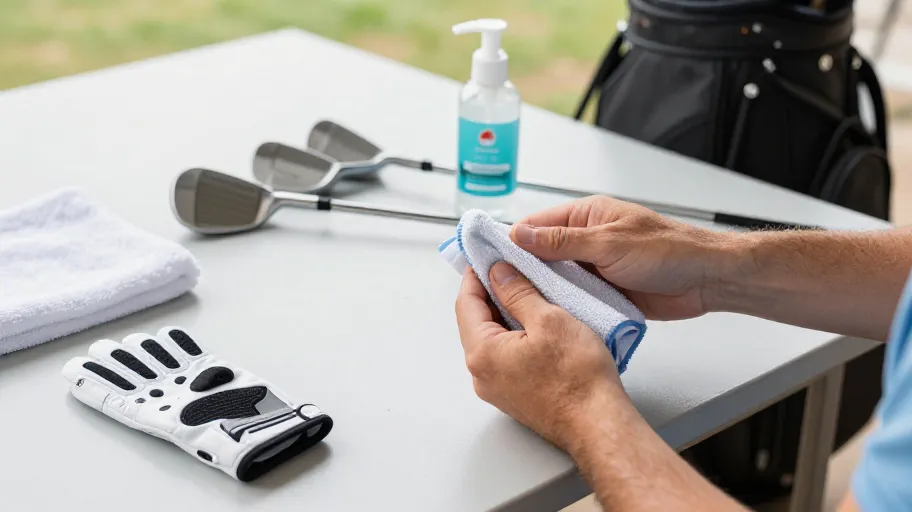
Start daily: wipe grips and clubheads with a microfiber cloth dampened with pH-neutral solution—no residue, no rubber damage. Weekly (under 10 minutes), use the Two-Bucket Microfiber Wash System: one for washing, one for rinsing. This prevents dirt from redepositing, which keeps driver grips tacky and rangefinder screens clear.
Clean glove interiors gently with a soft brush and air-dry away from heat—most leather cracks come from rushed drying, not use. Monthly, empty bag pockets, vacuum debris, then wipe with pH-balanced wipes to stop zipper corrosion before it starts.
Airflow is critical: 70% of premature failures stem from trapped moisture in foam grips or electronics. Dry everything in ventilated areas. Stick to this, and you don’t just extend gear life by up to 50%—you build confidence that every piece will perform when it counts.
Master Your Swing, DIY Your Fit. DIY Golf is the premier destination for the technical golfer. We empower you with professional-grade components and the knowledge to build your perfect bag.
Leave a Reply