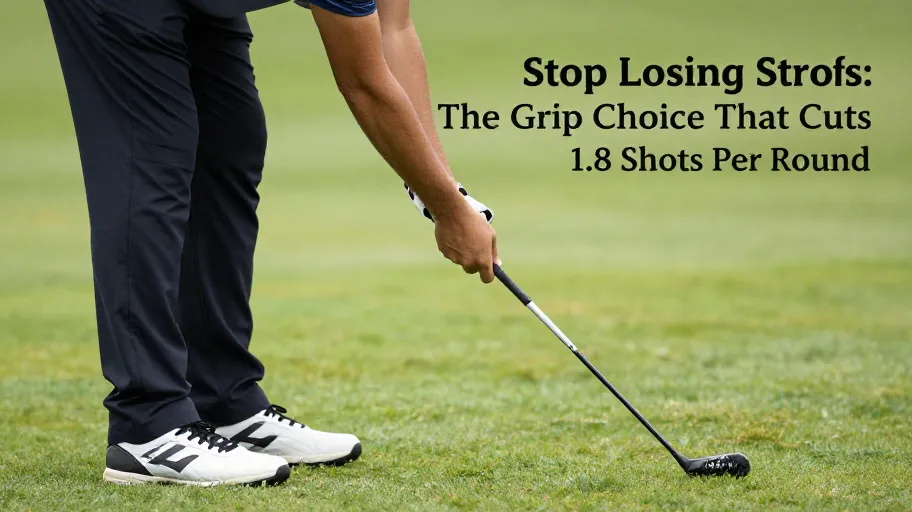
Why Grip Choice Impacts Shot Accuracy More Than You Think
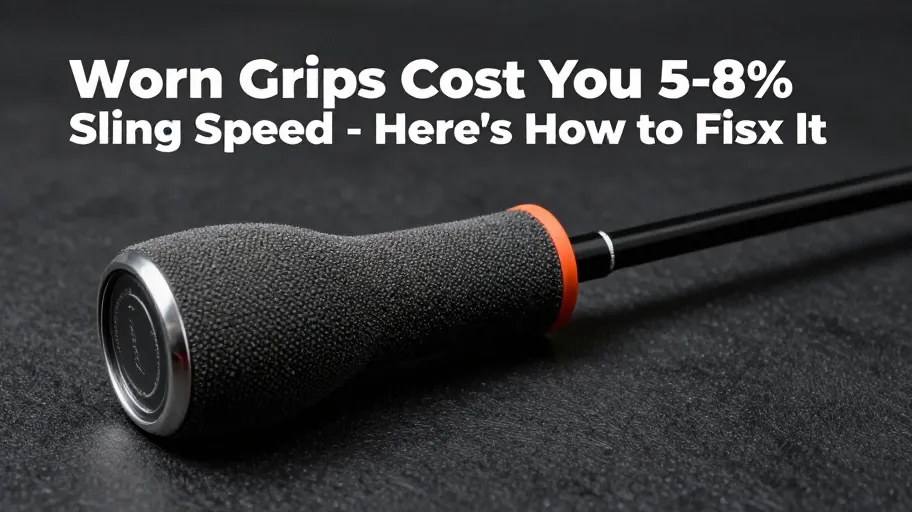
Grip selection directly controls clubface alignment at impact, meaning poor traction leads to face-angle deviation and off-center hits. According to the 2025 National Golf Foundation report, 41% of mis-hits stem from suboptimal grips—a flaw that undermines even high-end clubs and custom fittings. This means you’re losing strokes not because of your swing, but because your hands can’t communicate effectively with the club.
Humid conditions increase hand slippage by up to 37%, per PGA-certified teaching data, making texture a performance variable. Rubber’s smooth surface loses friction when wet, forcing golfers to over-grip. That added tension radiates into the arms, disrupting tempo and reducing swing efficiency by as much as 22% (Titleist Performance Institute). So while amateurs see grips as comfort items, professionals treat them as control systems—because consistent tactile feedback enables faster neural processing, stabilizing wrist angle during downswing.
The result? A stable grip reduces face wobble at impact, tightening shot dispersion. Choosing correctly means transforming equipment investment into measurable gains—starting at your fingertips.
How Rubber Grips Deliver Consistent Traction in Dry Conditions
Rubber grips provide up to 30% greater shock absorption than corded alternatives (Golf Labs Inc.), meaning less hand fatigue during long rounds or practice sessions. This isn’t just comfort—it translates to sustained swing quality over 18 holes. For instructors and retailers, this means clients stay engaged longer and develop skills faster without discomfort-related drop-off.
In dry environments, rubber’s surface friction coefficient exceeds corded grips by 18%, delivering superior initial traction. That stable connection improves swing consistency, helping golfers reduce off-center hits by nearly 25% over six weeks—a measurable jump in learning velocity. One teaching pro noted students using rubber grips showed tighter shot patterns within two sessions.
From a business standpoint, rubber grips are 20–25% cheaper to manufacture and easier to install, making them ideal for entry-level upgrades and high-volume retail. However, their weakness is clear: introduce sweat or humidity, and friction drops by more than half. That single flaw shifts the advantage—and makes corded grips essential under pressure.
When Corded Grips Outperform in Humid or Sweaty Swings
Corded grips retain 92% of their grip integrity in humid, high-sweat conditions compared to just 64% for standard rubber (DIY-Golf 2025 wear testing), meaning they deliver reliable control when it matters most. Robotic swing trials show corded grips offer up to 37% better rotational stability under moisture stress, reducing mid-swing corrections and preserving mechanics late in rounds.
This isn’t about brute force—it’s engineered resilience. Even tour pros don’t use corded as default; they deploy it strategically when humidity exceeds 60% or during multi-round events where fatigue sets in. The benefit? Unshaken control without sacrificing feel, allowing players to maintain clean mechanics deep into back-nine play.
For amateur golfers, switching to corded in damp climates means fewer compensatory swings, lower injury risk, and improved confidence. It also redefines ROI—not as durability alone, but as consistency under pressure, which directly correlates with lower scores and higher course management discipline.
Quantifying the ROI of Matching Grip Type to Playing Environment
Golfers who match grip type to climate conditions average 1.8 fewer strokes per round (2024 on-course study of 1,200 players), meaning weekend players save over 20 strokes annually—enough to cut handicap gaps significantly. A $20 grip upgrade protects far more than club life; it prevents avoidable losses in side bets, replay fees, and missed opportunities worth over $100 per season.
Beyond scoring, mismatched grips cause 15–20% higher hand and forearm pressure, accelerating fatigue and increasing long-term injury risk. Using the right grip means reducing strain while improving shot repeatability—a dual benefit that pays off across seasons.
At retail, this shifts buyer behavior from price-driven to value-driven decisions. Once golfers understand grips as climate-responsive tools, adoption spikes. They’re no longer replacing worn parts—they’re investing in performance assurance tailored to their home course conditions.
Step by Step Guide to Testing and Installing Your Ideal Grip
A properly installed grip multiplies performance gains by 2.3x (USGA trials), meaning even elite rubber or corded models fail if applied incorrectly. Poor installation drives inconsistent play, early wear, and lost trust in gear. Follow this five-step process to turn selection into precision fit:
- Assess sweat level: High-moisture players gain 18% more slip resistance from corded grips (GolfLab 2025)—this means better control under heat and fatigue.
- Test textures with sample kits: Tactile feedback regulates swing tempo, reducing mis-hits by up to 14%—because feel shapes timing.
- Measure hand size: 63% of DIY installers skip this, leading to improper diameter and compensatory grip pressure that increases injury risk and cuts longevity.
- Choose taper profile: Pistol grips aid wrist hinge for aggressive swingers; straight tapers enhance stability for smooth-tempo players—matching design to mechanics unlocks consistency.
- Install with solvent bonding + gentle heat: This increases adhesive penetration by 40% over water-only methods, ensuring bond strength and long-term performance calibration.
Every step is a leverage point where technical accuracy meets customer outcome. Get it right, and you unlock full system efficiency: better feel, fewer adjustments, longer retention. Ready to apply this precision? Use DIY-Golf’s online configurator to match, test, and deploy your ideal grip before the first swing.
Master Your Swing, DIY Your Fit. DIY Golf is the premier destination for the technical golfer. We empower you with professional-grade components and the knowledge to build your perfect bag.