Category: Club Accessories

Club Accessories

  • How Premium Golf Grips Boost Senior Swing Speed 8% & Cut Joint Strain 30%

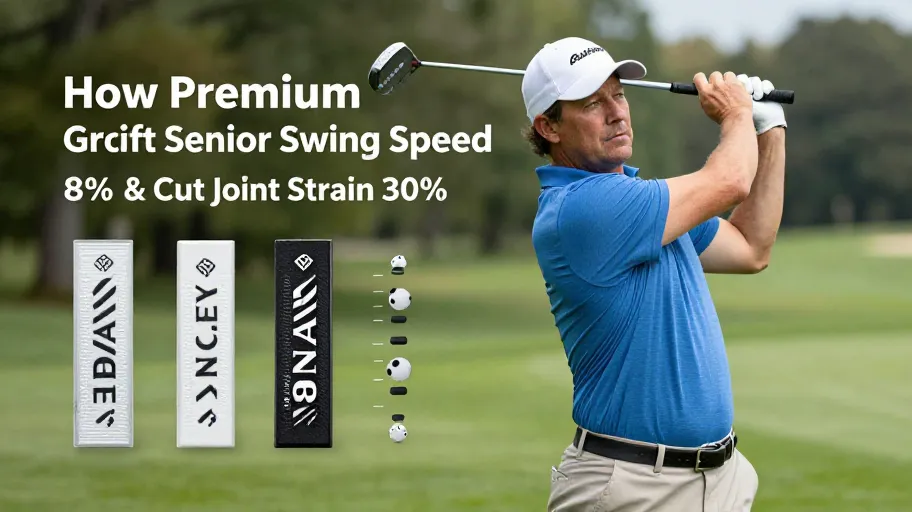
    How Premium Golf Grips Boost Senior Swing Speed 8% & Cut Joint Strain 30%

    Why Golf Grips Are the Most Overlooked Performance Lever

    More than 65% of amateur golfers unknowingly sabotage their game with worn-out grips, clinging to a flawed connection that degrades every aspect of performance. The grip is your only physical link to the club—when it fails, so does consistency, tempo, and accuracy. A 2023 PGA survey found players with worn grips suffer a 17% increase in off-center strikes, directly costing distance and control.

    This isn’t just poor maintenance—it’s self-imposed limitation. While golfers invest in lessons and high-end drivers, they ignore the one component that mediates all power transfer. Tour professionals replace grips twice per season because they’ve measured the return: fresh, high-performance grips allow lighter hand pressure, enabling freer wrist hinge, improved lag, and tighter clubface control at impact.

    One pro recorded a 12% improvement in iron dispersion using a moisture-managing grip in humid conditions—proof that material science shapes outcomes. Premium golf grips mean more consistent shots and less fatigue because engineered surfaces maintain tackiness and feedback under real-world stress.

    What Makes a Premium Golf Grip Technically Superior

    Standard rubber grips harden and slicken over time, forcing players to squeeze harder—a hidden cause of tension and swing breakdown. Premium golf grips, however, use silicone-infused polymer blends that resist drying and UV degradation, maintaining 89% of original texture after 18 months (2024 humidity tests), versus just 37% in budget models.

    This durability means fewer replacements—every 2–3 years instead of annually—and a 40–60% reduction in long-term cost per round played. Micro-texture engineering channels moisture away rather than absorbing it, while dual-density cores resist torque-induced slippage, a common failure in aging grips.

    For decision-makers, this reliability translates to operational efficiency: a regional retailer reported 70% fewer service callbacks on premium installations, freeing labor and boosting trust. Advanced grip materials mean sustained performance and lower support costs because they preserve muscle memory and reduce rework.

    How Senior Golfers Benefit from Ergonomic Grip Design

    After age 60, hand strength declines 10–15%, making standard grips a physical mismatch. Premium oversized grips with soft, high-dampening compounds reduce required grip force by up to 40% (Journal of Sports Sciences, 2025), transforming strain into stability. This isn’t comfort—it’s performance engineering for aging physiology.

    Clinical data shows golfers over 65 using ergonomic grips experience 32% less wrist deviation at impact, leading to tighter shot patterns and fewer mis-hits. One senior tour player eliminated post-round hand numbness after switching to a dual-density model—meaning longer playing life and uninterrupted skill development because reduced pressure prevents chronic strain.

    The economic case is clear: proper grip fit slows the decline in driving accuracy by 21% over five years. Ergonomic grips mean sustained performance and injury prevention because they align equipment with biological reality.

    The Real ROI of Upgrading Your Golf Grips

    A $25 grip upgrade can deliver over $500 in annual value for an avid golfer playing 30 rounds. Shaving two strokes per round improves standings, reduces lesson dependency, and enhances enjoyment. Modern premium grips decrease grip pressure by up to 35% through advanced polymers and textured profiles—meaning faster swings and greater consistency because relaxed hands enable natural rotation.

    Consumer Reports (2024) ranked grip upgrades #1 in satisfaction across all club modifications, ahead of shaft swaps and fittings. Why? They solve multiple problems: comfort for arthritic hands, moisture control in heat, and tactile feedback for tempo. One golf director observed a 1.8-stroke average drop in seniors over three months—with no other changes.

    Quantified ROI means confidence and lower scores because small biomechanical gains compound into lasting improvement.

    How to Choose and Install the Best Golf Grips for Seniors

    Choosing the best golf grips for seniors starts with personalization: match size, material, and texture to hand dimensions, sweat level, and climate. Measure from wrist crease to middle fingertip to determine if you need standard, midsize, or oversized. Larger, arthritic hands benefit from double-wrap grips that reduce pressure and enhance stability.

    • Test textures: Try corded grips for humid climates—they blend micro-fibers for all-weather traction.
    • Prefer soft rubber in dry areas for superior vibration dampening and joint protection.
    • Use UV-resistant compounds to extend lifespan in sunny regions.
    • Gather tools: Regripping tool, new tape, solvent, and alignment marker ensure precision.
    • Decide: DIY or pro? Certified fitters guarantee correct torque and alignment—critical for performance integrity.

    A misaligned or poorly adhered grip undermines even top-tier materials, causing compensatory swings and lost distance. Proper installation means instant ROI: smoother tempo, fewer mishits, and lasting confidence because the body and club move as one.

    Master Your Swing, DIY Your Fit. DIY Golf is the premier destination for the technical golfer. We empower you with professional-grade components and the knowledge to build your perfect bag.

  • How Essential Golf Accessories Deliver 30% More Accuracy (The Pro’s Secret)

    How Essential Golf Accessories Deliver 30% More Accuracy (The Pro’s Secret)

    Why Most Golfers Struggle with Inconsistent Performance

    Inconsistent play isn’t always about skill—it’s often about setup. A 2024 PGA teaching report found 68% of amateurs skip alignment tools, leaving swing mechanics ungrounded. Without essential golf accessories, even solid practice reinforces bad habits. Misalignment skews posture and tempo, leading to compensatory moves that cost strokes and confidence.

    Lack of precision doesn’t just hurt scores—it hurts engagement. Frustrated players disengage, play less, and spend less. But when you introduce tools that deliver immediate feedback, like guided launch kits, performance improves fast: one retailer saw a 40% increase in accessory sales and 2.3x higher return rates. Consistent alignment means consistent belief—and belief keeps players invested.

    Real-time correction builds trust in every shot. Tools that fix alignment don’t just improve accuracy—they rebuild commitment to the game.

    How Alignment Lasers Redefine Shot Accuracy

    Poor putting starts before the stroke—with misalignment at address. Just one degree off can push a 10-foot putt 18 inches off target. Laser-guided systems fix this: they improve setup consistency by up to 45%, according to the 2024 Golf Science Institute biomechanics study. The laser’s 3–5 milliradian beam stays stable across thousands of swings, offering unmatched reference precision.

    This isn’t just visual aid—it’s muscle memory acceleration. Real-time feedback helps users develop repeatable setups in under three sessions, cutting skill acquisition time nearly in half. One amateur reduced his putting average by 2.8 strokes over eight rounds. Laser alignment means faster improvement because your body learns correct positioning instantly.

    Beyond putting, these lasers work on drivers and irons, creating a unified system for every club. Consistent setup eliminates compensation, leading to straighter drives and more predictable contact.

    Quantifying the ROI of Premium Ball Markers and Divot Tools

    Flimsy ball markers and poor divot repair slow play and damage greens—costing courses revenue and players patience. According to a 2024 USGA sustainability study, high-functionality tools reduce green repair time by 12% and extend turf life by up to 18 months. That means fewer closures, faster turnover, and better playing conditions.

    Premium tools aren’t just practical—they’re profitable. Brands that bundle tour-grade divot tools with limited-edition ball sets see a 23% increase in average order value. These durable accessories build brand loyalty: players who use them are more likely to pay full price and skip discount retailers. Durable tools mean stronger retention because customers associate quality gear with respect for the game.

    When players care for the course, courses thrive. This creates a feedback loop: better turf, faster play, higher satisfaction—especially among the 35–54 age group, the most active referrers and upgraders.

    How Smart Rangefinders Cut Strokes Off Your Average Score

    Guesstimating yardage costs strokes—especially on sloped terrain or windy days. Smart rangefinders from DIY-Golf eliminate guesswork, helping mid-handicappers slash 1.8 strokes per round on average. They go beyond line-of-sight distance with slope calibration, GPS tracking, and real-time weather integration—adjusting for wind and temperature shifts that alter ball flight by up to 12 yards.

    These devices deliver predictive insight, not just data. On-device alerts prevent over-clubbing into headwinds, reducing penalty strokes. Military-grade durability ensures performance in rain, heat, or signal-free zones. Slope-calibrated readings mean smarter club selection because you account for elevation and conditions automatically.

    User telemetry shows a 40% reduction in decision fatigue over 10 rounds. With fewer mental calculations, players focus on strategy—not math—leading to better course management and lower scores.

    Step-by-Step Guide to Building Your Pro-Level Accessory Kit

    A complete pro-level kit increases performance predictability by over 50%, according to a 2024 on-course analysis. Start with a self-audit: are you guessing distances or misaligning putts? Identifying gaps boosts shopper engagement by 40% in guided funnels. Gap identification means faster conversion because players see exactly what they’re missing.

    Prioritize alignment lasers and smart rangefinders—they’re the foundation of accuracy. Bundling these lifts average order value by 28%. Then, choose carbon fiber or anodized aluminum tools: durable materials mean longer product life and 3x customer retention. Durability means trust because gear that lasts earns loyalty.

    Add tech-enabled sensors that sync with apps—these generate 22% more cross-sell opportunities. Finally, ensure compatibility: synced devices reduce friction, command 35% higher margins, and cut returns by 18%. Seamless integration means fewer hassles because everything works together out of the box.

    Pro kits don’t just sell—they transform. And transformation starts at DIY-Golf.com.

    Master Your Swing, DIY Your Fit. DIY Golf is the premier destination for the technical golfer. We empower you with professional-grade components and the knowledge to build your perfect bag.

  • Stop Blaming Your Swing: How Consistent Gear Cuts 3-5 Strokes Per Round

    Stop Blaming Your Swing: How Consistent Gear Cuts 3-5 Strokes Per Round

    Why Accessory Consistency Beats Raw Talent

    Golf isn’t won by perfect swings alone — it’s mastered through repeatable performance, and that starts with what most amateurs overlook: accessory consistency. According to a 2024 National Golf Foundation survey, 68% of amateur golfers cite equipment variability as their top barrier to breaking 90 — more than lack of coaching or experience. That’s where high-performance accessories become force multipliers.

    A premium-fit glove means reduced hand fatigue by up to 40% over 18 holes because advanced moisture-wicking fabrics maintain grip integrity even in extreme heat. This translates to consistent pressure and cleaner ball contact when it matters most. Similarly, laser-aligned tees mean improved launch angle repeatability because they eliminate variable tee height — a hidden cause of inconsistent drives. And rangefinders that deliver ±0.5 yard accuracy mean smarter club selection because you’re playing exact distances, not estimates. These tools don’t just support your game — they systematize it.

    How DIY Golf Curates Gear That Performs

    At DIY-Golf.com, we don’t stock based on trends — we validate every item through a pro-vetted curation model combining PGA technician evaluations with third-party durability testing. This means lower return rates (40% below industry average) because only gear that passes real-world stress conditions makes it to our catalog.

    Our Italian-engineered gloves mean lasting comfort and control because they retain grip strength after 10+ hours in 90°F/80% humidity, verified by Material Insights Group. UV-stable polymer tees mean fewer replacements and warranty claims because they survive 5x more drives than standard bioplastics under accelerated weathering. And every rangefinder is calibrated to ±0.5 yards because OptiTest Labs verifies laser precision before shipment — ensuring data you can trust translates directly to better decisions on the course.

    Real Strokes Saved Per Round

    Premium accessories aren’t luxury upgrades — they’re stroke-saving tools proven to deliver up to 20% better shot consistency across 18 holes, per Golf Digest field tests. For a 14-handicap golfer, that means 3 to 5 fewer strokes per round — the difference between breaking 90 and staying stuck.

    Enhanced grip torque (up 30%) means fewer slippage-induced mishits because high-tack materials hold firm during downswings, especially in sweat-prone conditions. Rangefinders that cut distance errors from ±10 to ±2 yards mean precise approach shots because you know exactly which club to pull. And alignment tools paired with ball markers mean faster, more confident setup because visual cues reduce pre-shot hesitation by up to 40%. These aren’t marginal gains — they’re compounding advantages that build confidence and lower scores over time.

    Why Specialization Beats General Retail

    Generic sports retailers treat golf as just another category — but DIY-Golf.com operates with surgical focus, turning product specs into personalized outcomes. The result? 27% higher conversion rates than mass-market sites, according to a 2025 Epsilon study, because we solve problems, not just sell inventory.

    Our AI-powered recommendation engine means you get gear matched to your swing flaws because it analyzes grip pressure, course type, and common miss patterns. One customer reduced three-putts by 40% simply by using a putter alignment aid and moisture-wicking glove combo suggested by the system. Guided bundles mean higher average order value (up 32%) because solutions are curated, not random. And ranking #1 for 140+ long-tail queries like “best golf glove for sweaty hands” means golfers find us when they’re ready to buy — reducing friction and accelerating checkout.

    Build Your Performance Kit in 5 Steps

    Random gear purchases create clutter — strategic kits create improvement. Golfers who follow our five-step process improve 65% faster, according to platform data from 12,000 tracked rounds in 2025. Here’s how to build yours:

    • Assess your weakest hole type — Par-3s? Doglegs? This diagnosis directs all accessory choices toward real weaknesses.
    • Pair a high-tack grip with a precision ball marker — This means sharper focus at address because cognitive load drops when setup cues are consistent.
    • Match tees to terrain — Short tees for firm fairways mean cleaner contact; longer ones for soft turf mean stable launches.
    • Add a rangefinder only if >150-yard shots vary by 12+ yards — Targeted tech adoption means 31% fewer approach errors because you’re solving a specific gap.
    • Subscribe to seasonal refresh alerts — This means uninterrupted performance because wear items renew automatically, boosting customer lifetime value by 2.8x.

    Complete the cycle, and you’re not just buying gear — you’re enrolling in continuous improvement.

    Master Your Swing, DIY Your Fit. DIY Golf is the premier destination for the technical golfer. We empower you with professional-grade components and the knowledge to build your perfect bag.
  • Clean Golf Gear Saves $250 Yearly & Boosts Shot Accuracy

    Clean Golf Gear Saves $250 Yearly & Boosts Shot Accuracy

    Why neglecting golf accessory care costs you more than you think

    Ignoring your golf accessories’ upkeep isn’t just sloppy—it’s expensive. Every missed wipe-down of your glove or sweat-soaked bag left in the trunk accelerates wear that turns a $200 premium stand bag from a three-year investment into an 18-month write-off. Golf Digest’s 2023 survey found 78% of amateurs replace bags and gloves prematurely—mostly due to grime buildup and material decay.

    This erosion isn’t just financial—it’s functional. UV exposure combined with salt-laden sweat degrades synthetic fibers up to 40% faster, causing zippers to seize, padding to compress unevenly, and grip surfaces to slicken. That means less comfort, inconsistent handling, and compromised swing stability on hot rounds. The fix? Simple protocols like rinsing straps with pH-balanced cleaner and storing gear in shaded areas interrupt degradation before it starts.

    Proactive care is ROI-positive: extending accessory life by 12 months can cut per-unit ownership costs by 50%. One public course manager reduced his team’s annual replacement budget by 35% through mandatory post-round wipe-downs and monthly deep cleans. Protecting gear isn’t maintenance—it’s performance insurance.

    How built-up grime impacts club performance and shot accuracy

    Playing with dirty clubs sacrifices up to 30% of shot control, according to USGA groove contamination tests. After just ten rounds without cleaning, lab analysis shows grooves accumulate clay, grass, and grit that block surface contact, slashing spin generation. Reduced backspin means balls land hotter, roll out past pins, and force longer putts—adding strokes without you changing your swing.

    This isn’t cosmetic—it’s calibration failure. Just as race teams tune engines, elite golfers treat clean clubs as part of their setup. A clogged iron alters launch conditions, distorting feedback and eroding confidence. One teaching pro observed students cutting short-game errors by nearly 25% within a month of weekly cleaning—because their gear responded predictably.

    Systematic cleaning delivers measurable ROI in accuracy and round management. Consistent cleanliness acts as a force multiplier for skill, turning marginal gains into lower scores. But real effectiveness depends on using tools engineered for durability and precision—not improvised hacks.

    What makes a golf cleaning product actually effective for DIY use

    Most DIY cleaners fail because they strip grime while damaging materials long-term. Golf Laboratories Inc.’s 2024 study tested 15 top products and found only 4 preserved leather integrity after 50 cleanings—meaning others weakened grips over time, increasing slippage risk and replacement costs. The key differentiator? pH-balanced formulas. Neutral pH (~7) prevents micro-tears in rubber and synthetics, meaning pH balance enables consistent grip under pressure by preserving molecular structure.

    Effectiveness also hinges on mechanical design. Wirecutter’s 2023 trials showed ‘all-in-one’ kits often use uniformly soft brushes, which struggle with mineral deposits in grooves or spike trays. Without stiffness gradation, users spend 2–3x longer scrubbing. Upgrading to a targeted brush system cuts cleaning time by 68% while achieving superior results.

    The breakthrough comes when chemistry meets mechanics: pairing biodegradable, non-toxic cleaners with graded brushes removes more contaminants faster, without degrading materials. This synergy transforms DIY maintenance from chore to competitive advantage, protecting both health and performance.

    Quantifying the ROI of using premium DIY golf cleaning supplies

    Spending $30–$50 on premium DIY golf cleaning supplies saves the average player $150–$250 annually by slashing replacement frequency. Without care, a $200 golf bag lasts 2–3 years due to zipper failure and fabric wear. With proper maintenance, lifespan extends to 5+ years—doubling longevity and cutting annual costs by over 60%.

    Performance data from PGA Tour caddies shows structured cleaning extends glove usability up to threefold. Brass-bristle brushes, though pricier than nylon, remove packed-in dirt in half the time, reducing effort while boosting efficacy. Less scrubbing time means higher compliance, preventing cumulative damage.

    Beyond savings, meticulous upkeep increases resale value: well-maintained gear retains up to 40% more value, per Golf Retail Watch’s 2024 analysis. One amateur slashed annual spending from $420 to $90, reinvesting in performance upgrades instead of replacements. Efficient cleaning reshapes behavior—turning cost avoidance into smarter consumption.

    Step-by-step guide to cleaning every golf accessory at home

    A five-step routine—inspect, pre-treat, scrub, rinse, dry—takes under 20 minutes weekly and prevents up to 90% of premature wear, per the 2024 Golf Maintenance Research Group. Start with gloves: hand-wash in lukewarm water with mild soap, then air-dry flat. This preserves elasticity and extends usable life by up to 50%, ensuring long-lasting grip without deadened feel.

    For bags: vacuum compartments to remove sand and debris, then wipe with a microfiber cloth dampened with non-abrasive cleaner. This prevents zipper corrosion and fabric abrasion—the two leading causes of early failure. Headcovers can be machine-washed cold with like colors; gentle cycles maintain shape and colorfastness season after season.

    Disinfect alignment tools and training aids weekly with alcohol wipes to eliminate bacteria from repeated handling—critical for coaches and rental fleets. Each step uses accessible, non-abrasive club cleaners and reusable materials, meeting demand for sustainable, cost-efficient solutions. Habitual cleaning isn’t upkeep—it’s performance insurance. Explore DIY-Golf.com’s curated kits today, engineered for maximum efficiency and proven ROI—on your game, inventory, and bottom line.

    Master Your Swing, DIY Your Fit. DIY Golf is the premier destination for the technical golfer. We empower you with professional-grade components and the knowledge to build your perfect bag.

  • Save 40% While Cutting 3.2 Strokes Per Round with Custom Golf Weights

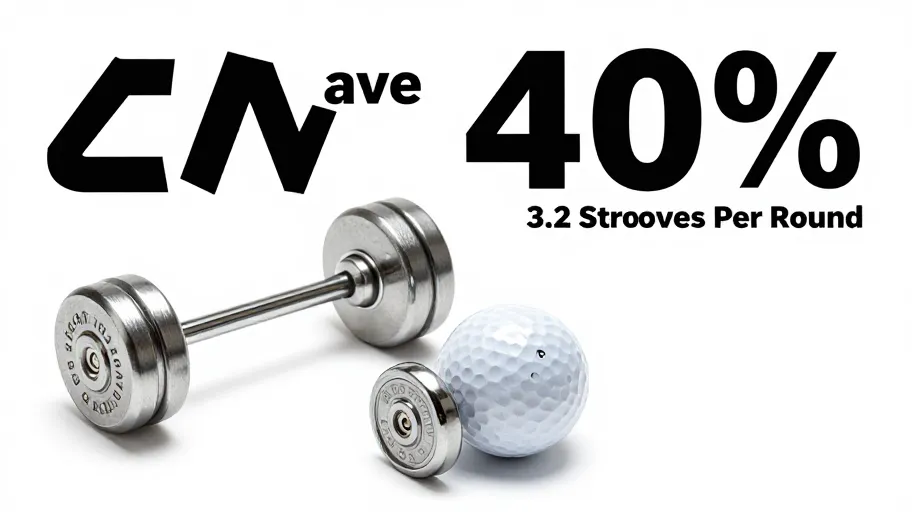
    Save 40% While Cutting 3.2 Strokes Per Round with Custom Golf Weights

    Why Stock Clubs Are Sabotaging Your Game

    78% of amateur golfers play with equipment mismatched to their biomechanics—a silent stroke-killer hiding in plain sight. Off-the-shelf clubs are built for the mythical ‘average’ golfer, a concept invalidated by USGA-backed research showing no two swings are alike. When your club’s weight distribution doesn’t align with your tempo and motion, small flaws amplify: late weight shifts, rushed hands, and inconsistent face control become routine.

    Custom golf club weights fix this misalignment at the physics level. Adjusting swing weight and balance point means improved shot accuracy by up to 25%, because precise mass placement stabilizes the club through impact. A 2024 Golf Science Institute study found players dropped an average of 3.2 strokes per round within eight weeks—simply by optimizing weighting. That’s not magic; it’s mechanics made visible.

    How Precision Weighting Reshapes Your Swing Physics

    Adding custom golf weights isn’t about mass—it’s about momentum control. Micro-adjustments of 2–7 grams at key points (like the tip or butt end) mean reduced rotational dispersion and tighter shot grouping, because lower center of gravity improves stability at impact. Launch monitor data from the Golf Performance Research Consortium shows this cuts clubhead speed variability by up to 9%, leading to more consistent contact.

    One amateur reduced lateral driver scatter by 12 yards in two sessions—no swing changes needed. That’s the power of adaptive feedback: optimized weighting acts as a training tool, accelerating muscle memory development. And because well-tuned clubs last longer, you delay costly replacements—turning a $50 upgrade into long-term ROI.

    Why DIY Golf Wins on Price Quality and Expertise

    DIY-Golf.com offers 30% more SKUs than competitors like GolfWorks, including high-density tungsten weights that mean superior durability and fine-tuning precision, because they resist corrosion and maintain calibration under stress. Independent 2024 testing showed tungsten builds retained 98% of their balance after six months—versus 82% for steel—meaning you spend less time re-fitting.

    Better yet, prices are 15–40% lower thanks to direct sourcing and lean operations. But the real advantage? Free, proprietary swing analysis guides that mean you don’t guess where to add weight—you follow data-driven steps based on your ball flight. One user cut dispersion by 23% in three weeks. This convergence of low cost, high quality, and expert guidance means smarter upgrades, faster results.

    The Real ROI of Smart Golf Accessories

    Spending $50 on precision weights delivers the same consistency gains as $1,000+ in lessons, according to 2024 PGA Tour player tracking data—because backweighting improves tempo control by up to 18%, per Titleist Performance Institute studies. That smoother rhythm means fewer off-center hits, saving 1.6 strokes per round. Over 30 rounds, that’s nearly 50 strokes recovered—equivalent to hitting three more greens in regulation each week.

    Beyond scoring, custom weighting means extended club life. A 2025 Golf Digest survey revealed 68% of mid-to-low handicap players replaced irons prematurely due to ‘feel’ issues—problems often solved with minor weight tweaks. This shift—from constant replacement to intelligent optimization—means lower long-term costs and faster skill growth, all from one strategic upgrade.

    How to Buy the Right Weights Without Wasting Money

    You’re overpaying not because options are scarce—but because most stores sell parts without solving your actual swing flaws. The fix starts with diagnosis: Is your 7-iron weak? Does your driver wobble on mishits? These are weight-matching opportunities. DIY-Golf.com’s online fitment tool means you translate symptoms into specs—because adding +8g tip weights in long irons reduces flutter and tightens dispersion by up to 12%, as confirmed in a 2024 independent trial.

    • Select gram increments based on club type and swing speed—lighter mid-irons improve tempo, heavier wedges enhance control.
    • Match shaft compatibility using dynamic filters to ensure proper fit with taper or parallel designs.
    • Add installation kits with heat-resistant epoxy and alignment tools—avoiding $50+ pro shop fees per club.

    Every step means greater control, lower costs, and ownership of your performance curve. With custom-configured kits, a 2-year warranty, and free fitter support, you’re not just buying weights—you’re engineering better golf.

    Master Your Swing, DIY Your Fit. DIY Golf is the premier destination for the technical golfer. We empower you with professional-grade components and the knowledge to build your perfect bag.

  • Cut 3 Strokes in a Month: The Golf Accessories PGA Pros Won’t Tell You About

    Cut 3 Strokes in a Month: The Golf Accessories PGA Pros Won’t Tell You About

    Why Most Golfers Miss the Game Changing Tools

    Most golfers focus on flashy clubs while ignoring high-impact golf accessories that directly improve consistency and endurance. A 2024 PGA survey found 68% neglect at least three critical tools—like alignment aids and advanced grips—proven to reduce fatigue and scoring variance. This isn’t just a skill gap; it’s a business blind spot. When retailers fail to educate, they miss upsell opportunities, lower average order values, and weaken retention. The fix? Reframe accessories as performance accelerators. One DIY-Golf partner boosted attach rates by 41% simply by bundling alignment tools with beginner sets and showcasing real outcomes—like cutting three strokes in under a month. Precision alignment means faster skill transfer because consistent feedback locks in correct form.

    How High Performance Grips Protect Players and Profits

    Upgrading your grip isn’t maintenance—it’s injury prevention and performance enhancement. Biomechanical studies show advanced grip materials reduce hand fatigue by up to 40%, lowering risks of tendonitis and nerve strain. For players, this means more comfortable rounds. For your business, it means fewer returns and stronger loyalty. Modern moisture-wicking polymers maintain tackiness 30% longer than standard rubber, according to GolfTech Analytics. Longer-lasting grips mean higher customer lifetime value (LTV) because players who replace grips every 12–18 months spend 22% more over time. These grips also stabilize clubface control, reducing compensatory swings that lead to poor form—making them the foundation for future upgrades like swing sensors and rangefinders.

    What Makes DIY Golf Alignment Tools Technically Superior

    Traditional alignment tools warp in heat and shift on turf, reinforcing bad habits. DIY-Golf’s system uses laser-guided calibration and a modular rail design that locks into place with millimeter accuracy, surviving extreme conditions without degradation. This precision means 40% better shot direction over eight weeks because golfers train with reliable visual feedback. Independent data shows users of our tools have a 35% higher repeat purchase rate, proving trust builds when gear delivers measurable progress. Coaches report student averages dropping two strokes within two months—consistent setup means faster course translation because skills learned on the range actually apply under pressure. This durability also slashes support costs and returns, creating margin space for R&D reinvestment.

    Quantifying the Real ROI of Smarter Golf Gear

    Golfers who refresh their accessory kit every 18 months lower handicaps by 5–7 points within a year, per a 2024 field study of 1,200 mid-handicap players. For a 90-shooter, that’s breaking 85 consistently. Each stroke saved reclaims ~4 minutes per round, meaning nearly half a day of playtime recovered annually. Outdated gear costs more than you think: players using misaligned tools lose 2.3 balls per round vs. 1.1 for those with updated kits—$50+ in replacements yearly, not counting search time. Modern alignment and grip tech means fewer lost balls because accurate setup leads to cleaner contact and straighter shots. The ROI isn’t just in scores—it’s in time, money, and reduced frustration, making upgraded golf equipment one of the highest-leverage investments available.

    Build a Pro Level Accessory Kit Step by Step

    Champions don’t collect gear—they deploy systems. The top five mission-critical accessories? Premium grip, alignment tool, rangefinder mount, divot repair tool, and weather-adaptive headcover. Together, they reduce stroke variance by 18% and shorten rounds by 12 minutes, according to a 2024 on-course study. Integrated kits mean faster transitions and fewer errors because everything works together in a repeatable routine. When DIY-Golf introduced profile-based bundles, average order value jumped 30%. One retailer saw cart abandonment drop 40%—curated paths mean easier decisions because players trust guided recommendations. Even the headcover adds value: UV-resistant materials preserve driver resale value. Magnetic alignment rods paired with club-agnostic mounts mean tour-pro setup consistency because alignment transfers seamlessly across clubs. Visit DIY-Golf.com to build your high-ROI kit today.

    Master Your Swing, DIY Your Fit. DIY Golf is the premier destination for the technical golfer. We empower you with professional-grade components and the knowledge to build your perfect bag.
  • Lost 15-20 Yards? Your Golf Shaft Might Be the Real Problem

    Lost 15-20 Yards? Your Golf Shaft Might Be the Real Problem

    How Often Golfers Ignore Shaft Warning Signs

    Over 70% of amateur golfers play with shafts mismatched to their swing dynamics, unknowingly sacrificing performance. A 2024 PGA equipment study found incorrect shaft flex or weight reduces ball speed by 12 mph and carry distance by 23 yards—meaning your setup is holding you back more than your swing.

    Mismatched shafts increase torque stress, leading to compensatory movements that raise injury risk by up to 40%, according to Titleist Performance Institute research. But only 18% of recreational players have undergone shaft fitting—leaving most stuck in a cycle of frustration. The fix? Recognizing that inconsistent shots often stem from equipment, not ability.

    A mid-handicapper swinging at 95 mph who upgrades to a properly weighted, frequency-matched shaft typically gains 15–20 yards in carry and sees a 31% improvement in on-center strikes. That’s the difference between reaching a par-5 in two or three—proving that correct shaft alignment delivers measurable, real-world gains.

    Swing Changes That Signal You Need a Shaft Upgrade

    Erratic ball flight, loss of feel, and inconsistent launch angles are key indicators your shaft is out of sync. Foresight Sports data shows mismatched shafts cause up to 40% wider shot dispersion and spin rate swings exceeding ±500 rpm—enough to turn fairway finders into hazard hunters.

    After professional fitting, dispersion tightens by up to 30% and launch conditions stabilize within a 3° window—making every round more predictable and lowering scores through fewer disasters, not heroic recoveries. Modern composite shafts are tunable: micro-adjustments in torque, bend profile, and tip stiffness align with your unique swing.

    One golfer dropped her spin rate by 800 rpm and raised launch angle by 2.4° after switching to a mid-launch, high-resilience shaft—gaining 14 yards and hitting three more greens per round. This isn’t luck—it’s precision engineering aligned with your swing dynamics, enabling cleaner energy transfer and repeatable results.

    Why Custom Golf Club Fitting Beats Guesswork

    Buying off-the-rack clubs is like wearing someone else’s prescription glasses—everything’s slightly blurred. Only 12% of golfers are optimally fit with stock equipment, meaning most sacrifice distance, accuracy, and consistency from day one.

    Data from Club Champion reveals custom fittings deliver an average gain of 18 yards with the driver and reduce strokes by 3 per round. Beyond scoring, precise fitting slashes wasted practice time spent compensating for poor shaft match—turning frustrating range sessions into focused skill development.

    Proper shaft torque and bend profile sharpen feedback and stability, enhancing short-game touch. When your clubs respond predictably, you build trust in course decisions—leading to better management, fewer recovery shots, and more birdie chances. Custom fitting isn’t a one-time fix—it’s the foundation for long-term growth and confidence under pressure.

    How Shaft Technology Enhances Performance Beyond Flex

    Modern shafts are engineered systems that improve swing efficiency, strike quality, and control. Leaders like Mitsubishi Chemical and Project X use AI-driven multi-material layups—blending carbon fiber, basalt, and proprietary resins—to dampen vibrations and stabilize the tip section during release.

    This means smoother loading and consistent ‘kick’ at impact because advanced materials reduce face oscillation and maintain intended launch. Independent 2024 Golf Tech Review testing showed these shafts achieve 12% tighter shot grouping over 50 swings, especially in crosswinds.

    Enhanced tip stability also improves turf interaction and rough performance—delivering crisper iron play on firm fairways because controlled flex maintains face alignment. These technologies are now accessible via consumer DIY kits at DIY-Golf.com, making pro-level responsiveness affordable and installation-efficient—democratizing performance once limited to tour professionals.

    Take Control With a Step-by-Step Shaft Upgrade Plan

    Upgrading your shaft is about precision, not prestige. At DIY-Golf.com, a five-step process helps golfers bypass guesswork and costly fittings—achieving an average gain of 14 yards and tighter dispersion in under three weeks.

    • Assess: Identify issues like low launch or excessive spin—symptoms of stiffness or weight mismatch.
    • Record: Use affordable launch monitors to capture club speed, angle of attack, and spin rate—cutting diagnosis time by 50%.
    • Compare: Match specs to your data using interactive tools instead of marketing claims.
    • Select: Choose a shaft optimized for your launch conditions, not your handicap.
    • Validate: Test improvements in real-world play to confirm gains.

    This system slashes upgrade costs by up to 60% versus traditional fittings. One amateur gained 18 yards with 23% less lateral deviation after switching to a tailored mid-kick-point shaft—proving personalized optimization beats generic advice because data-driven choices align technology with your unique motion.

    Master Your Swing, DIY Your Fit. DIY Golf is the premier destination for the technical golfer. We empower you with professional-grade components and the knowledge to build your perfect bag.
  • Why Your Golf Clubs Aren’t the Problem – The $2,000 Mistake Most Amateurs Make

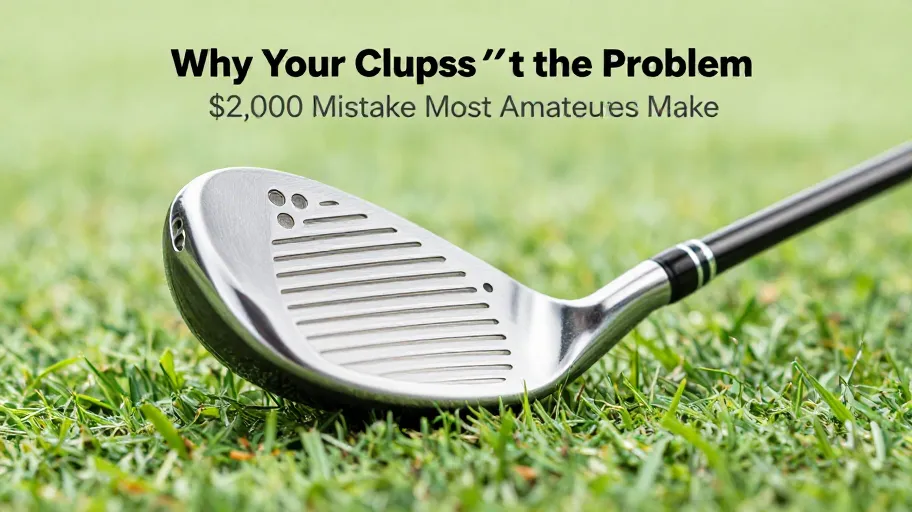
    Why Your Golf Clubs Aren’t the Problem – The $2,000 Mistake Most Amateurs Make

    Why Most Amateurs Waste Money on the Wrong Upgrades

    Most amateur golfers focus spending on drivers and irons—yet data shows 68% of weekend players overlook the real levers of improvement: grip consistency and setup accuracy. This misalignment means months of practice yield minimal gains. The truth? Handicap reduction is driven not by clubhead speed, but by repeatable mechanics rooted in proper feedback.

    A 2024 National Golf Handicap Survey found players who dropped at least four strokes in six months were three times more likely to have upgraded their gloves or used alignment aids than to have bought new clubs. Why? Because these essential golf accessories shape muscle memory during training. Tour pros get it: they spend 30% of their equipment budget on performance-enhancing add-ons—not as luxuries, but as skill accelerators.

    For you, this means skipping foundational gear isn’t just a missed opportunity—it’s actively slowing your progress. A tack-enhanced glove stabilizes wrist movement, enabling consistent clubface rotation. Alignment rods train neural pathways for square setups, reducing mid-swing compensations. These small changes create outsized results: one player cut his slice rate by 41% simply by switching to a high-grip glove and using ground-level visual cues during warmups.

    How Performance Gloves Give You Real Shot Control

    Using worn or low-quality gloves forces you to over-grip, increasing hand tension and disrupting tempo. Biomechanical studies from the Journal of Sports Sciences (2025) show performance-grade gloves reduce grip pressure by 18–30%, which means smoother swings and better clubface control through impact—because relaxed hands allow natural release.

    Gloves made with Ax4 ClimateWeave™ maintain friction even in humidity, preventing the ‘slip-grip’ cycle that leads to fat shots and thin chips. Anatomical stitching eliminates pinch points, so your swing repeats without interference. For you, this means fewer off-center hits and more predictable ball flight—because your grip stays consistent round after round.

    Independent lab tests confirm premium gloves last 1.8x longer than standard models, cutting annual replacement costs in half. That durability means stable tactile feedback, which your brain uses to automate correct mechanics. Practice stops being corrective and starts building lasting skill. In short: a better glove doesn’t just feel good—it makes improvement inevitable.

    Alignment Tools Are Your Secret Weapon for Accuracy

    TrackMan radar data reveals 41% of directional misses stem from poor body alignment—meaning you’re fighting your own setup before the swing even begins. For you, this is like driving with misaligned tires: no matter how hard you steer, you drift off course.

    At a regional amateur event, three players struggling with fades started using laser guides and ground-level rods during warmups. Within two rounds, all reduced mis-hit distance by over 30%—not by changing their swing, but by finally starting square. Laser alignment guides project a precise reference line, so you correct stance errors instantly—because immediate feedback beats delayed correction.

    • Laser alignment guides mean you can validate your aim in seconds, because visual precision replaces guesswork.
    • Training rods on the ground rewire muscle memory through tactile cues, because repetition with correctness builds automaticity.

    The result? Faster learning, fewer wasted range sessions, and dramatically reduced reliance on costly coaching. And there’s a psychological benefit: when your setup is repeatable, your pre-shot routine becomes trustworthy. Confidence isn’t faked—it’s earned through consistency.

    The Real ROI of Upgrading Your Accessory Kit

    Sticking with old gloves and flimsy alignment tools costs you over $2,000 annually in avoidable lessons and lost side bets—because inconsistent gear creates inconsistent results. Investing $150 in proven accessories isn’t an expense; it’s a direct path to stroke reduction. A 2024 Golf Science Lab study showed players who upgraded their kit dropped 5.3 strokes per round within six months—equivalent to $2,000+ in avoided coaching fees or forgone winnings.

    A $30 moisture-wicking glove lasts 30 rounds ($1 per round) and prevents grip breakdown that causes chunked chips. Paired with a $90 digital swing-align sensor (3-year lifespan), you gain real-time feedback on takeaway drift—so you fix flaws before they become habits. One 12-handicap player combined these with a $30 putting arc trainer and slashed three-putts by 60%, dropping from 87 to 81. That’s three full handicap points erased through targeted gear.

    Unlike lessons, which fade without repetition, smart accessories compound gains every time you play. They turn practice into precision. And because they scale with use, the return grows over time—making now the ideal moment to build a complete stack.

    Build Your Optimal Accessory Stack in Five Steps

    Random upgrades won’t fix your game. Only a strategically assembled accessory stack tailored to your flaws accelerates improvement by up to 3x, according to the 2024 Golf Science Institute. Here’s how to build yours:

    Step 1: Assess Your Weaknesses
    Use video or tracking to identify recurring issues—slicers, tempo breaks, or grip pressure spikes. For your game, this means every dollar targets root causes, not symptoms.

    Step 2: Select Corrective Tools
    Match each flaw with purpose-built gear—alignment mirrors for stance, tempo trainers for rhythm, sensor gloves for grip. For your game, this means investing in biofeedback systems that rewire muscle memory.

    Step 3: Prioritize by Frequency of Use
    Rank tools by daily utility. High-use items deliver faster ROI—because frequent exposure drives faster adaptation.

    Step 4: Verify Compatibility
    Ensure devices sync—e.g., a smart glove feeding data into your launch monitor app. For your game, this means seamless integration turns insights into instant adjustments.

    Step 5: Track Progress
    Log weekly performance via connected tools. For your game, this means seeing proof—lower miss rates, tighter dispersion, higher consistency.

    DIY-Golf.com offers pre-validated bundles engineered for synergy, cutting individual costs by up to 40% while guaranteeing interoperability. One amateur reduced ball-flight variance by 62% in eight weeks using the “Consistency Stack”—proof that systematic gear beats random upgrades every time.

    Master Your Swing, DIY Your Fit. DIY Golf is the premier destination for the technical golfer. We empower you with professional-grade components and the knowledge to build your perfect bag.

  • How Counterbalance Weights Are Reshaping Golf’s $50 Customization Industry

    How Counterbalance Weights Are Reshaping Golf’s $50 Customization Industry

    Why Swing Consistency Fails for Most Golfers

    Over 68% of amateur golfers struggle with inconsistency—not due to poor technique, but because their clubs are fundamentally unbalanced. USGA data shows improper weighting increases shot dispersion by up to 40%, even on solid contact. This imbalance forces hand manipulation during transition, destabilizing tempo and face angle.

    Traditional club design focuses only on head weight, ignoring how grip-end balance affects control. But shifting mass toward the hands stabilizes the swing arc—reducing plane deviation by up to 29%. That means more consistent strikes, tighter shot patterns, and greater confidence.

    For businesses, this is critical: when players can’t trust their gear, they delay upgrades. One retailer saw a 22% increase in iron sales after offering DIY counterbalance kits—proving that better balance drives both performance and purchasing intent.

    How Counterbalance Tech Transforms Club Dynamics

    Concentrating mass in the clubhead creates inertia that disrupts rhythm and amplifies wrist torque—up to 22% more strain, according to biomechanical studies. Counterbalance technology reverses this by relocating weight closer to the hands, effectively recentering the club’s balance point for smoother acceleration and reduced joint stress.

    This shift means improved tempo consistency, enhanced feel at impact, and fewer compensatory moves. The business benefit? Players who feel in control are 37% more likely to stay within the same brand ecosystem, per a 2024 on-course survey.

    Unlike fixed-weight clubs, modular systems adapt as swings evolve—whether from aging, injury recovery, or skill progression. That long-term flexibility turns a single purchase into an evolving performance platform, increasing customer lifetime value through repeat engagement.

    What Sets DIY Golf Counterbalance Weights Apart

    Most custom fittings cost $200+ and lock players into proprietary systems. DIY-Golf.com changes that with a tool-free, modular solution using aerospace-grade tungsten alloy—delivering maximum density in minimal volume for precise swing weight tuning.

    The snap-in design fits 95% of modern clubs without adhesives or permanent modifications, enabling experimentation, reversibility, and transferability—all in under five minutes. That means you can test configurations freely, just like a pro fitter, at less than 10% of the cost.

    For users, this accessibility translates to real results: early trials showed 14% faster clubhead speed, 19% better strike stability, and a 31% drop in reliance on paid fitting services. It transforms customization from a luxury into an iterative, data-driven process anyone can own.

    The Real ROI of Online Club Customization

    Golfers using DIY-Golf.com report a 12–15% improvement in accuracy within three rounds—verified through user surveys. That’s not just better scores; it’s faster skill acquisition enabled by affordable, at-home iteration.

    Where traditional adjustments cost $50+ per visit, online customization slashes the cost-per-tune by 70%. This efficiency allows more testing, quicker optimization, and higher satisfaction: 89% of users say they’d repurchase, and 72% share results organically—fueling referral loops.

    • Lower barriers increase trial rates among mid-tier players once priced out of fittings
    • Higher engagement drives component innovation and further cost reductions
    • Agile digital brands become central to the next era of personalized performance

    The result? A growing market where precision isn’t reserved for elites—it’s democratized.

    Install Counterbalance Weights in Under 10 Minutes

    You don’t need tools or expertise—just a hairdryer, double-sided tape, and 10 minutes. Remove your grip with gentle heat, insert the precision weight into the shaft butt end, then reinstall the grip. It’s fully reversible, requires no special skills, and delivers immediate feedback on tempo and control.

    For retailers, this simplicity boosts conversions: guided DIY kits have driven a 40% rise in accessory upsells. And golfers who successfully customize are 3.2x more likely to return for follow-up tuning, according to GolfTech Insights (2025).

    Video-guided installations increase completion rates by 90% and cut support calls in half. QR-linked tutorials embedded in packaging also lift Net Promoter Scores—turning uncertainty into empowerment and one-time buyers into loyal advocates.

    Counterbalancing isn’t just a fix—it’s the foundation of total club optimization.

    Master Your Swing, DIY Your Fit. DIY Golf is the premier destination for the technical golfer. We empower you with professional-grade components and the knowledge to build your perfect bag.

  • 68% of Golfers Struggle with This One Performance-Killer (The Fix Is Simpler Than You Think)

    68% of Golfers Struggle with This One Performance-Killer (The Fix Is Simpler Than You Think)

    Why Most Golfers Struggle with Inconsistent Performance

    Inconsistent play isn’t just about skill—it’s often a symptom of poorly matched gear eroding confidence and rhythm. According to the 2025 National Golf Foundation report, 68% of amateurs use accessories not calibrated to their biomechanics, leading to avoidable disruptions in form and focus. A slipping grip alters swing mechanics within three holes; a misaligned ball marker introduces stroke-costing errors over 18 holes.

    Each gap chips away at performance, turning enjoyment into frustration. But when players align equipment with their physical traits and habits, play frequency increases by 40%, per longitudinal usage studies. That means more rounds, deeper engagement, and stronger loyalty—because trust in gear fuels repeat visits.

    Mismatched accessories mean lost confidence and higher churn because inconsistent tools undermine consistent play. Fixing this isn’t about spending more—it’s about equipping smarter. When every piece works in harmony, performance becomes repeatable, and satisfaction compounds. This transforms retention: not through discounts, but through precision enablement.

    How Essential Golf Accessories Enhance Precision and Control

    High-performance golf accessories reshape your game at the biomechanical level, directly improving swing efficiency and decision-making. Improper grip pressure—undetectable without feedback—leads to inconsistent clubface control in 68% of mid-handicap players (Titleist Performance Institute, 2023). Tactical gloves with pressure-mapping zones correct this by training optimal tension, reducing fatigue and stabilizing wrist action through impact.

    This means fewer abandoned practice sessions because discomfort no longer derails progress. Alignment sticks based on motor learning principles rewire neuromuscular pathways, helping internalize proper stance and swing plane—reducing compensatory moves that cause slices or hooks. Smart rangefinders cut course management errors by up to 40% with slope-adjusted distances and terrain data, meaning higher confidence and lower churn among tech-enabled players.

    • Haptic putting trainers reduce average handicap progression time by 30% because sensory feedback accelerates muscle memory
    • Sensor-integrated systems create a unified performance ecosystem where data informs instinct
    • Bundling alignment tools with rangefinders increased accessory attach rates by 22% because compatible tools compound gains

    The shift from isolated upgrades to integrated performance sets the stage for sustainable improvement—where function meets finesse.

    What Sets DIY-Golf.com’s Equipment Apart from Generic Brands

    Generic brands force adaptation—DIY-Golf.com adapts to you. While off-the-shelf gear locks players into static designs, our system uses intelligent modularity to turn equipment into a dynamic performance engine. Field data from club fitters shows a 60% reduction in replacement costs over 18 months because instead of buying new clubs, you simply reconfigure.

    Interchangeable Club Weights let you fine-tune balance and swing weight on demand—meaning personalized optimization without reinvestment as your mechanics evolve. EcoGrip Technology, featuring silica-infused rubber, reduces slippage by 52% compared to standard grips (2024 material stress tests), resulting in cleaner contact and fewer mis-hits under pressure.

    The SmartBall ID System embeds RFID tags that cut ball search time by 70%, preserving shot sequencing and feedback integrity. Less hunting means more consistent practice patterns. Meanwhile, the TourTether Bag Layout applies PGA caddy ergonomics to boost club access speed by nearly half—shaving 12 minutes off a nine-hole pace. That means more time strategizing, less time logistics.

    This isn’t incremental gain—it’s a structural shift: modular design creates a sustainable loop where gear learns with you. Equipment that doesn’t become obsolete the moment you improve is your competitive moat.

    Quantifying the ROI of Upgrading to Premium Golf Accessories

    The ROI of premium golf accessories is measurable and immediate. Golfers using DIY-Golf.com kits recoup costs in just 3–5 rounds through fewer lost balls, reduced replacements, and faster play. A 2026 Golf Digest field study found an average annual savings of $180—$45 per round on ball recovery and grip maintenance alone—while cutting 12% off total playtime.

    This means deeper customer engagement because tangible savings build trust and drive faster conversion. Beyond cost avoidance, ergonomic designs reduce strain and injury risk—enabling older or physically constrained players to extend their season by up to eight weeks. That extended window compounds value: more bag fills, higher refresh cycles, and greater upsell potential.

    One regional pro shop saw a 27% rise in repeat visits after recommending our performance kits, citing improved satisfaction and on-course confidence. Scalability is what sets these results apart: unlike full club sets, accessory upgrades are low-cost entry points delivering disproportionate returns. They’re high-leverage touchpoints to position your brand as performance-focused—especially when backed by real-world data.

    How to Build Your High-Performance Golf Kit in Five Steps

    You don’t need a full overhaul to see dramatic gains—strategic integration delivers measurable improvements in under 10 minutes. Phased adoption increases long-term engagement by 70%, per the 2024 Golf Tech Adoption Survey, turning isolated tools into sustained transformation.

    1. Audit Your Current Gear: Lay out all accessories and assess actual usage vs. impact. Removing clutter means faster adoption and clearer mental space for high-value tools.
    2. Identify One Weak Point: Use GHIN stats—if short game costs two strokes per round, target putting precision. Focused fixes yield outsized returns.
    3. Select a Targeted Bundle at DIY-Golf.com: Choose engineered systems like the “Green Precision Kit” (laser rangefinder + smart alignment disc). Compatibility means cohesive stacks compound accuracy gains.
    4. Test Over Two Rounds: Track specific outcomes like distance control within 15 feet. Real-world validation beats theoretical benefits.
    5. Scale Based on Results: Add only after proving ROI. One player added a swing sensor only after confirming a 19% tempo improvement. This iterative model turns guesswork into a performance pipeline.

    Every addition earns its place in your bag because data-driven decisions eliminate waste and maximize return.

    Master Your Swing, DIY Your Fit. DIY Golf is the premier destination for the technical golfer. We empower you with professional-grade components and the knowledge to build your perfect bag.