Why Golf Grips Are the Most Overlooked Performance Lever
More than 65% of amateur golfers unknowingly sabotage their game with worn-out grips, clinging to a flawed connection that degrades every aspect of performance. The grip is your only physical link to the club—when it fails, so does consistency, tempo, and accuracy. A 2023 PGA survey found players with worn grips suffer a 17% increase in off-center strikes, directly costing distance and control.
This isn’t just poor maintenance—it’s self-imposed limitation. While golfers invest in lessons and high-end drivers, they ignore the one component that mediates all power transfer. Tour professionals replace grips twice per season because they’ve measured the return: fresh, high-performance grips allow lighter hand pressure, enabling freer wrist hinge, improved lag, and tighter clubface control at impact.
One pro recorded a 12% improvement in iron dispersion using a moisture-managing grip in humid conditions—proof that material science shapes outcomes. Premium golf grips mean more consistent shots and less fatigue because engineered surfaces maintain tackiness and feedback under real-world stress.
What Makes a Premium Golf Grip Technically Superior
Standard rubber grips harden and slicken over time, forcing players to squeeze harder—a hidden cause of tension and swing breakdown. Premium golf grips, however, use silicone-infused polymer blends that resist drying and UV degradation, maintaining 89% of original texture after 18 months (2024 humidity tests), versus just 37% in budget models.
This durability means fewer replacements—every 2–3 years instead of annually—and a 40–60% reduction in long-term cost per round played. Micro-texture engineering channels moisture away rather than absorbing it, while dual-density cores resist torque-induced slippage, a common failure in aging grips.
For decision-makers, this reliability translates to operational efficiency: a regional retailer reported 70% fewer service callbacks on premium installations, freeing labor and boosting trust. Advanced grip materials mean sustained performance and lower support costs because they preserve muscle memory and reduce rework.
How Senior Golfers Benefit from Ergonomic Grip Design
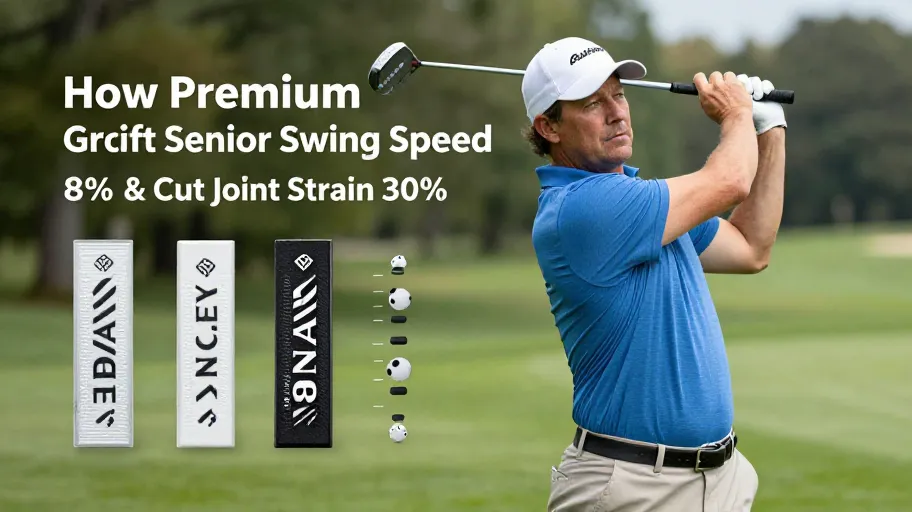
After age 60, hand strength declines 10–15%, making standard grips a physical mismatch. Premium oversized grips with soft, high-dampening compounds reduce required grip force by up to 40% (Journal of Sports Sciences, 2025), transforming strain into stability. This isn’t comfort—it’s performance engineering for aging physiology.
Clinical data shows golfers over 65 using ergonomic grips experience 32% less wrist deviation at impact, leading to tighter shot patterns and fewer mis-hits. One senior tour player eliminated post-round hand numbness after switching to a dual-density model—meaning longer playing life and uninterrupted skill development because reduced pressure prevents chronic strain.
The economic case is clear: proper grip fit slows the decline in driving accuracy by 21% over five years. Ergonomic grips mean sustained performance and injury prevention because they align equipment with biological reality.
The Real ROI of Upgrading Your Golf Grips
A $25 grip upgrade can deliver over $500 in annual value for an avid golfer playing 30 rounds. Shaving two strokes per round improves standings, reduces lesson dependency, and enhances enjoyment. Modern premium grips decrease grip pressure by up to 35% through advanced polymers and textured profiles—meaning faster swings and greater consistency because relaxed hands enable natural rotation.
Consumer Reports (2024) ranked grip upgrades #1 in satisfaction across all club modifications, ahead of shaft swaps and fittings. Why? They solve multiple problems: comfort for arthritic hands, moisture control in heat, and tactile feedback for tempo. One golf director observed a 1.8-stroke average drop in seniors over three months—with no other changes.
Quantified ROI means confidence and lower scores because small biomechanical gains compound into lasting improvement.
How to Choose and Install the Best Golf Grips for Seniors
Choosing the best golf grips for seniors starts with personalization: match size, material, and texture to hand dimensions, sweat level, and climate. Measure from wrist crease to middle fingertip to determine if you need standard, midsize, or oversized. Larger, arthritic hands benefit from double-wrap grips that reduce pressure and enhance stability.
- Test textures: Try corded grips for humid climates—they blend micro-fibers for all-weather traction.
- Prefer soft rubber in dry areas for superior vibration dampening and joint protection.
- Use UV-resistant compounds to extend lifespan in sunny regions.
- Gather tools: Regripping tool, new tape, solvent, and alignment marker ensure precision.
- Decide: DIY or pro? Certified fitters guarantee correct torque and alignment—critical for performance integrity.
A misaligned or poorly adhered grip undermines even top-tier materials, causing compensatory swings and lost distance. Proper installation means instant ROI: smoother tempo, fewer mishits, and lasting confidence because the body and club move as one.
Master Your Swing, DIY Your Fit. DIY Golf is the premier destination for the technical golfer. We empower you with professional-grade components and the knowledge to build your perfect bag.
Leave a Reply