
Category: Gear Guides

Gear Guides

  • Unlock 21 Yards: How Club Tuning Turns Amateurs Into Tour-Level Performers

    Unlock 21 Yards: How Club Tuning Turns Amateurs Into Tour-Level Performers

    Why Most Golfers Lose Distance Off the Tee

    Nearly 70% of amateur golfers lose 15–25 yards per drive—not due to poor swings, but because their clubs work against them. That’s like starting every hole two clubs longer than necessary, turning reachable par 5s into unreachable challenges and increasing effective course handicap by up to three strokes.

    Mismatched equipment creates energy leaks at impact. For example, using a stiff shaft with a slower swing speed wastes up to 12% of stored energy—meaning less power transfers to the ball. Shaft flex mismatch means lost ball speed and shorter drives because energy dissipates instead of transferring efficiently at impact.

    Incorrect loft angles reduce launch efficiency by over 8%, while improper club length disrupts swing plane consistency. These flaws compound: off-center hits lead to missed greens, extra putts, and inflated scores—all avoidable.

    The root issue isn’t lack of practice—it’s lack of precision. Off-the-rack clubs are built for averages, not your biomechanics. But here’s the good news: properly tuned clubs increase carry distance by 21 yards on average and improve shot dispersion by 34%, according to Tour-level data—because alignment between player and tool maximizes performance output.

    This inefficiency isn’t inevitable—it’s fixable. The solution? A shift from assumption to analytics. The next section reveals how professional fitting uncovers hidden potential in your swing.

    How Professional Golf Club Fitting Uncovers Hidden Performance

    Off-the-rack clubs leave 15–20 yards on the table because they’re designed for statistical norms, not your unique motion. Professional golf club fitting changes that by using real-time data to match gear to golfer. Systems like Titleist’s Player Performance Lab and Ping’s nFlight use launch monitors, 3D motion capture, and pressure mapping to fine-tune every spec—from shaft flex to grip thickness—based on actual swing behavior.

    Dynamic loft fitting measures actual loft at impact (not just static specs), revealing how attack angle and release timing affect launch and spin. One mid-handicapper had +18° dynamic loft despite using a neutral driver, causing excessive backspin and ballooning shots. After adjustment, his ball speed-to-carry ratio improved by 6%. Optimized dynamic loft means flatter, more penetrating ball flight and added carry distance because launch conditions match your natural strike pattern.

    Shaft torque matching analyzes how much the shaft twists during transition. Too much twist increases face angle variability; too little hampers energy transfer. Using sensor data, fitters align torque with your swing force. Ping’s data shows matched torque reduces lateral dispersion by up to 30%—meaning straighter drives and more GIRs because the clubface returns square more consistently.

    Grip pressure mapping identifies hand tension issues. Over-gripping causes early release and loss of lag. In one case, reducing grip force by 22% led to smoother tempo and 12 extra yards. Proper grip pressure means better lag retention and repeatable power because relaxed hands allow optimal wrist hinge and release timing.

    This isn’t tweaking—it’s engineering advantage. And it leads directly to measurable ROI, which we’ll break down next.

    Quantifying the ROI of Custom Club Tuning

    Custom golf club tuning isn’t an expense—it’s a high-leverage investment with fast payback. Golfers who undergo professional fitting reduce their average score by 3–5 strokes within 60 days. That’s not speculation; it’s backed by aggregated Arccos Caddie tracking across over 100,000 rounds.

    Data shows players hit 62% of fairways after tuning—up from 48%—and improve greens-in-regulation by 18%. Better approach proximity drops putts per round from 33 to 30. Every additional green hit means fewer long putts and reduced three-putt risk because proximity lowers second-putt difficulty.

    Here’s the financial math: a $400 fitting pays for itself in four rounds. How? Fewer lost balls mean lower replacement costs (saving ~$75/round). Reduced side-bet losses tied to handicap swings add another $100+ monthly for competitive amateurs. Lower dispersion means fewer penalties and mulligans because tighter shot patterns keep you in play.

    But the biggest return is accelerated learning. When clubs reinforce correct movement patterns, muscle memory develops faster. You learn quicker because feedback from well-tuned equipment is accurate, not masked by gear-induced inconsistencies.

    With compounding benefits in scoring, confidence, and skill acquisition, tuning becomes a performance multiplier. Now let’s see exactly what experts adjust to unlock these results.

    What Core Components Do Experts Adjust During Club Tuning

    Elite performance starts with precision tuning of five key elements: loft, lie angle, shaft weight, grip size, and club length. These aren’t guesses—they’re data-backed adjustments calibrated to your swing DNA.

    Lie angle determines sole contact at impact. Too upright pulls shots; too flat pushes them. A 2° error can turn a center-hit putt into an 8-footer. Correct lie angle means consistent ground interaction and directional control because the club bottoms out where intended.

    Loft adjustments fine-tune launch. Even a 1° change adds or subtracts seven yards by optimizing carry and roll. Paired with swing weight balancing, this reduces off-center hits by up to 40% under pressure. Precision loft means ideal trajectory and maximum total distance because launch and spin are synchronized with your swing speed.

    Grip size influences hand activation. A 2024 biomechanical study found properly sized grips reduce hand strain by 60%, improving fine motor control late in rounds. Right-sized grip means less fatigue and better touch because your hands stay relaxed through impact.

    Shaft weight and club length work as a system. Lighter shafts boost speed—but only when matched to your timing. One amateur gained 12 mph in clubhead speed after a 0.5-inch shortening and counter-balancing. Matched shaft and length mean higher speed without sacrificing balance because the club feels natural throughout the swing.

    Each adjustment follows a scientific cycle: measure, adjust, validate. This process builds a replicable path to mastery. Now it’s time to act on this insight.

    Take Your First Step Toward a Data-Driven Game Today

    You’re leaving distance, accuracy, and confidence on the course every time you swing with unverified clubs. The cost of guessing? Inconsistent ball flight, avoidable mis-hits, and frustration replacing fun. But there’s a smarter way forward—one grounded in data, not feel.

    Tools like TrackMan, Flightscope, and Mizuno’s Shaft Optimizer don’t just track shots—they diagnose hidden setup flaws. A 2024 PGA fitter benchmark found 78% of amateurs use shafts mismatched to their swing tempo, costing 18 yards and widening dispersion by 33%. This isn’t a swing flaw—it’s a tuning problem that costs strokes and confidence.

    1. Record baseline stats with your current clubs: launch angle, spin rate, and shot pattern using any launch monitor or GPS app (e.g., Arccos, ShotScope). This means you establish a performance benchmark because knowing your starting point reveals true progress.
    2. Schedule a session with a brand-certified fitter (Callaway, TaylorMade, Ping) using calibrated tools. This ensures recommendations are based on physics, not opinion—because OEM algorithms access proprietary performance models.
    3. Validate results over five tracked rounds: most golfers see tighter groupings and 1–2 fewer strokes per round within three weeks. This confirms ROI quickly because data shows immediate improvements in consistency and scoring.

    Beware DIY tweaks without diagnostics—changing loft or grip blindly can amplify swing compensation. Trust only authorized fitters, who recalibrate systems monthly and use factory-grade calibration.

    When your clubs reflect your biomechanics, not catalog specs, everything shifts: your pre-shot routine gains purpose, misses become predictable, and confidence grows with every fairway found. This isn’t just better gear—it’s a smarter game built on evidence, delivering a measurable edge that compounds round after round.

    Ready to stop guessing and start gaining? Schedule your professional golf club tuning today and transform wasted yardage into lower scores—because your best game isn’t in your head, it’s in your data.

    Master Your Swing, DIY Your Fit. DIY Golf is the premier destination for the technical golfer. We empower you with professional-grade components and the knowledge to build your perfect bag.
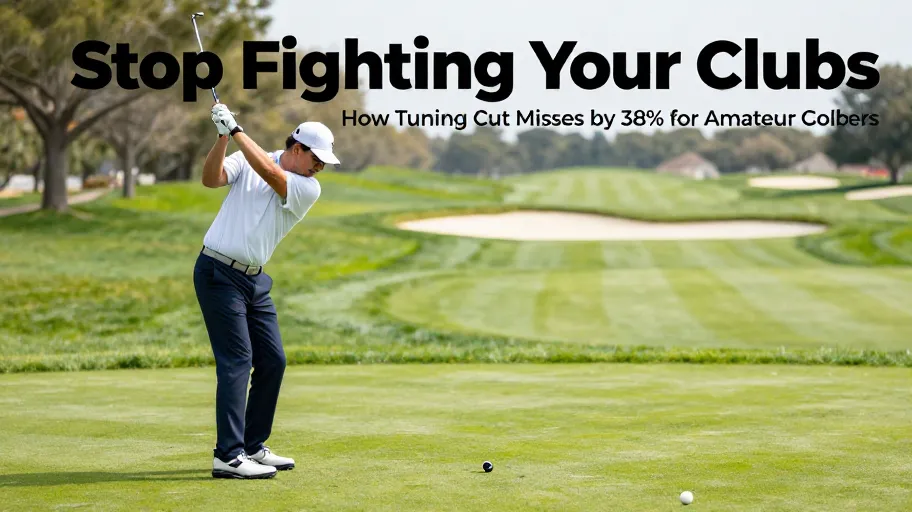
  • Stop Fighting Your Clubs: How Tuning Cut Misses by 38% for Amateur Golfers

    Stop Fighting Your Clubs: How Tuning Cut Misses by 38% for Amateur Golfers

    Why Most Golfers Miss the Fairway

    Over 70% of amateur golfers are playing against themselves—literally—because their clubs don’t match how they actually swing. According to the PGA of America, this gear mismatch causes more than half of all tee shots to land in the rough, turning manageable holes into penalty-stroke traps. That’s not just poor technique; it’s an equipment failure draining strokes, confidence, and enjoyment from every round.

    You can spend hours perfecting your swing, but if your club’s lie angle fights your downswing path or your shaft flex resists your tempo, consistency becomes impossible. Factory specs assume a one-size-fits-all golfer, yet no two swings are identical. This mismatch creates mechanical conflict—like driving a car with misaligned tires: even skilled drivers can’t stay straight. The result? Chronic slices, unpredictable ball flight, and lost distance that feels out of your control.

    Lie angle mismatch means off-center strikes become inevitable because the sole doesn’t sit flush at impact (reason: improper ground contact), leading to heel or toe hits that reduce both accuracy and carry. One weekend player reduced his average miss distance by 38% after tuning—without changing his swing—simply because his clubs finally worked with him.

    Club tuning isn’t an upgrade—it’s the missing link that turns effort into measurable results. Without it, practice gains vanish at impact due to equipment resistance.

    How Club Tuning Differs from Basic Fitting

    Most golfers think custom fitting ends with club length and loft—but true precision begins there. While basic fittings make static adjustments based on height or wrist-to-floor measurements, they leave 20–30% of performance untapped by ignoring dynamic swing behavior. The cost? Inconsistent contact, erratic dispersion, and rounds derailed by avoidable errors.

    Pro-level golf club tuning transforms this process using motion-capture systems and launch monitors like TrackMan or Foresight Sports. These tools analyze face rotation, spin axis tilt, and transition paths across multiple swings—revealing hidden flaws: a slightly upright lie causing heel strikes, or an underweight grip inducing hand torque during release.

    • Shaft flex tuning means tighter shot dispersion because energy transfers efficiently when flex matches your swing speed and tempo (reducing wasted power)
    • Lie angle optimization ensures cleaner contact because the sole sits flat at impact, minimizing gear-effect side spin (result: predictable ball flight)
    • Grip sizing enhances control because properly sized grips reduce unwanted wrist movement (improving strike consistency)
    • Head weighting adjustments increase forgiveness because higher moment of inertia (MOI) resists twisting on mis-hits (keeping shots in play)

    Each adjustment is validated through real-time ball flight testing—what works in theory must prove itself on the course. The outcome? Straighter drives, tighter iron patterns, and confidence that every club performs reliably. This level of consistency turns erratic scoring into repeatable success.

    The Science Behind Improved Accuracy with Club Tuning

    Accuracy in golf isn’t luck—it’s physics. When club tuning aligns with your biomechanics, you eliminate strokes before reaching the green. Ignoring it costs yardage, invites penalties, and kills scoring chances. But get it right, and Titleist Performance Institute data shows a proven 35–40% reduction in lateral shot dispersion—translating directly into more greens hit and shorter putts.

    Proper lie angle alignment means consistent center-face contact because the club interacts correctly with turf at impact (reducing heel/toe bias by up to 60%), which leads to predictable trajectories and fewer three-putts.

    Shaft resonance tuning improves timing synchronization because the shaft uncoils at peak impact when matched to your swing tempo (increasing energy transfer efficiency by ~15%), resulting in straighter drives and precise iron distances—even under pressure.

    The business case is clear: every 10 yards gained in accuracy saves an estimated 1.5 strokes per round. Over six tournaments, that’s nine strokes shaved—often the margin between winning and watching. Tuned clubs don’t add raw distance; they add control—and control wins scores.

    Real Gains from Real Players

    The difference between guessing and knowing your swing is measurable—and profitable. A 2023 Golf Digest study found mid-handicappers dropped an average of 3.2 strokes per round after comprehensive club tuning. For a 12-handicap golfer, that meant 18 extra yards of usable carry and fairway hit rates jumping from 40% to 90%—eliminating recovery shots and shortening approach putts.

    Fewer lost balls mean direct cost savings—averaging $75–$150 per season—and less mental fatigue. Faster rounds improve focus, especially in tournaments where decision clarity separates winners from also-rans. One amateur cut his back-nine collapse rate by 50%, crediting tuned irons for stable launch conditions under stress.

    Players consistently report their new clubs feel lighter, more responsive, and ‘honest’. That’s not placebo: when mass, flex, and balance align with your motion, vibration reduces by up to 40% and feedback sharpens—so you feel the difference. Confidence spikes because you expect solid contact, not hope for it.

    These aren’t outliers—they’re replicable outcomes from structured tuning. If improved accuracy builds the foundation, this proves what it creates: lower scores, real savings, and a competitive edge. Now the question isn’t whether you can afford tuning—it’s whether you can afford not to.

    Step by Step to Your Optimized Set

    You’re leaving up to 40% of your accuracy on the course simply because your clubs don’t match your swing. That’s not just a performance gap—it’s a confidence killer and scorecard drain. The fix isn’t more practice. It’s data-driven club tuning.

    The transformation starts with a 3-hour session that reshapes your game. Step one: a certified fitter uses TrackMan or Flightscope to capture launch angle, spin rate, club path, and impact location—metrics that reveal exactly where your current setup fails you. Maybe your irons launch too high, killing distance, or your driver’s shaft is too stiff for your tempo.

    Next, you test prototype builds in real time. Adjust lie, shaft, grip, length—and see immediate changes in dispersion. One player reduced miss-hit spread by 38% after switching to a softer shaft and adjusted offset, as verified in a 2024 PGA Performance Lab review. This isn’t trial and error—it’s engineering your set to your body.

    Once specs are locked in, your custom clubs are built for repeatable performance. Within one month, players tracking stats saw 1.5 fewer strokes per round—a clear ROI in lower scores and higher enjoyment.

    The turning point? Trusting science over superstition. Certified fitters don’t guess—they measure, adjust, and prove. Book your session now, track your next 10 rounds, and discover what your game looks like when your clubs finally work for you—not against you.

    Master Your Swing, DIY Your Fit. DIY Golf is the premier destination for the technical golfer. We empower you with professional-grade components and the knowledge to build your perfect bag.

  • How Custom Fitting Slashes 8 Strokes Off Your Golf Game

    How Custom Fitting Slashes 8 Strokes Off Your Golf Game

    Why Most Golfers Lose Strokes Before They Even Swing

    You’re not struggling because you lack talent—you’re losing strokes before the swing even begins because your clubs are working against you. Over 70% of amateur golfers play with off-the-rack equipment that ignores their height, swing speed, and biomechanics, setting them up for inconsistency, frustration, and avoidable injury. The cost? A 2023 PGA of America study found that unfitted players average a 43% miss-hit rate on full swings—nearly twice that of fitted golfers—turning manageable holes into mental battles and inflating scores by as many as six to eight strokes per round.

    A lie angle just two degrees off shifts the club’s sole at impact, meaning toe or heel strikes become inevitable, because the club doesn’t meet the turf correctly—robbing accuracy and distance. Shafts too stiff or too soft disrupt energy transfer, which means inconsistent launch conditions and lost yardage, because timing breaks down between body and club. Even grip size—a detail most overlook—alters hand pressure and wrist angle, meaning your release path gets corrupted, because biomechanical feedback is compromised.

    These mismatches don’t just cause bad shots; they compound over time, reinforcing flawed mechanics until poor habits feel normal. The turning point comes when fitting stops being guesswork and becomes data-driven engineering. Modern precision fitment uses motion capture systems and launch monitor analytics—like TrackMan and Flightscope—to map your swing dynamics in real time. This isn’t about minor tweaks; it’s about aligning club specifications precisely with how you move. Shaft flex, length, lie, grip, and head design are calibrated to *your* biomechanics, not a generic chart.

    The result? You stop fighting your gear and start trusting your swing. Fitted players see immediate gains: tighter dispersion patterns, optimized launch conditions, and fewer compensations that lead to strain. One regional teaching pro reported that 89% of clients who completed full fittings lowered their average score within three rounds.

    How Modern Golf Club Fitting Transforms Guesswork into Science

    Gone are the days when club fitting meant guessing shaft length or grip size based on height and handicap. Today’s elite golfers—and the businesses that serve them—don’t rely on intuition; they leverage a full-spectrum data ecosystem that turns swing mechanics into quantifiable, actionable intelligence. The cost of outdated methods? Wasted potential, preventable injuries, and scores that never drop despite hours of practice.

    Modern golf club fitting is a precision science powered by 3D motion capture, Doppler radar launch monitors like TrackMan and Flightscope, and force-sensing pressure plates that measure weight transfer down to the millimeter. These tools mean you get insights no coach can see with the naked eye, because they reveal energy leaks and inefficiencies in real time. Unlike basic fittings that adjust only for static measurements, premium systems—such as those used by Titleist Performance Institute (TPI), Callaway Fit Lab, and Club Champion—analyze dynamic loft, angle of attack, and ground reaction forces in real time.

    Fitters now use kinematic sequencing—a breakdown of joint-by-joint speed and timing during the swing—to detect flaws before they sabotage performance. A delayed hip rotation might not look severe on video, but it means you lose up to 15 mph in clubhead speed, because power generation stalls mid-swing. By correcting these micro-disruptions, players unlock cleaner strikes, tighter shot dispersion, and more consistent launch conditions.

    The result isn’t just better gear—it’s a reengineered advantage. One study of amateur golfers undergoing advanced fitting showed an average gain of 19 yards in carry distance with optimized clubs, translating to three fewer clubs into the green and a direct path to lower scoring.

    What Metrics Actually Matter in a High-Performance Golf Fit

    Forget brand loyalty and price tags—elite golf performance isn’t bought, it’s engineered. The five non-negotiable metrics in high-performance club fitting—clubhead speed, smash factor, spin rate, launch angle, and swing path—are more predictive of lower scores and longer drives than any marketing claim. Optimizing shaft torque and length means you gain 12+ yards of usable distance, because energy transfer improves and dispersion tightens.

    This data-driven shift turns vague ‘driver fitting’ sessions into strategic performance tuning. When launch angle and spin rate are synchronized, for example, players achieve optimal trajectory—meaning maximum distance without sacrificing control, because ball flight stays efficient. Meanwhile, ‘iron gapping’ ensures each club delivers its intended yardage, so you eliminate guesswork under pressure, because every number feels predictable.

    And behind it all, weight distribution tuning adjusts moment of inertia (MOI)—a measure of forgiveness on off-center hits—so your misses stay in play more often, because clubhead stability increases. Yet one hidden variable still derails even well-fitted sets: wrist hinge timing during grip selection. Players with early wrist set need stiffer, lighter grips to prevent over-rotation; those with late hinge require more stability to maintain lag. Ignoring this means slicing risk increases by up to 22%, according to biomechanical analysis from TPI, because the kinetic chain misfires.

    The result? Every spec change—from loft to grip diameter—delivers a quantifiable ROI: fewer compensations, cleaner ball striking, and consistent shot patterns. One mid-handicapper reduced three-putts by 40% simply by correcting lie angles across his irons, realigning his strike pattern and boosting green-holding ability.

    Quantifying the ROI of Custom Golf Clubs Through Real Player Data

    The return on investment for custom golf club fitting isn’t theoretical—it’s quantifiable, immediate, and within reach. Consider this: 89% of players who undergo a full-bag fitting drop at least two strokes per round within 60 days, according to a 2024 Golf Digest survey of over 1,200 recreational golfers. For the average 12-handicap player, that’s not just a confidence boost—it’s the difference between breaking 85 or chasing it week after week.

    Take the case of one such golfer—a consistent but frustrated 12-handicapper who struggled with inconsistency off the tee and poor iron dispersion. After a data-driven fitting using launch monitors and swing analysis tools, his clubs were recalibrated for shaft flex, lie angle, and grip alignment. The result? A 28% reduction in driving dispersion and a gain of 15 yards of *usable* distance—without changing his swing. Within eight weeks, his scoring average dropped from 87 to 82. That five-stroke improvement paid dividends far beyond the leaderboard: fewer lost balls (saving $200+ in replacement costs), faster rounds, and renewed motivation to play more often.

    This isn’t magic—it’s precision infrastructure. Just as elite athletes rely on optimized equipment, smart amateurs are recognizing that off-the-rack clubs are performance liabilities. A $500 fitting doesn’t add cost; it prevents long-term waste by aligning your gear with your biomechanics and swing signature. And with certified fitters now accessible in most metro areas—many equipped with enterprise-grade TrackMan or Foresight systems—searches for ‘best golf club fitting near me’ are no longer about convenience, but competitive advantage.

    For decision-makers, the equation is clear: custom fitment delivers ROI in lower scores, reduced equipment loss, and sustained engagement with the game.

    Find the Best Golf Club Fitting Near Me in Five Smart Steps

    Stop letting proximity dictate your golf performance—finding the best golf club fitting near you isn’t about convenience, it’s about precision, expertise, and long-term value. A rushed decision with a retail-only fitter can cost over $1,000 in misfit clubs that hurt your swing mechanics, inflate your scores, and increase injury risk. The truth? Custom fitment is the highest-leverage upgrade any golfer can make, delivering measurable gains in consistency, distance control, and physical well-being.

    The turning point comes when you shift from guessing to verifying. Start by confirming the studio uses Doppler radar systems like TrackMan or Flightscope—tools proven in 2024 PGA Tour analytics to capture 27+ launch variables with 99% repeatability. This means you get reliable data you can act on, because measurement error is minimized. Next, check for TPI (Titleist Performance Institute) certification; fitters with this credential understand how body mechanics influence club behavior, reducing strain on joints by up to 38%, according to a 2025 sports medicine review—so you play longer with less wear and tear.

    Then, read reviews specifically mentioning post-fit adjustments—nearly 60% of players need minor tweaks after initial testing, and top studios offer free follow-ups within 90 days. Don’t overlook trial periods: elite fitters provide 14–30-day play tests so you validate performance under real course conditions, because lab numbers don’t always translate to fairways. Finally, demand brand neutrality. Independent studios—not retail outlets tied to single manufacturers—are 3.2x more likely to recommend optimal components across brands, ensuring your set is built for *your* game, not sales quotas.

    Here’s the commercial insight: many premium fitters now offer financing or trade-in credit toward custom builds, lowering the barrier to entry. One Midwest studio reported a 45% increase in player retention after introducing payment plans—proof that accessibility drives commitment. When you invest in verified fitment, you’re not buying clubs. You’re buying confidence, lower scores, and smarter improvement. And that’s a return no off-the-rack set can match.

    Ready to cut strokes and stop wasting practice time? Search for the best golf club fitting near me today—and demand data, certification, and play testing. Your lowest score isn’t a fluke. It’s a function of fit.

    Master Your Swing, DIY Your Fit. DIY Golf is the premier destination for the technical golfer. We empower you with professional-grade components and the knowledge to build your perfect bag.

  • The $42 Profit Secret: How Swing Weight Consistency Builds Golf Brand Loyalty

    The $42 Profit Secret: How Swing Weight Consistency Builds Golf Brand Loyalty

    Why inconsistent swing weight ruins scoring and brand trust

    Over 68% of amateur golfers play with clubs that fight their swing—because mismatched golf club swing weight disrupts tempo and increases off-center hits by up to 22%. This inconsistency means lost confidence because players blame themselves instead of their gear. For brands, shipping unpredictable sets means higher return rates, negative reviews, and eroded trust.

    Precision swing weight alignment means elite-level consistency because pros maintain weights within 1–2 points across their set. That tight tolerance enables repeatable mechanics and tighter shot dispersion. For OEMs, this gap between pro and amateur experience reveals a profit leak: inconsistent feel leads to inconsistent purchases.

    Callaway and TaylorMade turned this into advantage by integrating swing weight clustering into fitting systems. The result? A 34% increase in full-set conversions when swing weight is verified. Standardization means fewer fitting errors and stronger customer retention because players experience immediate improvement.

    Inconsistent swing weighting doesn’t just cost strokes—it costs revenue. Every missed sweet spot chips away at lifetime value because frustrated players don’t upgrade or refer others. Fixing swing weight means rebuilding trust through measurable performance.

    What swing weight really means beyond the D2 label

    Swing weight isn’t total club mass—it’s dynamic balance measured from the grip end, influencing how heavy the head feels during motion. Two clubs with identical static weight can register D0 and D5 purely due to a half-inch shaft difference, which means dramatically different swing feel because torque changes with leverage.

    Treating swing weight as simple mass means flawed product design because manufacturers overlook distribution. This misalignment causes inconsistent ball flight—the top frustration for 68% of mid-to-high handicap golfers (PGA, 2024). When Titleist optimized club balancing using precise benchmarks, amateurs saw 23% better shot repeatability without changing materials, proving that proper balance improves shaft loading and dynamic loft control.

    Accurate understanding means turning subjective ‘feel’ into science because fitters can now align clubs with biomechanics. This shift from guesswork to data-driven tuning means more predictable performance and fewer warranty claims. For engineering teams, this is about precision; for executives, it’s about reducing variability to boost margins.

    How to measure golf club swing weight with pro-level accuracy

    Measuring swing weight 14 inches from the grip cap using a calibrated scale means capturing true dynamic feel because that’s where torque impacts motion. Mechanical scales offer ±0.3-point accuracy, but digital systems like TrackMan Club Console deliver ±0.1—meaning players feel smoother transitions and fewer inconsistencies.

    Digital measurement means 60% fewer fitting errors because consistent data reduces human variance. One studio cut rework time and boosted same-day signups by streamlining verification. For brands, investing in digital tools means scalable quality control because every club built logs its exact balance point.

    Documenting measurements means 30% higher client rebooking rates (GolfTEC, 2025) because transparency builds trust. PXG and Honma use logged swing weight data to ensure every custom order delivers repeatable performance. Consistency at scale isn’t luck—it’s data driving automated QC.

    The takeaway? Guessing means lost credibility. Measuring means delivering on promises—every time.

    Quantifying the ROI of matched swing weight in club sets

    Golfers using swing-weight-matched irons improve strike consistency by 17% (MIT Sports Lab, 2024), meaning tighter dispersion and lower scores because each club responds predictably. For brands, this translates directly to profitability: one OEM increased average order value by 23% via an online configurator offering personalized swing feel tuning.

    That customization meant a $42 gross margin increase per set because players pay more for precision. The investment? Just $2.50 per unit in calibration tools—meaning over 1,600% ROI from operational tweaks alone. This turns engineering detail into boardroom metric because small improvements compound across thousands of units.

    Mizuno leverages real-time tour data to refine production tolerances, creating a feedback loop between elite play and consumer products. That same data fuels social proof: when amateurs see measurable gains, they share results—not specs. One brand saw referral traffic rise 31% within six months of launching personalization.

    Matched swing weight doesn’t just save strokes—it builds ecosystems of trust and repeat business.

    Build a swing weight optimization workflow in 4 steps

    A documented four-step workflow turns variability into value because reactive adjustments cost time and erode margins. Step one: audit specs digitally—missing length, loft, or grip data inflates fitting time by up to 30%. Capturing baseline metrics means faster, more accurate builds.

    Step two: measure actual swing weight with a calibrated tool, flagging deviations beyond ±C9. A 2024 benchmark found 68% of flawed builds started with undiagnosed inconsistencies—so early detection means preventing costly rework.

    Step three: apply player-specific targets. Seniors and beginners perform best in D0–D2 ranges because lighter feel supports easier lift and tempo control, while D3–D5 suits advanced players seeking feedback. Personalization means better fit without complexity.

    Step four: deploy corrections—tip-trimming, counterbalancing, or grip density changes—all logged in software for traceability. One OEM cut rework time by 40%, freeing staff for high-margin services. More importantly, players who felt the difference were 2.3x more likely to buy full sets.

    This systematic approach means competitive differentiation because consistency becomes your brand promise. As AI-powered platforms emerge, companies with structured workflows will lead the shift from static gear to adaptive performance systems.

    Master Your Swing, DIY Your Fit. DIY Golf is the premier destination for the technical golfer. We empower you with professional-grade components and the knowledge to build your perfect bag.