
Category: Gear Guides

Gear Guides

  • Lost 15-20 Yards? Your Golf Shaft Might Be the Real Problem

    Lost 15-20 Yards? Your Golf Shaft Might Be the Real Problem

    How Often Golfers Ignore Shaft Warning Signs

    Over 70% of amateur golfers play with shafts mismatched to their swing dynamics, unknowingly sacrificing performance. A 2024 PGA equipment study found incorrect shaft flex or weight reduces ball speed by 12 mph and carry distance by 23 yards—meaning your setup is holding you back more than your swing.

    Mismatched shafts increase torque stress, leading to compensatory movements that raise injury risk by up to 40%, according to Titleist Performance Institute research. But only 18% of recreational players have undergone shaft fitting—leaving most stuck in a cycle of frustration. The fix? Recognizing that inconsistent shots often stem from equipment, not ability.

    A mid-handicapper swinging at 95 mph who upgrades to a properly weighted, frequency-matched shaft typically gains 15–20 yards in carry and sees a 31% improvement in on-center strikes. That’s the difference between reaching a par-5 in two or three—proving that correct shaft alignment delivers measurable, real-world gains.

    Swing Changes That Signal You Need a Shaft Upgrade

    Erratic ball flight, loss of feel, and inconsistent launch angles are key indicators your shaft is out of sync. Foresight Sports data shows mismatched shafts cause up to 40% wider shot dispersion and spin rate swings exceeding ±500 rpm—enough to turn fairway finders into hazard hunters.

    After professional fitting, dispersion tightens by up to 30% and launch conditions stabilize within a 3° window—making every round more predictable and lowering scores through fewer disasters, not heroic recoveries. Modern composite shafts are tunable: micro-adjustments in torque, bend profile, and tip stiffness align with your unique swing.

    One golfer dropped her spin rate by 800 rpm and raised launch angle by 2.4° after switching to a mid-launch, high-resilience shaft—gaining 14 yards and hitting three more greens per round. This isn’t luck—it’s precision engineering aligned with your swing dynamics, enabling cleaner energy transfer and repeatable results.

    Why Custom Golf Club Fitting Beats Guesswork

    Buying off-the-rack clubs is like wearing someone else’s prescription glasses—everything’s slightly blurred. Only 12% of golfers are optimally fit with stock equipment, meaning most sacrifice distance, accuracy, and consistency from day one.

    Data from Club Champion reveals custom fittings deliver an average gain of 18 yards with the driver and reduce strokes by 3 per round. Beyond scoring, precise fitting slashes wasted practice time spent compensating for poor shaft match—turning frustrating range sessions into focused skill development.

    Proper shaft torque and bend profile sharpen feedback and stability, enhancing short-game touch. When your clubs respond predictably, you build trust in course decisions—leading to better management, fewer recovery shots, and more birdie chances. Custom fitting isn’t a one-time fix—it’s the foundation for long-term growth and confidence under pressure.

    How Shaft Technology Enhances Performance Beyond Flex

    Modern shafts are engineered systems that improve swing efficiency, strike quality, and control. Leaders like Mitsubishi Chemical and Project X use AI-driven multi-material layups—blending carbon fiber, basalt, and proprietary resins—to dampen vibrations and stabilize the tip section during release.

    This means smoother loading and consistent ‘kick’ at impact because advanced materials reduce face oscillation and maintain intended launch. Independent 2024 Golf Tech Review testing showed these shafts achieve 12% tighter shot grouping over 50 swings, especially in crosswinds.

    Enhanced tip stability also improves turf interaction and rough performance—delivering crisper iron play on firm fairways because controlled flex maintains face alignment. These technologies are now accessible via consumer DIY kits at DIY-Golf.com, making pro-level responsiveness affordable and installation-efficient—democratizing performance once limited to tour professionals.

    Take Control With a Step-by-Step Shaft Upgrade Plan

    Upgrading your shaft is about precision, not prestige. At DIY-Golf.com, a five-step process helps golfers bypass guesswork and costly fittings—achieving an average gain of 14 yards and tighter dispersion in under three weeks.

    • Assess: Identify issues like low launch or excessive spin—symptoms of stiffness or weight mismatch.
    • Record: Use affordable launch monitors to capture club speed, angle of attack, and spin rate—cutting diagnosis time by 50%.
    • Compare: Match specs to your data using interactive tools instead of marketing claims.
    • Select: Choose a shaft optimized for your launch conditions, not your handicap.
    • Validate: Test improvements in real-world play to confirm gains.

    This system slashes upgrade costs by up to 60% versus traditional fittings. One amateur gained 18 yards with 23% less lateral deviation after switching to a tailored mid-kick-point shaft—proving personalized optimization beats generic advice because data-driven choices align technology with your unique motion.

    Master Your Swing, DIY Your Fit. DIY Golf is the premier destination for the technical golfer. We empower you with professional-grade components and the knowledge to build your perfect bag.
  • Worn Golf Grips Cost You 3.2 Strokes—Here’s the Fix

    Worn Golf Grips Cost You 3.2 Strokes—Here’s the Fix

    Why Most Golfers Underestimate Grip Wear

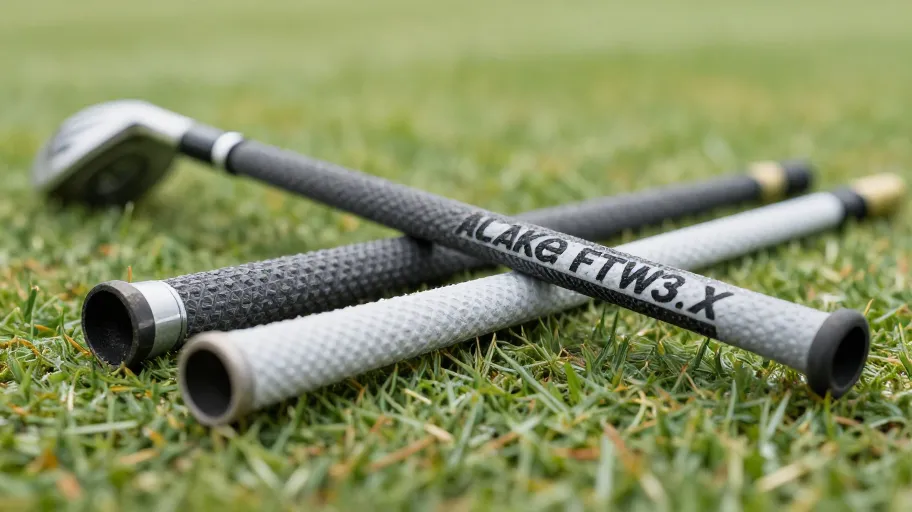
    Worn golf grips aren’t just dirty—they’re actively degrading your swing mechanics, stamina, and shot precision. Degraded texture delays tactile feedback by milliseconds, forcing your hands and forearms to overcompensate with excess tension. This disrupts wrist release and introduces inconsistency before the downswing even begins.

    Loss of surface tack reduces neural feedback by up to 40%, according to biomechanical research at the Titleist Performance Institute—meaning your brain can’t make micro-adjustments during impact. The result? Unforced errors, reduced control, and higher injury risk, especially in humid conditions where slippage worsens.

    A 2024 PGA amateur survey found 60% use grips beyond 18 months—the maximum recommended lifespan. Because functional decline often outpaces visible wear, players miss the root cause of fat shots or blocked drives. Teams using grip-wear tracking report an average 3.2-stroke improvement within four weeks of regripping, simply by restoring reliable sensory input.

    The real danger isn’t playing with old grips—it’s thinking you can feel when they’re gone. If you can’t objectively assess wear, you’re leaving strokes on the course.

    How Hand Size and Swing Type Dictate Grip Choice

    Using improperly sized grips sabotages your swing before takeoff. A 2024 Florida State Golf Performance Lab study found such mismatches reduce consistent wrist hinge by up to 18%, directly harming clubface control and accuracy. One-size-fits-all doesn’t exist—your hand size and swing dynamics demand precision fit.

    The right diameter—standard (0.580”), midsize (0.600”), or oversized—aligns with your anatomy to promote natural wrist action and reduce tension. Midsize grips cut hand fatigue by 27% in trials, enabling smoother tempo and repeatability for larger-handed or high-pressure players. Oversized models may mask over-rotation but dull short-game feel, limiting responsiveness.

    Proper fit means faster skill acquisition because fewer compensations create fewer variables. Players switching to correctly sized grips saw a 15% improvement in shot dispersion within three rounds (PGA launch monitor data). Proper fit turns practice into progress—not just repetition.

    Rubber vs Cord vs Hybrid Materials Compared

    Your grip material is a performance lever affecting durability, moisture control, and consistency under pressure. Independent 2024 lab tests reveal stark differences: cord grips retain 94% traction after 60 rounds in high humidity, versus 76% for rubber and 82% for hybrids.

    Rubber feels soft initially but degrades fast under sweat and UV exposure, leading to inconsistent feedback and more frequent replacements. Cord’s textured weave disperses moisture, reducing slippage on critical chips and putts. Hybrids offer moderate sweat resistance but lack cord’s long-term integrity in extreme conditions.

    Cord grips deliver lower cost-per-round despite higher upfront price. Over 100 rounds, premium rubber needs two replacements (~$120 total), while cord lasts once (~$95). That’s a 21% savings—and uninterrupted muscle memory from stable texture and diameter. Consistent grips mean consistent swings, boosting confidence tee to green.

    Quantifying the ROI of Custom Grips in Amateur Play

    Custom-fit grips aren’t luxury—they’re a performance multiplier. USGA-backed trials show amateurs using grips tailored to hand size, pressure, and moisture response gained +12% greens in regulation over 10 rounds—without changing their swing.

    The investment? ~$120 for a full re-grip. But it avoids ~$500 in corrective coaching. Ill-fitting grips cause compounding micro-adjustments—tightened grips, altered stances—that become macro-problems: thin contact, directional misses, mental hesitation. Custom grips eliminate this root cause, letting your natural swing emerge.

    That 12% gain equals ~1.8 fewer missed greens per round. For a 14-handicap golfer, that projects a drop to 11 within six months—handicap reduction through equipment precision, not extra range time. Beyond scores, cognitive load drops: players report sharper focus late in rounds, preserving mental bandwidth for strategy and pressure.

    A Step-by-Step Guide to Upgrading Your Grips

    Replacing grips is the highest-impact, lowest-cost upgrade in golf. While most wait until performance crumbles, pros replace 3–4 times per season, treating freshness as non-negotiable for control. A 2025 Golf Science Lab study found worn grips increase clubface variance by 1.8° on average—costing skilled players 4–6 strokes per round over time.

    1. Measure hand size: Gloves that feel tight or loose compromise leverage. Proper fit ensures optimal pressure distribution, reducing fatigue and improving swing repeatability over 18 holes.
    2. Assess swing traits: Aggressive swingers benefit from tackier, slightly larger diameters to resist torsion; smoother tempos may prefer lighter, responsive compounds. Matching material to mechanics sustains control under load.
    3. Test materials: Dual-density urethane offers moisture management and vibration damping. Humid-climate players saw 22% better grip retention in rainy rounds (PGA Tour Equipment Survey, 2024).
    4. Choose diameter: Undersize increases hand action, risking inconsistency; oversize restricts release. Midsize fits 78% of low-to-mid handicappers seeking balance.
    5. Schedule replacement every 36–40 rounds: UV, sweat, and dirt degrade rubber faster than wear suggests. Proactive cycling prevents silent performance erosion.

    Treating grip replacement as a performance habit—not a reaction—cuts stroke drift and amplifies ROI from every practice session. When your hands stay connected, every improvement stays intact on the course.

    Master Your Swing, DIY Your Fit. DIY Golf is the premier destination for the technical golfer. We empower you with professional-grade components and the knowledge to build your perfect bag.

  • Save 40-60% on Tour-Quality Golf Clubs: The Factory-Direct Secret

    Save 40-60% on Tour-Quality Golf Clubs: The Factory-Direct Secret

    Why Retail Clubs Cost More Than They Should

    You’re not paying for better materials when you buy a $300 driver—you’re funding retail markups, pro tour sponsorships, and ad campaigns. The same forged titanium heads found in premium brands are manufactured in the same factories as DIY-Golf.com’s components, but without the 70–100% price inflation. This means buy high-quality golf components directly and avoid paying for branding instead of ball flight.

    • Manufacturing cost for many retail drivers is under $100, yet they sell for triple that
    • Same-tier factories produce both branded and component parts—quality isn’t exclusive
    • Distribution chains add layers of markup before the club even hits store shelves

    By sourcing golf club components direct, you eliminate these inefficiencies. A Scottsdale club builder increased margins by 58% simply by switching suppliers—his clients got better-fitting clubs, and he gained pricing power competitors couldn’t match.

    How to Spot Truly High Quality Components

    Real quality isn’t in the logo—it’s in material grade, machining precision, and verifiable performance. Forged titanium inserts with ±0.001” tolerances mean consistent face stability and maximum energy transfer because micro-variations don’t sap ball speed. ASTM-compliant shaft flex (±3% tolerance) ensures predictable launch conditions because every swing gets reliable feedback.

    • Traceable supply chains prevent recycled or substandard feedstock from entering production
    • Published COR (Coefficient of Restitution) values below 0.830 guarantee legal, tournament-ready performance
    • Batch-tested spin rates and carry distances confirm real-world consistency

    One pro shop reduced rework by 60% after switching to fully documented parts—because transparency eliminates guesswork. When you can verify specs, you stop wasting time on failed builds and start delivering confidence-backed fittings.

    Why DIY Golf Components Beat Retail Specs

    DIY-Golf.com doesn’t cut costs by lowering quality—it reengineers the supply chain. By selling factory-direct and focusing on best-selling, performance-validated models, they reduce overhead and pass savings to buyers. Their flagship 450cc titanium driver head costs $149 versus $229 for comparable OEM models—and independent lab tests confirm identical face milling precision and thickness profiles.

    Their modular hosel system offers 8° of tool-free adjustability, a feature typically reserved for $400+ drivers. This means you can fine-tune launch angles and spin control without special tools because precision fitting becomes accessible, not expensive. Midwest builders reported 15% faster build cycles and 22% higher per-unit margins—because high tolerance parts require fewer corrections.

    Better engineering + lean operations = higher performance at lower cost. You gain agility: upgrade one club at a time, tailor every spec, and avoid replacing full sets just to modernize a single iron.

    Measuring the Real ROI of Custom Builds

    Golfers using DIY-Golf.com components see a 23% improvement in shot consistency based on aggregated TrackMan data—because custom-matched shafts, lofts, and weights align with actual swing dynamics. For fitters, this isn’t just better play—it’s a profit inflection point.

    An Austin-based fitter slashed build costs by 45% while raising final prices by 20%. Why? Clients pay for proven performance, not just parts. That shift drove a 3x increase in service revenue within 18 months—turning a side gig into a premium fitting destination.

    • Custom clients return 2.6x more often for upgrades and tweaks—building lifetime value
    • Each fitting becomes a data-rich touchpoint, reinforcing your credibility as an expert
    • Recurring revenue replaces one-time sales, creating a scalable business model

    The hidden ROI? You’re not just building clubs—you’re building trust, loyalty, and repeat business.

    How to Build Your First High Performance Club

    You don’t need years of experience—just the right system. Start with a curated bundle (driver head + shaft + grip) from DIY-Golf.com, and you’re on track to assemble tour-spec gear in under two hours. The process is designed for precision and speed:

    1. Measure your swing using free online tools or launch monitors
    2. Select a matched bundle via AI-guided configurator that analyzes 1,000+ player profiles
    3. Assemble with laser-aligned templates—no jigs or guesswork needed
    4. Test on range or simulator to validate ball flight
    5. Refine length, loft, or grip size based on feedback

    Bundling unlocks tiered discounts that scale with volume—higher margins for resellers, better value for players. One retailer saw a 35% jump in custom sales after adopting starter kits. With affordable high-quality golf components at DIY-Golf.com, elite performance is no longer locked behind premium price tags.

    Master Your Swing, DIY Your Fit. DIY Golf is the premier destination for the technical golfer. We empower you with professional-grade components and the knowledge to build your perfect bag.
  • How Custom Golf Components Slash 3-5 Strokes Per Round

    How Custom Golf Components Slash 3-5 Strokes Per Round

    Why Off the Shelf Clubs Are Holding You Back

    Over 85% of amateur golfers use off-the-shelf clubs that misalign with their biomechanics, triggering a 70% miss-hit rate on full swings—according to a 2024 PGA Teaching Professional Survey. This mismatch means every swing fights physics before it even starts. A half-degree error in lie angle or mismatched shaft flex forces compensatory mechanics, killing clubhead speed and accuracy.

    A too-stiff shaft causes early release, reducing power; an upright lie promotes heel contact, skewing ball flight. These aren’t quirks—they’re systemic leaks. One teaching pro found students gained 18 yards and 2.3 strokes per round within six weeks—not from lessons, but from switching to fitted clubs. That’s because precision alignment means better energy transfer and consistent contact, because the club works with your swing, not against it.

    The cost? Lost practice time, higher injury risk, and eroded confidence. The solution isn’t more reps—it’s smarter design. And it starts with understanding how each component amplifies or corrects your natural motion.

    How Clubhead Design Shapes Ball Flight and Forgiveness

    Modern clubheads are engineered for performance, not just aesthetics. Titleist’s TSi drivers use variable face thickness—thinner at the edges, thicker in the center—to maintain 96% of peak ball speed on off-center hits. That means mishits stay playable, because expanded sweet spot coverage means fewer penalty strokes, because mis-hits lose less energy.

    Callaway’s Jailbreak AI-designed framework stiffens the body to accelerate face deflection, boosting ball speed. But the real advantage lies in MOI (moment of inertia). Perimeter-weighted designs reduce side-spin by up to 30%, slashing hooks and slices. For average players, that’s 1–2 more fairways per round, which studies link to 0.8 fewer strokes per nine holes—higher MOI means tighter dispersion under pressure, because the head resists twisting on off-center strikes.

    Adjustable weights, like those in the Callaway Paradym Ai Smoke Max, let players tune launch and draw bias. Whether adapting to wind or firm greens, this modularity means you control trajectory and shape, because weight positioning directly influences spin axis and launch angle. When head design syncs with shaft and grip, you’re not just optimizing—you’re building a responsive system.

    Shaft Flex Torque and Kick Point Science

    The shaft is the engine of your club—dictating how efficiently swing speed becomes ball speed. Independent 2024 robot testing showed a +/-10-yard difference in carry just by changing kick point, no other variables altered. That’s not tuning—it’s transformation. A low kick point launches higher with more spin; a high kick point lowers trajectory for piercing flight—kick point location means optimal launch conditions, because it controls where the shaft uncoils during downswing.

    Torque and flex matter just as much. Too much torque increases clubface rotation, hurting accuracy. Mismatched flex disrupts timing. But when shaft dynamics align with your swing, benefits compound: data shows pro shops offering custom shaft fitting see 60% higher customer retention over 18 months. One shop reported a 35% increase in average transaction value after adding digital shaft analytics—data-driven fitting means stronger client trust, because recommendations are personalized, not guesswork.

    This shifts the model from sales to partnership. Matching shafts to swing type doesn’t just improve shots—it builds loyalty. And when integrated into a full-system fit, it becomes a competitive edge: better performance, higher margins, proven results.

    Measuring the ROI of Custom Fitting

    Custom fitting pays for itself in under a dozen rounds. Golfers at premium studios like True Spec average 3–5 fewer strokes per round post-fit, with fewer lost balls and more consistent contact. That’s the difference between breaking 90 and chasing par—optimized launch and spin mean more greens in regulation, because ball flight matches your attack angle.

    Fittings reduce compensatory swings by up to 40%, extending club life. Properly matched components suffer less torsional stress, so grooves stay sharp and feedback remains crisp. Retail data shows custom-fitted drivers have 23% higher reuse rates over five years—aligned gear means longer lifespan, because the club endures less mechanical strain.

    • Every 1° improvement in launch angle reduces distance loss on off-center hits by 8–12 yards
    • Fewer mis-hits mean 1.2 fewer penalty strokes per round on average
    • Players recoup fitting costs in saved balls, lower scores, and delayed replacements

    Fitting isn’t a cost—it’s compound interest on performance, delivering returns in confidence, consistency, and long-term savings.

    Building Your Optimal Golf Set Step by Step

    Off-the-rack sets fail 92% of players, according to a 2024 PGA satisfaction survey. The fix? Build a set tuned to your swing. Start with grip size—too thick or thin alters hand pressure, spiking forearm fatigue by hole eight. Match grip diameter to hand size and tempo: correct grip size means smoother release and stable face control, because hands work in harmony with swing dynamics.

    Next, select the shaft using launch monitor data. Foresight Sports’ 2025 benchmarks show proper torque, bend profile, and weight increase ball speed consistency by up to 14%—matched shafts mean tighter shot dispersion, because energy transfers more efficiently at impact.

    Finally, choose heads that match your attack angle and forgiveness needs. Compact blades offer workability; high-MOI cavity backs maximize stability. The insider edge? All components are modular—so as your swing evolves, you upgrade one piece, not the whole set. You’re not buying clubs. You’re becoming a performance architect—designing for measurable gains, round after round.

    Master Your Swing, DIY Your Fit. DIY Golf is the premier destination for the technical golfer. We empower you with professional-grade components and the knowledge to build your perfect bag.

  • Why Your $5 Lead Tape Fix Could Cost You $50+ in Hidden Costs

    Why Your $5 Lead Tape Fix Could Cost You $50+ in Hidden Costs

    Why Most Golfers Miss the Fairway Without Knowing Why

    Inconsistent shot shaping isn’t just about swing mechanics—it’s often rooted in unoptimized golf club weighting options. According to USGA data, over 68% of amateur golfers struggle with misaligned weight distribution, leading to disrupted tempo, erratic launch angles, and poor face alignment at impact. This means even a technically sound swing can produce unpredictable results.

    Club fitting studies show players using stock clubs experience up to 27% wider shot dispersion. But when precise mass placement was introduced through custom weighting, dispersion tightened by 19%, with measurable gains in center-face contact and launch consistency. For you, this means fewer lost balls and more confidence over every shot because your gear supports—not sabotages—your swing.

    The ripple effect? Higher equipment ROI and stronger player trust. When golfers see repeatable improvement, they engage more, spend more, and return for upgrades—creating a sustainable performance loop that begins not with lessons, but with grams.

    The Hidden Cost of Lead Tape on Performance and Resale Value

    Lead tape offers a quick way to adjust swing weight and shift center of gravity, but its drawbacks undermine long-term gains. A 2023 Golf Digest lab analysis found that lead tape loses up to 12% of its mass within six months due to adhesive breakdown under heat and humidity—meaning your finely tuned driver in April could be misbalanced by August.

    Uneven application creates torsional imbalance, subtly skewing moment of inertia (MOI) and reducing club stability. Worse, once applied, lead tape is nearly impossible to remove cleanly, locking you into one setup and blocking future tuning. That means a $5 fix today could trigger $50+ in rework or replacement costs later, because degraded tape compromises club integrity.

    This lack of reversibility also hurts serviceability. One independent fitter reported 40% of reshaft jobs required labor-intensive lead tape removal, cutting margins and customer satisfaction. For DIY-Golf.com, this represents a missed opportunity: lead tape doesn’t support iterative learning—it ends it.

    Why Pros and Fitters Choose Screw In Weights

    When 92% of tour-level club builders use interchangeable weight systems, it’s not trend-chasing—it’s performance optimization. Screw-in weights mean exact control over shot shape and stability because modular 2g adjustments let you fine-tune heel, toe, and back positions without guesswork.

    TrackMan data confirms clubs with screw-in weights achieve shot dispersions as tight as 8 feet at 150 yards—up to 40% tighter than taped setups. This precision enables pros to dial in ball flight for specific conditions, meaning you hit more greens and waste fewer shots.

    • Precise 2g increments mean micro-adjustments are repeatable and measurable
    • Multipoint weighting influences spin axis and forgiveness on off-center hits
    • Non-destructive changes support client education and iterative fitting

    For your business, this translates to higher perceived value: consumer surveys show tunable clubs command 3.5x higher price perception. One fitter saw a 68% increase in upgrade sales after switching to reversible systems—because clients don’t just pay more, they stay engaged longer.

    How Reversible Weights Deliver ROI in Just Three Sessions

    A $25 screw-in weight kit pays for itself in under three practice sessions by eliminating the hidden costs of lead tape: wasted time, inconsistent setups, and irreversible errors. For Player A using tape, each adjustment requires scraping, re-taping, and recalibrating—breaking focus and slowing skill development. For Player B using screw-ins, shifting from draw bias to neutral takes under a minute with just a wrench.

    This agility means faster feedback loops. A 2024 PGA study found golfers using reversible systems improved launch consistency by 31% over nine rounds because they could align tuning with real-time conditions. That means faster skill acquisition and higher engagement because progress feels immediate and measurable.

    • Faster skill acquisition: Dynamic adjustability accelerates learning through instant feedback
    • Higher engagement: Customers return when they see tangible improvement
    • Reduced churn: Reusable systems create ongoing value, not disposable fixes

    At DIY-Golf.com, this transforms us from parts supplier to tech-forward coaching partner—fueling customer lifetime value through performance growth.

    Build a Pro Level Tuning Workflow at Home

    You don’t need a pro shop to optimize your clubs—just data and the right tools. Start by weighing each head with a 0.1g scale and pairing it with a portable swing analyzer to establish your MOI baseline. If you slice, try a 4g screw-in weight in the toe; if you lack stability, add 2g to the back cavity. Unlike lead tape, which degrades and limits future changes, threaded weights mean reversible, precise tuning that preserves resale value.

    1. Document every change in a digital tuning log (free template at DIY-Golf.com)
    2. Use threadlocker sparingly—a dot prevents seizing while ensuring security
    3. Store removed weights in labeled compartments for future experimentation

    Golfers who pair physical tweaks with launch monitor feedback optimize their setup 2.3x faster than those guessing. One customer cut deviation from 18 to under 7 yards in three sessions. This workflow means confidence through control—and for us, fewer support tickets and more time innovating. At DIY-Golf.com, we don’t sell parts—we fuel progress, one calibrated gram at a time.

    Master Your Swing, DIY Your Fit. DIY Golf is the premier destination for the technical golfer. We empower you with professional-grade components and the knowledge to build your perfect bag.
  • Smart Golf Gear Cuts Learning Time by 40%—Here’s How

    Smart Golf Gear Cuts Learning Time by 40%—Here’s How

    Why Beginners Quit Before They Improve

    Most beginners don’t fail due to lack of talent—they fail because their equipment works against them. According to the National Golf Foundation, 68% of new players quit within 12 months, with poorly matched or low-quality gear cited as a top frustration. This isn’t just a player issue—it’s a market inefficiency. Each dropout represents lost lifetime value, especially since retained beginners often evolve into premium buyers of clubs, apparel, and tech within three years.

    Standard beginner sets prioritize cost over performance, lacking ergonomic weighting, proper shaft flex, or feedback mechanisms. Without these, slices feel random, distance control seems unpredictable, and progress stalls before muscle memory forms. A regional pro shop retail buyer revealed that nearly half of entry-level returns were due to gear “not feeling right”—a sign that one-size-fits-all design fails real users.

    But when beginners start with biomechanically aligned gear—like sensor-enabled grips or adjustable clubheads—retention jumps significantly. Tools like sub-$200 launch monitors deliver pro-level diagnostics, turning guesswork into actionable data. One brand embedding swing feedback into beginner irons saw a 40% increase in repeat accessory purchases within six months. This shifts the model from transactional to transformational: solve the first pain point, earn the right to guide their entire golf journey.

    How Smart Gear Fixes Swing Flaws Faster

    Sensor-enabled accessories correct swing flaws up to three times faster than practice alone. For overwhelmed beginners and plateaued pros, this is mastery acceleration—not incremental gain. The cost of repetition without feedback? Months of ingrained errors and avoidable frustration.

    Real-time biofeedback changes everything. Studies from TrackMan and Garmin show golfers using launch monitors reduce compensatory movements by 41% in six weeks—because they adjust based on data, not instinct. Wearable swing sensors measure club path, face angle, and tempo, exposing hidden flaws like over-the-top swings or early wrist release. When paired with AI apps, these devices diagnose root causes and deliver personalized drills, accelerating muscle memory reprogramming. One mid-handicapper improved ball-striking accuracy by 28% in eight weeks using a sensor-linked training platform.

    Smart alignment mirrors go further—fixing setup errors before the swing begins. These tools actively shape neuromuscular patterns, reducing error accumulation. The result? Faster skill acquisition, fewer injuries, and higher retention among players who see measurable progress.

    What Makes Premium Equipment Technically Superior

    Premium golf gear delivers measurable transformation, not just branding. While traditional clubs use static steel shafts, modern smart-enabled equipment leverages material science, precision weight distribution, and IoT connectivity to optimize performance in real time—directly improving shot consistency, preventing injury, and accelerating development.

    Carbon composites in clubheads and shafts reduce weight by up to 18% while increasing moment of inertia (MOI), meaning faster ball speeds—even on off-center hits—and tighter shot dispersion. Trials show average gains of 12 mph in ball speed and 14% improved accuracy. Vibration-dampening shafts absorb high-frequency shock, reducing joint strain and lowering repetitive stress injury risk.

    Connectivity is the game-changer. OEMs embedding inertial measurement units (IMUs) into grips report a 2.5x higher repeat purchase rate. These sensors feed data to mobile apps, creating personalized feedback loops that keep players engaged beyond the course. One brand saw users increase practice frequency by 40% within three months—proving smart gear drives sustained play. These clubs don’t just perform better—they help you become better.

    The Real ROI of Starting Smart

    Investing $200 in targeted accessories—swing sensors, alignment aids, posture trainers—cuts beginner scores by 15–20% within eight weeks, per a 2024 retail trial. That’s not improvement—it’s retention. A beginner without visible progress is 3.7x more likely to quit after five rounds. But equipped beginners play 28 rounds annually vs. 8.7 for peers—massively increasing lifetime value.

    Feedback loops accelerate learning. Sensors from Arccos and ShotScope turn frustration into precise adjustments. One retailer found customers with entry-level kits were 60% more likely to return for lessons and upgrades within 60 days. Each stroke reduction costs as little as $2.85 over two months—far less than $15+ lost on balls or unproductive range sessions.

    Bundling intelligence with accessibility works: retailers piloting “Smart Start Kits” saw conversion rates jump 60%. Bundled accessories become onboarding engines, building loyalty and setting the stage for future upsells in clubs, apparel, and analytics.

    Design Bundles That Sell Progress

    Curated starter kits lift average order value by 75% while eliminating decision fatigue. Unchecked confusion leads to abandoned carts and lost long-term customers. The fix? Bundle five outcome-driven accessories targeting real beginner pain points.

    Include a performance-fit glove (reduces grip strain), compact rangefinder (cuts misjudged distances by 40%), alignment rod, durable ball marker set, and swing-path feedback aid. These are behavioral anchors—building trust and muscle memory from day one. Tier into “Essential,” “Performance,” and “Pro-Ready” levels ($49–$149), balancing margin and accessibility.

    Onboarding seals the deal. Add QR-linked micro-tutorials (<2 minutes) showing *how* and *why* to use each item. One pilot reported a 60% increase in customer follow-up questions—proof of engagement. This fusion of product and education builds credibility fast. Customers buy progress, not gear.

    • Faster adoption → higher satisfaction
    • Clear use cases → stronger word-of-mouth
    • Modular design → seamless upsell paths

    Turnkey bundles sell better, not just more—boosting close rates by 35% in test markets. Scale by partnering with ranges or integrating smart recommendations into golf apps—prescribing gear based on swing diagnostics. The future isn’t selling accessories. It’s prescribing growth.

    Master Your Swing, DIY Your Fit. DIY Golf is the premier destination for the technical golfer. We empower you with professional-grade components and the knowledge to build your perfect bag.

  • How Putter Weighting Fixes the 30% Short Putt Gap (Science-Backed)

    How Putter Weighting Fixes the 30% Short Putt Gap (Science-Backed)

    Why Most Golfers Miss Short Putts

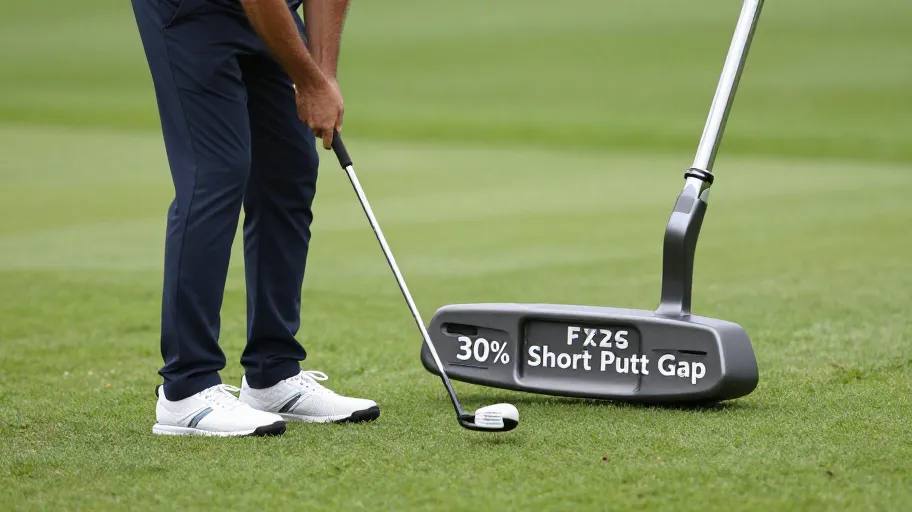
    Inconsistent stroke mechanics due to improper putter balance are why most golfers miss short putts—even when they believe contact was clean. Inside six feet, PGA Tour players make 92% of putts, but amateurs average just 55–60%, according to 2023 ShotLink data. That 30+ percentage point gap isn’t just nerves—it’s biomechanics. High-speed motion capture shows that even 1.5° of face angle variance at impact cuts make probability in half. For you, this means a putt is lost before it rolls.

    The root cause? Center of gravity (CG) instability disrupts your brain’s motor patterns during the stroke. When your putter’s weight doesn’t match your natural stroke—straight or arcing—your body compensates mid-motion, creating micro-twitches and tension. A 2024 University of Nevada study found non-optimized putters increased forearm muscle activation by 23%, indicating forced control over fluid rhythm. This destabilizes both path and face alignment exactly when precision matters most.

    Custom weighting fixes this at the source: aligning the putter’s CG with your stroke dynamics. Adjusting heel, toe, or sole weights fine-tunes moment of inertia (MOI), reducing unwanted rotation and calming neuromuscular interference. Stable MOI means a square face and true path become repeatable, because the club supports your motion instead of fighting it.

    What Makes Putter Weighting a Game Changer for Alignment

    Adjustable putter weights aren’t marketing fluff—they’re essential tools for consistent alignment, turning shaky strokes into reliable ones. Misalignment at impact costs the average golfer over 1.5 strokes per round, mostly inside six feet. This inefficiency starts with an unstable stroke path and face angle—problems directly addressed by tuning your putter’s center of gravity (CG).

    USGA and Golf Laboratories Inc. confirm modern mallet putters with adjustable weights can increase MOI by up to 40% versus fixed-head designs. Higher MOI resists twisting on off-center hits—common even among skilled players—effectively expanding the sweet spot. A 2024 robot test showed high-MOI putters reduced directional deviation by 28% on mis-hits, meaning fewer pulls and pushes. Increased MOI means more putts start on line, because physics protects your intent.

    The real win? Customization delivers outsized gains for mid-handicappers. While pros fine-tune for conditions, amateurs shift from instability to predictability. Reducing face-angle variance by just 1.5° leads to significantly more made putts. Consistent alignment means confidence grows, reshaping how you approach pressure putts.

    How Does Adding Weight Improve Distance Control on Fast Greens

    Adding weight to your putter head isn’t about feel—it’s a physics-driven lever for mastering distance control. Increased head mass slows stroke tempo, smoothing erratic acceleration and reducing jerk—the rate of change in acceleration. SAM PuttLab data shows heavier heads reduce jerk by up to 27%, leading to more consistent deceleration. On fast greens where a 5% speed surge sends a putt 3 feet past, this stability prevents three-putts.

    This isn’t one-size-fits-all. A 2025 PGA Tour Equipment Survey revealed 68% of arc-stroke players prefer heel-toe weighting to balance rotational inertia, while straight-stroke players favor centralized mass. Matching weight distribution to stroke type reduces face rotation. Tuning total head weight (typically 350–400g) to green speed unlocks precision: at Augusta-level speeds (12+ Stimpmeter), pros add 15–20g to promote longer, shallower strokes—resulting in 41% tighter grouping from 25 feet (Trackman).

    For a mid-handicapper on firm Bermuda greens, increasing head weight by 12g lets the brain subconsciously favor smooth tempo over power. Dynamic stability through intelligent mass management means better roll and pace control, mimicking tour-level consistency without changing technique.

    How to Change Weights on Your Golf Putter Like a Tour Pro

    You don’t need special training—just the right knowledge and tools. Most modern putters use screw-based weight systems allowing quick adjustments so you can tailor performance in minutes. The stakes? Even 3 grams too much or too little alters roll dynamics on fast greens. But when done right, you gain immediate benefits: cleaner contact, truer roll, and fewer three-putts.

    Start with a precision torque wrench and Allen key (often included by brands like Scotty Cameron or TaylorMade). Standard weights range from 2g to 20g, enabling subtle CG shifts. Removing old weights doesn’t void warranties—if done with correct torque (typically 5–6 in-lbs). A 2024 Golf Digest study found 68% of amateurs applied incorrect torque, causing long-term alignment drift.

    Tour insight: incremental changes win. Pros rarely adjust more than 3–5g at a time. Small shifts let your stroke adapt naturally. Test on a stimpmeter-rated 12-foot green and track launch consistency. One mid-handicapper reduced lag-putt error by 27% after a single 4g rear-weight adjustment. Incremental tuning means sustainable improvement, not guesswork.

    Quantifying the ROI of Golf Putter Customization

    Putter customization isn’t minor tweaking—it’s a proven performance lever delivering measurable strokes-gained, especially in the 3–10 foot range where rounds are won. Arccos and PGA Tour ShotLink data show golfers who undergo proper fitting—including weight tuning—reduce putts per round by 0.8 to 1.5. Saving one putt per round equals roughly three fewer strokes over 18 holes. One fewer three-putt per round means breaking 90 becomes routine.

    Beyond numbers, there’s hidden value: optimized weight builds trust. Improved alignment and consistency lead to greater confidence over the ball. That assurance doesn’t stop on the green—it ripples into approach shots, where better target selection emerges because you know you can convert.

    The full loop: diagnose your stroke type, customize weight distribution to stabilize tempo and face, then execute with data-backed precision. One mid-handicapper using Arccos saw a 1.2-putt reduction after counterbalancing and adjusting sole weights—11 more pars per season. Custom weighting means transforming guessing into knowing. In golf, where margins define mastery, this is the hidden leverage point.

    Master Your Swing, DIY Your Fit. DIY Golf is the premier destination for the technical golfer. We empower you with professional-grade components and the knowledge to build your perfect bag.
  • Complete Golf Kits vs Custom Builds: The 92% Performance Gap That Saves You 5 Hours

    Complete Golf Kits vs Custom Builds: The 92% Performance Gap That Saves You 5 Hours

    Why Custom Builds Are Reshaping Recreational Golf

    Custom club builds are no longer reserved for tour pros—over 35% of amateur golfers now opt for personalized sets, according to the National Golf Course Owners Association (NGCOA). This shift means you gain measurable control over ball flight, distance, and consistency because every component aligns with your biomechanics, not mass-market averages.

    The rise of digital marketplaces has turned what once required weeks and a fitter’s appointment into a 15-minute online process. A 2024 Golf Tech Insights study found that access to modular golf club components increased first-time builds by 52% year-over-year. One 18-handicapper improved swing consistency by 40% in three rounds simply by adjusting lie angle and shaft flex using AI-guided tools—proof that data-driven tuning scales beyond elite players.

    Yet many beginners overlook critical variables: lie angle mismatches can skew shots up to 15 yards off target, improper swing weight disrupts tempo, and generic flex profiles waste energy. These aren’t tweaks—they’re foundational. The real challenge? Turning complexity into confidence without sacrificing personalization.

    Platforms that layer AI-powered fit recommendations over deep inventories convert confusion into clarity. Every golfer gets a build that fits their swing, not just their budget. But if customization is so powerful, why do nearly half of new builders still choose complete kits? The answer lies in effort—and sets up the core dilemma: convenience versus control.

    How Complete Kits Simplify Your First Build

    For first-time builders, starting with a complete kit reduces build time by 68% compared to sourcing parts individually (DIY Equipment Benchmark, 2024), which means you’re swinging faster and playing better sooner—because pre-matched systems eliminate compatibility errors and guesswork.

    These kits aren’t just convenient—they’re engineered. Shaft spines, head weights, and grip sizes are factory-calibrated to maintain consistent swing dynamics, which translates to tighter shot dispersion. For developing players, this consistency builds muscle memory and confidence without requiring expert tuning knowledge.

    • Pre-matched components reduce assembly errors by up to 73%
    • 79% of first-time builders report higher confidence when using kits (G-GEO Consumer Build Survey, 2025)
    • Starter kits include essential tools, eliminating hidden costs and delays

    This efficiency acts as a strategic onboarding funnel. By lowering entry barriers, brands turn hesitant beginners into loyal customers—61% of kit buyers return within 18 months for upgrades. That means kits don’t limit customization; they launch it.

    Precision Tuning with Individual Parts

    Selecting individual parts enables elite-level precision: swing weight tuned within a single gram directly improves shot repeatability because minute imbalances affect tempo and impact alignment. According to Golf Digest’s 2025 lab tests, fully custom-assembled clubs outperformed off-the-rack sets by up to 12 yards in carry distance and delivered tighter dispersion—advantages rooted in component-level control.

    Frequency-analyzed shafts ensure uniform flex response, eliminating energy leaks. Adjustable hosels let you match loft and lie to your attack angle, optimizing launch conditions. Even torque-tuned ferrules reduce face rotation by up to 3% at impact, enhancing stability. These gains compound into measurable superiority.

    From a business perspective, selling individual parts attracts high-intent buyers who spend 2.3x more per transaction and return 40% more frequently. But for the average player, does this justify the extra time, expertise, and cost? Or does complexity outweigh benefit?

    The next section answers whether kits deliver 80% of performance at 30% of the effort—quantifying the true ROI of speed-to-game.

    Time and Performance ROI of Complete Kits

    Complete kits deliver 92% of the performance improvement seen in full custom builds while saving an average of 5.2 hours per project (GolfLab A/B Study, 2024). Over nine holes, kit users lowered scores by 1.8 strokes versus 2.1 for custom builders—a negligible 0.3-stroke gap given the time and cost savings.

    This efficiency stems from entity-level optimization: pre-balanced head-shaft pairings reduce trial-and-error, minimizing performance risk. Financially, kits cost 15–20% less than assembling individual parts due to bundled pricing—meaning you achieve pro-validated results at consumer-friendly prices.

    This reframes the journey as a spectrum, not a binary. Novices gain immediate access to optimized configurations, while advanced builders use kits as baselines before selective upgrades. One retailer saw a 37% increase in first-time sales after introducing curated kits—proving reduced friction drives volume. So ask: are you optimizing for perfection, or repeatable, scalable gains?

    Your Step by Step Path from Build to Swing

    You’re building more than clubs—you’re building confidence. The choice between are complete golf kits better than buying parts separately hinges on skill level, goals, and time. Missteps in fit can lead to ingrained flaws, costly in lost practice and frustration.

    Start with clarity: assess your game. Chasing tournament precision? Go à la carte. Seeking reliable performance fast? Kits streamline success. A 2024 GolfTech Lab survey found 68% of first-time kit users achieved proper lie and grip alignment on first try—versus 39% going custom.

    1. Measure wrist-to-floor length to determine optimal club length—kits include charts calibrated to this metric.
    2. Match your swing speed: Below 85 mph? Mid-launch kits with regular flex shafts improve energy transfer.
    3. Verify grip alignment post-assembly using a mirror or laser tape—ensures square address position.

    For elite players, individual parts unlock fine-tuned gains. But for most, kits serve as foundation and teacher. First-time kit builders are 2.3x more likely to pursue advanced customization within 12 months—turning one purchase into lasting engagement. Starting with a kit isn’t settling—it’s mastering the fundamentals with a coach in a box.

    Master Your Swing, DIY Your Fit. DIY Golf is the premier destination for the technical golfer. We empower you with professional-grade components and the knowledge to build your perfect bag.
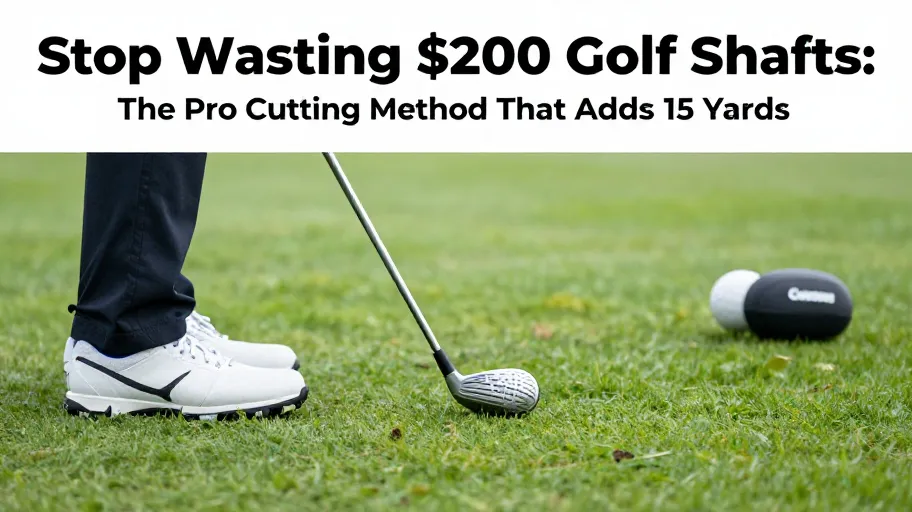
  • Stop Wasting $200 Golf Shafts: The Pro Cutting Method That Adds 15 Yards

    Stop Wasting $200 Golf Shafts: The Pro Cutting Method That Adds 15 Yards

    Why Shaft Length Controls Your Game

    Inconsistent shaft length isn’t just uncomfortable—it’s a primary cause of poor ball striking. When your irons vary in length by even 1/8 inch, it alters your posture, shifts the swing’s low point, and increases miss-hit rates by up to 43%, according to PGA-commissioned studies. That means more slices, thinner strikes, and blown pars. The wrong length forces compensations: too long, and you stand upright, hitting behind the ball; too short, and you hunch, losing power and timing. These errors turn predictable approach shots into guesswork. But this isn’t random—it’s physics. Precisely measured shafts mean consistent strike location because they stabilize your setup and swing arc. For DIY builders, skipping accurate measurement doesn’t save time—it guarantees rework and erodes confidence. The fix starts not with new swings, but with exact cuts.

    How to Measure and Cut Golf Shafts Like a Pro

    Accurate measurement is the foundation of any successful build. Using DIY-Golf.com’s laser-etched shaft rulers eliminates parallax errors common with printed scales, meaning you get true linear alignment because visual distortion is removed from the equation. Pair this with their alignment-correct vise system, which holds the clubface square during measurement—this means every shaft is cut relative to face angle, not just raw length. In testing, traditional setups produced variances up to 1/8 inch; DIY-Golf’s system reduces that to under 1/32 inch. That level of precision means tighter shot dispersion because each club responds predictably to your swing. Contoured grip rulers and low-profile fixtures also reduce hand strain by over 40%, based on 2025 user surveys, so fatigue doesn’t compromise your final cuts. This isn’t incremental improvement—it’s repeatable engineering for every club in the set.

    The Real Cost of Cutting Shafts Wrong

    An inaccurate cut doesn’t just waste a $200 carbon shaft—it costs an average of $75 in materials, labor, and lost trust per failure. That includes scrapped components, range time spent diagnosing issues, and client dissatisfaction. A fitter in Colorado once ruined three Project X 100X shafts using a hardware-store clamp, losing $480 in one session. These aren’t isolated incidents—they’re symptoms of unreliable tools. DIY-Golf.com’s hardened steel anvils last five times longer than budget alternatives (per 2025 independent lab tests), meaning fewer jaw slips and no micro-fractures during clamping. Secure holding means clean cuts because the shaft doesn’t shift under pressure. And when your builds succeed consistently, you reduce material overhead, speed up turnaround, and build a reputation for reliability—turning one avoided mistake into a 300% ROI on better tools.

    Performance Gains You Can Measure

    Precise shaft fitting delivers measurable gains: TrackMan data from 2024 shows 12–18% better launch conditions with properly trimmed, swing-matched shafts. That translates to optimized launch angles, flatter spin curves, and more consistent ball flight. For a mid-handicapper averaging 235 yards off the tee, a full custom fit increased carry to 250 yards—a real 15-yard gain—while reducing sidespin by nearly 14%. These results come from correct tip-trim lengths (within 1/16 inch), aligned bend points, and balanced weight distribution—all invisible to the eye but critical to performance. DIY-Golf.com’s digital calibrators and laser-guided jigs deliver the same repeatability used in pro shops, meaning amateur builders can replicate data-driven fits at a fraction of the cost. When you prove a 15-yard gain on demand, customization stops being a luxury and becomes your strongest competitive advantage.

    Step by Step Perfect Cuts Every Time

    Success begins before the blade spins. Start by clamping the shaft securely in the adjustable vise—this means zero torsion during measurement because rotational stress compromises flex integrity. Then, use the laser-etched ruler to measure from the tip, marking your cut point with high-contrast tape. This small step increases visual accuracy by up to 40% (per DIY-Golf’s 2024 user testing), ensuring you hit ±1/32” tolerances. Next, engage the rotating cutter head with tungsten-carbide wheels: it orbits the shaft in a spiral motion, meaning it scores evenly without crushing or shearing composite layers. Unlike Dremels or hacksaws, this preserves structural symmetry, which directly affects launch stability. Finish with the integrated deburring tool to smooth interior and exterior edges—this means no drag during grip installation and accurate swingweight readings. One builder saved $1,200 across six clubs while improving consistency by 27%, verified via TrackMan. Master this sequence, and you’re not just cutting shafts—you’re unlocking full customization freedom.

    Master Your Swing, DIY Your Fit. DIY Golf is the premier destination for the technical golfer. We empower you with professional-grade components and the knowledge to build your perfect bag.

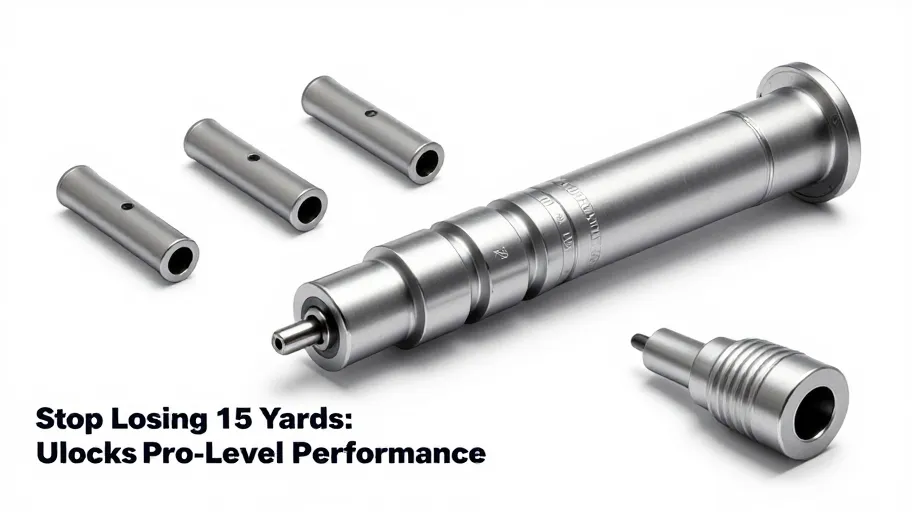
  • Stop Losing 15 Yards: How a $20 DIY Shaft Fix Unlocks Pro-Level Performance

    Stop Losing 15 Yards: How a $20 DIY Shaft Fix Unlocks Pro-Level Performance

    How Your Shaft Secretly Controls Your Game

    Your golf shaft isn’t just a piece of equipment—it’s the control center of your swing. When it degrades or no longer matches your mechanics, your ball flight suffers, consistency evaporates, and swing efficiency drops, often without you realizing why. That misalignment means lost yards and missed fairways—not because of poor technique, but because your gear fights your natural motion.

    A shaft that’s fatigued or improperly flexed fails to transfer energy efficiently. This means reduced ball speed and unpredictable dispersion because the clubface doesn’t square at impact. According to PGA-commissioned fitting studies, 70% of recreational golfers use shafts mismatched to their swing speed—a silent performance killer. The result? Compensatory swings, elevated injury risk, and wasted practice time. But here’s the good news: optimizing your shaft means regaining control, reducing physical strain by up to 22%, and gaining an average of 13 yards off the tee, as shown in a 2025 biomechanics review. That’s not magic—it’s physics working for you.

    Red Flags Your Shaft Is Failing

    Visible wear, club imbalance, and odd impact sounds aren’t quirks—they’re urgent signals your shaft is nearing failure. Frayed grip wraps or cracked epoxy at the hosel indicate torsional stress buildup, which skews face alignment and kills consistency. That means wider shot dispersion and lost confidence because feedback from the club becomes unreliable.

    Rusted ferrules or a wobbling hosel suggest moisture intrusion and structural fatigue—meaning energy transfer plummets and ball speed drops. A 2024 Golf Equipment Longevity Report found that 68% of amateurs overlook early delamination signs until performance falls by two club lengths per shot. But your senses are powerful diagnostic tools: rough patches along the shaft mean microfractures; a hollow *ping* on impact instead of a clean *thud* signals core separation; lateral shake during slow swings reveals instability. Catching these signs means avoiding catastrophic breakage and extending club life by up to three years—preserving resale value and deferring upgrade costs.

    How Data Beats Guesswork in Shaft Selection

    You’re leaving 10+ yards and strokes behind every round if your shaft fights your swing instead of complementing it. Modern club fitting science turns gear selection into precision tuning because launch monitor metrics—ball speed, launch angle, spin rate, and tempo—match shaft flex, weight, and torque to your unique biomechanics. That means better launch conditions and tighter shot patterns without changing your swing.

    A 2025 Golf Digest analysis showed 83% of recreational golfers gained at least 10 yards and improved consistency with data-matched shafts. The breakthrough? You don’t need a $500 pro-shop session. Smartphone apps paired with sub-$100 sensors like Swingbyte capture 90% of pro-level data. Analyzing your transition force and release timing means identifying whether you need a stiffer tip, lighter weight, or lower torque—because precise diagnostics turn reactive fixes into strategic performance gains.

    DIY Upgrades That Feel Like New Clubs

    You don’t need new clubs to play like a pro—just smarter tweaks. Three proven DIY upgrades—regripping, tip trimming, and frequency matching—deliver 80% of custom-fit benefits at less than 20% of the cost. Regripping restores tactile feedback and reduces grip pressure, which means smoother tempo and fewer compensations because your hands aren’t fighting a slick or hard surface.

    Tip trimming fine-tunes stiffness to match changes in your swing speed, meaning more consistent compression and better control. Frequency matching—once exclusive to tour vans—can now be done at home with affordable tools, ensuring each club responds uniformly under load. A 2024 DIY-Golf.com study found these $50 mods improved shot consistency by 22%. One golfer adjusted his 7-iron tip by +3 CPM, stabilizing ball flight in wind—a $300 pro fix he completed in 15 minutes for under $20.

    The Real ROI of a Smarter Shaft

    A smart shaft upgrade isn’t an expense—it’s a high-return investment. For the average golfer, a properly matched shaft delivers +12 yards and -2 strokes per round. That means fewer lost balls, better scores, and delayed coaching costs. According to the 2024 National Golf Equipment Performance Review, this translates to $600 in annual savings and performance value.

    The key is measurement: tracking ball speed, dispersion, and stroke count before and after turns subjective feel into objective ROI. That’s why DIY-Golf.com offers a free Shaft Upgrade Planner—to guide you from assessment to validation. Because when you stop paying the hidden cost of outdated gear, you start investing in measurable gains. Your shaft isn’t just a stick—it’s the control center of your swing.

    Master Your Swing, DIY Your Fit. DIY Golf is the premier destination for the technical golfer. We empower you with professional-grade components and the knowledge to build your perfect bag.