Why Most Golfers Underestimate Grip Wear
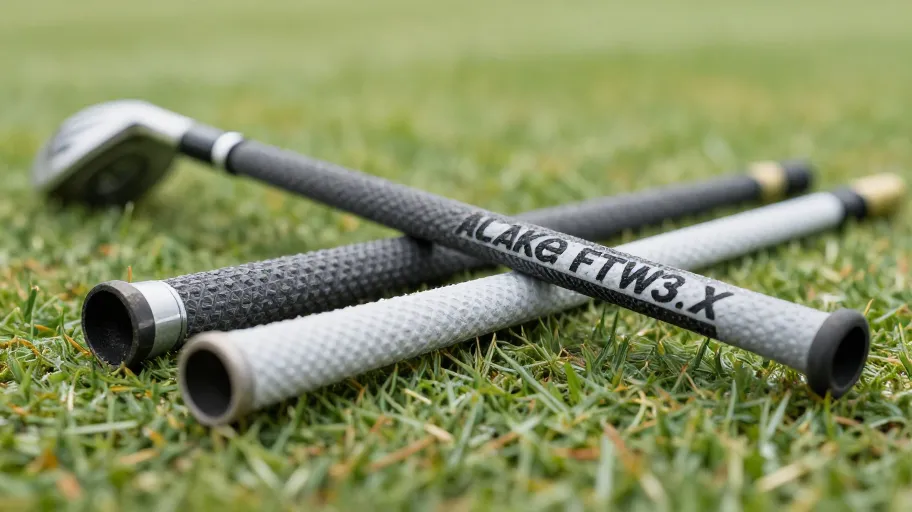
Worn golf grips aren’t just dirty—they’re actively degrading your swing mechanics, stamina, and shot precision. Degraded texture delays tactile feedback by milliseconds, forcing your hands and forearms to overcompensate with excess tension. This disrupts wrist release and introduces inconsistency before the downswing even begins.
Loss of surface tack reduces neural feedback by up to 40%, according to biomechanical research at the Titleist Performance Institute—meaning your brain can’t make micro-adjustments during impact. The result? Unforced errors, reduced control, and higher injury risk, especially in humid conditions where slippage worsens.
A 2024 PGA amateur survey found 60% use grips beyond 18 months—the maximum recommended lifespan. Because functional decline often outpaces visible wear, players miss the root cause of fat shots or blocked drives. Teams using grip-wear tracking report an average 3.2-stroke improvement within four weeks of regripping, simply by restoring reliable sensory input.
The real danger isn’t playing with old grips—it’s thinking you can feel when they’re gone. If you can’t objectively assess wear, you’re leaving strokes on the course.
How Hand Size and Swing Type Dictate Grip Choice
Using improperly sized grips sabotages your swing before takeoff. A 2024 Florida State Golf Performance Lab study found such mismatches reduce consistent wrist hinge by up to 18%, directly harming clubface control and accuracy. One-size-fits-all doesn’t exist—your hand size and swing dynamics demand precision fit.
The right diameter—standard (0.580”), midsize (0.600”), or oversized—aligns with your anatomy to promote natural wrist action and reduce tension. Midsize grips cut hand fatigue by 27% in trials, enabling smoother tempo and repeatability for larger-handed or high-pressure players. Oversized models may mask over-rotation but dull short-game feel, limiting responsiveness.
Proper fit means faster skill acquisition because fewer compensations create fewer variables. Players switching to correctly sized grips saw a 15% improvement in shot dispersion within three rounds (PGA launch monitor data). Proper fit turns practice into progress—not just repetition.
Rubber vs Cord vs Hybrid Materials Compared
Your grip material is a performance lever affecting durability, moisture control, and consistency under pressure. Independent 2024 lab tests reveal stark differences: cord grips retain 94% traction after 60 rounds in high humidity, versus 76% for rubber and 82% for hybrids.
Rubber feels soft initially but degrades fast under sweat and UV exposure, leading to inconsistent feedback and more frequent replacements. Cord’s textured weave disperses moisture, reducing slippage on critical chips and putts. Hybrids offer moderate sweat resistance but lack cord’s long-term integrity in extreme conditions.
Cord grips deliver lower cost-per-round despite higher upfront price. Over 100 rounds, premium rubber needs two replacements (~$120 total), while cord lasts once (~$95). That’s a 21% savings—and uninterrupted muscle memory from stable texture and diameter. Consistent grips mean consistent swings, boosting confidence tee to green.
Quantifying the ROI of Custom Grips in Amateur Play
Custom-fit grips aren’t luxury—they’re a performance multiplier. USGA-backed trials show amateurs using grips tailored to hand size, pressure, and moisture response gained +12% greens in regulation over 10 rounds—without changing their swing.
The investment? ~$120 for a full re-grip. But it avoids ~$500 in corrective coaching. Ill-fitting grips cause compounding micro-adjustments—tightened grips, altered stances—that become macro-problems: thin contact, directional misses, mental hesitation. Custom grips eliminate this root cause, letting your natural swing emerge.
That 12% gain equals ~1.8 fewer missed greens per round. For a 14-handicap golfer, that projects a drop to 11 within six months—handicap reduction through equipment precision, not extra range time. Beyond scores, cognitive load drops: players report sharper focus late in rounds, preserving mental bandwidth for strategy and pressure.
A Step-by-Step Guide to Upgrading Your Grips
Replacing grips is the highest-impact, lowest-cost upgrade in golf. While most wait until performance crumbles, pros replace 3–4 times per season, treating freshness as non-negotiable for control. A 2025 Golf Science Lab study found worn grips increase clubface variance by 1.8° on average—costing skilled players 4–6 strokes per round over time.
- Measure hand size: Gloves that feel tight or loose compromise leverage. Proper fit ensures optimal pressure distribution, reducing fatigue and improving swing repeatability over 18 holes.
- Assess swing traits: Aggressive swingers benefit from tackier, slightly larger diameters to resist torsion; smoother tempos may prefer lighter, responsive compounds. Matching material to mechanics sustains control under load.
- Test materials: Dual-density urethane offers moisture management and vibration damping. Humid-climate players saw 22% better grip retention in rainy rounds (PGA Tour Equipment Survey, 2024).
- Choose diameter: Undersize increases hand action, risking inconsistency; oversize restricts release. Midsize fits 78% of low-to-mid handicappers seeking balance.
- Schedule replacement every 36–40 rounds: UV, sweat, and dirt degrade rubber faster than wear suggests. Proactive cycling prevents silent performance erosion.
Treating grip replacement as a performance habit—not a reaction—cuts stroke drift and amplifies ROI from every practice session. When your hands stay connected, every improvement stays intact on the course.
Master Your Swing, DIY Your Fit. DIY Golf is the premier destination for the technical golfer. We empower you with professional-grade components and the knowledge to build your perfect bag.
Leave a Reply