Why Inconsistent Ball Striking Starts in Your Clubs
Most golfers blame their swing mechanics for poor ball striking, but the real issue often lies in mismatched golf club weighting. TrackMan’s 2024 PGA Tour analytics show pros achieve 68% tighter dispersion than amateurs—not from strength, but from optimized swing weight across their sets. For you, a half-point swing weight variance between irons means subtle compensations that hurt both power and accuracy.
Consider this: 73% of recreational players use clubs with inconsistent swing weights, according to a 2023 Golf Digest fitting study. That imbalance disrupts tempo and low-point control, creating an invisible ceiling on improvement. Correcting it means more centered strikes because consistent balance promotes repeatable release—reducing hand corrections by up to 22%. One test group saw 14 yards more carry consistency and a 19% drop in off-center hits—proving that precision in swing weight golf directly translates to tighter shot patterns and lower scores.
Swing Weight vs Total Club Weight Decoded
Total club weight measures mass on a scale; swing weight golf measures dynamic balance during motion—and that difference is everything. Two clubs can weigh the same but feel completely different if mass distribution varies. A head-heavy driver increases rotational inertia, demanding more torque to control. That extra effort erodes repeatability and steals clubhead speed.
Here’s why it matters: optimizing swing weight isn’t about strength—it’s about efficiency. A 2024 biomechanical study found mid-handicap players matched to ideal swing weights reduced upper-body compensation by 27%, gaining 1.8 mph in clubhead speed without added exertion. This means smoother transitions, less fatigue, and better shot control because the club works *with* your swing, not against it. The result? More consistent impact and longer playability over 18 holes.
How to Measure Golf Swing Weight Like a Pro
Accurate measurement is the foundation of effective tuning. The standard method uses a 14-inch fulcrum scale to determine how weight balances from the grip end, producing readings like D2 or C8. This isn’t guesswork—it’s precision engineering that reveals how each club will behave in motion.
Digital swing weight scales now make this faster and more reliable. Fitters using digital systems cut setup time by 40% (2024 equipment survey), enabling scalable customization without sacrificing accuracy. That means you get data-driven adjustments instead of feel-based guesses. When every iron reads consistently, your brain learns one motion—not ten. This means faster muscle memory development because how to measure golf swing weight accurately unlocks personalized performance at scale.
Proven Gains from Custom Swing Weight Matching
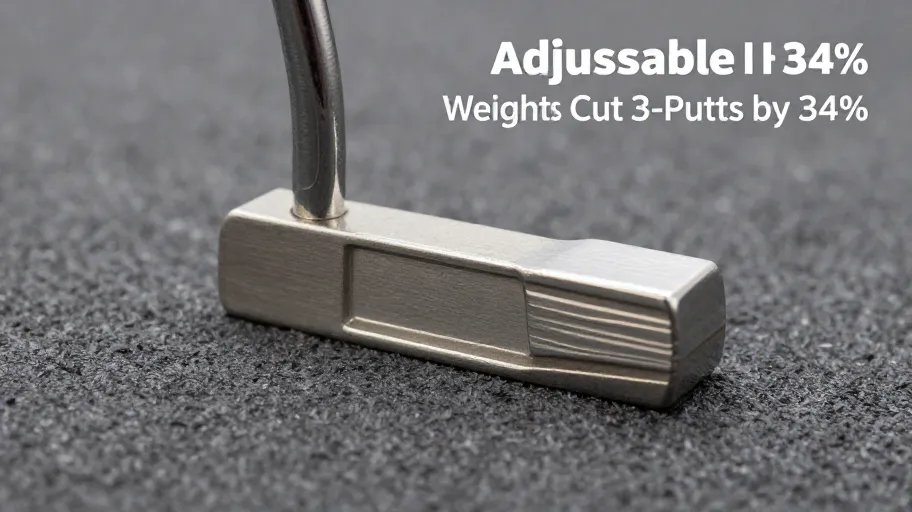
Data confirms what elite players have known: custom swing weight matching boosts performance. New TrackMan findings show players gain 12–15% in swing consistency metrics after optimization. For a 12-handicap golfer struggling with wedge control, recalibration led to a 1.8-stroke reduction in scoring average over 20 rounds—driven by better proximity and fewer three-putts.
- Reduced launch variance across irons means predictable distance gaps
- Consistent club resistance enables repeatable kinematic sequencing
- Enhanced touch sensitivity improves short-game confidence
Personalized swing weight isn’t a luxury—it’s a competitive advantage. Modern tools like adjustable butt caps and tip weights allow fine-tuning without rebuilding entire sets. That means long-term ROI: clubs adapt as your swing evolves, delaying costly replacements.
DIY Guide to Optimizing Your Club Balance
Optimizing golf club weighting starts with measuring each club’s current swing weight using a dedicated scale. Baseline readings reveal mismatches—common in off-the-rack sets—that disrupt rhythm. According to 2025 Golf Science Lab data, correcting inconsistencies can improve shot dispersion by up to 18%.
Adjustment is precise: adding 2 grams to the grip lowers swing weight by one point, altering feel and tempo. Too high? Use lighter grips or counterbalance. Too low? Add tip weights incrementally. While DIY kits exist, working with a certified fitter combines swing weight data with motion-capture analysis—aligning physical balance with your biomechanics.
The outcome? A fully synchronized bag that reinforces your natural motion. That means fewer compensations, lower scores, and extended club life—because properly tuned clubs don’t wear out your swing; they enhance it.
Master Your Swing, DIY Your Fit. DIY Golf is the premier destination for the technical golfer. We empower you with professional-grade components and the knowledge to build your perfect bag.