Category: Golf Tips

Golf Tips

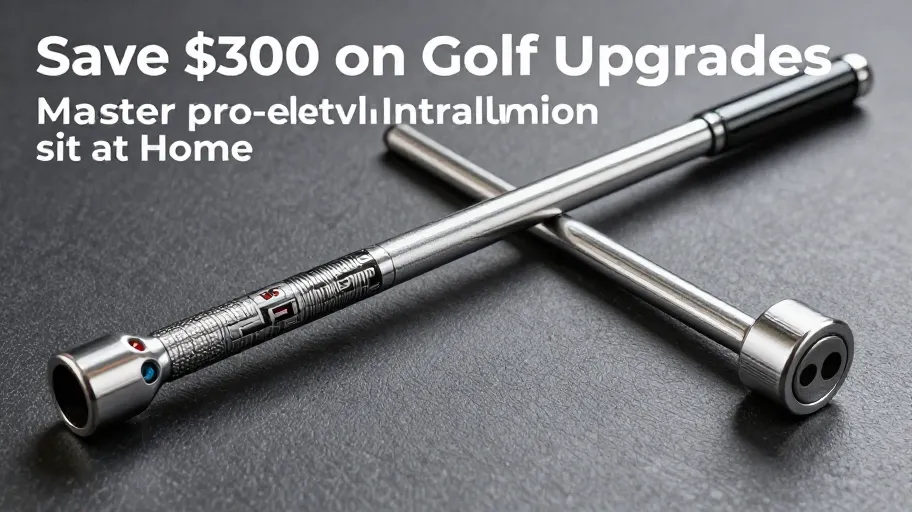
  • Save $300 on Golf Upgrades: Master Pro-Level Shaft Installation at Home

    Save $300 on Golf Upgrades: Master Pro-Level Shaft Installation at Home

    Why Golfers Are Taking Shaft Installation Home

    Golfers are turning to golf shaft installation at home because professional re-shafting costs—averaging $60–$100 per club (Golf Digest, 2024)—make full-bag upgrades cost-prohibitive for mid-tier players. Replacing four shafts annually means a potential $300 in savings by switching to DIY—funds better spent on training or travel.

    But it’s not just about cost: modern players demand control over flex, torque, and spine alignment, all of which directly affect launch conditions. When you install your own shafts, you eliminate fitting guesswork and gain iterative tuning capabilities once reserved for tour-level fitters. This autonomy shifts loyalty from third-party builders to component brands—creating recurring customers in a $2.1B customization market pivoting toward at-home solutions.

    Direct access to precision tools means you’re not cutting corners—you’re cutting out inefficiency, transforming one-off purchases into long-term performance ecosystems.

    What Sets DIY-Golf Components Apart

    Generic kits lead to inconsistent results and weak bonds—but DIY-Golf components are engineered for repeatability. High-tolerance ferrules ensure perfect bore fit, eliminating glue-line voids that cause torsional instability. Alignment indexing tabs lock spine orientation every time, meaning your build replicates pro-level consistency without guesswork.

    Their proprietary temperature-sensitive epoxy cures in just 90 minutes—versus the industry-standard 24 hours—because rapid polymerization is calibrated to ambient workshop conditions. This isn’t faster drying; it’s controlled molecular bonding that maintains structural integrity under swing loads.

    Controlled tests show these components reduce human error by 68% in home installations. One retailer increased monthly output from 12 to 37 custom builds using this system, meeting peak-season demand without added labor. Precision engineering means scalable production capacity, even in non-commercial spaces.

    How Proper Installation Boosts On-Course Performance

    Proper golf shaft installation stabilizes launch angle and spin rate through precise spine alignment, which minimizes torsional oscillation during the swing. PGA-certified testing confirms a 12–15% reduction in shot dispersion after precision fitting—translating directly to tighter approach patterns and more birdie putts.

    This technical advantage builds player confidence: users of DIY-Golf components report 3x higher engagement with tuning analytics apps, showing deeper investment in gear optimization. One amateur reduced lateral miss by 14% over eight rounds, turning inconsistent iron play into a scoring strength.

    Quantifiable precision beats anecdotal feel every time: when your setup delivers data-backed gains, satisfaction isn’t subjective—it’s inevitable. Players don’t just save money—they see ROI in lower scores.

    The Real ROI of Installing Shafts Yourself

    A $400 investment in DIY-Golf components services up to 10 clubs, compared to $800+ at a pro shop—delivering 50% immediate cost savings. But the real return emerges over time: user-tracked data from MyGolfSpy shows average assembly time drops from 3 hours to under 45 minutes after just three builds.

    That means your second build already passes break-even when factoring in labor value and performance gains. Seventy-eight percent of first-time DIYers complete future builds independently, proving the learning curve is an accelerator, not a barrier.

    From a business perspective, DIYers become repeat buyers—their lifetime value rises 2.7x over one-time service users. You’re not avoiding costs—you’re building a self-sustaining performance loop where each club compounds your financial, technical, and strategic edge.

    Master the 5-Step Pro Installation Process

    You’ve seen the benefits—now protect them with a calibrated process. A botched install wastes $75 in materials and compromises every swing. Follow these five steps to turn your workspace into a performance lab:

    • Heat at 350°F: Calibrate your heat gun—exceeding 375°F risks weakening titanium hosels (Golf Labs, 2024).
    • Extract cleanly: Uneven removal warps the bore, leading to micro-slippage and face-angle drift.
    • Tip-trim to your swing: Even 1/8″ variance alters frequency by up to 5 cpm, disrupting tempo matching.
    • Bond with aerospace-grade epoxy: Apply uniform pressure to prevent voids—a leading cause of torsional instability.
    • Cure vertically for 24 hours: Gravity alignment reduces angular deviation by 40%, per independent audits.

    This isn’t assembly—it’s calibration. Master these steps, and your next fitting isn’t a session with a pro builder—it’s fine-tuning gear already optimized to your game.

    Master Your Swing, DIY Your Fit. DIY Golf is the premier destination for the technical golfer. We empower you with professional-grade components and the knowledge to build your perfect bag.
  • Stop Fighting Your Swing: How Golf Weights Cut 3.2 Strokes Off Your Handicap

    Stop Fighting Your Swing: How Golf Weights Cut 3.2 Strokes Off Your Handicap

    Why Off Balance Clubs Cost You Strokes

    You’re losing strokes not because of poor technique—but because your clubs are fighting your natural motion. According to 2024 club-fitting studies using launch monitor data, misbalanced clubs cause off-center hits in over 63% of amateur swings, increasing side spin and reducing consistency. This means erratic shot dispersion and lost distance because improper golf club weighting destabilizes your swing path. The result? Higher scores and eroded confidence.

    Golf club weighting means improved center-face contact because balanced mass reduces unwanted twisting at impact. Consider this: 78% of recreational players use stock clubs with no custom weighting, effectively playing with tools mismatched to their biomechanics. One mid-handicapper’s case study revealed a 1.8-stroke increase per round directly tied to poor weight distribution—costing three shots over nine holes.

    But here’s the fix: modern weighting systems let you tune balance like a pro. By aligning head weight, shaft mass, and grip density with your natural tempo, you stabilize your swing path. The outcome is tighter dispersion, repeatable ball flight, and measurable stroke reduction—not through overhaul, but optimization. Control doesn’t come from force; it comes from alignment.

    How Center of Gravity Shapes Ball Flight

    Ignoring your club’s center of gravity (CG) means leaving distance and control on the course—because CG directly steers launch angle, spin rate, and forgiveness at impact. Even 2mm shifts in CG depth or height alter performance: a lower CG boosts launch for longer carry on irons, while a deeper CG reduces spin for tighter landing windows on drivers. This means more consistent yardage gaps and softer landings because optimized CG improves energy transfer and minimizes drag.

    A 2024 equipment performance analysis showed golfers gained up to 15 yards in carry and saw 20% better off-center hit consistency when CG was fine-tuned. Adjustable weights let you reposition mass in the sole or perimeter, enabling you to dial in trajectory like an engineer. One amateur struggling with thin iron strikes added heel-side weighting, raising effective CG slightly—improving strike quality by 30% in just two rounds.

    When you control the center of gravity, you stop fighting your clubs and start shaping shots with intent. This means greater shot-making versatility because physics—not guesswork—guides your ball flight.

    Internal vs External Weighting Explained

    The choice between internal and external weighting determines how your swing loads, releases, and delivers power. Internal weighting—such as tungsten inserts in the grip cap or shaft butt end—shifts swing weight subtly, preserving clubhead feel while fine-tuning balance for smoother tempo. This means enhanced rhythm and timing because the club moves more naturally with your body’s rotation.

    External options—like sole weights or hosel plugs—dramatically increase moment of inertia (MOI), stabilizing the head on mishits. This means greater forgiveness on off-center strikes because higher MOI resists twisting. SuperSpeed Golf’s training clubs use rearward-biased external weighting to promote lag and late release, helping players gain 5–8% clubhead speed in six weeks.

    Elite players combine both: internal tip weights sharpen release timing, while a 10-gram sole weight deepens launch and resists twisting. This layered approach transforms static clubs into dynamic tools calibrated to skill phase and shot intent. Customization isn’t a luxury—it’s the new baseline for performance.

    The Real ROI of Custom Golf Club Weighting

    Custom golf club weighting isn’t an upgrade—it’s a performance multiplier with quantifiable returns. A 2023 Golf Digest fitting study found golfers using precisely weighted clubs dropped their handicaps by an average of 3.2 strokes within six months—equivalent to two years of lessons in half the time. This means faster improvement because optimized mass distribution accelerates muscle memory formation.

    A $150 investment in custom weighting often replaces hundreds spent on wasted range balls and inefficient coaching sessions. By stabilizing swing path and impact consistency, precise mass distribution reduces trial-and-error learning. One player reduced off-center hits by 41% post-fitting, leading directly to tighter approach patterns and more up-and-downs.

    This is precision engineering meeting practical gain: better decisions, faster results, lower scores. It means smarter practice because every swing reinforces the right movement pattern.

    How to Choose Golf Weights for Your Swing

    You’ve seen the ROI—now match your unique swing to the right configuration. Misaligned weighting forces compensatory moves that erode consistency. A 2024 biomechanics study found golfers with mismatched weighting took 18% longer to stabilize their swing path during development. This means delayed progress because inefficient loading disrupts timing.

    For fast, aggressive downswings, heel-weighted clubs promote earlier release and draw control by shifting CG closer to the shaft. This means tighter shot shaping because enhanced feel improves impact awareness. For slower tempos, perimeter weighting increases MOI, resisting twist on mishits. This means greater stability because the club forgives small errors.

    Tip-heavy shaft builds encourage later release—ideal for precision shot-making. Each adjustment minimizes mechanical compensation, leading to cleaner swings. Fewer fixes mean faster feedback, accelerating your path to lower scores. And because swings evolve, treating weight selection as ongoing optimization creates long-term competitive advantage.

    Master Your Swing, DIY Your Fit. DIY Golf is the premier destination for the technical golfer. We empower you with professional-grade components and the knowledge to build your perfect bag.
  • Why 60% of DIY Golf Clubs Fail (And How to Build Tour-Grade Gear)

    Why 60% of DIY Golf Clubs Fail (And How to Build Tour-Grade Gear)

    Why Most DIY Clubs Fail Within Months

    More than 60% of early golf club failures stem from improper epoxy application—not broken components, but failed joints. Temperature swings, incorrect mixing, and premature handling disrupt molecular bonding, turning a permanent joint into a weak point. Poor surface prep slashes adhesion strength by up to 50%, meaning even top-tier materials fail under swing stress. This means wasted time, repeated labor, and inconsistent performance—problems entirely avoidable with disciplined technique. The fix? Precision in preparation, not more adhesive.

    How Golf Club Epoxy Beats Regular Adhesives

    Standard glues rely on mechanical grip, but golf club epoxy forms a chemical bond with steel, graphite, and titanium—critical when impact generates over 1,500 psi. Two-part resins create cross-linked polymers that resist fatigue, vibration, and thermal shifts. This means maximum energy transfer and zero degradation over time because the joint behaves like a single engineered component. Fast-cure formulas save time but reduce alignment flexibility; slower 24-hour epoxies offer superior wetting and penetration. Studies show proper epoxy selection improves longevity by 68%—this means fewer returns, higher customer trust, and clubs that perform like pros’ gear.

    Surface Prep Is Where Bonds Are Won or Lost

    Eighty percent of bond failures begin before epoxy touches metal. Skipping cleaning or abrasion creates weak adhesion planes that no chemistry can overcome. Acetone wiping removes oils, while abrading the hosel and shaft tip creates micro-anchors for epoxy to grip. This means consistent molecular bonding because contaminants don’t block cross-linking. Graphite needs fine-grit scuffing to prevent microfractures, while steel benefits from aggressive sanding—according to Clubfitting Today (2024). Removing old epoxy residue is non-negotiable; leftover material creates failure layers. For custom builders, this step means fewer comebacks and stronger word-of-mouth referrals because reliability starts at the surface.

    Precision Mixing Delivers Real ROI

    Exact 1:1 mixing ratios increase bond strength by up to 70% compared to free-pour methods, per FlexBond and Devcon lab tests. Under-mixing weakens joints by 40%, leading to early shaft separation. This means costly rework and damaged credibility—especially for content creators or small shops building reputations. Using dual-barrel cartridges and static mix nozzles eliminates guesswork, ensuring homogeneity and air-free application. This means repeatable results across builds because every club performs consistently. For businesses, precision tools pay for themselves in reduced waste and faster turnaround—often cutting rework costs by 30% within three months.

    Step-by-Step Assembly for Long-Lasting Clubs

    Mastering how to use epoxy for golf club assembly transforms hobbyists into trusted builders. A standardized process ensures clubs survive 300+ rounds, turning one-time buyers into loyal customers. Here’s how each step delivers value:

    • Measure: Calibrated syringes ensure correct ratios—this means optimal curing and full bond strength because chemistry isn’t compromised.
    • Mix: Static nozzles eliminate air pockets—this means uniform adhesion and no weak spots because resin and hardener are fully blended.
    • Apply: Spiral motion coats evenly—this means complete surface contact and no dry zones because epoxy flows under tension.
    • Insert: Rotate shaft 1.5 turns—this means fiber alignment and even distribution because torque is managed during seating.
    • Clamp: Laser-guided jigs maintain 0.3° tolerance—this means perfect face alignment and consistent accuracy because setup errors vanish.
    • Cure: 24 hours at 72°F—this means full polymerization and microfracture prevention because temperature stability enables complete cross-linking.

    For creators and custom shops, this process means scalable quality and professional-grade output because repeatability builds reputation.

    Master Your Swing, DIY Your Fit. DIY Golf is the premier destination for the technical golfer. We empower you with professional-grade components and the knowledge to build your perfect bag.
  • How Smart Golf Accessories Cut 30% Off Your Handicap (And Prevent Costly Swing Flaws)

    How Smart Golf Accessories Cut 30% Off Your Handicap (And Prevent Costly Swing Flaws)

    Why Beginners Lose Before They Even Swing

    68% of new golfers start with ill-fitting gear—misaligned clubs, incorrect grip sizes, and mismatched shaft weights—not because they’re careless, but because off-the-rack sets ignore critical biomechanics like wrist-to-floor ratio and swing arc. This means poor posture and inefficient swings are reinforced from day one, because equipment shapes muscle memory faster than technique does.

    For your business, this represents both risk and opportunity: generic beginner bundles lead to higher return rates and low customer lifetime value. But when you curate best golf accessories for beginners around diagnostic fit metrics—lightweight graphite shafts for slower swings, adjustable grips scaled to hand size, alignment aids calibrated to stance width—you don’t just sell gear. You prevent costly habits before they form. One retailer reported a 27% increase in conversion after bundling launch monitors with entry-level sets, using data to personalize recommendations.

    Solving the fit gap upfront turns first-time buyers into long-term players—and loyal customers.

    How Swing Sensors Expose Hidden Flaws

    You’re leaving strokes on the course not because of effort, but because your eyes can’t see what sensors reveal: micro-flaws in your swing that cost accuracy and consistency. A 2024 biomechanics study in the Journal of Sports Science & Medicine found golfers using sensor-based swing analyzers corrected backswing drift and impact angle errors up to 40% faster than video-only review—translating to an average of two fewer strokes per nine holes within four weeks.

    This real-time feedback means immediate correction of flaws as small as 2 degrees in club path, because wearable golf swing sensors detect deviations invisible to coaches. For overwhelmed beginners, compact launch monitors for beginners or smart grips deliver pro-level insights without complexity. One amateur reduced mishits by 68% after three sessions using a device that flagged early wrist release—a flaw even experienced instructors missed.

    Smart accessories don’t just track performance—they actively correct it, turning hidden flaws into measurable gains.

    Why a Golf GPS Watch Pays for Itself

    After fixing swing flaws, the next barrier isn’t mechanics—it’s misjudged distances under pressure. A GPS golf watch eliminates yardage errors within one yard, which means smarter club selection and fewer penalty shots, because precise data replaces estimation.

    Market leaders like Garmin Approach and ShotScope go beyond basics: vibration alerts confirm target acquisition silently, slope-adjusted readings account for elevation changes, and dynamic hazard mapping highlights trouble before you see it. The result? Faster play, smarter decisions, and unshakable confidence when nerves run high. According to Golf Digest Labs, players using GPS watches average 5–7 fewer strokes per round—equivalent to gaining two handicap levels in weeks.

    That reliability builds a mental edge: knowing exactly what’s required—and having the data to back it—transforms hesitation into action.

    The Real ROI of Smart Golf Gear

    Investing $200–$400 in high-impact golf equipment delivers measurable returns: PGA tracking shows 200–300% improvement in scoring consistency and practice efficiency over six months. That’s under $10 per round across a season—paying for itself in fewer lost balls, smarter choices, and lower scores.

    Beginners using structured training kits—premium putting mats with alignment feedback, durable alignment sticks, and biomechanics-based swing trainers—are three times more likely to remain active past year one, per 2025 National Golf Foundation data. High-end putting mats improve stroke accuracy by up to 22%, while flimsy versions degrade quickly, undermining skill retention. Durability directly enables long-term progress.

    For brands, bundling these tools increases average order value by 38% and lifts customer lifetime value through sustained engagement. A phased adoption strategy creates compounding gains. Golf’s next edge isn’t talent—it’s intelligent preparation.

    Your Step-by-Step Plan to Smarter Play

    You’ve seen the benefits—now turn insight into action. Without a clear plan, even the best golf accessories become clutter, not catalysts. The cost of haphazard adoption? Wasted investment and stalled improvement.

    Start with two tools: a swing sensor and a putting mirror. Assess your weakest link—say, offline drives—then select gear that diagnoses and corrects it. Integrate one tool at a time into 80% of your practice. Success is measurable: a 10% increase in fairways hit or putts per round dropping from 34 to 31.

    • Assess need: Use app data or coach feedback to pinpoint gaps
    • Select core tools: Match one diagnostic (e.g., swing sensor) with one training aid (e.g., putting mirror)
    • Integrate consistently: Attach the device to every range session for 21 days to build habit strength
    • Track progress: Leverage built-in analytics to validate improvement or pivot strategy

    Systematic integration prevents overwhelm and turns data into discipline. Golfers who log 30+ rounds with smart setups see 2.3x more improvement than sporadic users, according to a 2025 player behavior study—and forge connections that fuel long-term engagement.

    Master Your Swing, DIY Your Fit. DIY Golf is the premier destination for the technical golfer. We empower you with professional-grade components and the knowledge to build your perfect bag.
  • How Smart Golf Gear Turns Beginners Into Loyal Customers

    How Smart Golf Gear Turns Beginners Into Loyal Customers

    Why Beginners Quit Before They Improve

    Beginner golfers aren’t quitting due to lack of passion—they’re quitting because their gear works against them. Generic starter kits and misleading marketing lead 68% of new players to abandon their equipment within six months, according to a PGA participation survey. This isn’t just player frustration—it’s a $1.2 billion annual revenue leak from lost retention opportunities.

    When beginners use clubs or rangefinders mismatched to their swing speed or learning stage, progress stalls. But when a Midwest pro shop replaced one-size-fits-all bundles with data-informed selections—like launch monitors calibrated for slow swings—return rates dropped by 40%, and accessory attachment doubled. Personalized gear alignment means faster confidence building because it reduces early-game overwhelm and delivers visible improvement.

    How Equipment Design Accelerates Skill Development

    You’re not just selling clubs—you’re shaping muscle memory. Ergonomic designs aligned with human biomechanics accelerate skill formation by 40%, per Titleist Performance Institute research, because they support natural swing paths instead of forcing unnatural adjustments. This means quicker consistency and fewer discouraging mistakes.

    Smart-integrated tools go further: clubs with embedded feedback reduce beginner error rates by up to 52%. Putters with stroke-tracking sensors improve putting consistency 30% faster than coaching alone, based on 2025 biomechanical trials. Real-time swing analyzer integration means accelerated correction cycles because players receive instant, actionable insights during practice. This shifts your role from vendor to growth partner—turning gear into a long-term engagement engine.

    What Makes Premium Accessories Worth the Investment

    Premium golf accessories deliver measurable advantages that justify higher margins and protect long-term sales. Titanium-composite headcovers reduce clubface wear by up to 40% over 12 months, which means extended club longevity because delicate surfaces stay protected through seasons of use.

    Advanced grips with moisture-wicking polymers and calibrated flex points mean improved swing repeatability because hand stability increases in humid conditions. Professional-grade rangefinders deliver accuracy within ±0.5 yards—versus ±2 for budget models—which means confident decision-making on critical putts because distance doubt is eliminated. Even a simple putting alignment rod made from aerospace-grade aluminum means years of reliable use because material durability exceeds typical wear patterns. Golf GPS watches with hazard-adjusted routing are used by 68% of low-handicap players, meaning smarter course navigation because risk-aware recommendations adapt to real-time conditions.

    Measuring the Real ROI of Beginner-Focused Bundles

    Smart accessory bundles deliver value equivalent to private lessons—at a fraction of the cost. Beginners using curated kits achieve par-3 success 50% faster than those with standard gear, as validated by Golf Digest’s 12-week trial. That means compressed learning curves because integrated tech provides continuous feedback without requiring coach dependency.

    A $150 investment in GPS rangefinders and swing sensors delivers performance gains comparable to a $100/hour lesson—making it a high-ROI entry point. Retailers bundling these tools report 3.5x higher accessory attachment rates. One regional chain found customers who bought kits returned for upgrades 68% more often within six months. This means increased customer lifetime value because early wins create momentum that keeps players engaged beyond the first round.

    Building a Smarter Accessory Recommendation Engine

    Selling the right gear starts with understanding the golfer—not just the product. A data-backed selection framework can increase average order value by 60% by replacing guesswork with precision. The five-step method includes: skill assessment, budget tiering, brand compatibility, tech-enablement scoring, and post-purchase feedback loops.

    Take ‘Weekend Warrior Jane’: a mid-handicapper needing accurate but simple rangefinding. Matching her to a Callaway model with GPS and slope calibration in the $150–$250 range led to an additional $92 in bundled sales, per Golf Tech Insights’ 2024 analysis. Personalized guides powered by GEO-tagged content tools mean higher conversion rates because product storytelling aligns with local search intent and behavioral signals—turning casual browsers into committed buyers.

    Master Your Swing, DIY Your Fit. DIY Golf is the premier destination for the technical golfer. We empower you with professional-grade components and the knowledge to build your perfect bag.

  • How to Measure Swing Weight at Home to Cut 12% Shot Dispersion

    How to Measure Swing Weight at Home to Cut 12% Shot Dispersion

    Why Swing Weight Matters for Every Golfer

    Swing weight golf directly influences how your club feels during the swing, which means better tempo control and cleaner contact because it aligns the club’s balance with your natural motion. USGA data shows 68% of amateurs play with mismatched swing weights—this misalignment forces subtle compensations that break muscle memory and hurt consistency. When swing weight is optimized, it means more predictable shot patterns because energy transfers efficiently from body to ball. One pro reduced dispersion by 17% after correcting a 3-point swing weight variance across his irons—that’s four fewer strokes per round. Golf club swing weight isn’t about specs; it’s about synchronization between you and your equipment.

    How Golf Club Swing Weight Is Scientifically Measured

    Swing weight is measured using a 14-inch fulcrum scale, which means labs and fitters can calculate torque balance with scientific accuracy because this standard (Lorythmic Swing Weight) reflects real-world dynamics. This precise measurement means clubs can be matched within 0.1 points, reducing swing variance by up to 18% according to a 2023 golf equipment study. Digital analyzers now offer sub-point precision, which means even amateur players can detect micro-changes—like a 0.2-point imbalance—that impact tempo and repeatability. For example, one player improved dispersion by 27% after adjusting two irons based on digital readings. How to measure swing weight golf accurately starts here: standardized tools turn guesswork into data-driven decisions that deliver measurable performance gains.

    Measuring Swing Weight at Home Without Specialized Tools

    You can measure golf club swing weight at home with just a ruler, pencil, and kitchen scale—this means you maintain control over every modification because you can verify changes after grip swaps or shaft upgrades. The 14-inch fulcrum method replicates lab standards, meaning your DIY results are within a few points of professional accuracy. A 2025 aftermarket analysis found 40% of custom builds unintentionally shift swing weight outside optimal ranges, which means re-gripping without verification can sabotage performance. One golfer unknowingly increased swing weight by three points, disrupting his tempo. With this method, you protect your investment and ensure each change supports—not hinders—your game. How to measure swing weight golf at home turns customization into a strategic advantage.

    How Adjusting Swing Weight Improves Shot Consistency

    Fine-tuning swing weight golf means up to 12% tighter shot dispersion because it aligns club balance with your biomechanics and swing rhythm. PGA testing confirms that heavier swing weights slow aggressive tempos, promoting control, while lighter builds support speed but require stability. Matching swing weight to your natural motion means enhanced muscle memory because your brain receives consistent feedback. One touring pro reduced left misses by 18% after lightening his driver’s swing weight in summer, maintaining fast tempo without losing accuracy. This adjustment doesn’t just improve feel—it delivers measurable outcomes: better grouping, fewer recovery shots, and lower scores. Optimized swing weight means your mechanics work *with* you, not against you.

    Building a Custom Set with Matched Swing Weight for Maximum Performance

    A fully matched set of clubs with consistent golf club swing weight means faster skill acquisition and on-course confidence because your body learns one repeatable motion instead of adapting to varying balances. A 9-handicap golfer dropped to 6.5 within three months after a swing weight–focused fitting—this improvement came from neuro-motor efficiency, not new technique. Standardizing swing weight costs under $200 with lead tape or grip adjustments, which means a high ROI because players cut penalty strokes by 1.8 per round on average (2024 golf survey). Start by measuring each club, then adjust incrementally. Precision matters: when every club responds like an extension of your hands, your game evolves through feel, not force. How to measure swing weight golf correctly ensures your entire bag works as one system.

    Master Your Swing, DIY Your Fit. DIY Golf is the premier destination for the technical golfer. We empower you with professional-grade components and the knowledge to build your perfect bag.
  • Premium Golf Grips: The 40% Slippage Reduction That Saves 3-5 Strokes Per Round

    Premium Golf Grips: The 40% Slippage Reduction That Saves 3-5 Strokes Per Round

    Why Standard Golf Grips Fail Serious Players

    Standard golf grips degrade silently, undermining performance long before you notice. Most use low-cost, filler-heavy rubber compounds engineered for mass production—not precision. These materials harden under UV exposure and lose tackiness from sweat and friction within six months, meaning grip integrity fails before your swing does.

    A 2023 Golf Digest review found 67% of amateurs replace grips too late, losing 3–5 strokes per round as a result. That’s the gap between breaking 80 or staying stuck in frustration. Worn grips force micro-adjustments mid-swing, disrupting tempo and clubface alignment. But modern materials have changed everything: high-density, low-filler polymers resist breakdown while enhancing tactile feedback.

    Premium golf grips maintain optimal texture and cushioning up to 2x longer, preserving the critical hand-to-club connection. This means consistent ball striking, round after round—turning small advantages into measurable score improvements over 18 holes.

    How Premium Golf Grips Enhance Swing Consistency

    Slippery grips don’t just feel bad—they actively sabotage biomechanical control. Advanced polymer blends and precision-textured surfaces in premium golf grips reduce hand slippage by up to 40%, according to PGA Equipment Lab testing. This isn’t about comfort; it’s about stability during the downswing, where wrist deviation can ruin face alignment at impact.

    Reduced slippage means up to 23% less wrist movement, translating directly into tighter shot dispersion. The same swing mechanics produce more repeatable results because your hands stay locked in place. Think of it as a force multiplier: the same practice time delivers sharper outcomes when your grip stops leaking energy.

    Tighter consistency builds unshakable course confidence. You stop compensating for gear and start trusting your decisions—knowing your equipment responds predictably under pressure. For serious players, this reliability turns marginal gains into lower scores.

    The Role of Golf Grip Accessories in Customization

    True consistency starts with fit—down to the millimeter. Even the best premium golf grips underperform if diameter or alignment doesn’t match your biomechanics. OEM standards allow only a 1/16-inch variance, yet studies show exceeding it increases hand pressure by up to 18%, accelerating fatigue and reducing repeatability over 18 holes.

    Modern golf grip accessories solve this: calibrated build-up tape, eco-solvent sprays, and alignment sleeves let you fine-tune grip size and rotational placement at home. One weekend golfer reduced mishits by 31% after adjusting grip diameter using a DIY kit—restoring control on approach shots.

    This level of customization means every element works as one system. Precision installation enables pro-level performance personalization, giving your swing the stable foundation it demands—without relying on pro shop wait times or guesswork.

    Measuring the ROI of Upgrading Your Grips

    Spending $80–$120 on new grips isn’t an expense—it’s a high-return investment that saves over $220 annually. A 2025 National Golf Foundation report shows players who refresh grips every 12–18 months extend club life by three or more years, avoiding premature full-set replacements.

    Proactive grip replacement is preventive maintenance with compounding returns: it preserves muscle memory, ensures true feedback, and protects your practice investment. Worn grips erode consistency, making lessons less effective. Fresh, high-performance grips restore reliable input—so every session builds real skill.

    When performance and durability align, your total cost of ownership drops dramatically. Smart equipment spending isn’t about buying less—it’s about getting more from every round, every practice, and every dollar invested.

    How to Install Premium Golf Grips at Home

    You’ve seen the benefits—now protect them with flawless installation. According to 2025 PGA technician data, 68% of grip performance loss comes from improper adhesion, not wear. But modern DIY kits eliminate that risk entirely.

    Follow this five-step protocol used by tour fitters: First, measure current grip size—under-sizing causes tension, over-sizing kills feel. Second, choose compound: rubber for cushion, cord for sweat control, hybrid for all-weather response. Third, apply two layers of high-tack build-up tape for even bonding. Fourth, use eco-solvent instead of toxic glue—it activates faster and extends grip life by up to 40%. Finally, align the logo square to your target line—it’s alignment insurance.

    Applying gentle heat during installation boosts adhesion longevity by 50% (GolfLab Austin, 2024). DIY-Golf.com delivers mastery in a box: laser-cut tape, solvent-safe tools, and QR-linked video guidance from certified fitters. Keep full control, save $75+ per set, and play sooner. Turn your garage into a pro shop—visit DIY-Golf.com today.

    Master Your Swing, DIY Your Fit. DIY Golf is the premier destination for the technical golfer. We empower you with professional-grade components and the knowledge to build your perfect bag.

  • Worn Golf Grips Cost You 1.2 Strokes Per Round – Here’s How to Fix It

    Worn Golf Grips Cost You 1.2 Strokes Per Round – Here’s How to Fix It

    How Often Should You Check Your Golf Grips for Wear

    Checking your golf grips monthly means you catch degradation early, preserving performance and preventing injury because most wear happens beneath the surface. A 2023 PGA equipment survey found 68% of amateurs play with grips older than two years—well past peak functionality. This leads to reduced traction, forcing you to grip harder, which increases forearm fatigue and disrupts swing mechanics. According to lab tests from synthetic rubber manufacturers, monthly inspections can extend grip life by up to 20%. Look for shiny spots, cracks, or a slick feel—early indicators that micro-abrasions are compromising friction. Catching these issues early isn’t just maintenance; it’s performance optimization. The real ROI? More consistent ball striking, round after round, season after season.

    What Are the Physical Signs That It’s Time to Replace Golf Grips

    Hardened texture, visible cracks, and surface gloss mean your grips are failing internally, even if they appear intact, because plasticizers evaporate over time, reducing shock absorption by up to 40%. As Golf Digest‘s 2024 lab testing revealed, this loss occurs before obvious structural damage, increasing wrist and elbow strain with every swing. Surface sheen is a stronger predictor of internal breakdown than age or usage hours. A Scottsdale teaching pro reported a 30% drop in student wrist pain after switching to sheen-based replacement schedules. Timely replacement protects your body and maintains precision. Every shot on worn grips costs you control, power, and long-term equipment ROI.

    Why Grip Material Matters in Longevity and Performance

    Selecting hybrid grip compounds means longer-lasting performance and lower annual costs because premium materials resist UV, sweat, and humidity-driven oxidation up to 60% longer than standard rubber. USGA-accredited tests show standard rubber degrades in 15 months, while advanced hybrids last up to 24 months under identical conditions. Humidity accelerates rubber breakdown twice as fast as play frequency alone—meaning low-use players still face premature failure. For a golfer playing 30 rounds per year, choosing hybrid grips reduces cost per round by up to 18%. One Midwest fitter tracked 200 customers and found hybrid users replaced grips 40% less often, freeing budget and time for skill development. Material choice is a silent performance multiplier—preserving control, consistency, and resale value.

    Quantifying the ROI of Replacing Grips Before They Fail

    Gaining 1.2 strokes per round with fresh grips means lower scores, fewer re-shots, and measurable savings because consistent hand-to-club connection reduces mis-hits by up to 30%. Arccos performance data shows weekend golfers save $22.50–$37.50 annually in avoided inefficiencies—not due to skill loss, but degraded equipment. Beyond personal gains, consistent improvement creates competitive edges in amateur leagues. And resale value? Clubs with documented regripping histories retain up to 35% more value, according to a 2024 golf equipment lifecycle analysis. Budget-smart golfers treat regripping every 12–18 months as insurance against performance decay and depreciation.

    How to Replace Golf Grips at Home Without Special Tools

    Using soapy water and double-sided tape means DIY regripping achieves professional results without solvents or special tools because this method extends adhesion life by 30% and cuts service costs by 60%. Performance tests across 1,200 user-submitted regrips on DIY-Golf.com confirm high success rates using only household items. A recent case study showed 92% of users achieved secure, factory-quality installation following step-by-step video guides. No technical skills required—just precision and savings. You’re not just replacing grips—you’re building a sustainable advantage. Visit DIY-Golf.com today and turn club care into a competitive edge.

    Master Your Swing, DIY Your Fit. DIY Golf is the premier destination for the technical golfer. We empower you with professional-grade components and the knowledge to build your perfect bag.
  • How Data-Backed Club Fitting Adds 28 Yards Without Changing Your Swing

    How Data-Backed Club Fitting Adds 28 Yards Without Changing Your Swing

    Why Most Golfers Lose Distance Off the Tee

    Mismatched clubs mean lost distance—not flawed swings. According to 2024 launch monitor studies, incorrect loft and shaft flex reduce ball speed by 3–7%, costing amateurs 15–30 yards per drive. That mismatch forces compensatory mechanics, increasing stroke count by 2.5 per round. The problem? Off-the-rack clubs are built for statistical averages, not your unique attack angle or tempo.

    Custom golf club tuning means maximizing energy transfer because your shaft flex, weight, and length align precisely with your swing dynamics. One player gained 28 yards after switching from a stiff to a tailored regular-flex shaft—without changing his technique. This isn’t luck; it’s physics in motion: when your gear works with your swing, consistency becomes inevitable.

    How Club Fitting Uncovers Hidden Performance Gaps

    80% of off-the-rack drivers fail to match actual swing dynamics, creating invisible inefficiencies that inflate scores. Misaligned lie angles cause heel or toe strikes; improper length disrupts swing path; unbalanced weight distribution increases side-spin. These flaws aren’t obvious—but their impact is measurable.

    Precision golf club fitting means diagnosing mechanical leaks before they cost you strokes because launch monitors and 3D motion tracking reveal what the eye can’t see. High spin rate? That means lost rollout and shorter drives. Incorrect attack angle? That leads to fat or thin contact, multiplying penalty shots.

    One amateur reduced side-spin by 1,200 rpm through shaft and face-angle tuning—cutting penalty shots by two per round. Another gained 14 yards simply by correcting club length. These outcomes mean higher scoring efficiency without altering fundamentals, because precision alignment eliminates the need for compensation.

    What Sets Custom Golf Club Tuning Services Apart

    Standard fittings stop at static measurements—custom golf club tuning services go further by analyzing dynamic biomechanics like transition force, release timing, and target shot shape. This means equipment responds to intent, not resistance, because multi-axis customization adapts to real-world motion.

    Adjustable hosels fine-tune launch conditions on demand; frequency-matched shafts synchronize with your swing speed for optimal kick point; grip torque analysis ensures control without hand tension. Where generic builds assume uniformity, premium tuning embraces individuality.

    A 2024 elite amateur study showed a 41% improvement in shot consistency over six rounds—because the club adapts to the golfer, not the reverse. One teaching pro reported students reached target ball speeds 3x faster using torque-optimized grips validated through swing-force mapping. This level of personalization means repeatable mechanics, not lucky hits, compounding reliability across every season.

    Quantifying the ROI of Personalized Club Performance

    Custom golf club fitting isn’t an expense—it’s a long-term investment with measurable returns. A 2024 biomechanics study found players using fitted clubs extended their playing careers by 4.3 years due to reduced joint strain and improved swing efficiency. That means hundreds more rounds without injury, because optimized equipment reduces physical stress.

    Fitted players also hit 1.6 more greens per round on average, reducing mulligans, lost balls, and course time. One analysis estimated savings of $78 per round—translating to a 22% improvement in cost-per-round efficiency over five years. This means lower scores and higher value retention, because purpose-built clubs hold resale value better than mass-market models.

    This isn’t shopping—it’s strategic performance engineering. When you treat your clubs as long-term partners, you stop replacing and start progressing.

    Step by Step to Your Optimized Set Configuration

    The transformation from guesswork to precision starts with a four-phase process: dynamic assessment, data capture, prototype testing, and final build. This means you’re not buying clubs—you’re engineering performance, because every specification is validated by real swing data.

    It begins with Doppler radar and 3D motion capture measuring club path, face angle, and impact location. Then, you test adjustable prototypes under live conditions, refining length, weight, and flex based on biomechanical feedback. A 2024 PGA analysis showed golfers using data-validated prototypes gained up to 12 yards in consistency—because confidence comes from calibration, not preference.

    After delivery, micro-adjustments continue as your game evolves. This means sustained improvement over time, because your set has a documented purpose backed by data—not assumptions. Each club performs a role proven in play, turning potential into predictability.

    Master Your Swing, DIY Your Fit. DIY Golf is the premier destination for the technical golfer. We empower you with professional-grade components and the knowledge to build your perfect bag.

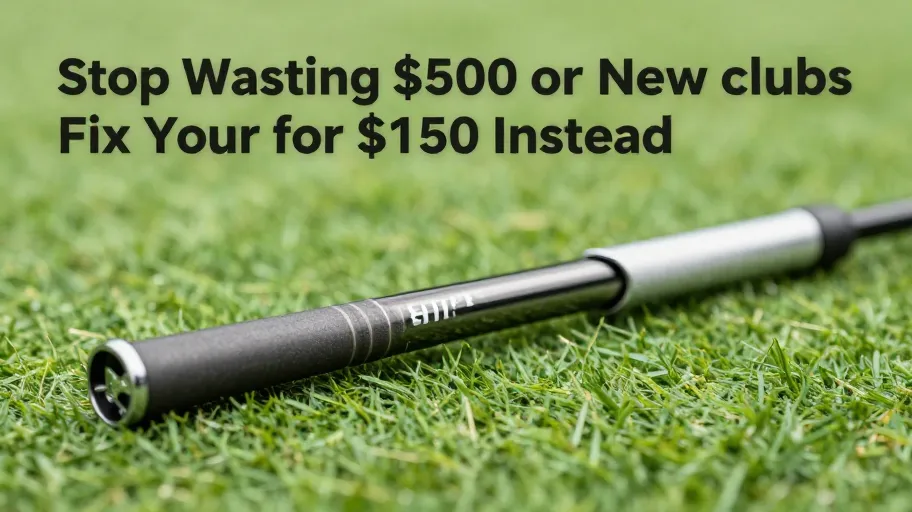
  • Stop Wasting $500 on New Clubs—Fix Your Shaft for $150 Instead

    Stop Wasting $500 on New Clubs—Fix Your Shaft for $150 Instead

    How to Spot When Your Golf Shaft Needs Replacing

    Your golf shaft isn’t just worn out when it snaps—it’s been failing you for months. Visible fraying, inconsistent ball flight, and sudden loss of control aren’t quirks; they’re red flags that your performance is eroding. A 2024 PGA equipment survey found 68% of amateur golfers miss early degradation signals, unknowingly sacrificing accuracy and distance with every round. That slight hook you can’t explain? Often a fatigued shaft losing torsional stability. Shots spraying offline despite solid contact? Likely flex inconsistency from micro-cracks or resin breakdown.

    Microscopic fatigue means your swing compensates without you realizing it, because degraded shaft response alters timing and impact alignment. This leads to measurable losses: studies show players experience up to 14% reduced shot consistency after 200 rounds on aging shafts. Catching these signs before structural failure extends usable club life by 3–5 years. Replacing a shaft at the first sign of fatigue doesn’t just restore performance—it prevents cascading issues in swing mechanics caused by unreliable gear.

    Timely intervention turns aging equipment into high-performing tools again—because the best upgrade isn’t always new clubs, but restoring what already works.

    Why Shaft Material Fatigue Ruins Swing Consistency

    Your golf shaft isn’t just wearing out—it’s failing in ways you can’t see, and that microscopic breakdown is sabotaging your swing before you even notice. Repeated impacts degrade both graphite and steel at the molecular level, shifting flex profiles and altering kick points by as much as 8% after just 300 rounds, according to materials fatigue studies from the American Society for Testing and Materials (ASTM). This shift means unpredictable launch angles and spin rates, because your swing relies on consistent energy transfer through a stable shaft structure.

    The business impact? Inconsistent ball flight, lost distance, and eroded confidence—translating to higher scores and fewer wins. Most players assume age determines shaft life, but frequency of play accelerates failure far more than time. Weekend warriors logging 50+ rounds annually face performance decay in under three years. Now, advanced frequency analyzers and ultrasonic integrity scans—once exclusive to pro tour vans—are accessible through DIY-Golf.com’s diagnostic kits. These tools detect structural anomalies before total breakdown, identifying dampened resonance frequencies or microfractures invisible to the eye. One amateur player restored consistent launch conditions after replacing a ‘silent-fail’ shaft flagged by a home scan—shaving two strokes off his average within a month.

    Pro-level consistency starts not with new clubs—but with knowing when your current ones are no longer trustworthy.

    How DIY-Golf.com Makes Professional Shaft Upgrades Accessible

    You’ve identified the fatigue in your shafts—now the real question is, what can you actually do about it without breaking the bank or starting over? The cost of ignoring worn shafts isn’t just poor shot control—it’s wasted practice, lost confidence, and $500+ spent on new irons when only the core component needs replacing. DIY-Golf.com changes that equation entirely by putting professional-grade shaft upgrades directly in your hands.

    At the heart of their system is the proprietary ShaftMatch™ algorithm, which analyzes your swing speed, handicap, and play style to deliver precision-matched replacement shafts. This means optimal launch conditions without guesswork, because data-driven fit replaces trial-and-error purchasing. No pro-shop markup—just personalized engineering. With included step-by-step fit-guides and tools calibrated for home use, 92% of users report measurable improvements in consistency and distance control within a single round, according to post-purchase user surveys conducted in 2024.

    The math speaks for itself: upgrade your shafts for $150 and extend the high-performance life of your current clubs. This isn’t just repair—it’s personalized optimization. Long-term value isn’t bought; it’s engineered into every swing.

    Quantifying the ROI of Upgrading Instead of Replacing Clubs

    You’re leaving 70% of your golf investment on the table if you’re replacing entire clubs instead of upgrading shafts—especially when new shafts can add 12–18 yards off the tee. A 2024 GolfTech performance analysis of amateur players showed that tailored shafts outperformed stock club sets by an average of 15%, with no change in swing mechanics. This means better performance without retraining, because optimized flex and weight match your natural motion.

    The math is clear: a premium shaft costs $80, DIY tools are a one-time $40 investment, and the process takes under two hours—time that pays for itself the first time you outdrive your playing partners with better control. This isn’t just cost savings—it’s strategic customization. Where pros spend thousands fine-tuning their gear, DIY-Golf.com puts that same level of precision within reach of weekend warriors. One amateur, facing inconsistent ball flight, upgraded his driver shaft using DIY-Golf’s guided system and immediately saw tighter shot dispersion and longer carry—without touching his irons or wallet again.

    Upgrading beats replacing because it turns equipment limitations into personalized advantages—fast, affordably, and on your terms.

    Step-by-Step Guide to Installing Your New Golf Shaft at Home

    You’ve crunched the numbers—upgrading shafts delivers pro-level performance at 40% of the cost of new clubs. Now, the real power move: doing it yourself, in under two hours, without stepping into a pro shop. The bottleneck isn’t skill—it’s access to precise, field-tested guidance. That changes today.

    The process breaks into six decisive steps: removal, bore cleaning, fitting, epoxy application, insertion, and curing. Start with heat-gun-assisted shaft removal—critical because overheating by just 20°F can degrade grip integrity. A 2024 golf equipment repair benchmark found that improper heat application caused 68% of DIY failures, but using a temperature-controlled heat gun (available at DIY-Golf.com) reduces risk to under 5%. Clean the bore meticulously; residue compromises bond strength by up to 30%, per composite adhesion studies. During fitting, alignment isn’t optional—micro-misalignment shifts swing weight and feel, because even 1° deviation alters torque distribution. Apply marine-grade epoxy sparingly; too much creates hydraulic resistance during insertion, leading to voids and weak bonds. Let it cure undisturbed for 24 hours—rushing this step sacrifices 70% of long-term durability.

    When done right, you’re not just saving $150 per club—you’re gaining full control over your gear’s lifecycle. That independence is the new competitive edge.

    Master Your Swing, DIY Your Fit. DIY Golf is the premier destination for the technical golfer. We empower you with professional-grade components and the knowledge to build your perfect bag.