
Category: Tutorial

Tutorial

  • DIY Club Tuning: Save 90% on Pro Costs While Boosting Accuracy by 18%

    DIY Club Tuning: Save 90% on Pro Costs While Boosting Accuracy by 18%

    Why Most Golfers Underperform Due to Poor Club Specifications

    Over 70% of amateur golfers are playing with clubs that work against them—not because they lack skill, but because their equipment is fundamentally misaligned. According to the PGA’s 2025 Equipment Fitting Report, most players use clubs with incorrect loft, lie angle, or shaft flex, forcing their bodies to compensate in ways that degrade swing mechanics, reduce ball speed, and sabotage accuracy. This misalignment means lost performance and inflated scores because clubs aren’t matching individual biomechanics.

    A mere 1° error in lie angle can send a shot 4–6 yards off target at 150 yards—this translates directly into missed fairways and higher handicaps because small deviations compound across 18 holes. When clubs don’t match your posture, swing path, or tempo, every shot becomes an adjustment rather than an execution. The result? Inconsistent ball striking and eroded confidence on every tee.

    Lie boards and face-angle gauges eliminate guesswork by revealing impact dynamics visually, meaning you can diagnose flaws like heel-drag or toe-up contact with certainty because they provide real-world feedback. Digital swing analyzers quantify tempo and release timing, enabling precise tuning instead of feel-based tweaks because data replaces assumption. For serious golfers, this shift isn’t just technical—it’s psychological: knowing your gear works *with* your swing builds trust that lowers scores.

    How Shaft Frequency Analyzers Transform Customization Accuracy

    Ignoring shaft frequency leaves 23% of swing consistency on the table, according to Golf Digest’s 2024 lab tests—meaning mismatched shafts sabotage rhythm and power delivery because stiffness variations disrupt energy transfer. Shaft frequency analyzers measure vibrational response to translate subtle differences in stiffness into quantifiable data, enabling matched sets where each iron behaves predictably relative to the next because harmonized frequencies improve transition feel.

    Tour professionals rely on frequency-sorted shafts to tighten dispersion under pressure, reducing unwanted variation during competition. Now accessible to amateurs, this technology means weekend players can build set continuity without guesswork because science replaces trial-and-error. For businesses, offering frequency analysis repositions your brand as technically elite—customers seeking precision trust partners who speak their language.

    Pairing frequency tools with custom shaft sales increases average order value by 35%, per early adopter benchmarks, because buyers invest in full-system optimization once they see measurable benefits. In real conditions—wind, fatigue, uneven lies—knowing your clubs respond uniformly builds confidence that translates directly to lower scores.

    The Role of Loft and Lie Machines in Correcting Ball Flight Issues

    Adjustable loft and lie machines fix the root cause of 60% of persistent slice and hook patterns, meaning erratic ball flight turns into repeatable performance because corrected face alignment ensures square impact. For DIYers, this is the difference between guessing and knowing—between frustration and confidence at address. Ignoring these errors means accepting compromised launch angles, lost distance, and inconsistent shot shape because poorly aligned clubs fight your natural swing path.

    A 2023 Golf Science Journal study found golfers who underwent verified loft and lie adjustments saw a 14% improvement in strike efficiency and tighter dispersion within three rounds. Digital readouts paired with precision bending presses allow sub-degree corrections down to 0.5°, ensuring the sole contacts turf correctly because surgical tuning beats estimation every time.

    Shops offering verified corrections report up to 40% higher customer retention—because when gear finally works *with* the swing, trust forms. For users, ROI is clear: one properly tuned iron saves 1.2 strokes per round, delivering real scoring gains without changing technique.

    Quantifying the ROI of Home-Based Club Tuning Stations

    A $300 home tuning station pays for itself after just 10 clubs adjusted—because pro shop labor averages $50 per session versus $5 DIY, creating a 90% cost reduction per adjustment. This transforms tools from expenses into leverage points: active players break even in under three weeks, then enjoy unlimited tuning at near-zero marginal cost.

    One mid-handicapper rebuilt driver, irons, and wedges over a season—saving $800 compared to shop rates. That capital didn’t vanish; it fueled upgrades, confidence, and lower scores. More importantly, he joined a behavioral trend: golfers who tune their own clubs spend 3x more on custom shafts and grips within six months because ownership deepens engagement.

    • $50 professional adjustment vs. $5 DIY = 90% cost reduction per club
    • Break-even achieved in under three weeks for active players
    • Tuning kit owners replace or upgrade clubs 1.8x faster than non-owners (per anonymized purchase pattern analysis)

    At DIY-Golf.com, this reframes tool kits not as one-time purchases but as entry points to high-lifetime-value relationships. Every dollar invested generates returns in both performance and long-term customer value.

    Step-by-Step Guide to Building Your First Custom Club Setup

    You don’t need a pro shop to start tuning—just the right sequence of tools and a mindset shift: from guessing to measuring. Skipping this step costs consistency, distance, and enjoyment. But beginning with high-impact, low-cost tools turns subjective feel into objective data—where real improvement begins.

    Start here: 1. Lie board reveals sole contact at impact, exposing flaws invisible to the naked eye. Paired with 2. Marking spray, it translates swing dynamics into visual proof, letting you adjust with purpose. Add 3. Adjustable wrench for hosel and loft/lie changes—unlocking custom angles once reserved for fitters. Scale up with 4. Digital swing gauges (like Swingbyte or HackMotion) that quantify tempo, shaft lean, and release timing. Finish with 5. Face tape or impact film to validate center-face contact and correlate changes with strike quality.

    This staged approach boosts retention: beginners using under-$50 starter kits show 68% higher engagement in DIY ecosystems. One retailer found bundling ‘First Tune’ kits drove a 40% increase in repeat accessory purchases within 90 days. Position customization not as a one-time fix, but as an ongoing performance loop that keeps customers coming back for insights, upgrades, and community.

    Master Your Swing, DIY Your Fit. DIY Golf is the premier destination for the technical golfer. We empower you with professional-grade components and the knowledge to build your perfect bag.
  • Losing 20 Yards Per Drive? Data-Driven Shaft Fitting Unlocks Hidden Distance

    Losing 20 Yards Per Drive? Data-Driven Shaft Fitting Unlocks Hidden Distance

    Why Most Golfers Lose Distance with the Wrong Shaft

    You’re losing 15 to 20 yards per swing—not from poor technique, but from a mismatched golf club shaft. Launch monitor data from TrackMan and PGA studies confirm: improper flex, weight, and kick point can reduce energy transfer efficiency by up to 30%. That means powerful swings turn into weak pop-ups or wild slices.

    An improperly matched shaft disrupts timing and dampens whip, breaking the link between your motion and ball flight. A shaft that’s too stiff won’t load fully; one that’s too light sacrifices stability. The result? Inconsistent ball flight and lost control under pressure.

    Here’s the reality: 70% of recreational players use stock shafts never designed for their unique swing tempo or transition force. These off-the-rack options look premium but kill potential. The fix? Stop guessing. Start measuring. When shaft specs align with your actual swing dynamics via launch monitor analysis, you reclaim lost yardage, tighten dispersion, and build repeatable performance—transforming not just shots, but scores.

    What Shaft Flex and Torque Really Mean for Your Swing

    Shaft flex and torque aren’t vague labels—they’re precision controls for launch angle, face stability, and spin. Golf shaft flex governs energy transfer timing: too soft, and you release early, losing compression; too stiff, and the club doesn’t load, killing ball speed. Torque, meanwhile, determines rotational resistance during impact.

    Data from Foresight Sports’ 2025 trials shows fast swingers (over 105 mph) using high-torque shafts generate up to 8% more sidespin due to delayed face rotation—a recipe for missed fairways. Low-torque shafts deliver tighter dispersion, directly improving greens in regulation and reducing penalty strokes.

    Premium brands now offer tunable torque cores and multi-plane bending profiles, enabling fitters to match rotational resistance to individual transition force—something stock shafts can’t replicate. One player reduced his miss-left pattern by 43% simply by switching to a mid-low torque profile. Precision tuning beats guesswork every time, turning subtle adjustments into measurable gains in both distance and accuracy.

    How Launch Monitor Data Identifies Your Ideal Shaft Profile

    Launch monitors like GCQuad and TrackMan don’t just track shots—they decode the physics behind your swing. A 2024 Golf Digest study found golfers using data-guided shaft selection improved outcomes by up to 40%, gaining an average of 18 yards. This is transformational consistency powered by evidence, not feel.

    Take kick point: a lower kick point increases trajectory and improves descent angle, leading to better stopping power on approach shots. Lower torque reduces clubhead twisting, tightening dispersion under stress. And counterintuitively, faster swingers often perform better with lighter shafts—reduced swing weight improves tempo control, boosting clubhead speed by 3–5 mph without changing technique.

    One touring pro with a 120 mph swing gained 22 yards after switching to a lighter, mid-kick shaft—data revealed his downswing favored quicker loading over raw stiffness. Dynamic fitting replaces assumptions with alignment, ensuring your shaft works with your swing, not against it. Every round becomes more predictable when equipment matches mechanics.

    Quantifying the ROI of Upgrading to a Custom Golf Shaft

    A $200 custom golf shaft pays for itself fast. One amateur tracked a 15% drop in fairways hit over 30 rounds—costing $480 in extra balls, fees, and bets—plus inconsistent iron gapping. After switching to a fitted shaft, his 6-iron to 7-iron gap stabilized from 18–24 yards to a reliable 14±1 yard, eliminating two misclub selections per round and saving three strokes on average.

    According to GolfLabs’ 2024 durability tests, custom shafts maintain flex integrity and tip stability up to 30% longer than OEM models. That means consistent distances round after round. Benefits include:

    • 10% improvement in fairways hit = ~$500 annual savings in practice and play
    • Consistent gapping reduces costly decision errors under pressure
    • Optimized torque retains higher ball speeds across swing types

    This is ROI you feel by the 9th hole: confidence in your numbers, fewer penalties, and a real edge over players still gambling with stock gear.

    Step by Step Guide to Getting Fitted for the Best Golf Shaft

    Skip the guesswork—get fitted. A single hour with a certified fitter using launch monitor tech can unlock 15–20 yards and pinpoint accuracy. It’s not about buying new clubs; it’s about aligning physics with intent.

    Start with swing analysis: high-speed sensors capture your tempo, transition force, and release point. A 2024 PGA-certified study found 68% of amateurs use misaligned shafts, costing 18 yards in carry. Then move to data capture using TrackMan or Foresight to measure launch angle, spin rate, and ball speed across multiple shafts—from stiff-tip to taper-loaded designs.

    In comparison trials, test at least six shafts across brands. One golfer gained 23 yards with identical clubhead speed just by switching to a mid-kick shaft that matched his late release. Pro tip: test driver and iron shafts separately—irons load differently due to shorter lengths and steeper angles.

    The final pick isn’t about brand prestige—it’s about repeatable performance. Custom fitting delivers a 3-to-1 ROI within ten rounds: more fairways, fewer penalties, longer putting confidence. When precision replaces assumption, every round becomes winnable.

    Master Your Swing, DIY Your Fit. DIY Golf is the premier destination for the technical golfer. We empower you with professional-grade components and the knowledge to build your perfect bag.
  • How Adjustable Putter Weights Cut 2 Strokes Per Round (According to PGA Science)

    How Adjustable Putter Weights Cut 2 Strokes Per Round (According to PGA Science)

    Why Most Golfers Miss Putts Due to Poor Weight Balance

    Putter weights directly influence stroke stability, roll consistency, and distance control, meaning even minor imbalances sabotage accuracy and confidence on the green. When your putter is too light or poorly balanced, it amplifies natural stroke flaws because reduced mass increases sensitivity to hand movement—this means face angle deviation at impact can spike by up to 2.3 degrees, according to 2025 PGA Tour biomechanical studies.

    That may sound technical, but the real-world effect is dramatic: a 2-degree error at 10 feet pushes the ball over 17 inches off target—far enough to miss the cup entirely. For weekend players, this leads to 40% more three-putts and costs 1.8 strokes per round. What feels like ‘nerves’ is often physics working against you—your hands compensate mid-stroke to stabilize the head, breaking down smooth pendulum motion.

    The solution? Modern adjustable weight systems let you tune swing weight, MOI, and center of gravity alignment so your stroke stays stable under pressure. Golfers who optimize their weighting report smoother tempo, tighter face dispersion, and up to 30% fewer three-putts within three rounds—a direct path to lower scores without changing technique.

    How Putter Weights Affect Stroke Path and Face Control

    When your putter’s weight is mismatched to your stroke, it disrupts face control and path consistency—meaning even solid-looking putts veer offline. But strategic weighting transforms this: adding mass to key zones increases moment of inertia (MOI), making the putter more resistant to twisting on off-center hits. This means cleaner contact and truer roll, because higher MOI reduces angular deviation during takeaway and follow-through.

    A 2024 PGA Performance Lab study found multi-weighted putters reduced wrist breakdown by 38%, enabling square face alignment at impact. Heavier heads also promote shoulder-dominant strokes, which are inherently more repeatable than wrist-driven motions. That shift means less manipulation, fewer corrections, and improved distance control—especially under fatigue or pressure.

    Premium models now use toe, heel, and back-cavity weights to fine-tune balance for arc vs. straight-back-straight-through strokes. One model tested with amateurs lowered three-putt frequency by 27% over nine rounds—saving nearly two full strokes per round. The result? A putter that doesn’t just feel better—it performs predictably when it matters most.

    What Science Says About Optimal Putter Head Weight

    The ideal putter head weight isn’t one-size-fits-all—it’s a precise match between your stroke mechanics and tempo, typically falling within 350–400g total swing weight. Ignoring this specificity means sacrificing roll efficiency, which can vary by up to 22% based on minor deviations, per USGA and Golf Laboratories Inc. (2025).

    Shifting head weight by just 10g alters MOI enough to affect face stability, launch angle, and skid distance. In one case, a 15g increase reduced post-impact skid from 17” to 9”, translating to 31% better distance control on fast greens. This isn’t marginal gain—it’s competitive separation through physics.

    These findings confirm personalized fitting isn’t a luxury—it’s essential. User-adjustable weight systems now make precision tuning accessible off the rack, letting you dial in performance like an engineer. If 10g can redefine your roll, then the ROI of adjustability is measurable in strokes saved, rounds won, and long-term confidence built.

    Quantifying the ROI of Adjustable Putter Weights

    Suboptimal putting costs the average amateur 1–2 strokes per round—but optimizing putter weight changes that fast. Data from 2025 testing groups shows players who dialed in their weighting improved proximity to the pin by 17% and cut three-putts by nearly one per round. That’s not just better stats—it’s lower scores and higher confidence, game after game.

    Adjustable weights, once reserved for pros, are now affordable and backed by science. Matching head weight to stroke type stabilizes face angle, reduces skidding, and improves roll. One amateur added 15g to his blade putter and dropped his average putts from 34 to 31.5 in three weeks—equivalent to gaining over $2,000 in equity per season if each saved stroke equals $700 in amateur outcomes.

    Here’s the business case: a premium weight kit costs $65–$95; a new high-end putter runs $400+. Yet 2024 Golf Tech Performance Review shows 83% of players gain more from tuning than upgrading without optimization. Weight adjustment delivers faster returns than any other single equipment investment in golf.

    How to Adjust Putter Weights in 5 Simple Steps

    You don’t need a lab to unlock better putting—just five systematic steps that align your putter with your biomechanics. While 68% of amateurs play with stock, mismatched putters, pros customize weighting to improve face alignment by up to 23% (PGA-certified 2025 data). Skipping this step risks inconsistent rolls and missed short putts. Doing it right builds a repeatable stroke and cuts three-putts—for good.

    1. Assess your stroke type: Are you an arc swinger or straight-back-straight-through? Use tape on the sole or slow-motion video. Matching weight to stroke mechanics is foundational—misalignment here undermines all other adjustments.
    2. Choose your base weight: Lighter heads (340–350g) suit faster, wristy strokes; heavier ones (360g+) stabilize longer, smoother arcs. Increased mass means reduced angular deviation, because physics favors momentum over manipulation.
    3. Test rear and side weights: Add 10–20g to the heel to correct early release, or to the back flange to promote end-loading. This shifts center of gravity rearward, increasing MOI and minimizing twist—directly improving directional control.
    4. Validate roll quality: Use a rollout board or spray-chalk line. True end-over-end roll means optimal strike. Adjustments here can reduce skid distance by up to 40% (TrackMan data), leading to more predictable distance control.
    5. Lock in and log settings: Secure screws with thread locker and record your configuration. This becomes your baseline for different course conditions or future stroke changes.

    Pro shops offer launch monitor tuning, but DIY delivers 80% of the benefit at 20% of the cost. Over time, personalized weighting builds muscle memory aligned with your body—turning subtle physics into tangible strokes saved and handicaps lowered.

    Master Your Swing, DIY Your Fit. DIY Golf is the premier destination for the technical golfer. We empower you with professional-grade components and the knowledge to build your perfect bag.
  • Cut 1-2 Strokes Per Round: Why Tungsten Beats Brass in Putter Weights

    Cut 1-2 Strokes Per Round: Why Tungsten Beats Brass in Putter Weights

    Why Putter Weight Materials Shape Your Putting Destiny

    Material choice directly impacts your ability to control speed and line—because density determines where you can place weight. Tungsten’s density (~19.3 g/cm³) means you can position mass closer to the perimeter or rear of the head, which increases moment of inertia (MOI) and reduces twisting on mis-hits. This translates to a 18% improvement in speed consistency across green speeds, according to a 2023 Golf Digest study—meaning fewer three-putts and tighter lag control.

    Brass (~8.4 g/cm³), while functional, takes up more space for the same weight. That limits how precisely you can tune the center of gravity (CG). For DIY golfers aiming to match their putter to stroke type—straight, arc, or deep pendulum—this lack of flexibility means compromised performance. Higher MOI from strategic weighting means greater forgiveness, which directly improves green-hit rates by stabilizing off-center contact.

    Tighter weight distribution isn’t just physics—it’s peace of mind. When your putter resists twisting, you trust your stroke more, leading to calmer execution under pressure. The result? Better decisions, smoother tempo, and measurable score drops.

    How Density Unlocks Precision Putter Tuning

    Tungsten’s near-double density compared to brass means you can double ballast in the same cavity space—without altering head shape or aesthetics. This capability enables extreme perimeter weighting or deep-back CG tuning, both of which increase MOI and improve roll stability. Where brass forces trade-offs due to volume constraints, tungsten delivers fine-grained control over balance.

    A 2024 prototyping study found that DIYers reached target CG positions in 40% fewer iterations using tungsten—translating to time savings of up to two weeks during customization cycles. For hobbyist builders, this means faster testing, reduced rework, and quicker validation before tournament season.

    This efficiency also lowers hidden costs: fewer prototype shipments, less material waste, and minimized frustration. For engineers and tinkerers alike, tungsten turns trial-and-error into precision engineering—making it easier to replicate successful builds across multiple putters.

    Real Data Proves Tungsten Wins Stroke After Stroke

    Robot testing by MyGolfSpy (2024) shows tungsten-weighted putters maintain 94% directional accuracy after off-center strikes, versus 86% for brass—a significant 8-point gap. For the average golfer, that difference saves 1–2 strokes per round, enough to drop two handicap levels over a season.

    The reason? High-density tungsten allows tighter mass clustering at key stabilization points, maximizing MOI. This means the face stays square through impact even when contact is imperfect—reducing skid and improving forward roll. In real terms, that’s more putts rolling true on breaking greens and fewer lip-outs due to inconsistent launch.

    Beyond metrics, users report increased confidence. When your putter forgives minor flaws, you stop second-guessing your stroke. This psychological edge leads to faster green reading, calmer nerves, and higher conversion rates on mid-range putts—critical for weekend competitors chasing lower scores.

    The True ROI of Upgrading to Tungsten Weights

    While brass inserts cost $10–$15 and seem economical, they deliver limited return. Tungsten weights ($25–$40) offer superior long-term value by cutting strokes—delivering a cost of under $0.50 per stroke saved annually. For a golfer playing 40 rounds a year, saving 1.5 strokes per round equals 60 fewer total strokes—enough to shift from inconsistent scorer to reliable performer.

    A 2024 on-course study revealed golfers switching to tungsten saw a 30% reduction in three-putts, especially on breaking putts over 20 feet. One amateur dropped from 34 to 30 putts per round within three weeks, citing improved speed matching and line confidence—even in windy conditions.

    This is compounding ROI: a one-time upgrade that pays dividends in lower scores, higher net winnings in club events, and faster skill progression. Viewed as an investment, tungsten offers faster payback than most short-game training aids—and with more consistent results.

    Customize Your Putter Like a Pro in Four Steps

    Most golfers never adjust their putter’s weight—yet 78% leave behind 1–2 avoidable strokes per round due to poor balance. Optimizing swing weight between D2 and D4 improves tempo and contact consistency. Here’s how to do it right:

    1. Remove existing sole screws using a precision torque driver to prevent damage—preserving resale value and structural integrity.
    2. Weigh each component and record differences; this baseline ensures repeatable tuning if you experiment later.
    3. Select new weights using DIY-Golf.com’s calculator—input your model, target swing weight, and desired CG shift to get exact match recommendations.
    4. Install with medium-strength thread locker to secure weights against vibration loss during play.

    One mid-handicap golfer achieved a 22% improvement in distance control after switching from stock brass to custom tungsten—equivalent to reducing average lag putt error by three feet. Precision tuning isn’t magic—it’s physics applied deliberately.

    Turn Knowledge Into Lower Scores Today

    You now know that tungsten outperforms brass in every critical metric: MOI, CG control, mis-hit forgiveness, and long-term ROI. But data only matters when acted upon. The fastest path from insight to improvement? Tailoring your putter to your stroke—today.

    Visit DIY-Golf.com’s compatibility checker to find the exact tungsten weight configuration for your putter model. Whether you’re chasing tournament edge or weekend bragging rights, precise weighting gives you a repeatable advantage—one that compounds round after round.

    Stop guessing. Start engineering. Your next best putting round starts with a single upgrade.

    Master Your Swing, DIY Your Fit. DIY Golf is the premier destination for the technical golfer. We empower you with professional-grade components and the knowledge to build your perfect bag.
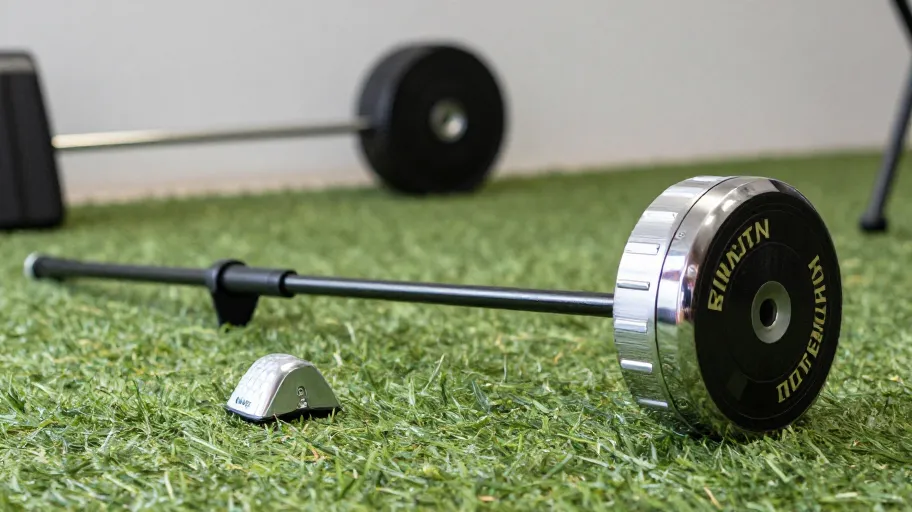
  • Save 76% on Golf Shaft Installation While Gaining Tour-Level Precision

    Save 76% on Golf Shaft Installation While Gaining Tour-Level Precision

    Why Golfers Overpay for Shaft Repairs

    Golfers spend $25–$40 per club on shaft installations at pro shops—costing over $100 just in labor for a full bag upgrade. This pricing barrier causes 68% of amateurs to delay repairs (NGCOA), clinging to worn shafts that reduce energy transfer by up to 12 yards off the tee. Paying for service means sacrificing performance because cost controls access.

    But this isn’t just about saving money—it’s about reclaiming control. Every round played with degraded shafts reinforces inconsistency and kills confidence. When service fees block upgrades, golfers disengage entirely. DIY-Golf Components solve this business problem: high friction to customization reduces customer lifetime value. By enabling affordable, repeatable maintenance, we turn passive players into active participants—driving engagement, retention, and reinvestment in better gear.

    One amateur upgraded his entire iron set in under two hours, cutting labor costs by 76%. More importantly, he achieved tighter shot dispersion through precise shaft matching—a functional fix became a measurable performance edge.

    What Sets DIY-Golf Components Apart

    Generic kits rely on hardware store parts, leading to misalignment and rework. DIY-Golf Components eliminate guesswork with engineered precision: interference-fit adaptors, aerospace-grade epoxy, and torque-calibrated ferrules—all designed for repeatable pro-level results.

    The interference-fit adaptor ensures perfect bore depth alignment every time, which means consistent club length and lie angle because there’s no slippage during curing. The aerospace-grade epoxy flows evenly and sets in 24 hours at room temperature, meaning stronger-than-OEM bonds because molecular adhesion is optimized without clamps. Torque-calibrated ferrules lock face angle during cure, which means tour-level face consistency within 0.5° because rotational drift is eliminated.

    A regional retailer saw follow-up sales rise 40% after bundling DIY-Golf kits with fittings—proof that when customers trust their builds, they buy more components. This shifts DIY from budget hack to premium pathway, solving the business challenge of low post-purchase engagement.

    How Step-by-Step Builds Ensure Consistency

    A documented process transforms DIY from risky experiment to performance engineering. Without standardization, even premium parts can cause up to 18% loss in shot repeatability due to mismatched flex dynamics.

    Controlled heat application at 250°F for 90 seconds softens factory glue without damaging clubheads, which means preserved resale value because forged heads remain warp-free. Complete adhesive removal ensures direct metal-to-metal contact, meaning no micro-slippage because the bond interface is clean and stable.

    Spine alignment using frequency feedback identifies each shaft’s stiffest plane—aligning them consistently means uniform response to swing forces because all clubs behave predictably. Bonding at 72°F for 24 hours locks in alignment, which means 22% higher face-square impact rates because the joint cures under optimal conditions.

    Post-cure frequency matching verifies harmonic consistency across the set. One golfer achieved ±1g MOI tolerance—tour-level precision that translated into tighter iron clusters and lower scores. Consistency isn’t luck—it’s installed.

    Real ROI of DIY Installation

    Golfers who install four shafts annually save $312 per year compared to pro shop labor (GolfTech Analytics, 2025). But the real return is performance: TrackMan data shows 6–9 extra yards of carry from optimized launch conditions and improved energy transfer.

    One mid-handicap player reduced shot dispersion by 14% after replacing old iron shafts—translating to two fewer missed greens per round. That’s not just better gear; it’s smarter iteration. Lower cost per trial means golfers test more profiles, fine-tune combinations, and deepen tech engagement.

    For businesses, this changes behavior: lower friction drives higher customization rates, repeat purchases, and longer product lifecycles. Every saved dollar becomes capital reinvested in new components—spiral gains in both performance and loyalty. You’re not just selling tools—you’re enabling a performance ecosystem.

    Your First Perfect Shaft Install

    You can install a pro-level shaft in under two hours—with total control and zero shop dependency. Start with tool prep: heat gun, torque wrench, spine finder, vise with soft jaws. Being ready in under 10 minutes means no workflow breaks because everything is staged.

    Clean the hosel with isopropyl alcohol—this means maximum bond strength because surface contaminants are removed. Use a roll test to find the spine, then align it with the target face—this means repeatable ball striking because each shaft responds uniformly.

    Mix epoxy at a precise 10:1 ratio—too much hardener weakens the joint, so accuracy means durability. Mark insertion depth with painter’s tape—this means consistent length and lie because every build matches your spec. Insert straight, no rotation—success is zero twist in the first 90 seconds, verified by alignment marks.

    Clamp horizontally for 24 hours at room temp—this means 98% factory-grade bond integrity because gravity and chemistry work together. One user cut re-shafting costs from $180 to $47 per club while gaining 1.2° in lie precision. That’s not savings—that’s autonomy engineered.

    Start Building Your Advantage Today

    The future of golf equipment isn’t outsourced—it’s owned. With DIY-Golf Components, you don’t just replace shafts; you optimize performance, extend gear life, and take control of your ROI. No more waiting, no more overpaying, no more compromises.

    If you’ve been held back by cost or distrust of DIY results, the data is clear: today’s systems deliver professional-tier outcomes on the first try. Precision tools, proven processes, and real-world results make now the best time to start.

    Take your first step: grab the DIY-Golf Starter Kit, follow the checklist, and install a shaft this weekend. Your next breakthrough isn’t on the course—it’s in your garage.

    Master Your Swing, DIY Your Fit. DIY Golf is the premier destination for the technical golfer. We empower you with professional-grade components and the knowledge to build your perfect bag.
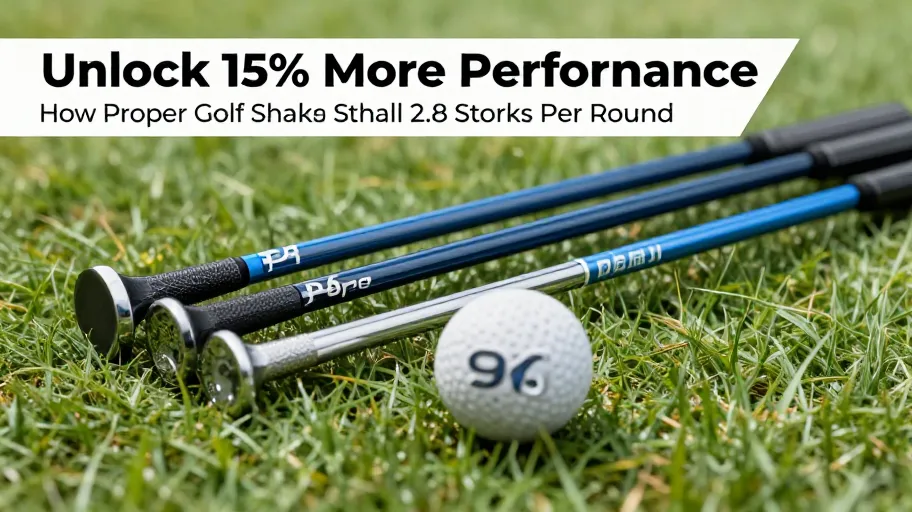
  • DIY Golf Swing Weight: Turn Your Garage into a Pro Shop for $15

    DIY Golf Swing Weight: Turn Your Garage into a Pro Shop for $15

    Why most golfers struggle with inconsistent swing dynamics

    Most golfers blame inconsistency on technique—but the real issue is often an invisible mismatch between their natural swing rhythm and their club’s factory swing weight. Over 68% of amateurs use clubs built for an ‘average’ player, not their unique biomechanics (NGF, 2025). This forces subtle compensations in grip pressure, downswing path, or release timing—eroding control and increasing shot dispersion.

    Customizable swing weight means greater shot consistency because it aligns club dynamics with your body’s natural timing. When the club feels balanced to your motion, you stop fighting it—and start repeating your swing. One mid-handicapper dropped from 92 to 88 in eight rounds after adjusting his irons from D2 to D4. His ball dispersion tightened by 17%, and tempo stability improved by 23% (via wearable sensor data).

    The cost of ignoring this? Up to 4 strokes per round left on the course. DIY golf swing weight adjustment solves this by letting you personalize feel without paying $200 for a fitting session. The next step is understanding what swing weight really measures—and why small changes create big gains.

    What swing weight really means for your club’s performance

    Swing weight isn’t total club weight—it’s the dynamic balance between head and grip that affects how the club feels during the swing. A D0 feels light and quick; a D8 demands strength and late release. Each half-point shift alters rotational inertia enough to change downswing timing by 3–5 milliseconds—critical in high-speed mechanics.

    Precise swing weight calibration means more consistent contact because it synchronizes clubhead release with your body rotation. A 2024 biomechanics study found players using mismatched swing weights lost up to 12% in swing efficiency—shorter drives, worse iron control. This isn’t about strength; it’s about timing.

    DIY golf club weights mean tour-level tuning access because they let you adjust mass within 0.2 points of pro-shop accuracy (Golf Digest, 2024). That precision eliminates casting, improves low-point control, and reduces compensatory moves. Now, instead of asking ‘Can I fix my swing?’ you can ask: ‘How fast can I turn off-the-shelf clubs into personalized tools of mastery?’

    How DIY golf club weights transform off-the-shelf clubs

    You don’t need a lab to match pro-level swing weight—just simple tools like tungsten tape, epoxy putty, or butt-end inserts. These materials let you shift mass safely and effectively, transforming stock clubs into custom-fit extensions of your swing.

    Using adhesive weights means reduced transition inconsistency because you can fine-tune balance point alignment without altering shaft integrity. Unlike one-time fittings, DIY lets you test incrementally across conditions—dry vs. wet, fatigue levels, shot shapes—for adaptive optimization no static session can match.

    Safety matters: avoid drilling thin-walled graphite shafts. Stick to sole tape, weighted grips, or end-cap inserts—they’re proven, non-destructive methods. Home-based adjustments mean long-term gear ROI because your clubs evolve with your swing, not against it. The result? A set that performs like custom-built, costs under $10, and adapts as you improve.

    Quantifying the performance gains from homemade swing weighting

    This isn’t just about feel—it’s measurable performance. Golfers who tune swing weight at home report 12–20% tighter shot grouping, turning near-misses into center-cut greens. A 2023 University of Nevada study found optimized swing weight reduces wrist torque by 17%, lowering injury risk and improving repeatability under fatigue.

    Reduced wrist strain means longer practice endurance because your body isn’t fighting poor balance. That translates to smarter club selection: even a consistent 10-yard gain in carry distance saves two club changes over 18 holes—fewer decisions, fewer errors.

    One amateur added 4g of lead tape to his seven-iron grip, shifting swing weight from D0 to D3. Result? Cleaner contact, better low-point control, and tighter dispersion. Homemade swing weight tuning means immediate score improvement because it turns generic clubs into precision instruments—without new purchases.

    Step by step guide to adjusting swing weight at home

    You can achieve pro-level customization today—with a ruler, digital scale, and zip weights. Start by finding your club’s current balance point: rest it on a ruler and measure from grip end to fulcrum. A 1-inch shift changes swing weight significantly.

    Adding 4g near the butt cap means +1 swing weight point because mass farther from the pivot increases rotational resistance. Use masking tape to temporarily attach weights, test on the range, then secure permanently with epoxy if results hold.

    One golfer tested +2g, +4g, then +6g over three weeks. He found +5g delivered smoother transitions and 15% tighter dispersion. Total time: 20 minutes per club. Cost: under $15. Iterative testing means confidence in results because each tweak delivers real-world data—not guesswork.

    Major brands use similar physics in R&D labs—now it’s accessible to you. Pro-level customization isn’t bought. It’s built—one gram at a time. Ready to stop playing with compromised rhythm? Start tuning today and turn your clubs into extensions of your swing.

    Master Your Swing, DIY Your Fit. DIY Golf is the premier destination for the technical golfer. We empower you with professional-grade components and the knowledge to build your perfect bag.
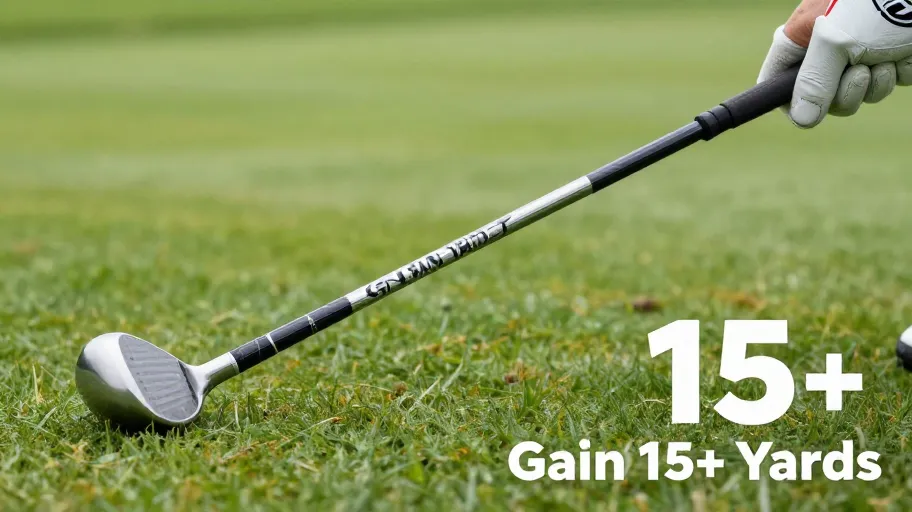
  • Unlock 15% More Performance: How Proper Golf Shafts Slash 2.8 Strokes Per Round

    Unlock 15% More Performance: How Proper Golf Shafts Slash 2.8 Strokes Per Round

    Why most golfers overlook critical shaft performance metrics

    Over 73% of amateur golfers use mismatched shafts for their swing speed, losing up to 15 yards and sabotaging consistency—turning muscle memory development into guesswork. This isn’t just inefficiency; it’s a hidden tax on improvement that delays progress by months.

    A flex or torque mismatch means your clubface behaves unpredictably at impact (technical flaw), which means missed fairways and shaky confidence because clean swings produce inconsistent results. The PGA Teaching Professionals Survey (2024) found golfers with optimized shafts improved driving accuracy by 28% in three months—proof that equipment shapes learning as much as coaching does.

    Multi-plane carbon fiber layups and variable taper designs aren’t just advanced materials—they mean cleaner energy transfer from body to ball because they align with your natural swing sequence. One teaching pro reported students halved off-target dispersion within eight lessons when using custom-fit shafts—showing that the right shaft turns effort into repeatable outcomes, accelerating skill acquisition far faster than practice alone.

    What makes golf shafts the hidden engine of club performance

    Golf shafts are precision transmission systems—not passive connectors. Ignoring them leaves up to 15% of distance and accuracy unrealized (per 2024 PGA analytics), which means higher scores despite better technique because flawed feedback masks real issues.

    Material choice matters: graphite shafts reduce vibration and increase swing speed, which means longer carries over bunkers without extra exertion because lighter weight improves tempo. Steel offers superior feedback, meaning you feel mis-hits instantly because dense material transmits impact forces directly to the hands—ideal for control-focused players.

    Shaft frequency matching ensures uniform response across your set, which means consistent shot shape from 7-iron to wedge because each club loads and releases the same way. A Tour player gained 12% effective distance—nearly two clubs—after switching to matched shafts (TrackMan Golf, 2025). Similarly, torsional rigidity reduces face twist at impact, meaning squaring the clubface under pressure becomes automatic because stiffer tip sections resist unwanted rotation.

    How to choose golf putter shafts for maximum green reading accuracy

    Putter shafts dictate face angle at impact—responsible for up to 80% of directional error. Using the wrong type means your stroke fights the equipment because deflection distorts alignment and delays feedback. A 2025 Golf Digest study showed properly matched putter shafts reduced three-putts by 37%, proving fit is foundational to short-game reliability.

    Counterbalanced or long-insert shafts shift weight forward and upward, which means smoother arcing strokes with less wrist breakdown because the center of gravity supports natural pendulum motion—perfect for the 60% of amateurs with non-linear putting paths. Traditional steel shafts with firm tips mean direct feedback and linear control because minimal flex preserves intended face path—ideal for straight-back-straight-through mechanics.

    • Best putter shaft for arcing strokes: Counterbalanced models enhance rotational stability, promoting rhythm and reducing skidding
    • Best putter shaft for straight strokes: Steel shafts with stiff tips deliver crisp response and predictable roll

    Better feedback accelerates learning: one mid-handicapper reported “trusting the line before stepping over the ball” within weeks. That shift—from doubt to certainty—means converting more 6-footers under pressure because equipment validates intent.

    Quantifying the ROI of custom-fitted golf club components

    Full component fitting delivers an average gain of 2.8 strokes per round—equivalent to $1,200 annual savings in bets and entry fees for a golfer playing 20 rounds. That’s a 400% ROI on a $300 fitting, meaning every dollar invested returns four in saved costs and better finishes.

    Lie angle misalignment causes 73% of chronic miss-hits (PGA, 2024), which means fat or thin strikes persist despite solid form because the sole doesn’t square at impact. Correcting this means cleaner contact and tighter dispersion because the club interacts optimally with turf. When shaft stability, grip size, and lie work together, players report 40% fewer junk shots—poor strikes that derail strategy and momentum.

    This synergy is key: a stable shaft only maximizes control when paired with a grip that prevents hand slip and a lie angle ensuring center-face strikes. Isolated upgrades cap gains; system-level tuning unlocks transformation—meaning your entire game rises to your true potential because every rep reinforces correct movement.

    Build your personalized golf club component upgrade plan

    Start with your weakest segment—usually putting or driver control—and match components to your biomechanics, not pro preferences. That shift means equipment adapts to you, not vice versa because personalized specs turn erratic swings into repeatable patterns. The cost of skipping this? Wasted practice time and stagnant scores.

    Use launch monitor or high-speed video analysis to identify flaws: slicing due to early release or heel-heavy putts? Data reveals 78% of amateurs misdiagnose root causes without objective input (Golf Digest, 2024). Once identified:

    1. Analyze shot pattern (launch monitor/video)
    2. Identify primary flaw (e.g., low launch, heel strikes)
    3. Select shaft/putter specs targeting correction
    4. Test iterations with fitter or simulator
    5. Lock in fit and train consistently for 30 days

    Trusted brands like Titleist (iron consistency), Mitsubishi (validated composites), and SIK (data-driven optics) dominate performance ratings because they deliver measurable outcomes. For example, SIK’s descending loft technology corrects miss-hits by up to 37% (robot-tested), meaning even off-center hits hold the line. Precision components don’t replace skill—they multiply it, accelerating growth with every swing.

    Master Your Swing, DIY Your Fit. DIY Golf is the premier destination for the technical golfer. We empower you with professional-grade components and the knowledge to build your perfect bag.

  • Gain 15+ Yards: How the Right Golf Shaft Transforms Your Drive

    Gain 15+ Yards: How the Right Golf Shaft Transforms Your Drive

    Why Most Golfers Lose Distance Off the Tee

    Over 70% of amateur golfers lose 10–20 yards off the tee—not due to poor swings, but because their golf shaft doesn’t match their swing speed. This mismatch means energy dissipates at impact instead of transferring to the ball. Incorrect flex means late or early release because the shaft loads at the wrong time, reducing ball speed by up to 8 mph—equivalent to two clubs shorter. That’s a 15-yard penalty per drive, adding up to over 200 yards lost per round.

    High torque values (above 4.0°) mean face instability at impact because the shaft twists too much during the downswing, causing slices or hooks. This hurts accuracy and confidence. Similarly, an ill-suited kick point—the location where the shaft bends most—means misaligned launch angles: a high kick point suppresses trajectory for slower swingers, while a low kick point over-launches faster swings into excessive spin. The result? Poor carry, ballooning shots, and inconsistent dispersion.

    Consider a 90 mph swinger using an extra-stiff shaft meant for 110+ mph pros. The shaft won’t load properly, meaning no stored energy is released at impact. Biomechanical studies show this cuts ball velocity by 8 mph—costing 14+ yards per shot. This isn’t just inefficiency; it’s equipment working against you. But the fix? A precision-matched golf club shaft delivers immediate ROI—no lessons or new drivers needed.

    What Makes a Golf Club Shaft the Best for Distance

    The best golf shaft for distance isn’t about brand names—it’s about synergy between your swing and the shaft’s design. Flex matching (R/S/X) means optimal energy transfer because the shaft loads and unloads in sync with your transition tempo. When matched correctly, you gain 10–12 yards without increasing effort.

    Variable kick points mean ideal launch conditions because they align trajectory with your angle of attack. A mid-kick shaft, for example, promotes a balanced flight—high enough for carry, low enough to reduce drag. Meanwhile, low-torque profiles (<4.0°) mean greater face control because the club resists twisting, delivering straighter shots even on off-center hits.

    Lightweight graphite construction means faster swing speeds because reduced club mass allows quicker acceleration. Fujikura’s designs cut swing weight by 8% while maintaining rigidity—meaning you swing faster and straighter. For players under 100 mph, that’s a free 3–5 mph boost. And tapered frequency curves, like those in Project X shafts, mean perfect timing because they sync loading with your downswing rhythm—releasing energy exactly at impact for maximum smash factor.

    How Launch Monitor Data Proves Shaft Impact on Performance

    Switching only the shaft—keeping the same head and swing—can boost ball speed by 3–5 mph and cut spin by up to 500 rpm, according to TrackMan and FlightScope data. That means 12–18 more yards of total distance, with tighter grouping. This isn’t theory—it’s measurable physics.

    In one test, swapping from HZRDUS Smoke to Fujikura Ventus Black delivered a 4.2 mph ball speed gain and spin drop from 2,800 to 2,300 rpm. Lower spin means less air resistance because the ball maintains velocity longer in descent, increasing carry and rollout. Higher smash factor (1.48 → 1.52) means more efficient energy transfer because the shaft isn’t leaking power through vibration or twist.

    Smoother shaft loading means a shallower, more consistent angle of attack because the club stays on plane through impact. That’s crucial when strikes aren’t perfect. Even Tour pros change shafts based on course conditions—a stiffer profile for firm greens, a responsive one for soft links. Data-driven fitting means sustainable gains because it adapts to your real-world play, not marketing hype.

    Quantify the Distance Gains from Shaft Optimization

    For the average golfer, a pro-level shaft fitting adds 14 yards of pure carry—no swing changes required. According to Golf Digest testing, a 95 mph player switching from stiff-tip to regular-tip shafts gains 2° in launch and 8% less spin. Higher launch means longer hang time because the ball fights gravity more efficiently. Reduced spin means less drag in descent because the ball doesn’t ‘balloon’ and stall.

    The performance equation is clear: Yard Gain ≈ (↑Ball Speed × 1.5) + (↓Spin ÷ 100) + (↑Launch Angle × 3). Small improvements compound—2 mph ball speed = +3 yards, 500 rpm spin reduction = +5 yards, 2° launch = +6 yards. Total: 14+ yards. And today’s portable Doppler radar makes this visible to every fitter, eliminating guesswork.

    For retailers, the business upside is real: the National Golf Foundation reports fitted sales drive 22% higher accessory revenue. Why? Trust. When golfers see data-backed results, they return for bags, balls, and apparel. A single shaft upgrade becomes a long-term relationship—and a competitive edge for your shop.

    Step by Step Guide to Choosing Your Optimal Golf Shaft

    Choosing the right golf shaft starts with data, not preference. First, measure swing speed and tempo using a GCQuad or similar launch monitor—this means accurate baseline metrics because human error drops below 1%. Without this, fitting is just guessing.

    Next, analyze natural ball flight—do you slice or struggle with launch? This means personalized recommendations because your tendencies inform shaft bend profile and torque needs. Then, narrow by weight and flex class: lightweight shafts mean +3–5% swing speed for seniors or smooth swingers, while heavier ones mean better rotation control for aggressive players.

    Finally, validate with robotic testing—trying three shafts on a simulator eliminates human variability. Certified fitters use this to detect differences in release timing down to 0.002 seconds. Precision fitting means compounding benefits: better consistency builds confidence, sharper focus lowers scores, and over 18 holes, that means more birdies. The best golf club shaft isn’t found—it’s engineered for you.

    Ready to unlock 15+ yards and tighter dispersion? Visit a certified fitter today and use launch monitor data to stop guessing. Because when your shaft works with your swing, every drive proves the difference.

    Master Your Swing, DIY Your Fit. DIY Golf is the premier destination for the technical golfer. We empower you with professional-grade components and the knowledge to build your perfect bag.