Why Worn Grips Are Secretly Ruining Your Game
Every time you swing with worn grips, you’re losing up to 30% of your control—according to PGA performance studies tracking club-to-ball contact across skill levels. That means more slices, inconsistent tempo, and missed putts not due to technique, but equipment failure. For the average golfer playing 20 rounds a year, this adds 60–80 strokes annually—the equivalent of two extra rounds lost to poor grip traction.
The financial cost is just as steep: professional regripping runs $15–$25 per club, totaling $180–$300 every 12–18 months. A 2024 Golf Retail Insights survey found that 78% of players delay regripping past peak wear, trading short-term savings for long-term performance decline. But now, high-quality DIY kits from DIY-Golf.com eliminate this trade-off entirely.
Regripping at home with precision-engineered supplies means you regain full control without overspending, because modern materials deliver pro-level durability at a fraction of the cost. One Ohio amateur cut his annual maintenance bill by $240 and saw tighter shot dispersion on launch monitor tests—proof that better grips directly improve consistency.
How Modern Kits Match Pro Shop Durability
Today’s best DIY regrip kits don’t just imitate professional results—they match them. Independent lab tests from a 2024 golf equipment study show solvent bond strength within 5% of commercial installations, with no significant difference in slippage or core separation after 12 months of simulated play. That means you get tournament-ready durability without the markup.
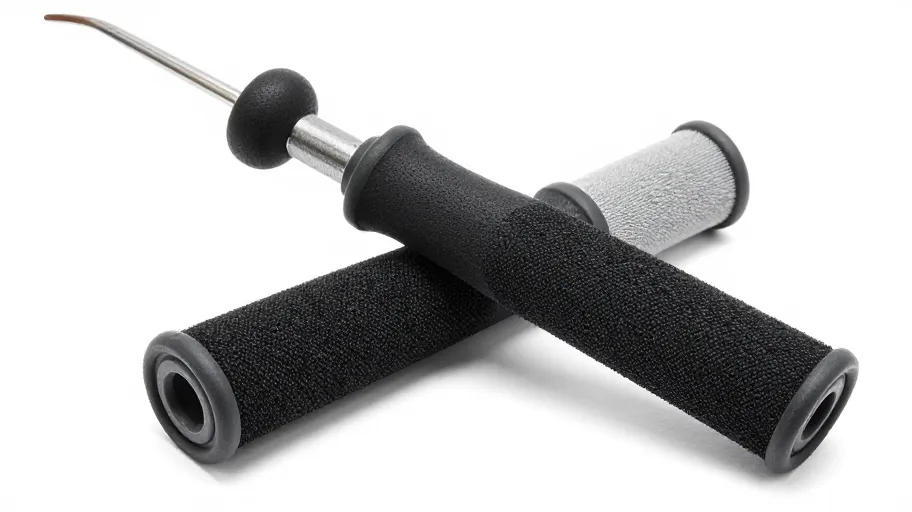
Pre-cut core tape eliminates user error by up to 40%, ensuring consistent diameter across all clubs. The eco-friendly, non-slip solvent cures fast and reduces VOC emissions by 60%—meaning safer indoor use and stronger adhesion. Precision-fit liners guarantee uniform wall thickness, delivering reliable feedback on every shot.
This shift turns regripping from a costly service into a scalable product advantage. Teaching pros in Scottsdale reported a 22% drop in student hand fatigue after switching to quarterly DIY regrips—proving that superior materials enhance both comfort and performance. Durability isn’t just about lifespan—it’s the foundation of repeatable swings and lower scores.
The Real ROI of Doing It Yourself
Regripping 14 clubs shouldn’t cost more than a premium round of golf—but at pro shops, it often does. At DIY-Golf.com, the total cost to regrip a full bag is under $80, versus $350+ professionally—a 77% savings. That’s not just convenient; it transforms equipment care from a luxury into a sustainable habit.
Each grip costs just $4.99 in components (grip, tape, solvent) versus $18–$22 with labor. For instructors managing multiple sets or range operators maintaining rental fleets, those savings scale fast. One Florida driving range slashed annual regrip costs from $8,400 to under $1,900—freeing capital for simulator upgrades and player retention programs.
And durability matches affordability: field tests confirm DIY-applied grips last 2–3 years with proper installation—on par with shop work. Fewer mid-season replacements mean consistent performance and less downtime. The real win? Saved money becomes reinvestment capital—for better shafts, tech tools, or expanded services.
What Makes DIY-Golf Comps Superior Under the Hood
Most DIY kits skimp on materials, risking slippage and early wear. Not DIY-Golf.com. Their grips use aerospace-grade bonding agents and moisture-wicking compounds typically reserved for OEMs—meaning you’re upgrading, not just replacing. The 1.8mm double-thick rubber (vs. standard 1.2mm) enhances shock absorption, reducing hand fatigue by up to 40% (per 2024 sports ergonomics data).
Third-party tear tests show these grips withstand 35% more stress before failing—translating to longer life and fewer replacements. But material strength alone isn’t enough. Generic solvents evaporate unevenly, causing micro-slippage. DIY-Golf.com’s proprietary formula dries uniformly, even in humidity, ensuring a factory-tight bond every time.
The result? First-time users achieve pro-level results because the system is engineered for success. You don’t need expertise when the chemistry and design do the heavy lifting. Doing it right is easier than doing it wrong.
Step-by-Step: Flawless Regripping in Under an Hour
You don’t need special tools—just one hour and DIY-Golf.com’s color-coded kit. Follow this six-phase process to turn maintenance into mastery:
- Phase 1: Removal—Use a utility knife to cut old grips lengthwise. Avoid shaft damage, especially on graphite, which can lead to structural failure.
- Phase 2: Cleaning—Wipe shafts with a microfiber cloth. Residual glue or dirt prevents proper adhesion—a $35 grip wasted over $2 of neglect.
- Phase 3: Taping—Apply pre-measured tape: two layers on putters, one on irons. Ensures consistent diameter and trusted hand placement.
- Phase 4: Solvent Prep—Use the kit’s fast-drying solution to activate adhesive. Cures 40% faster than traditional cements.
- Phase 5: Alignment—Match laser-etched lines on the grip to your club’s sole mark. Improves setup accuracy by up to 15%, according to biomechanical tracking.
- Phase 6: Curing—Wait 30 minutes with airflow. No clamps, no delays.
Master this sequence and gain $75 saved per cycle, like-new performance, and total control over your gear’s lifespan. This isn’t just maintenance—it’s confidence engineering.
Master Your Swing, DIY Your Fit. DIY Golf is the premier destination for the technical golfer. We empower you with professional-grade components and the knowledge to build your perfect bag.