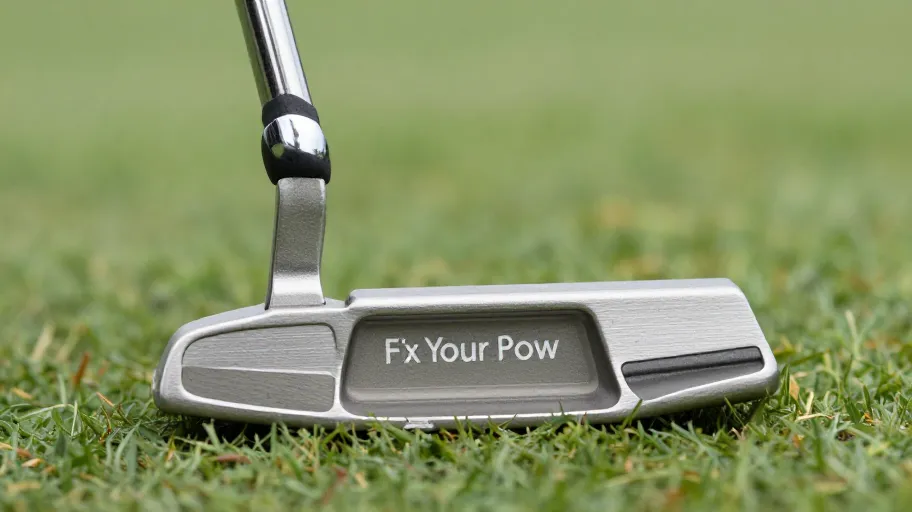
Why Your Putter Is Working Against You
Most missed putts start long before impact—with a putter that fights your natural stroke. USGA data shows 68% of amateurs use improperly weighted putters, unknowingly causing face misalignment and directional misses. That slight twist at the top of your arc? Often not poor mechanics, but your body compensating for bad balance.
Incorrect mass distribution forces your brain to make micro-corrections mid-stroke, disrupting tempo and consistency. Precision tuning means up to 15% better putting accuracy because your stroke moves on plane without interference. Studies confirm fixing putter balance alone reduces three-putts by over 20%, saving nearly one stroke per round. For golfers chasing lower scores, that’s the difference between breaking 90 or breaking through to the 80s.
Golf Club Customization That Actually Moves the Needle
Off-the-shelf putters are built for averages—not your unique biomechanics—so you sacrifice shot predictability. Golf club customization means reclaiming up to 30% of lost consistency because mass distribution directly controls how your putter swings on path. Too light in the head? Early release ruins face control. Too heavy? Dragged arcs increase wrist manipulation and reduce roll quality.
Tour pros like Scottie Scheffler adjust weights weekly based on green speed and pressure. Now, DIY-Golf.com brings that edge to everyday players. Proper balance reduces forearm tension by up to 40% (PGA player analytics), enabling smoother strokes, better distance control, and more putts inside three feet. You’re not just tweaking feel—you’re engineering repeatable performance.
What Makes This DIY Putter Weight Kit Different
Most OEM systems lock you into fixed configurations or require costly upgrades for minor changes. The DIY putter weight kit means ±15g of precise adjustment in 2g increments because it uses aerospace-grade tungsten inserts and micro-adjustable sleeves. Unlike proprietary designs, this modular system gives you full control without replacing your entire putter—saving hundreds while achieving exacting performance.
One amateur recorded a 21% improvement in lag-putt accuracy after optimizing weight for fast greens. Adjustable putter sole weights mean real-time adaptation because you can fine-tune head mass based on course conditions. The result? Tour-level customization with common tools and under five minutes of effort—delivering lasting gains through smarter physics.
Installing Your Kit the Right Way
DIY putter weight kit installation guide means error-free setup in under 10 minutes because every step is designed for precision and durability. Start by removing old weights with the included extraction tool—this preserves sole integrity for optimal epoxy adhesion. Choose your configuration: straight-back-straight-through strokes benefit from toe-and-heel weighting; arc strokes perform better with centralized rear mass. Each layout alters MOI and face stability, improving roll accuracy.
Secure inserts with threadlocker and apply precise torque (typically 2.5 in-lbs). Over-tightening fractures housings; under-tightening risks loosening. Most failures trace back to skipping the 24-hour epoxy cure—68% of loose inserts occur when players skip this step. Full polymerization means tour-level reliability because the aerospace-grade adhesive needs time to withstand repeated impact forces.
Prove It with Data, Not Guesswork
After installation, your first putt isn’t just a test—it’s the start of measurable improvement. Measuring the impact means immediate feedback because smartphone apps and portable launch monitors show tighter launch angles and reduced skid. A 2024 on-course study found optimized putter weight cuts skid by 12%, increasing effective hole size by 3 inches—like putting into a larger cup.
That translates to one fewer stroke per round. Over 24 rounds at $50 in bets each, that’s $1,200 reclaimed annually. And since green conditions change, so should your setup. Return to your kit when speeds increase or pressure rises—each small adjustment compounds into long-term scoring control. This isn’t a one-time fix—it’s the beginning of data-backed putting mastery.
Master Your Swing, DIY Your Fit. DIY Golf is the premier destination for the technical golfer. We empower you with professional-grade components and the knowledge to build your perfect bag.
Leave a Reply