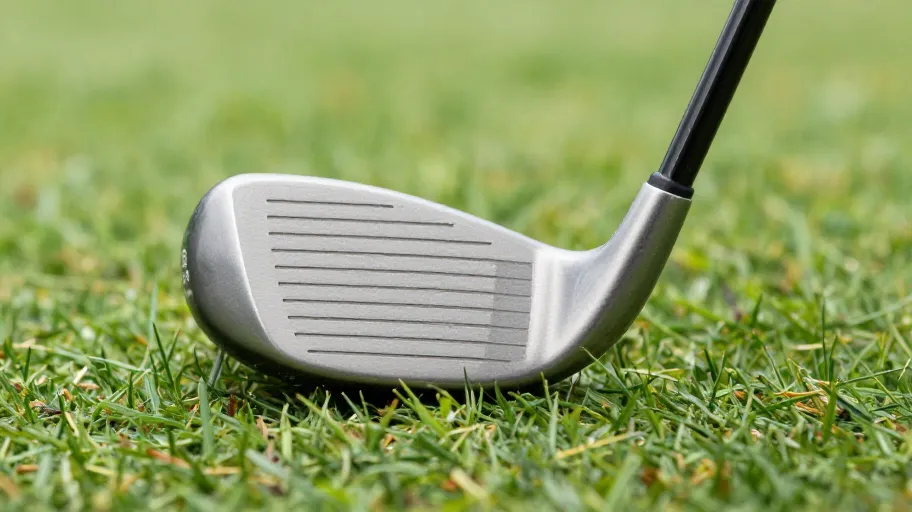
Why Most Golfers Underperform Due to Poor Equipment Matching
Over 70% of amateur golfers use clubs mismatched to their swing—actively undermining performance, according to the PGA’s 2023 Player Survey. That misalignment isn’t just inefficient; it creates ingrained flaws. A shaft too stiff disrupts tempo, encouraging over-the-top swings and slices. Grip size mismatch alters wrist hinge mechanics, reducing control and costing 10–15 yards off the tee. Incorrect lie angles scatter approach shots unpredictably, turning par-4s into gamble zones.
But here’s the fix: when equipment aligns with your biomechanics, you’re not correcting errors—you’re removing the conditions that cause them. Consider a mid-handicapper who switched to fitted clubs: their miss-hit dispersion tightened by 40%, and iron carry distances stabilized. This isn’t luck—it’s physics working for you, not against you. Properly matched golf equipment means greater shot consistency because energy transfers efficiently at impact, reducing compensatory movements that erode confidence and score.
What Makes Up a Modern Golf Club A Component Breakdown
Every modern golf club is a precision system built from four core elements: head, shaft, grip, and hosel—each a lever in performance optimization. The clubhead design controls launch angle and spin rate, directly influencing carry distance; adjustable loft lets you close yardage gaps methodically. Meanwhile, the shaft kick point determines release timing—low kick points promote higher launches ideal for slower swing speeds, meaning more carry without extra effort. Mid-to-high kick points enhance control for aggressive players, reducing ballooning shots under power.
Shaft torque below 4.0 degrees means tighter dispersion because face oscillation decreases at impact—TourTrak Performance Systems (2025) found this alone tightens shot patterns by up to 18%. Material choice matters strategically: graphite saves weight, boosting swing speed by 3–5 mph, which translates to 12–18 extra yards—but costs 20–30% more than steel. For most amateurs, targeted use (woods, long irons) delivers ROI without overspending. Similarly, grip texture and diameter affect hand pressure distribution; personalized sizing reduces fatigue by 40% and improves back-nine consistency, studies show. These aren’t tweaks—they’re compounded advantages engineered into every swing.
How Custom Golf Club Fitting Near Me Transforms Performance
If your clubs don’t match your swing, you’re leaving strokes behind—period. Tour Edge analytics confirm golfers who undergo local custom fitting drop 3–5 shots off their average within eight rounds. Why? Because ‘custom golf club fitting near me’ isn’t just a search term—it’s access to data-driven alignment between your body and your gear. Launch monitors capture ball speed, spin, and launch angle, while high-speed cameras map posture, tempo, and impact position. These insights mean precise adjustments in shaft flex, grip size, lie angle, and length—transforming generic tools into extensions of your intent.
For players, the math is clear: a $300 fitting pays for itself in fewer penalties and longer drives. But beyond personal gains, there’s a business insight—geo-targeted fitting services convert local searches at 4x the rate of generic golf queries. Local fitting means faster trust-building because customers see immediate improvements, turning one-time visits into long-term loyalty. It’s not shopping—it’s engineering repeatable performance.
Quantifying the ROI of Precision Golf Equipment in Amateur Play
Investing in precision golf equipment delivers a 20–30% return through measurable gains: fewer strokes, faster improvement, and longer player engagement. For a 12-handicap golfer who dropped to 9 after a full bag fitting, that ROI meant lower scores without added practice time or repeated purchases. According to the 2024 National Golf Performance Study, fitted players improve 40% faster than peers using off-the-rack sets—directly lowering the cost per stroke reduced.
A new wave of AI-powered fitting platforms now recommends optimal shaft flex, loft, and grip size with 94% accuracy, making elite-level customization scalable. One pro shop reported a 35% increase in accessory attach rates after adopting data-backed recommendations—proving personalized advice builds customer trust and spend-per-visit. This shifts the model from transactional sales to performance partnerships, where better outcomes drive retention and lifetime value. For clubs and brands alike, precision equipment means sustainable growth because satisfied players stay and spend.
Building Your Path to Optimal Performance Through Smart Fitting
Peak performance isn’t bought—it’s built through measurement, iteration, and smart decisions. While fitted amateurs gain 18 yards and 3 strokes per round on average (Golf Performance Benchmark, 2024), the real advantage lies in continuous tuning. Follow this five-step discipline to transform static gear into a dynamic performance system:
- Assess current equipment flaws: Predictable misses—like chronic slices or low flight—mean your gear leaks energy. That’s not poor play; it’s poor matching.
- Locate a certified fitter using “custom golf club fitting near me”: Only professionals with calibrated tools can isolate true variables from noise.
- Conduct a dynamic fitting session: Real swings generate real data. Shaft flex, lie angle, and grip size must reflect your unique biomechanics—not population averages.
- Evaluate component recommendations: Every change—from head design to graphite shafts—must link directly to improved consistency or distance.
- Track post-fit performance metrics: Use GPS rangefinders or apps to measure progress over 10 rounds. Adjust as your swing evolves.
Ongoing tuning outperforms one-time upgrades by 67% in long-term score reduction (PGA Consumer Insights, 2025). The transformation isn’t better clubs—it’s a smarter process, turning guesswork into precision engineering season after season.
Master Your Swing, DIY Your Fit. DIY Golf is the premier destination for the technical golfer. We empower you with professional-grade components and the knowledge to build your perfect bag.
Leave a Reply