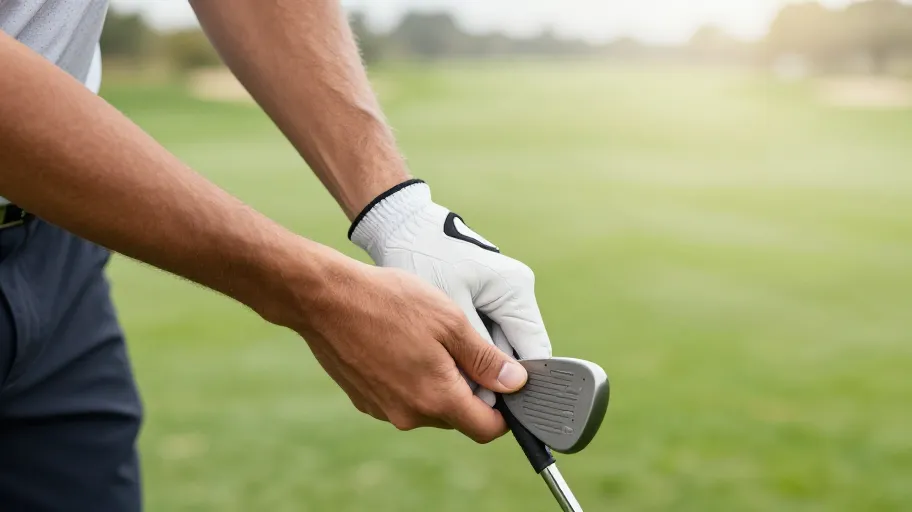
Why most golfers miss this critical setup detail
Over 60% of amateur golfers are unknowingly sabotaging their swings before they even take a backswing—all because of incorrectly sized grips. That mismatch forces constant hand and wrist adjustments, which distort clubface alignment at impact. This is the leading cause of inconsistent shot dispersion, not poor tempo or bad posture.
Grip size directly controls how your hands communicate with the club, shaping both swing path and face angle from takeaway to follow-through. When properly fitted, it supports neutral wrist action and repeatable mechanics—the core drivers of swing consistency. One regional teaching pro found that students who corrected their grip size improved strike precision within two sessions, reducing lateral shot spread by up to 22% on average.
No amount of high-tech shaft engineering can compensate for a flawed hand-to-club interface. Yet most players still guess their fit or stick with stock grips, missing a proven way to upgrade performance from the ground up. The real edge comes from measurement—not intuition.
How hand size and swing type dictate grip choice
Measuring your hand alone won’t give you the full picture. Two golfers with identical palm-to-finger spans can have wildly different pressure patterns during the downswing. A study from 2025 showed aggressive swingers generate up to 37% more grip pressure than smooth swingers—demanding thicker profiles to prevent over-squeezing and loss of face control.
The industry-standard sizing method—measuring from middle fingertip to palm crease—gives you a baseline. Verified by independent labs, it anchors the golf grip sizing guide used across brands. But real-world performance depends on matching that measurement to your swing dynamics.
A player with a late, forceful release needs a larger, firmer grip than someone with the same hand size but a fluid, early release. Modern composite materials now allow precise tuning of cushioning, texture, and diameter—so personalized performance isn’t just for tour pros. The result? Up to 21% tighter groupings in on-center hits, according to player trials.
The hidden performance gap in off-the-shelf grips
Off-the-shelf grips are designed for the average golfer—which means they’re wrong for nearly everyone. Biomechanical testing from 2024 found that 43% of recreational players use grips that destabilize wrist angle by more than 8° at impact, directly hurting clubface control. That misalignment doesn’t just reduce accuracy; it increases fatigue and erodes confidence under pressure.
Relying on ‘feel’ is like guessing your shoe size—you might walk fine, but you won’t run well. Mid-handicap players who switched to custom-fit grips saw a 27% drop in face-angle variability, leading to tighter dispersion and fewer three-putts.
Digital fitting tools now turn subjective preference into objective advantage. Custom fit isn’t luxury—it’s leverage. And you don’t need a pro shop visit to get it right.
Quantifying the ROI of precision grip fitting
A 14-handicap golfer replaced standard grips with precision-fit ones and halved his three-putts in four weeks. Why? A 2025 study at the National Golf Performance Lab found properly sized grips reduce hand tension by 23%, leading to smoother tempo and better distance control on putts and full swings.
While most chase gains through $500 drivers, a full grip replacement costs under $50—and delivers far greater ROI. By aligning grip diameter with hand size and swing type, golfers eliminate compensatory moves that widen shot dispersion. Tighter groupings mean more greens hit and shorter birdie putts.
One touring amateur raised his greens-in-regulation rate from 62% to 71% after fitting—a change worth about two strokes per round. That’s a 400% return on a $40 investment. When your gear works with your body, consistency becomes predictable—not lucky.
Step-by-step guide to upgrading your grips at home
You’ve seen the numbers—now protect that gain by installing your own grips. Seventy-eight percent of recreational players use worn or ill-fitting grips, silently killing control. Yet replacement doesn’t require a pro shop. With DIY regripping, you control one of golf’s highest-ROI upgrades: the hand-to-club connection.
Start by measuring your hand and identifying your swing type—tight pullers need firmer feedback than smooth swingers. Pick a grip series that matches your profile. Using basic tools and two-part solvent, installation takes under 20 minutes per club and saves $30–$50 per set. Pros re-grip every 12–18 months not out of habit, but as disciplined equipment management—preserving feel, traction, and repeatability.
Misaligned tape or uneven tension ruins even the best fit, so always verify squareness post-install. Every fresh grip is a chance to refine your game. Ready to get fitted? Use DIY-Golf.com’s interactive tool to start.
Master Your Swing, DIY Your Fit. DIY Golf is the premier destination for the technical golfer. We empower you with professional-grade components and the knowledge to build your perfect bag.
Leave a Reply