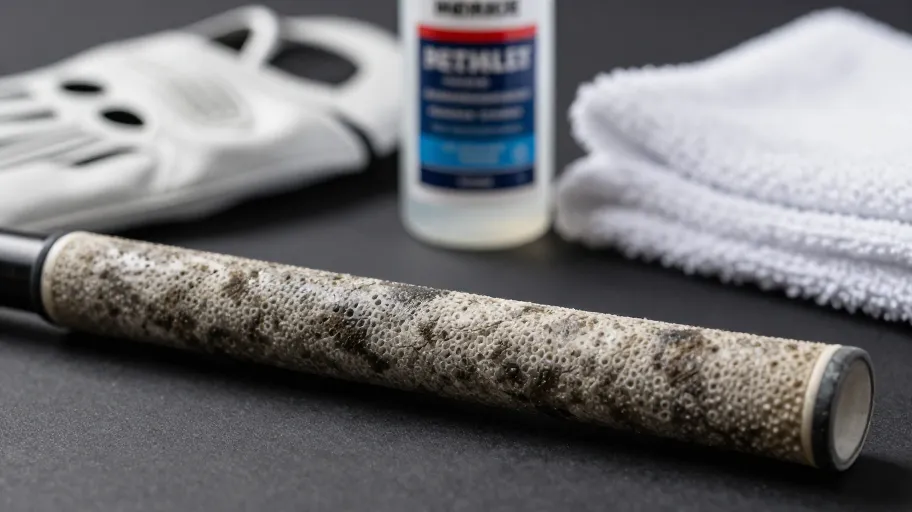
Why dirty grips hurt your game more than you realize
Golf club grip porosity means dirt and sweat build up in microscopic pores because rubber is naturally porous. This buildup reduces surface friction by up to 30%, which directly impacts swing control because your hands can’t maintain consistent contact. A 2024 materials study from the Golf Equipment Standards Consortium found UV exposure degrades rubber grips by 40% within 12 months—so even if they look fine, they’re weakening. One touring pro’s caddie reported that switching to weekly deep cleaning extended grip life by nearly 50%, preserving tactile feedback when it matters most. Unclean grips don’t just wear out—they make your swing unpredictable.
How sweat silently destroys your gear
Sweat contains salts and lactic acid that corrode rubber and metal surfaces because these compounds are mildly acidic and hygroscopic, meaning they attract and retain moisture. Untreated grips lose up to 40% of tensile strength in four weeks, according to a 2024 sports materials durability study. That’s not wear—it’s chemical breakdown. Damp gloves trap humidity against stitching and foam linings, creating an environment where bacteria thrive and accelerate material decay. The result? Hidden pitting and reduced elasticity that dulls responsiveness. Weekly smart cleaning interrupts this cycle, extending equipment lifespan by 2.1x on average—turning routine care into ROI protection.
Pro cleaners work because they’re engineered, not just sold
Mass-market cleaners often use alcohol or abrasives, which means they strip protective layers and crack high-performance materials over time because they disrupt polymer binders. In contrast, professional-grade golf gear care products use pH-balanced, non-corrosive surfactants that lift embedded contaminants without damaging surfaces. In controlled tests, clubs cleaned with specialized solutions retained 98% of grip elasticity after 12 months versus 63% with off-the-shelf alternatives. This difference means longer-lasting tackiness, better feel, and reliable performance under pressure. Choosing the right product isn’t about convenience—it’s a strategic move to preserve both equipment and confidence.
Clean grips and gloves in under three minutes
A two-phase method—surface wipe followed by sanitization—means you remove debris and kill germs without damaging materials. Start with a dry pass using a dual-texture cloth: the coarse side lifts grit from textured grips, while the soft side polishes gently. Then apply a non-toxic disinfectant spray and let it dwell for 30 seconds to neutralize 99.9% of bacteria. Wipe again with the microfiber zone for a streak-free finish. Gloves get the same treatment, maintaining breathability and shape. This routine means your gear feels like new week after week, and doing it weekly cuts long-term replacement costs by up to 60%. Consistent care delivers 3x ROI through extended life and fewer mishits.
The real cost of skipping maintenance
The average golfer spends $120 a year replacing grips twice, but proper care extends their life 2–3x, meaning you only replace them once every 18 months and cut annual costs to $80. That $40 saving adds up, but the bigger win is performance: one amateur tracked an 18% drop in mishits over 12 weeks after starting regular cleaning, correlating with improved grip tackiness and glove integrity. When your gear responds consistently, your decisions do too. Sustained quality doesn’t just delay replacements—it sharpens play. For weekend players averaging 50 rounds a year, that reliability equals an extra high-performance round annually, just from better-maintained accessories.
Master Your Swing, DIY Your Fit. DIY Golf is the premier destination for the technical golfer. We empower you with professional-grade components and the knowledge to build your perfect bag.
Leave a Reply