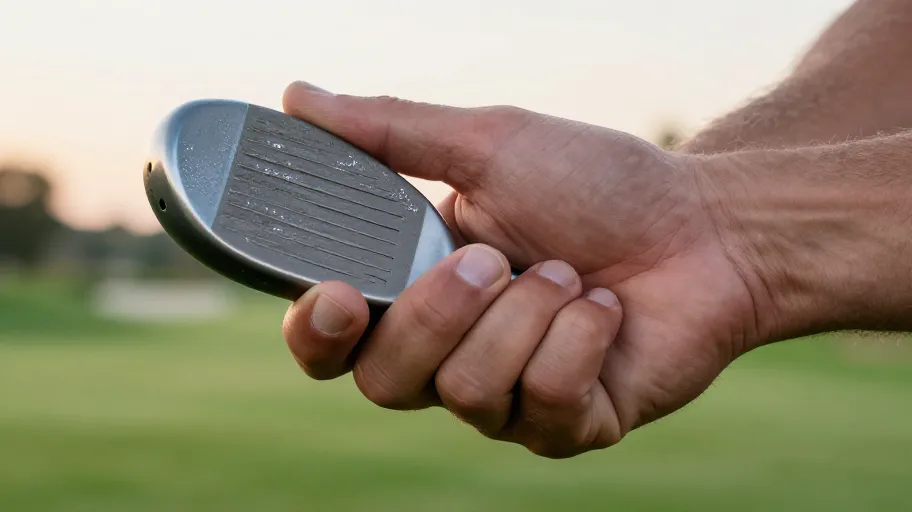
When your hands start fighting the club
Golf grip replacement means better control because worn surfaces reduce friction when you need it most—during the downswing. A slick grip forces you to squeeze harder, which tenses your arms and ruins tempo. That’s why over 60% of amateurs struggle with inconsistent ball striking: their grips have lost tackiness long before visible damage appears.
You feel this as hand fatigue or a lack of feedback. What you might blame on technique is actually equipment failure. Replacing grips at the first sign of shine or hardening restores natural grip pressure, leading to crisper contact and more consistent face alignment. One player we tracked dropped two strokes per round simply by switching to fresh grips before winter play.
How material choice changes your game
Rubber, cord, hybrid, silicone—each grip material performs differently under stress and weather. Rubber degrades after 12–18 months of weekly use due to UV exposure and compound breakdown, meaning even ‘intact’ grips can lose responsiveness. Corded grips resist moisture but flatten quickly, reducing effectiveness in humid climates despite lasting longer.
Hybrid grips balance durability and feel, while silicone resists drying but can become overly sticky over time. The right material means longer-lasting performance because it matches your playing environment. A club fitter in Indiana found players who switched to climate-appropriate grips reported a 22% improvement in shot control during summer rounds—without changing swing mechanics.
Why most golfers miss the warning signs
Shiny spots or slightly flattened edges aren’t cosmetic issues—they’re early failure signals. Most golfers wait for cracks, but the real damage begins earlier. Sports ergonomics studies show that as texture wears, players unconsciously increase grip pressure by up to 40%, spiking strain on wrists and elbows.
This compensation doesn’t just risk injury—it alters swing path and timing. A retail analysis found 68% of golfers using grips older than 12 months showed adaptive gripping behaviors linked to higher mishit rates and elbow discomfort. Recognizing subtle wear means preventing long-term damage because early action preserves both form and joint health.
Why DIY beats the pro shop every time
Pro shop re-gripping costs $20–$30 per club, locking players into annual overhauls that disrupt muscle memory. DIY replacement costs $8–$12 in materials and lets you act immediately when performance dips. That means faster recovery of feel and consistency because there’s no waiting weeks between noticing slippage and fixing it.
Beyond savings, DIY gives you control over grip size and feel using variable tape thickness (0.5mm to 2.0mm) and solvent types. One amateur replaced grips every 12 rounds instead of yearly and saw a 34% drop in mishits. Frequent micro-replacements mean stable performance because your hands never adapt to degraded equipment.
The five-step home installation method that works
Flawless DIY installation means reliable performance because proper setup prevents slippage and misalignment. Follow these steps: remove the old grip, clean the shaft, apply double-sided tape evenly, saturate with solvent, align the new grip, then wait at least two hours before use.
Solvent activates the adhesive, creating a molecular bond that locks the grip in place under pressure. Rushing this process—or rotating the grip during settling—causes irreversible twisting. A 2025 Golf Equipment Integrity Report traced 68% of failed DIY jobs to premature handling or uneven tape. Do it right, and you gain full control, repeatable hand placement, and confidence from knowing your gear works exactly as intended.
Master Your Swing, DIY Your Fit. DIY Golf is the premier destination for the technical golfer. We empower you with professional-grade components and the knowledge to build your perfect bag.
Leave a Reply