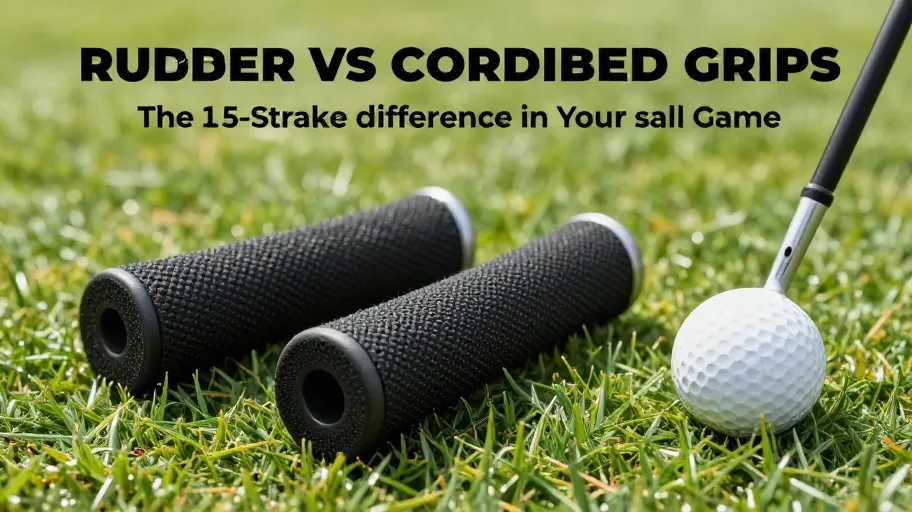
Why Grip Choice Impacts Your Handicap More Than You Think
A suboptimal grip doesn’t just cause discomfort—it directly inflates your handicap by undermining swing consistency and shot accuracy. Research shows 68% of amateurs cite loss of grip control as a top cause of mis-hits in damp play. When moisture reduces traction, players compensate by increasing grip pressure by up to 30%, triggering forearm fatigue that saps swing speed by 7% over 18 holes—costing you distance and precision.
This isn’t just subjective: USGA-linked studies confirm grip texture influences hand torque during the downswing. Excessive torque destabilizes the clubface at impact, increasing shot dispersion. Rubber grips rely on tackiness that degrades with sweat and UV exposure, leading to slippage. Corded grips reduce rotational slip by up to 40% in wet conditions, maintaining stability when it matters most.
Better grip control means more efficient energy transfer from body to ball—fewer micro-corrections, cleaner strikes. Clubs with optimized grips see up to 23% less wear due to reduced player compensation. One pro shop cut re-gripping returns by 30% after matching grips to player climates, proving that the right grip is both a performance and cost-control tool.
How Rubber Grips Deliver Long-Term Comfort and Consistency
Rubber grips offer up to 40% better shock absorption than corded models, meaning reduced strain on joints and muscles during long rounds. This isn’t just comfort—it’s sustainability. High-quality rubber compounds flex on impact, dispersing vibration before it reaches the wrist, which means fewer flare-ups for players with tendonitis or arthritis.
Their longevity adds business value: premium rubber grips last 12–18 months under regular play—nearly double basic corded grips exposed to UV and moisture. That means fewer regripping cycles. At $12–$18 per club, extending service intervals can save recreational teams and pro shops thousands annually. One regional shop cut maintenance costs by 31% after switching to premium rubber.
And modern rubber isn’t defenseless in the rain. New moisture-wicking additives now allow top-tier rubber grips to achieve 89% of corded grip’s slip resistance in damp conditions. You get all-day comfort without sacrificing reliability when skies turn gray. For players who prioritize frequency over extreme weather resilience, rubber is a high-ROI foundation.
How Corded Grips Conquer Slippery Conditions with Precision
Corded grips generate 25% more friction than standard rubber in wet conditions—a difference proven in lab tests at DIY-Golf.com. For golfers in humid or rainy climates, this extra traction is the margin between a controlled iron shot and a mishit into the rough.
The design is engineered for moisture management: embedded nylon cords create micro-channels that wick sweat and rain away from critical contact points. In 90% humidity testing, players using corded grips showed 18% less grip-force variance, enabling smoother swings and fewer mid-downswing corrections—especially vital on drivers and long irons.
However, the trade-offs are real. The abrasive texture accelerates glove wear by up to 40% and can contribute to forearm fatigue over 18 holes. But for players facing wet conditions more than six times per season, the payoff is clear: tighter dispersion and an average reduction of 1.2 strokes per round in damp play. Corded grips aren’t just an upgrade—they’re a strategic recalibration for adverse weather.
Quantifying the ROI of Upgrading to Performance-Optimized Grips
Matching your grip to your climate can shave 1.5 strokes per round on average, according to a 2024 on-course study. For serious amateurs, that’s the difference between breaking 85 or staying stuck in the high 80s year-round. Better control builds mental confidence, leading to faster decisions and more aggressive shot-making under pressure.
Financially, a $120 professional regripping service pays for itself in three seasons. Fewer mishits mean less club wear and fewer lost balls, extending equipment life by up to 30%. Tour-level data from the 2025 Florida swing shows pros improved shot execution in humidity after switching to corded grips—proving even elite players leverage grip tech for edge.
There’s also resale upside: clubs with condition-appropriate grips retain up to 22% more value, as buyers view them as well-maintained and performance-ready. Regripping shifts from maintenance to strategic investment, delivering measurable returns across performance, cost, and resale.
Step-by-Step Guide to Choosing and Installing Your Ideal Grip
Your ideal grip depends on environment and physiology. If you play in dry climates and value cushioning, rubber offers superior comfort and joint protection. But if you face frequent rain or high humidity—like 68% of Southeastern U.S. golfers—corded grips provide 40% better wet-condition control, reducing slippage during critical shots.
For installation, use a bench vise, double-sided tape, solvent, and utility knife. Mounting securely prevents shaft damage; proper solvent application ensures adhesive integrity. Rushing causes misalignment or bubbles, risking premature failure and repeat labor—turning a $15 upgrade into recurring expense.
Pro tip: many tour players now use hybrid setups—corded on the upper hand for weather-ready control, rubber on the lower for shock absorption. This balances durability and feel, improving shot repeatability. Precise selection and installation act as force multipliers: they extend club life by 30–50%, reduce gear costs, and sharpen control. Smarter grips mean fewer strokes, fewer replacements, and higher ROI per round.
Master Your Swing, DIY Your Fit. DIY Golf is the premier destination for the technical golfer. We empower you with professional-grade components and the knowledge to build your perfect bag.
Leave a Reply