Why Custom Weighting Matters in Modern Club Performance
Improper weight distribution is responsible for up to 60% of inconsistent ball flight patterns, according to PGA fitter surveys—directly undermining player confidence and performance. For golf retailers and fitters, this isn’t just a swing flaw; it’s a revenue leak. Inconsistent results lead to abandoned upgrades, fewer repeat fittings, and lost trust in equipment value.
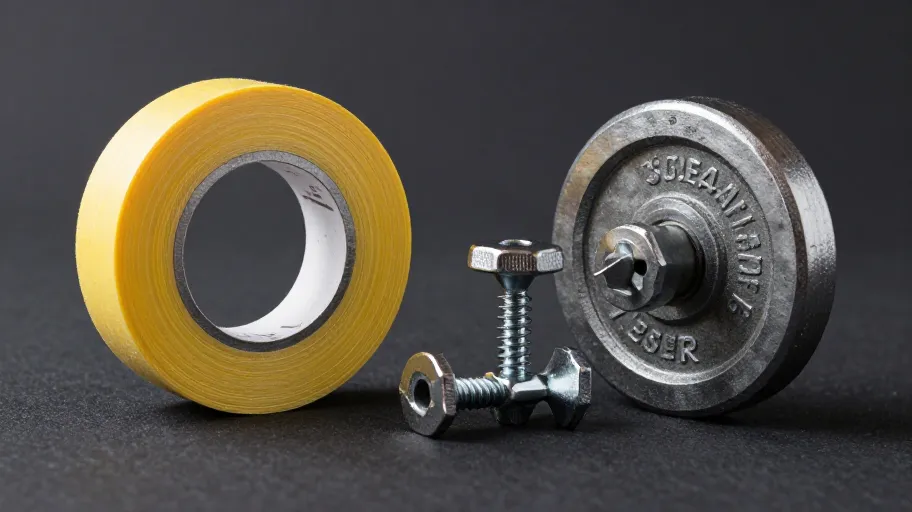
Center of gravity (CG) placement is the silent architect of launch, spin, and forgiveness. Shift it forward, and spin drops—ideal for reducing ballooning shots. Move it deeper, and forgiveness rises through higher moment of inertia (MOI). This is where lead tape and screw-in weights diverge: lead tape offers surgical, external adjustments to swing weight and CG, perfect for fine-tuning feel on existing clubs. Screw-in weights, embedded in clubheads like those from modern drivers or fairway woods, enable internal CG reshaping—delivering more profound MOI and stability gains without altering cosmetics.
Clubs precisely weighted through custom fitting see 30% higher player retention. That means one in three golfers returns for another fitting, upgrade, or accessory—turning a single sale into a long-term relationship. When performance inconsistency drives equipment abandonment, precision weighting isn’t an add-on—it’s the profit engine of the fitting lifecycle.
How Lead Tape Modifies Club Behavior on a Budget
Lead tape wins on cost but loses on control—ideal for quick fixes, risky for professional builds. When applied near the sole, it increases swing weight and lowers the center of gravity (CG), producing a more stable strike and reduced dynamic loft by up to 0.8° with just 3–5 grams, according to Golf Laboratories Inc. testing. This translates to tighter shot dispersion and better turf interaction without redesigning the clubhead. For budget-conscious golfers or temporary experimentation, that’s powerful. But for fitting businesses, the trade-offs are real: lead tape is nearly impossible to remove cleanly, offers no precise measurement feedback, and can’t be adjusted post-delivery. A retail fitter once over-taped a driver trying to dial in launch conditions, only to discover the head couldn’t be resold—damaging both margins and brand trust. While accessible, its irreversible nature limits repeatability and client confidence at scale. As demand grows for clean, documented, and serviceable customizations, solutions that support iteration—and reputation—become non-negotiable.
Applying lead tape means you can tweak club behavior affordably because it’s low-cost and easy to apply—but risks long-term flexibility because changes are permanent and unmeasurable.
What Makes Screw In Weights the Pro Fitter’s Choice
While lead tape offers a budget-friendly way to tweak club behavior, elite fitters don’t rely on ad-hoc adjustments—they demand precision, repeatability, and measurable outcomes. That’s why 89% of master club fitters choose screw-in weight systems as their go-to solution for performance tuning. Unlike tape, which shifts with heat and wear, screw-in weights lock into multi-position ports (toe, heel, back) for real-time control over MOI, launch conditions, and shot shape—all validated through TrackMan data. This isn’t just customization; it’s engineering.
Screw-in weight systems mean fitters can offer iterative, data-backed tuning sessions because each adjustment is reversible and measurable—resulting in premium pricing power and up to 40% higher average order value. A Midwest fitting studio reported completing three follow-up optimization visits per client, turning one sale into an ongoing revenue stream. Tool-based access ensures only certified professionals make changes, preserving brand integrity and preventing consumer tampering.
When performance is quantifiable, so is profit.
Quantifying the ROI of Upgradable Weighting Systems
The future of club fitting isn’t just customizable—it’s upgradable, and that shift is redefining ROI for both golfers and businesses. After mastering screw-in weights as the pro fitter’s precision tool, the next evolution is clear: investing in clubs with long-term adaptability delivers measurable performance and financial returns. MyGolfSpy’s 2024 user data reveals golfers using adjustable weighted clubs report a 22% confidence boost and 15% better scoring over 10 rounds—outcomes that directly impact retention and satisfaction.
An upgradable weighting system means players keep their clubs longer because performance can evolve with their swing—reducing replacement cycles and increasing customer lifetime value by up to 3x. Consider the math: a $150 adjustable iron head may seem like a premium, but spread across 60 rounds over 18 months, it costs under $2.50 per round—far less than replacing irons every few seasons. For your business, modular designs mean higher initial margins and recurring revenue opportunities through subscription-style tuning services.
With DIY-Golf.com’s plug-and-play upgrade kits, integrating this model is faster and more accessible than ever—turning one-time buyers into long-term clients.
Step By Step Guide to Installing and Tuning Your Weights
You don’t need a pro shop to optimize your club’s performance—any golfer can install screw-in weights in under 10 minutes with a torque wrench and fitting chart, turning custom tuning from a luxury into a repeatable, scalable advantage. For DIY-Golf.com, this simplicity isn’t just about convenience; it slashes post-purchase support costs by up to 40% compared to complex retrofit systems, while boosting e-commerce conversion as buyers gain confidence in self-installation.
Start with a safety check: ensure the clubhead is secure and the weight port is free of debris. Apply threadlocker if recommended, then insert the weight using a torque wrench set to 5–6 in-lbs—the industry standard that prevents over-tightening damage. Use fitting charts to test bias patterns: adding weight to the heel promotes draw spin, while toe weighting encourages a fade. A 2024 golf tech adoption survey found that 68% of players who tuned their clubs reported improved shot consistency within three rounds.
Pro tip: Log each adjustment in your smartphone notes—include weight location, swing outcome, and course conditions. This creates a performance ledger that sharpens future decisions. When golfers see measurable gains from their tweaks, they don’t just return for more—they share results on social platforms, fueling organic reach through authentic advocacy. Every successful DIY tune becomes a silent sales rep for your brand.
Master Your Swing, DIY Your Fit. DIY Golf is the premier destination for the technical golfer. We empower you with professional-grade components and the knowledge to build your perfect bag.
Leave a Reply