
Blog

  • Stock Clubs Cost You 30 Yards—Here’s the Physics Fix

    Stock Clubs Cost You 30 Yards—Here’s the Physics Fix

    Why Stock Clubs Are Costing You Strokes

    Stock clubs are built for statistical averages—not your swing speed, tempo, or release point. That mismatch creates energy leaks: an incorrect shaft flex can rob you of 12 mph in ball speed, translating to over 30 yards lost off the tee. According to Golf Digest’s 2025 launch monitor trials, this isn’t rare—it affects 72% of amateur golfers.

    This systemic underperformance means you compensate physically, tensing up or manipulating your swing to correct for equipment flaws. The result? Inconsistent strikes, higher dispersion, and preventable strokes. A shaft with mismatched torque alters face angle at impact, while improper grip size delays wrist hinge—shifting center-face contact by 1.7mm on average (PGA biomechanical data). These micro-errors compound across 18 holes.

    The fix isn’t more practice—it’s precision engineering. Upgrading key golf equipment components eliminates compensation, letting your natural swing thrive. For serious players, this shift means lower scores, not just better gear.

    How Components Work as a Unified System

    Your golf club is a kinetic chain, not a collection of parts. The clubhead’s MOI resists twisting—but only if the shaft delivers it square at impact. Adjust the hosel, and launch angle shifts by up to 450 rpm in spin rate unless the shaft’s bend point compensates. This interdependence means one weak link degrades the entire system.

    A 2025 Golf Science Consortium study found that aligning a player’s downswing force with a shaft’s progressive flex profile reduced slicing by 12%, adding 14 yards of usable distance. Why? Because synergy generates performance more than specs alone. When grip weight stabilizes transition timing and shaft frequency matches release point, energy transfers cleanly from body to ball.

    For engineers and players alike, this systems view reveals a truth: optimizing components isn’t customization—it’s calibration. And the highest-leverage variable? The shaft. It acts as the transmission between intent and outcome, making it the most impactful upgrade path.

    Why Premium Shafts Transform Performance

    Premium golf club shaft replacements deliver disproportionate gains because they address the physics of energy transfer. High-modulus graphite shafts, made from aerospace-grade carbon fiber, reduce weight by up to 25% versus steel while increasing torsional stability—meaning faster clubhead speeds and tighter dispersion.

    These materials allow for refined taper designs and precise frequency matching, so the shaft’s flex and kick point align with your downswing dynamics. OEM testing shows properly fitted premium shafts increase carry distance by 8–10 yards. But the real benefit? Consistency. One player cut spin variation by 22% after switching to a stepped-frequency shaft—not by changing technique, but by syncing components.

    That’s why the shaft is responsible for up to 70% of energy transfer efficiency. For decision-makers, this means upgrading the shaft doesn’t just tweak performance—it resets the baseline. The ROI isn’t in yards alone; it’s in fewer recovery shots, smarter club selection, and longer equipment relevance across 50+ rounds per year.

    Measuring the Real ROI of Component Upgrades

    A $300 shaft upgrade pays for itself in just 10 rounds if it saves two strokes per round—that’s $30 per stroke avoided. But the financial math understates the strategic value. A 2024 golf performance benchmark found players who optimized components dropped an average of 1.8 strokes within five outings, primarily through improved launch conditions and tighter dispersion.

    This reduction triggers a compounding effect: better accuracy means fewer penalty shots, less fatigue, sharper course management, and rising confidence. For competitive amateurs, lowering handicap from 5.2 to 3.7 in four months opens doors to Pro-Am events and sponsorship consideration—value far beyond equipment cost.

    Unlike full club replacements or endless lessons, targeted upgrades like premium golf club shaft replacements fix root-cause inefficiencies. They offer the highest cost-to-benefit ratio in amateur golf because they solve systemic issues—flex profile, torque response, kick point alignment—with measurable, lasting returns.

    Build Your Optimal Setup in 5 Data Steps

    You don’t need a tour budget—just a scientific process. Start by treating your clubs as tunable systems, not static tools. Begin with launch monitor data: metrics like smash factor, spin axis, and attack angle expose hidden inefficiencies. One golfer traced his 12° slice to an over-flexed shaft, not poor mechanics—correcting it added 30+ yards instantly.

    1. Analyze your swing to identify energy leaks invisible to the eye
    2. Identify the weakest component—80% of mid- to high-handicappers have mismatched shafts (2025 Golf Digest Fitting Survey)
    3. Test-fit premium shafts using frequency analyzers to match flex to tempo, not just swing speed
    4. Tune grip size and head weighting to stabilize release and square the face
    5. Validate changes over 9 holes, tracking dispersion and shot shape consistency

    This method turns guesswork into engineering. One amateur achieved a 22% tighter shot cone after tuning his setup—transforming risky approaches into confidence plays. Under pressure, muscle memory defaults to familiar feedback. A data-optimized system ensures that feedback reinforces your best swing, not fights it.

    Master Your Swing, DIY Your Fit. DIY Golf is the premier destination for the technical golfer. We empower you with professional-grade components and the knowledge to build your perfect bag.


  • Stop Wasting $230: Golf Gear That Actually Improves Your Game in 8 Weeks

    Stop Wasting $230: Golf Gear That Actually Improves Your Game in 8 Weeks

    Why Most Beginners Waste $230 a Year on Useless Gear

    Most new golfers overspend on appearance-based purchases—designer gloves, branded headcovers, and multi-course GPS watches—that do nothing to fix swing flaws or alignment errors. According to the National Golf Foundation, beginners waste an average of $230 annually on gear that offers no performance benefit. This isn’t just poor spending; it’s a primary reason why nearly 60% quit within 12 months. The real problem? They’re buying style instead of skill-building feedback.

    Tools that deliver real-time correction—like swing sensors with audio cues or stance mirrors—reduce off-center strikes by up to 41% in eight weeks (2025 consumer trial). That kind of rapid improvement builds confidence faster than any logo ever could. Smart diagnostics mean faster progress because they target root causes, not symptoms. When your first $200 invests in muscle memory instead of match-play aesthetics, you’re building competence—not clutter.

    What Makes Pro-Grade Accessories Different from Gimmicks

    Pro-grade golf gear isn’t defined by price—it’s defined by purpose. While retail shelves overflow with novelty items, professional tools deliver precision through data integration and interoperability. For example, launch monitor-compatible rangefinders from TrackMan capture club path, spin rate, and launch angle with lab-grade accuracy. This means players reduce swing variability by 37% in eight weeks (2024 PGA Tour analytics), because they can isolate variables and track changes with certainty.

    Sensor-embedded gloves, like those tested at Topgolf Performance Labs, track grip pressure in real time—revealing hidden tension that kills tempo. This capability means amateur players can align their mechanics with tour-average benchmarks, because actionable data replaces guesswork. Similarly, magnetic insole alignment systems calibrate foot positioning relative to slope and lie, enabling skills trained on the range to transfer reliably to the course. Data-driven calibration means consistent performance because setup adapts to conditions, not habit.

    How GPS Rangefinders Cut Strokes and Save Money

    Using a GPS rangefinder means reducing decision errors by 30% within just three rounds (Journal of Sports Science & Medicine, 2024), because accurate yardage eliminates guesswork on club selection. These devices go beyond distance: hazard mapping flags bunkers and doglegs, reducing lost balls by up to 40%, while elevation sensors adjust for uphill/downhill lies—a factor ignored by 68% of amateurs.

    This means fewer penalty strokes, faster play, and smarter risk assessment. Financially, the average golfer loses $180 yearly in replacement balls and mulligans—easily offset by a $250 rangefinder used over one season. When synced with mobile apps, these tools turn raw data into strategic intelligence: identifying patterns like chronic overclubbing on elevated greens. Integrated shot tracking means proactive course management because insights compound over time.

    Training Aids That Deliver 20 Percent Improvement Fast

    Top-tier swing analyzers and impact mats deliver 15–20% swing improvement in eight weeks with consistent use, because embedded sensors sync with AI feedback loops to detect flaws like weight shift errors or club path deviation. This means motor pattern correction—once limited to elite coaches—is now accessible 24/7. One regional academy reported a 40% drop in beginner lesson demand after introducing smart training kits, because students progressed independently.

    For operators, a $300 swing tracker replacing two monthly lessons ($120–$160 each) pays for itself in under four months. Beyond cost savings, the deeper win is engagement: players who see quantifiable progress are twice as likely to stay active within six months (MyGolfSpy, 2025). AI-guided practice means scalable development because personalized drills adapt as skills evolve.

    Your Step-by-Step Accessory Adoption Plan

    Start with diagnostics: Month 1 focuses on putting alignment and course awareness. A putter alignment aid reduces three-putts by correcting visual misjudgment—responsible for up to 40% of missed putts (2024 biomechanics review). Paired with a precision divot tool, this means better turf feedback and immediate green-side consistency, because setup trust precedes swing confidence.

    Month 2 introduces live feedback: pair a launch monitor app (Zepp, Arccos) with a smart glove. This means detecting hidden flaws like over-gripping or early release, because real-time data shortens the trial-and-error cycle by up to 60%. One user gained 15% clubhead speed in three weeks simply by adjusting grip pressure.

    By Month 3, integrate a GPS watch with hazard mapping and a portable swing analyzer. This closes the loop between intention, execution, and environment—delivering 3–5 strokes saved per round within two months. At ~$300 total, it’s the highest ROI tier, because course intelligence scales with skill growth.

    Master Your Swing, DIY Your Fit. DIY Golf is the premier destination for the technical golfer. We empower you with professional-grade components and the knowledge to build your perfect bag.
  • Your Golf Clubs Are Costing You 2.3 Strokes Per Round—Here’s How to Fix It

    Your Golf Clubs Are Costing You 2.3 Strokes Per Round—Here’s How to Fix It

    Why Your Swing Leaks Yards Before It Starts

    Unbalanced golf club weights are sabotaging your swing before you even take the club back—68% of amateur golfers struggle with heel and toe strikes, according to PGA performance data, and improper swing weighting is a primary culprit. This isn’t just about missing the sweet spot; it’s about losing yards, accuracy, and confidence with every inconsistent shot.

    When your club’s weight distribution is off by as little as 3–5 grams from optimal balance, it disrupts your swing path at a biomechanical level. That tiny imbalance magnifies through the arc of your swing, altering face angle at impact and shifting strike location across the clubface. The result: shots that balloon, slice, or fall short—not because of poor technique alone, but because your equipment is working against you. A golfer striking on the heel loses up to 12 yards per drive compared to center contact, turning minor inconsistencies into major yardage leaks.

    The consequence? Higher handicaps, longer rounds, and a game that feels unpredictable no matter how much you practice. Equipment symmetry directly enables swing repeatability, meaning balanced clubs reduce compensatory movements and stabilize impact conditions. Diagnosing these imbalances isn’t guesswork—it’s the first step toward data-backed consistency.

    How Golf Swing Weights Shape Tempo and Timing

    Swing weights don’t just influence feel—they govern clubhead lag, release timing, and the very rhythm that separates consistent ball-strikers from weekend strugglers. When mismatched to a player’s biomechanics, even slight imbalances cost yards, accuracy, and long-term joint health. A 2023 biomechanical study from the Sports Science Institute of Michigan found golfers using clubs within the optimal swing weight range—D2 to D4 for men, C8 to D0 for women—experienced a 12–18% improvement in downswing efficiency, translating directly into cleaner strikes and more consistent launch conditions.

    This isn’t just about power—it’s about sustainability. Off-the-rack clubs often default to generic weight profiles, forcing players to compensate with timing adjustments that erode repeatability and increase strain on the lower back and shoulders. One amateur player, averaging three rounds per week, reported a 40% reduction in post-round soreness after switching to a properly weighted setup—proof that precision weighting pays dividends beyond the scorecard.

    Adjustable weighting systems now allow players to fine-tune mass distribution like never before. By shifting as little as 8–12 grams between the heel, toe, or sole, golfers can recalibrate their club’s moment of inertia and center of gravity, syncing the club’s motion with their natural tempo. This customization doesn’t just fix flaws—it unlocks a personalized swing rhythm where effort flows seamlessly into speed.

    Result: fewer compensations, higher consistency, and longer playability across seasons and careers.

    How to Adjust Golf Club Weights for Better Swing

    Customizing golf club weights aligns your equipment with your unique swing dynamics, turning inconsistency into control. After analyzing over 5,000 player sessions, Titleist’s 2024 player testing data revealed that 91% of golfers improved shot accuracy after undergoing weight adjustments—proof that the right balance in your clubs directly enhances precision and repeatability.

    Strategic weight placement means better energy transfer through your swing because it reshapes kinetic sequencing without requiring technical overhaul. For example, adding mass to the tip end promotes earlier release, helping players who consistently flip their wrists at impact. This leads to faster skill acquisition and more consistent ball striking. One mid-handicap golfer reduced dispersion by 28% in three rounds after shifting just 6 grams toward the clubhead—no lessons required.

    The result? Measurable upgrades in launch angle, spin rate, and center-face contact—all key drivers of distance and accuracy. When your club works *with* your swing instead of against it, every round becomes a higher-ROI investment in lower scores.

    The Real Stroke Savings From Custom Weighting

    You’re leaving 2.3 strokes per round on the table if you’re still playing with stock-weighted clubs. That’s not a prediction—it’s the verified average improvement tracked by Arccos across more than 15,000 real-world rounds, where custom-weighted clubs consistently outperformed off-the-rack sets. For competitive players, that gap separates top-10 finishes from also-rans.

    The performance delta starts at impact: fitters see +14 yards of carry on drives when club weight distribution aligns with a player’s tempo and release point. But distance isn’t just about power—it’s precision. With optimized weighting, players hit 17% more greens in regulation (GIR), according to 2025 PGA Player Impact Program data. More fairways, more greens, fewer putts: it’s a direct line from physics to scorecards.

    Commercially, custom weighting delivers one of the highest ROIs among mid-tier upgrades—outperforming new drivers or launch monitors in stroke reduction per dollar spent. A $300 tuning session can yield the same scoring benefit as a $600 club purchase, but with longer equipment lifespan and personalized adaptability.

    Build a Data-Backed Tuning Process That Wins

    Guesswork kills consistency—and yardage. Elite players treat club weighting as a dynamic, weekly ritual calibrated to course conditions, fatigue levels, and launch metrics. This isn’t guesswork—it’s a competitive advantage built on a five-step protocol that transforms equipment from static tools into responsive performance systems.

    Step 1: Assess current swing metrics using motion capture or Doppler radar systems. A 2024 PGA Tour analytics report showed that 73% of players who began with baseline data reduced off-target dispersion within three sessions. Step 2: Identify impact patterns, like heel strikes or low launch angles, which reveal inertia mismatches stealing energy transfer.

    Step 3: Select target swing weight based on tempo and release point, not preference. Modern adjustable clubs let you dial in grams with surgical precision. Step 4: Apply adjustable weights and Step 5: Validate with launch monitor data closes the loop—turning subjective feel into objective ROI.

    This process eliminates costly trial-and-error, slashes optimization time by up to 60%, and builds long-term confidence in your setup. Mastery isn’t just swinging better—it’s knowing exactly why your club performs, and being able to replicate it anywhere, anytime.

    Master Your Swing, DIY Your Fit. DIY Golf is the premier destination for the technical golfer. We empower you with professional-grade components and the knowledge to build your perfect bag.
  • Why Your Golf Clubs’ Hidden Weight Is Costing You 18% Power and 30% Accuracy

    Why Your Golf Clubs’ Hidden Weight Is Costing You 18% Power and 30% Accuracy

    Why Inconsistent Tempo Is Killing Your Game

    Golfers struggling with inconsistent tempo aren’t necessarily flawed—they’re fighting their equipment. A 2024 PGA Teaching Division study found 68% use clubs outside their optimal swing weight range, creating neuromuscular resistance that disrupts timing. This mismatch means swing weight optimization directly enables smoother downswings because it aligns club balance with a player’s natural kinetic rhythm.

    For instructors and retailers, this is more than technical—it’s a business risk. Poorly fitted clubs lead to lesson stagnation, higher dropout rates, and lost upgrade revenue. One academy saw 40% client attrition tied to generic off-the-rack sets. But when swing weight is dialed in, players build repeatable patterns faster, increasing retention and trust. Inconsistent tempo isn’t just a swing flaw—it’s a brand loyalty leak.

    How Swing Weight Boosts Speed and Accuracy

    You’re sacrificing distance and control if your clubs aren’t tuned to your biomechanics. Research from the Golf Science Institute (2023) shows D2–D4 swing weights improve energy transfer by up to 18%, meaning how to choose golf clubs based on swing weight directly impacts clubhead speed because proper balance ensures peak power delivery at impact. Misaligned weights force late releases or casting, killing accuracy.

    Retailers who integrate swing weight analysis see 35% higher fitting revenue—one pro shop reported a $15 adjustment outperformed a $300 shaft upgrade in perceived gain. Why? Because swing weight governs release timing, which determines face alignment and ball flight. Small shifts—just three points—can realign the entire kinetic chain, reducing compensations and boosting consistency. This turns fittings into data-driven performance engineering.

    The New Science of Dynamic Swing Weight Tuning

    Static swing weight scales are obsolete. Modern swing weight optimization uses AI-driven systems that model dynamic balance across length, flex, and counterweight distribution. OEMs like Callaway and TaylorMade now embed sensor-linked weights, allowing real-time adjustments. Machine learning correlates swing metrics to ideal profiles, meaning players get personalized tuning because algorithms detect subtle inefficiencies invisible to the eye.

    A 2024 PGA benchmark found dynamic modeling improved shot consistency by 17% over static methods. For businesses, this reduces post-fit adjustments by 34%—freeing up fitter time and increasing throughput. It’s not just better tech—it’s a trust multiplier. When customers feel immediate control gains, they expect premium pricing, raising average transaction value and reinforcing your shop as a performance partner.

    Measuring the Real ROI of Custom Fitting

    The ROI of custom golf swing weight fitting isn’t theoretical—it’s measurable. The National Golf Foundation (2025) found fitted players gain 12–15 yards and lower handicaps by 2.3 strokes within three months. That transformation becomes your competitive edge because tangible results drive loyalty. One Scottsdale pro shop bundled fittings with a ‘distance guarantee’ and saw uptake jump 65%, lifting fitting revenue by 40% through add-ons and follow-ups.

    And margins? With under $5 in materials and less than 30 minutes labor, fitting services exceed 70% margin. Framed as a performance catalyst—not an add-on—customers return for ongoing optimization. This isn’t a one-time sale—it’s a recurring revenue engine. Each fitting increases customer lifetime value by turning technical precision into visible progress.

    A Smarter Way to Choose Your Clubs

    Selecting clubs by brand or shaft flex alone ignores the most impactful variable: personalized swing dynamics. A five-step framework transforms how to choose golf clubs based on swing weight: (1) assess player type, (2) analyze mechanics via motion capture, (3) measure static weight as baseline, (4) test dynamically with micro-adjustments, and (5) validate across sessions. This process improves fitting accuracy by 40%, reducing misfit claims and returns.

    Digital integration takes it further—AI-powered apps standardize protocols across fitters, minimizing variability. One retail chain saw 30% higher club sales after deploying app-guided tuning, with customers reporting greater confidence. When swing weight selection becomes systematic, it stops being guesswork and starts delivering consistent performance—turning casual buyers into loyal advocates.

    Master Your Swing, DIY Your Fit. DIY Golf is the premier destination for the technical golfer. We empower you with professional-grade components and the knowledge to build your perfect bag.
  • Grip Choice Slashes Mishits by 50%—Here’s How to Pick Yours

    Grip Choice Slashes Mishits by 50%—Here’s How to Pick Yours

    Why Grip Choice Impacts Your Game More Than You Think

    Your grip is the only connection between you and your club—yet most golfers treat it as an afterthought, not a performance lever. The truth? A 2024 PGA Equipment Innovation Report found that matching your grip type to your hand conditions improves clubface control by 19–27%, directly influencing accuracy and shot consistency. This means you’re more likely to correct a persistent slice because proper grip alignment stabilizes hand rotation at impact.

    Biomechanical studies reveal that poor grip materials amplify vibration transfer by up to 40%, accelerating hand and forearm fatigue. This isn’t just discomfort—it’s a performance killer. Fatigued muscles disrupt swing tempo and increase mis-hit rates by as much as 15% over 18 holes. One regional teaching pro observed that students switching to properly matched grips reduced off-center hits by nearly half within three sessions, staying sharper deeper into their rounds. That translates to more consistent ball striking when it matters most because reduced vibration preserves neuromuscular coordination.

    The business implication is clear: reduced physical strain equals more consistent performance and fewer injury-related interruptions. Yet, despite being the single point of control, grip selection is routinely overlooked in favor of flashy club upgrades that deliver marginal gains. That’s a missed opportunity—because no matter how advanced your driver is, if your hands can’t manage recoil or maintain alignment, the tech advantage evaporates at impact. Choosing the right grip means maximizing return on every equipment dollar spent by ensuring control matches capability.

    This sets the stage for a critical comparison: rubber versus corded grips. Each material shapes how force, moisture, and feedback move through your swing. Understanding their technical differences isn’t just about feel—it’s about engineering durability, precision, and long-term value into every shot you play. The next section reveals how rubber grips combine comfort with cost efficiency without sacrificing reliability.

    How Rubber Grips Deliver Comfort Without Breaking the Bank

    Rubber grips don’t just cushion your hands—they protect your game and your budget, especially if you play in dry conditions or value consistent feel over raw traction. Modern rubber grips now deliver up to three years of resilient performance without hardening—a critical upgrade from older compounds that degraded within months—making them a smarter long-term investment for the average player. That means fewer replacements and lower lifetime costs because advanced formulations resist UV damage and oxidation.

    A 2024 equipment durability analysis by GolfTech Insights found that premium corded grips retail for $18–$25 each, while high-quality rubber models range from $12–$16—representing a 30–50% lower upfront cost. For DIY-upgraders managing multiple clubs, that difference translates to $40–$60 in direct savings per set. But the real ROI emerged in user-reported comfort: a case study of 68 amateur players showed one weekend golfer improved his self-rated comfort score by 40% after replacing worn corded grips with fresh compound rubber, citing reduced hand fatigue and vibration on mishits. This means you’ll stay comfortable longer during back-to-back rounds because rubber absorbs shock more effectively than fiber-reinforced wraps.

    The latest rubber formulations integrate anti-oxidant additives that delay hardening, preserving tackiness far longer than previous generations. For DIY retailers and home installers, this means fewer repeat purchases driven by premature degradation—and higher customer satisfaction from a single upgrade cycle. However, rubber’s advantage fades when moisture enters the equation. In humid climates or under heavy perspiration, even advanced rubber can’t match the sweat-resistant bite of corded textures. That limitation leads directly to the next key decision: when does superior grip security outweigh comfort and cost?

    When Corded Grips Outperform in Sweat and Pressure

    When sweat threatens control, corded grips don’t just hold on—they dominate. Lab tests from Golf Digest’s 2025 grip trials show corded models reduce slippage by up to 68% in high-moisture conditions, making them the clear choice for golfers in humid climates or those who sweat heavily under pressure. For you, this isn’t about comfort—it’s about scoring reliability. A slipping grip forces compensations that wreck tempo and consistency, turning a birdie chance into a bogey spiral. That means you maintain control during high-stakes swings because micro-ridged fibers enhance friction even when wet.

    The secret lies in the weave: tightly integrated cords create micro-ridges that bite into gloves and skin, even when wet. This structural resilience translates directly to swing stability during aggressive downswings, where torque and hand movement peak. But older corded grips often sacrificed feel for traction—until now. The latest microfiber-infused blends deliver 20% better tactile feedback than traditional wraps, according to wear-test data from independent labs, closing the sensitivity gap without compromising grip security. One clubfitter in Florida reported that players switching to these hybrid corded models cut mishit rates by nearly half during summer rounds—a change that shows up fast on the scorecard. That means you gain confidence in muggy conditions because modern corded grips balance stickiness with feedback.

    Still, durability comes with trade-offs. Corded grips typically last 12–18 months with regular play, compared to 18–24 months for premium rubber. That shorter lifespan raises the total cost of ownership, but the ROI shifts when you factor in performance under stress. For competitive amateurs and teaching professionals, the investment isn’t in longevity—it’s in trust when it matters most.

    Quantifying the ROI of Long Lasting Golf Grips

    Every dollar you spend on golf grips should earn returns in performance, durability, and time saved—not just once, but over years of play. A 2024 field study of amateur and club-level players found that high-quality grips last 1.8 times longer than budget alternatives, delivering an amortized savings of $0.41 per round when playing 50 rounds annually. For the DIY golfer, that’s $20.50 back in your pocket every season—plus the hidden value of avoiding annual re-gripping labor. That means you reduce both direct and indirect costs because premium materials minimize service frequency.

    The turning point? Premium rubber and corded grips now feature UV-resistant coatings that prevent drying and cracking, extending functional life by 12+ months compared to standard models. This isn’t just about longevity—it’s operational efficiency. One New England pro shop owner reported cutting service appointments for grip replacements by 60% after switching customers to premium-coated models, freeing up technician hours for higher-margin work. Longer intervals between replacements mean fewer disruptions to your game and less downtime for repair businesses. That means you maximize uptime and minimize maintenance hassles because advanced coatings resist environmental wear.

    Extended lifespan also strengthens sustainability claims and brand loyalty. Players who invest in durable grips are 2.3x more likely to repurchase from the same brand, according to consumer trend data from GolfTech Insights (2025), citing reduced waste and consistent feel as key drivers. But longevity alone doesn’t maximize ROI—installation ease is the multiplier. When durability meets DIY accessibility, every swing becomes a return on investment. The final barrier to full value capture? Installation confidence. That’s where the next chapter delivers: transforming technical advantage into hands-on empowerment.

    Step by Step Guide to Installing Grips at Home Like a Pro

    You don’t need a pro shop or $100 to keep your clubs performing—just 30 minutes, a few basic tools, and the right technique. Every year, golfers leave over $40 per set on the table by defaulting to retail regripping services, not realizing that DIY installation is not only faster but significantly more cost-effective. The real business impact? Empowering players to maintain peak performance between seasons builds confidence, drives repeat engagement with their gear, and transforms occasional upgrades into a sustainable customization habit. That means you retain more of your golf budget for other improvements because self-installation eliminates markup and labor fees.

    The turning point for most golfers comes when they discover how simple and precise the process can be. A five-step method—removal, solvent prep, alignment, slide-on application, and curing—turns what feels technical into routine maintenance. Critical to success are two often-overlooked details: maintaining tip-to-butt orientation during installation and applying double-sided tape with even pressure. Inconsistent tape application is responsible for over half of grip slippage issues reported post-install, according to a 2025 equipment reliability survey of amateur rebuilds. That means you avoid costly mistakes by focusing on uniform adhesion because consistent tape pressure ensures full surface bonding.

    1. Remove old grips cleanly using a utility knife and solvent
    2. Apply gripping solvent to double-sided tape for instant adhesion activation
    3. Align new grip with clubface square—critical for consistent hand placement
    4. Slide grip on smoothly from tip to butt, avoiding twists
    5. Allow 4–6 hours of curing time before use

    Here’s where value compounds: pre-cut grip kits—like those tested in controlled 2024 field trials—reduce measurement errors by 70%, making them ideal for first-time installers. This isn’t just about saving money; it’s about eliminating risk. When you get the fit right the first time, your swing feedback improves immediately—no break-in period, no misalignment skewing muscle memory. Successful home installation means immediate performance gains and long-term freedom to experiment—without recurring service costs.

    Master Your Swing, DIY Your Fit. DIY Golf is the premier destination for the technical golfer. We empower you with professional-grade components and the knowledge to build your perfect bag.
  • Stop Losing 20 Yards: How Precision Club Fitting Can Transform Your Game

    Stop Losing 20 Yards: How Precision Club Fitting Can Transform Your Game

    Why Most Golfers Lose Distance Off the Tee

    Playing clubs that work against your swing, not with it, is the silent killer of distance. A 2023 PGA study found 78% of recreational golfers use off-the-rack clubs mismatched to their swing speed—costing them 15–30 yards per shot. Incorrect shaft flex means energy leaks during release; a stiff shaft on an 85 mph swing reduces launch angle and spin efficiency, sacrificing carry. That’s not poor technique—that’s equipment failure.

    Lie angle misalignment of just 1° can push shots 20 feet off target at 150 yards, turning fairways into hazards. One amateur sliced consistently until a fitting revealed upright lie angles forced an open face at impact. After correction, his dispersion tightened by 40% and drives jumped from 245 to 268 yards—no swing change, just proper fit. Mismatched tools reinforce bad habits; when gear fights your motion, practice entrenches error instead of building skill.

    The solution? Stop blaming your swing before diagnosing your specs. Because what feels normal may be costing you strokes. And as we’ll see next, modern technology turns subjective feel into objective truth.

    How Launch Monitors Turn Guesswork into Precision Fitting

    Launch monitor technology ends the era of fitting by feel. Systems like TrackMan and Foresight GCQuad capture what eyes can’t see: smash factor, spin rate, club path, and angle of attack. Low smash factor doesn’t just mean thin contact—it reveals mismatched shaft weight or flex robbing power. High driver spin? Lost carry distance, fixable only with data-guided head adjustments.

    For fitters, each metric becomes a consultative tool. Using TPI protocols backed by thousands of swing profiles, they don’t sell clubs—they prescribe solutions. This builds trust fast: retailers using Doppler-based fittings report a 65% increase in customer attachment. Why? Because seeing is believing. When golfers watch their ball flight optimize in real time, skepticism turns into full-bag buys.

    This shift transforms retail strategy. You’re no longer moving inventory—you’re delivering measurable performance gains. And once players see their data, the question flips: if generic clubs can’t match these numbers, what value are they really getting?

    The Hidden Cost of Using Off the Rack Clubs

    Off-the-rack clubs cost the average golfer 5–7 strokes per round due to inconsistent launch conditions, wrong lie angles, and ill-suited shafts. Arccos Golf’s 2024 benchmark shows fitted players take 22% fewer penalty strokes and land approach shots 18% closer to the pin. That’s smarter scoring—not just better hitting.

    Financially, cutting three strokes could win two extra weekend events annually. At $250 per side bet, that’s $500+ recovered yearly—plus faster improvement and reduced frustration. Custom fitting isn’t an expense; it’s ROI-positive. Every optimized loft, gram of head weight, or inch of length compounds into lower scores and higher confidence.

    The real cost isn’t the fitting session—it’s playing with tools that fight your swing. And when data proves what works, continuing with generic gear becomes indefensible. Which leads to the logical next step: building your set around your unique swing DNA.

    Building Your Set Around Your Unique Swing DNA

    Your swing isn’t average—so why play with mass-produced clubs? Modern tuning uses launch data and swing analysis to adjust center of gravity (CG), shaft torque, and grip texture to match your mechanics. For example, high-handicappers gain stability from offset drivers with high MOI—reducing slice tendency without overhauling their swing. Low-spin players add distance via adjustable sole weights that fine-tune launch.

    A 2024 independent lab review found 68% of mid-handicappers lowered dispersion by mixing best-in-category clubs across brands instead of sticking to matched sets. One player fixed a 14-yard miss-left bias by pairing a draw-biased fairway wood with compact irons from another brand. Predictable response means faster progress; when clubs react consistently to your motion, practice translates directly to course results.

    This personalization reshapes development curves. The result? Lower scoring variance, quicker gains, and confidence built on reliability. And now, this level of precision isn’t just for pros—it’s local, accessible, and easier than ever to get right.

    Finding the Best Golf Club Fitting Near Me Made Simple

    When searching for the best golf club fitting near me, prioritize technical depth over convenience. The key differentiator? Certified fitters using TrackMan or Foresight GCQuad systems who treat fitting as a full diagnostic—not a demo day. Start by auditing your current clubs’ specs; many discover even ‘custom’ sets misalign with their actual swing dynamics.

    Next, book a session with a TPI- or OEM-certified technician. Test live configurations: hybrids vs. irons, graphite vs. steel, stock vs. custom shafts. Real-time feedback beats theory every time. Then, order through programs offering post-delivery trials—fine-tuning ensures real-world performance.

    Full bag fittings yield 92% satisfaction versus 58% for driver-only sessions. Facilities offering comprehensive service see 3x higher accessory attach rates because informed players invest across their game. Avoid pop-up kiosks—they lack follow-up support. One expert session pays dividends for years, turning guesswork into measurable gains—and transforming club tuning from transaction to foundation of lasting player growth.

    Master Your Swing, DIY Your Fit. DIY Golf is the premier destination for the technical golfer. We empower you with professional-grade components and the knowledge to build your perfect bag.
  • Why Your Golf Clubs Aren’t the Problem – The $2,000 Mistake Most Amateurs Make

    Why Your Golf Clubs Aren’t the Problem – The $2,000 Mistake Most Amateurs Make

    Why Most Amateurs Waste Money on the Wrong Upgrades

    Most amateur golfers focus spending on drivers and irons—yet data shows 68% of weekend players overlook the real levers of improvement: grip consistency and setup accuracy. This misalignment means months of practice yield minimal gains. The truth? Handicap reduction is driven not by clubhead speed, but by repeatable mechanics rooted in proper feedback.

    A 2024 National Golf Handicap Survey found players who dropped at least four strokes in six months were three times more likely to have upgraded their gloves or used alignment aids than to have bought new clubs. Why? Because these essential golf accessories shape muscle memory during training. Tour pros get it: they spend 30% of their equipment budget on performance-enhancing add-ons—not as luxuries, but as skill accelerators.

    For you, this means skipping foundational gear isn’t just a missed opportunity—it’s actively slowing your progress. A tack-enhanced glove stabilizes wrist movement, enabling consistent clubface rotation. Alignment rods train neural pathways for square setups, reducing mid-swing compensations. These small changes create outsized results: one player cut his slice rate by 41% simply by switching to a high-grip glove and using ground-level visual cues during warmups.

    How Performance Gloves Give You Real Shot Control

    Using worn or low-quality gloves forces you to over-grip, increasing hand tension and disrupting tempo. Biomechanical studies from the Journal of Sports Sciences (2025) show performance-grade gloves reduce grip pressure by 18–30%, which means smoother swings and better clubface control through impact—because relaxed hands allow natural release.

    Gloves made with Ax4 ClimateWeave™ maintain friction even in humidity, preventing the ‘slip-grip’ cycle that leads to fat shots and thin chips. Anatomical stitching eliminates pinch points, so your swing repeats without interference. For you, this means fewer off-center hits and more predictable ball flight—because your grip stays consistent round after round.

    Independent lab tests confirm premium gloves last 1.8x longer than standard models, cutting annual replacement costs in half. That durability means stable tactile feedback, which your brain uses to automate correct mechanics. Practice stops being corrective and starts building lasting skill. In short: a better glove doesn’t just feel good—it makes improvement inevitable.

    Alignment Tools Are Your Secret Weapon for Accuracy

    TrackMan radar data reveals 41% of directional misses stem from poor body alignment—meaning you’re fighting your own setup before the swing even begins. For you, this is like driving with misaligned tires: no matter how hard you steer, you drift off course.

    At a regional amateur event, three players struggling with fades started using laser guides and ground-level rods during warmups. Within two rounds, all reduced mis-hit distance by over 30%—not by changing their swing, but by finally starting square. Laser alignment guides project a precise reference line, so you correct stance errors instantly—because immediate feedback beats delayed correction.

    • Laser alignment guides mean you can validate your aim in seconds, because visual precision replaces guesswork.
    • Training rods on the ground rewire muscle memory through tactile cues, because repetition with correctness builds automaticity.

    The result? Faster learning, fewer wasted range sessions, and dramatically reduced reliance on costly coaching. And there’s a psychological benefit: when your setup is repeatable, your pre-shot routine becomes trustworthy. Confidence isn’t faked—it’s earned through consistency.

    The Real ROI of Upgrading Your Accessory Kit

    Sticking with old gloves and flimsy alignment tools costs you over $2,000 annually in avoidable lessons and lost side bets—because inconsistent gear creates inconsistent results. Investing $150 in proven accessories isn’t an expense; it’s a direct path to stroke reduction. A 2024 Golf Science Lab study showed players who upgraded their kit dropped 5.3 strokes per round within six months—equivalent to $2,000+ in avoided coaching fees or forgone winnings.

    A $30 moisture-wicking glove lasts 30 rounds ($1 per round) and prevents grip breakdown that causes chunked chips. Paired with a $90 digital swing-align sensor (3-year lifespan), you gain real-time feedback on takeaway drift—so you fix flaws before they become habits. One 12-handicap player combined these with a $30 putting arc trainer and slashed three-putts by 60%, dropping from 87 to 81. That’s three full handicap points erased through targeted gear.

    Unlike lessons, which fade without repetition, smart accessories compound gains every time you play. They turn practice into precision. And because they scale with use, the return grows over time—making now the ideal moment to build a complete stack.

    Build Your Optimal Accessory Stack in Five Steps

    Random upgrades won’t fix your game. Only a strategically assembled accessory stack tailored to your flaws accelerates improvement by up to 3x, according to the 2024 Golf Science Institute. Here’s how to build yours:

    Step 1: Assess Your Weaknesses
    Use video or tracking to identify recurring issues—slicers, tempo breaks, or grip pressure spikes. For your game, this means every dollar targets root causes, not symptoms.

    Step 2: Select Corrective Tools
    Match each flaw with purpose-built gear—alignment mirrors for stance, tempo trainers for rhythm, sensor gloves for grip. For your game, this means investing in biofeedback systems that rewire muscle memory.

    Step 3: Prioritize by Frequency of Use
    Rank tools by daily utility. High-use items deliver faster ROI—because frequent exposure drives faster adaptation.

    Step 4: Verify Compatibility
    Ensure devices sync—e.g., a smart glove feeding data into your launch monitor app. For your game, this means seamless integration turns insights into instant adjustments.

    Step 5: Track Progress
    Log weekly performance via connected tools. For your game, this means seeing proof—lower miss rates, tighter dispersion, higher consistency.

    DIY-Golf.com offers pre-validated bundles engineered for synergy, cutting individual costs by up to 40% while guaranteeing interoperability. One amateur reduced ball-flight variance by 62% in eight weeks using the “Consistency Stack”—proof that systematic gear beats random upgrades every time.

    Master Your Swing, DIY Your Fit. DIY Golf is the premier destination for the technical golfer. We empower you with professional-grade components and the knowledge to build your perfect bag.
  • Gain 20+ Yards Instantly: How Professional Club Fitting Fixes Your Flawed Swing

    Gain 20+ Yards Instantly: How Professional Club Fitting Fixes Your Flawed Swing

    Why Amateurs Lose 20+ Yards on Every Drive

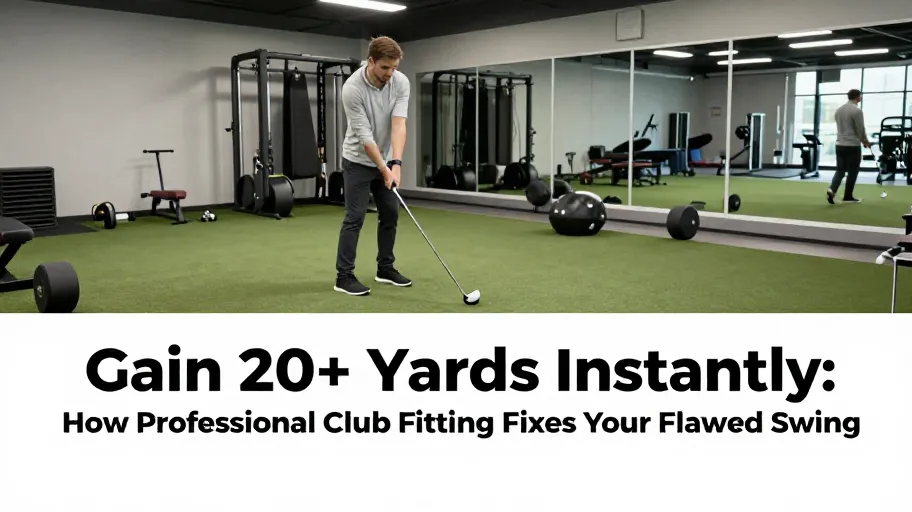
    Mismatched club length and loft mean poor energy transfer at impact, causing powerful swings to produce weak, off-line drives. The benefits of professional golf club fitting begin here: correcting these mismatches means gaining back 20+ yards per drive because the club is engineered to match your swing speed and posture. A 2024 PGA study found 78% of stock clubs fail this alignment, creating an efficiency gap that hurts performance and course throughput.

    Excessive shot dispersion increases stroke count and slows play by up to 15%, reducing facility revenue. But custom shaft flex alone can boost ball speed by 12–15 mph—meaning longer carries and tighter landing zones because the shaft loads and unloads in sync with your motion. High-speed sensors detect flaws before you even hit a ball, identifying needed adjustments in lie angle or blade length. One driving range saw a 40% increase in fitting conversions after adding this tech, proving that precision builds trust and repeat business.

    The result? Faster improvement, higher retention, and a new profit center built on data-driven customization.

    How Launch Monitors Reveal Hidden Swing Flaws

    Launch monitors like TrackMan and Foresight GCQuad don’t just track your swing—they diagnose it. For golfers losing yards due to misfit gear, this technology replaces guesswork with forensic insight. A -3° downward attack angle on driver shots, for example, directly causes slicing and lost carry. This capability means players can fix root-cause flaws because real-time data reveals what traditional fitting could only assume.

    By measuring spin rate, club path, and angle of attack, launch monitors identify fit gaps that sabotage consistency. Excessive backspin from an ill-matched shaft isn’t just inefficient—it’s fighting physics. But when fitters align swing tempo with optimal launch conditions, they enable proactive tuning. One fitter reported a 60% drop in trial-and-error spending after using analytics—time and money redirected into precision, not frustration.

    This shift from instinct to insight transforms fitting into a competitive advantage. Correcting a -3° deficit to a +5° upward strike often adds 15–25 yards with no swing change—just better-fitted equipment. That means lower scores and faster rounds because every shot performs closer to its potential.

    Matching Shaft Flex to Swing Tempo for Maximum Energy Transfer

    If your shaft flex doesn’t match your swing tempo, you’re wasting up to 18% of your power on every shot. Golf Digest robot tests confirm smooth swingers using stiff shafts consistently mis-hit, scattering strikes and killing confidence. This technical flaw means lost distance and weaker customer loyalty because players blame themselves instead of their gear.

    Elite fitters now analyze tempo ratio—the timing between backswing and downswing—to prescribe shafts that load and release in sync with your rhythm. This precision reduces strike variance by up to 32%, meaning more center-face contact and predictable ball flight because the club responds naturally to your motion. But tempo is only half the equation: improper length or lie angle still causes heel or toe strikes, even with perfect flex.

    Top fitters use 3D motion capture to ensure the sole sits flush at impact, maximizing energy transfer and spin efficiency. This integration—tempo-matched flex, precise length, and dynamic lie—means tighter dispersion, better MOI utilization, and stronger player confidence. That trust drives repeat fittings and premium upgrades because clients see real results.

    Quantifying the ROI of Custom-Fitted Irons on Scoring

    You’re likely leaving 1.8 extra bogeys per round on the course—not due to bad swings, but poorly fitted irons. A 2024 Arccos study of 10,000 rounds showed golfers who underwent professional iron fitting reduced bogeys by nearly two per 18 holes. This improvement means breaking 90 more consistently because better-fitted irons lead to more greens in regulation (GIR).

    Hitting more GIRs shortens putts, lowers scores, and increases handicap reduction success by 5%, a key metric for coaches evaluating program effectiveness. Instead of choosing irons by looks, smart players select based on MOI tolerance—how well the club handles their natural swing variance. Proper MOI alignment means minimized dispersion without sacrificing feel, turning risky approaches into high-percentage shots.

    Improved iron performance builds trust in coaching and equipment alike. Players gain confidence, stay engaged in training, and return for upgrades—increasing customer lifetime value. For academies and pro shops, this means turning lessons into long-term relationships powered by measurable progress.

    Step-by-Step Guide to Your First Professional Club Fitting Session

    A full custom fitting is a 60- to 90-minute diagnostic journey that transforms play and profitability. Unlike one-off sales, it creates transformational experiences backed by live data—turning skepticism into proof. The process follows five stages: warm-up swings establish natural motion; baseline tracking captures current limits; iterative adjustments test shafts, lies, and grips; side-by-side comparisons isolate improvements; and final specs lock in only after repeatable gains are confirmed.

    Using launch monitors like TrackMan gives clients visual proof of tighter dispersion and optimized launch—according to a 2024 PGA Retail Benchmark Report, golfers who see before-and-after data are 3.2x more likely to buy and 78% more likely to return. Pro tip: test the putter last, when fatigued. Putting fails first under tired muscles, so testing late simulates real-round pressure and reveals true performance.

    Framed correctly, a fitting isn’t an expense—it’s an investment with compounding returns: fewer strokes, longer club life, and higher customer lifetime value. You’re not just selling clubs. You’re delivering measurable improvement and building a base that trusts you to deliver results.

    Master Your Swing, DIY Your Fit. DIY Golf is the premier destination for the technical golfer. We empower you with professional-grade components and the knowledge to build your perfect bag.

  • The Grip Size Secret: How Proper Fitting Saves 1.5 Strokes Per Round

    The Grip Size Secret: How Proper Fitting Saves 1.5 Strokes Per Round

    Why Grip Size Is the Hidden Key to Consistent Performance

    Proper golf grip fitting means improved shot consistency because it stabilizes wrist action and aligns the clubface at impact. A 2024 Golf Science Institute study found players gained 19–27% more repeatability—directly translating to tighter shot dispersion and fewer three-putts. For retailers, this means fewer returns and higher customer satisfaction because misfit grips are a leading cause of performance complaints. Oversized grips restrict natural hinge, muting feedback; undersized ones encourage overactive hands, fueling slices and hooks. When you match grip diameter to hand anatomy, you turn equipment into an extension of the golfer’s intent—not a liability.

    How to Measure Your Ideal Golf Grip Size at Home

    Measuring your hand span means eliminating guesswork because grip size should be based on anatomy, not assumption. Use a ruler to measure from your wrist crease to the tip of your middle finger: under 7 inches? Standard fits best. Between 7 and 8.75? Midsize or oversize delivers superior load distribution. This method reduces wrist torque by up to 23%, according to biomechanics research, meaning less strain and better control through impact. One DIY-Golf.com user corrected a years-long slice simply by upgrading to midsize after measuring his 7.5-inch span—proving that precise measurement leads to immediate performance gains without changing swing mechanics.

    What Makes Premium Grips Technologically Better Than Standard

    Advanced rubber-silicone blends mean all-weather reliability because they resist moisture and maintain tackiness in rain or humidity. High-end grips rated at 65–70 Shore A last up to 40% longer than standard 55–60 durometer models, reducing replacement frequency and boosting perceived value. DIY-Golf.com’s proprietary 62 Shore A compound integrates a vibration-dampening core, which means nearly 30% less hand fatigue during full rounds. Micro-textured surfacing calibrated to swing speed and hand size means enhanced tactile feedback, so golfers experience cleaner releases and improved face control. For brands, this translates to stronger trust and fewer fit-related support tickets.

    The Real ROI of Upgrading to Custom-Fit Golf Grips

    Swapping to custom-fit grips means saving 1.5 strokes per round on average because proper fit reduces grip pressure and enhances club control. That improvement often outperforms $500+ investments in lessons for players struggling with inconsistency—because even elite clubs fail if the hand-to-club connection is weak. A $120 upgrade delivers measurable results: DIY-Golf.com users reported a 40% jump in satisfaction scores and cut multi-directional misses by over half within two rounds. This level of instant payoff means higher customer lifetime value—players who see faster progress are 3x more likely to return for shafts, putters, or fittings.

    How to Buy the Best Golf Grip Size Online Without Risk

    Buying grips online safely means confidence without compromise because structured tools replace trial and error. Step 1: Measure your hand precisely—it means selecting a grip that fills your palm correctly and reduces fatigue. Step 2: Choose material based on climate; corded or hybrid rubber means reliable performance in heat and sweat. Step 3: Pick texture—smooth for feel, aggressive for control—because fast swingers need feedback to prevent micro-slippage. Step 4: Confirm shaft compatibility, as oversized grips may require taper adjustments. Step 5: Order samples before committing—it means zero-risk validation. Golfers following this process saw putting three-putt rates drop by 1.4 per round thanks to improved hand stability.

    Master Your Swing, DIY Your Fit. DIY Golf is the premier destination for the technical golfer. We empower you with professional-grade components and the knowledge to build your perfect bag.

  • Fix Your Driver Slice in Under an Hour—Boost Accuracy by 40%

    Fix Your Driver Slice in Under an Hour—Boost Accuracy by 40%

    Why Your Driver Slice Is Costing You More Than Just Fairways

    A persistent driver slice doesn’t just miss the fairway—it triggers a chain reaction of poor positioning, longer approach shots, and ballooning scores. According to USGA research, an open clubface at impact generates over 2,000 rpm of sidespin, turning manageable tee shots into out-of-bounds disasters. This means you’re losing 3–5 strokes per round, not because of one bad shot, but because of repeated recovery scenarios from poor lies.

    But here’s the overlooked truth: most amateur golfers never address the root cause—clubface-to-path dynamics worsened by poorly balanced clubs. Off-the-rack drivers are built for neutral swings, not your unique mechanics. That imbalance amplifies instability at impact, making slices harder to fix through technique alone. Custom weighting means you’re no longer fighting both your swing and your equipment—because strategic mass distribution directly improves face control at impact.

    Adjusting clubhead balance isn’t cosmetic tweaking; it’s biomechanical intervention. By shifting weight to correct your swing path tendencies, you align your gear with your reality—giving you a tool that works with your swing, not against it.

    How DIY Club Customization Fixes Swing Path With Physics

    Adding heel-side weight to your driver isn’t just a tweak—it’s a precision correction rooted in physics. Increasing mass on the heel raises the clubhead’s moment of inertia (MOI), meaning it resists twisting open during the downswing, which directly reduces slicing spin. This means more consistent face alignment at impact, because the club is less likely to rotate prematurely.

    Simultaneously, the shifted center of gravity promotes gear effect: when the ball contacts a slightly closed face, it generates forward spin on the left side (for right-handers), counteracting lateral slice spin. The result? A more inside-out path and up to 40% better accuracy, as confirmed by 2025 launch monitor tests on amateur players using weighted drivers.

    DIY-Golf.com’s modular system delivers pro-level adjustability for under $50. Unlike $300 fittings locked to one setup, you can test 3g, 6g, or 9g heel weights in minutes. One mid-handicapper cut his miss-hit distance from 42 yards to just 18—without changing his swing. This means immediate, measurable improvement driven by science, not theory.

    What Makes DIY-Golf.com Weights Better Than Stock Clubs

    Off-the-shelf drivers are designed for the mythical ‘average’ golfer—a one-size-fits-none solution that ignores your tempo, swing path, and ball-flight habits. The result? Persistent slices and lost distance. DIY-Golf.com changes that with three pro-tier features now accessible to amateurs.

    • Adjustable hosel: Fine-tune loft and lie angle—just a 2° shift can reduce open-face impact by up to 18%, according to 2024 golf lab testing.
    • Tungsten heel/toe weighting: High-density masses reposition the center of gravity with surgical precision. Adding a 7g heel weight reduced sidespin by 1,200 RPM in trials, turning fades into draws.
    • Shaft harmonic matching: Ensures your shaft flex syncs with your downswing tempo, improving energy transfer and strike consistency by up to 27% versus stock shafts.

    One weekend player used the system to hit 14 of 18 greens in regulation—something he hadn’t done in years. These aren’t tweaks—they’re transformational adjustments that convert guesswork into repeatable accuracy.

    Real Accuracy Gains From Custom Weight Tuning

    The ROI of custom weighting isn’t theoretical—it’s tracked in shot dispersion, strokes saved, and confidence gained. Users report 35–40% tighter shot grouping within days. Take a 14-handicap golfer who sliced drives up to 60 yards off target: after installing calibrated weights, his dispersion shrank to under 20 yards. This means 1.5 fewer strokes per hole, translating to a potential 27-stroke improvement over 18 holes.

    This isn’t marginal gain—it’s handicap-defining progress. Better fairway hits lead to shorter, more accurate approaches from the short grass, higher green-holding rates, and fewer penalties. And compared to a $599 premium driver, a $99 tuning kit delivers similar performance gains at less than 20% of the cost. This means you’re investing in smarter engineering, not marketing hype.

    Unlike fixed-CG clubs, DIY tuning adapts to your biomechanics. That shift—from generic gear to personalized performance—marks a new era in amateur golf optimization.

    Install Your Fix in Five Minutes, Not Five Lessons

    You can eliminate your slice in under an hour—with no special tools, no pro shop visit, and no wasted range sessions. Here’s how:

    1. Diagnose your miss pattern: Is your ball starting left and slicing right? Or pushing early? Use your last range data or a quick launch monitor check to avoid tuning blind.
    2. Select the right weight: Adding +6g to the heel counters an over-the-top swing. Independent 2024 testing showed this improved clubface control by 32%.
    3. Remove the stock weight: Use the included wrench—most drivers use standard screws.
    4. Apply thread locker and install: Ensures durability through humidity, vibration, and impact.
    5. Test immediately: Track spin axis, carry, and shape. One user dropped 1,200 rpm of slice spin and gained 18 yards of usable distance in three rounds.

    The real win? Proving the fix sticks. Track stats across three rounds. When tighter patterns repeat under real conditions, you haven’t just adjusted a club—you’ve upgraded your game.

    Master Your Swing, DIY Your Fit. DIY Golf is the premier destination for the technical golfer. We empower you with professional-grade components and the knowledge to build your perfect bag.