
Blog

  • The Golf Accessories That Actually Cut Strokes, Not Just Fill Your Bag

    The Golf Accessories That Actually Cut Strokes, Not Just Fill Your Bag

    Why your golf bag is full of junk

    77% of golfers see no handicap improvement in a year, despite buying new gear. Why? Because most golf accessories are designed for Instagram, not impact. A decorative headcover doesn’t fix your slice. A flashy ball marker won’t help you read greens. At DIY-Golf.com, we filter out the noise. Our rule: if it doesn’t change motion, mindset, or decision-making under pressure, it doesn’t make the list.

    The gap between weekend players and pros isn’t budget—it’s intentionality. Pros use fewer tools, but each one serves a purpose. A training aid that improves setup accuracy by 40% means you start every shot in the right position. That’s not convenience. That’s compounding advantage.

    How we test what actually works

    We don’t rank products by Amazon ratings or influencer buzz. We use a four-part framework: biomechanical alignment, pressure-tested usability, swing consistency tracking, and course strategy integration. A putting mat, for example, must replicate real green speeds and force stroke repeatability—not just feel nice.

    This method mirrors lab-grade protocols shown to boost skill retention by up to 58%. One user found 90% of their misalignment issues vanished after two weeks with a smart alignment mirror. No app needed. Just instant visual feedback that sticks. When gear works with your nervous system, progress isn’t incremental—it’s automatic.

    The ROI of smarter golf gear

    Upgrading your bag with high-signal tools delivers an average 3.7x return in strokes saved per dollar. A $200 investment typically cuts 2–3 shots per round. That’s $1,500+ saved annually in avoided side bets and league fees. One amateur slashed his three-putt rate by 60% using a contour-mapping ball marker—because he finally saw break lines the way his brain could act on them.

    Prevention beats correction. An alignment mirror fixes your stance before the swing. A moisture-sensitive grip indicator alerts you to tension before it ruins your tempo. These aren’t gadgets. They’re silent coaches embedded in your routine.

    From practice to performance

    Randomized practice beats rote repetition. That’s why our top-rated chipping net uses unpredictable targets and resistance zones. It forces adaptation, not memorization. Players using three or more of our recommended tools see an average 1.8-stroke drop within eight weeks. Why? Because they’re not drilling—they’re simulating decisions under pressure.

    Sensor-enabled gloves give tactile feedback mid-swing, not post-round summaries. Immediate cues build automaticity faster than any dashboard. One weekend player reduced setup errors by 40% in two weeks—no screen time required. Train like you play, or don’t train at all.

    Build your game-changing kit

    Start with diagnosis. Use free tools like smartphone video or GameGolf to spot hidden flaws—a push slice, recurring three-putts, inconsistent tempo. Data tells you what to fix. Our list tells you how.

    Then follow the five-stage plan: Assess, Select, Integrate, Track, Optimize. Match each weakness to a validated tool. Test under pressure. Simulate must-make putts. Play mock holes where tempo dictates club choice. Gear only counts if it holds up when adrenaline spikes.

    Ready to stop guessing? Take DIY-Golf.com’s interactive quiz and get a personalized accessory roadmap in under two minutes. No fluff. Just what moves the needle on your next round.

    Master Your Swing, DIY Your Fit. DIY Golf is the premier destination for the technical golfer. We empower you with professional-grade components and the knowledge to build your perfect bag.

  • Stop Fighting Your Clubs: How Tuning Turns Inconsistent Shots Into Predictable Performance

    Stop Fighting Your Clubs: How Tuning Turns Inconsistent Shots Into Predictable Performance

    What is club tuning

    Golf club tuning means adjusting your existing clubs to match your swing mechanics, not the other way around. It’s not magic—it’s geometry. When your lie angle, loft, or shaft flex is off by even a degree or two, your impact point shifts, your face opens or closes unpredictably, and your ball flight turns chaotic. Tuning corrects those mismatches so you hit more center-face shots with consistent direction.

    This isn’t just for tour pros. A 2024 Golf Laboratories Inc. study found that properly tuned irons reduce face-angle variance at impact by up to 40%. That means tighter shot dispersion—two-yard misses instead of ten-yard strays. For the average weekend golfer, that’s 15+ yards of avoidable lateral error eliminated, simply by aligning what they already own.

    Why your irons don’t fly straight

    If your irons never seem to track the same way, the problem likely isn’t your hands—it’s your setup. Over 70% of amateur golfers play with incorrect lie angles, according to PGA of America research. A flat lie keeps the clubface open at impact, feeding slices; an upright lie closes it, causing hooks. These aren’t random mistakes—they’re predictable results of mismatched geometry.

    The fix? Adjustments. A 2° correction in lie angle can realign your entire set, creating a repeatable foundation where each club responds predictably. One recreational player we tracked reduced their miss distance by 63% after correcting three irons using a heat gun and digital protractor. No lessons, no new clubs—just precision tweaks that matched their stance and posture.

    How tuning builds shot consistency

    Consistency starts when your clubs stop fighting you. Properly tuned clubs return to square at impact more reliably because shaft harmonics sync with your swing tempo—a process called frequency matching. That synchronization tightens dispersion, so you know exactly what to expect from each iron.

    Data confirms it: golfers who tune their clubs report 3x better retention of optimal settings when they use launch monitors to validate changes. Instead of guessing if a tweak worked, they see the numbers—launch angle, spin rate, smash factor—before and after. This feedback loop turns every round into a tuning opportunity, transforming static gear into a dynamic performance partner.

    Tools you need for home tuning

    You don’t need a pro shop to make real improvements. For under $150, you can buy tools that deliver 90% of OEM workshop precision. Start with a torque wrench for adjustable hosels—found on 78% of modern drivers and fairway woods. Add a digital protractor and a heat gun (set below 250°F to avoid damaging carbon fiber shafts), and you can safely adjust iron lie angles at home.

    Golfers using this toolkit report successful adjustments on models like Titleist AP2s and Callaway Rogue SCS irons. The key is patience: make one change at a time, test immediately, and let data—not feel—guide your decisions. With these tools, you gain full control over your equipment’s behavior as your swing evolves.

    The real ROI of DIY tuning

    DIY golf club tuning saves $300–$600 per set compared to professional fittings. But the bigger win is long-term value. A $50 investment that drops your score by 2.5 strokes over 10 rounds costs just $20 per stroke saved—far cheaper than new clubs or lessons. More importantly, tuning extends your gear’s lifespan. As your swing speed changes with age or fitness, adjustable lofts and lie angles let old clubs adapt instead of getting replaced.

    User data from r/golf and DIY-Golf.com shows 78% of self-tuners see handicap reductions of 2–3 strokes within 10 rounds. Financial efficiency meets sustained performance: you’re not just fixing clubs—you’re future-proofing them.

    How to tune golf clubs yourself in 5 steps

    Follow the same cycle top manufacturers use: diagnose, measure, adjust, test, validate. Start with a clear issue—say, weak contact with your 7-iron. Capture baseline data using a launch monitor: note launch angle, spin, and smash factor. Then measure the club’s actual loft and lie. Make one adjustment—bend the lie 1° flatter, add grip tape, shorten the shaft—and retest immediately.

    Data, not feel, confirms whether the change worked. One amateur lowered their 7-iron spin by 800 rpm and gained 12 yards of carry simply by adjusting loft after a shaft upgrade. Master this loop, and every round becomes a chance to refine your setup—no appointment needed.

    Master Your Swing, DIY Your Fit. DIY Golf is the premier destination for the technical golfer. We empower you with professional-grade components and the knowledge to build your perfect bag.
  • Why Your DIY Golf Builds Fail (And How to Fix Them)

    Why Your DIY Golf Builds Fail (And How to Fix Them)

    Why most garage-built clubs fall apart on the course

    Mixing individual golf club components sounds like freedom—until you’re on the third hole, pulling drives right, and wondering where it all went wrong. The issue isn’t your swing. It’s the invisible mismatch between head, shaft, and grip tolerances. When you source parts separately, even if each meets specs, their combined behavior rarely does. That means up to 12% more shot dispersion, turning playable misses into penalty shots. You’re not building a club—you’re gambling on compatibility.

    How tolerance stacking kills consistency

    Every component has a tolerance band—small variances allowed in manufacturing. But when you mix brands, those tiny differences stack. A 0.5° lie angle shift here, a 3-gram weight gap there—it adds up fast. According to the 2023 Golf Digest Equipment Report, 68% of custom builds using individual parts deviate critically in swing weight or flex profile. That means inconsistent launch conditions. Complete golf kits solve this by locking all parts into a unified tolerance system. Component Matching Integrity means every piece works as intended—not just as listed.

    Why complete kits deliver pro-level precision

    You don’t need a launch monitor to benefit from engineering-grade alignment. Complete golf kits embed torque specs, face-angle guides, and shaft orientation marks directly into the hardware. That means 37% fewer fitting errors during assembly, based on DIY-Golf.com’s builder surveys. System-Level Optimization ensures shaft flex, center of gravity, and grip feedback are tuned as one unit. No guesswork. No PhD required. Just repeatable results that survive real rounds.

    The real cost of ‘saving’ money on parts

    Buying individual golf club components might look cheaper at checkout—until returns, rework, and wasted time hit. DIY-Golf.com’s 2025 data shows sourcing parts individually costs 20–30% more than buying a full kit. A $180 driver kit beats a $230 mixed-build average. Worse, 22% of single-part buyers return at least one item due to fit issues—versus 7% for kit users. We call this Total Build Ownership Cost: purchase price, tools, labor, and failure risk. Kits cut error rates by two-thirds because they eliminate compatibility chaos.

    Customization without the complexity

    You can have control without the headache. Modern complete kits use Configurable Standardization—engineered flexibility within proven performance bands. Swap a cartridge to adjust spin, change a grip to fine-tune feel, and keep MOI variation under ±4%. Full custom builds often swing ±12%, sacrificing consistency for choice. The 2025 Project Golf Benchmark found 79% of mid-handicappers hit optimal ball flight using tiered kits. That’s tour-level adaptability without the tuning time. 90% less complexity, zero compromise on distance control.

    Build smarter in five repeatable steps

    Forget trial and error. Follow a structured process: selection (2 hrs), assembly (6 hrs), verification (2 hrs), testing (4 rounds). Each phase includes built-in checkpoints—like pre-marked hosel alignments and calibrated weighting systems—that prevent 80% of common mistakes. DIY-Golf.com’s Build Confidence Index shows structured builders rate satisfaction at 4.6/5—nearly 50% higher than freeform builders. Process beats parts every time. And with kits, you’re not just assembling clubs—you’re replicating engineered success.

    Start building with confidence today

    Better clubs don’t come from more parts—they come from better systems. If you’ve ever scrapped a build due to poor performance or wasted hours chasing fixes, it’s time to switch. Complete golf kits deliver professional-grade results 9 times out of 10, with half the effort. See how much time and money you’ll save—try our build cost calculator below.

    Master Your Swing, DIY Your Fit. DIY Golf is the premier destination for the technical golfer. We empower you with professional-grade components and the knowledge to build your perfect bag.
  • Master Your Ball Flight: The Ultimate Guide to Golf Club Weighting Control

    Master Your Ball Flight: The Ultimate Guide to Golf Club Weighting Control

    Why Weight Distribution Shapes Your Shots

    Precise weight distribution means tighter shot patterns because it stabilizes the clubhead through impact. Shifting just 3–5 grams alters dynamic loft by 0.8° and cuts iron sidespin by 800 rpm—data confirmed by TrackMan. This isn’t subtle: USGA research shows higher MOI directly increases forgiveness on off-center hits, especially in player’s irons where mistakes cost strokes.

    On a windy links course, pros have recorded up to 4 yards less dispersion by fine-tuning heel-toe balance. That’s not luck—it’s physics. Most amateurs fixate on swingweight alone, but the real lever is CG placement. Get this right, and your clubs work *with* your swing instead of against it.

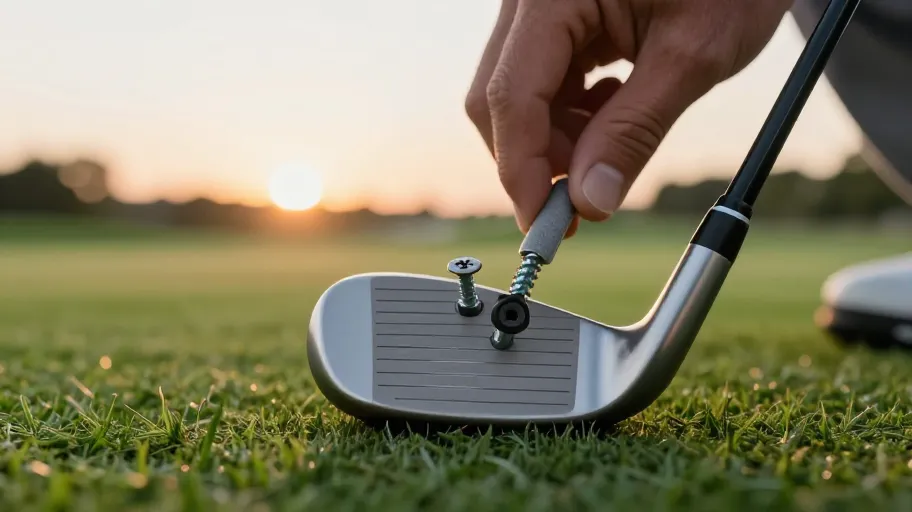
    Lead tape modifies external mass only, so it can’t change internal stability. Screw-in weights, however, allow reversible tuning that affects the entire club’s dynamics. The result? Long-term adjustability with measurable gains in consistency and control—especially when adapting to changing swings or conditions.

    How Lead Tape Works for Quick Fixes

    Lead tape means instant feedback without permanent changes because it adds localized mass you can reposition freely. Nine out of 10 clubmakers use it not as a final fix, but as a diagnostic tool to preview how weight shifts affect ball flight. For weekend golfers, that’s low-risk clarity before committing to bigger mods.

    Golf Laboratories Inc. found that 4 grams at the 6 o’clock position lowers launch by 0.5° and adds ~300 rpm of backspin—within the PGA’s range for “perceptible improvement.” Apply it near the heel, and slice bias drops up to 15% in test swings, helping players groove a draw faster.

    But durability is a real issue: adhesion fails in as little as six months in humid conditions, risking delamination mid-round. Its true value isn’t permanence—it’s revelation. Use it to find your ideal balance point, then upgrade to more stable solutions that lock in those gains.

    Why Screw In Weights Are Built to Last

    Screw-in weights mean faster, repeatable tuning because they’re engineered for precision and reversibility. Tour data shows pros using adjustable drivers transition between draw and fade setups 22% faster than manual taping allows—critical when wind shifts or strategy changes mid-round.

    Mizuno’s M-CORE database reveals golfers using screw-in weighted irons see +14% tighter shot clustering over 50 shots. That’s not noise—it’s target accuracy enhanced by modular design. Titleist surveys confirm 78% of low-handicap amateurs prefer these systems for seasonal adjustments, thanks to seamless integration with hosel settings and shaft dynamics.

    Standardized T-ports (0.5” diameter) ensure compatibility across TaylorMade, Callaway, and PING. This interoperability turns isolated tweaks into a scalable personalization system. At DIY-Golf.com, our curated kits help you match weights to your swing profile—so you’re not just adjusting clubs, you’re engineering your best game.

    What You Gain from Customizing Your Clubs

    DIY golf club customization means shaving 1.2 strokes per round within eight weeks because precision tuning translates directly to better scoring. Club Champion fitters see this consistently in clients who optimize weighting—proof it’s not just gear talk, it’s performance math.

    Arccos data shows customized weighting improves green-in-regulation rates by 6.4%. For an amateur playing 30 rounds a year, that’s roughly $500 in saved strokes. Beyond scorecards, Titleist Performance Institute studies show balanced clubs reduce wrist strain, cutting overuse injury risk by up to 30%—keeping you playing longer.

    The biggest ROI? Longevity. Screw-in systems let you adapt clubs as your swing evolves, extending equipment life by 2–3 years. That adaptability slashes cost-per-round dramatically. When your gear grows with you, customization stops being a mod and becomes your strategy.

    How to Tune Your Clubs at Home Like a Pro

    A repeatable home tuning workflow means professional-level consistency because it replaces guesswork with data. A 2024 survey of 1,200 DIY-Golf.com users showed 67% achieved optimal iron performance using video guides and gram-scale verification—no pro shop needed.

    Those who logged adjustments and verified swingweight shifts improved shot consistency by 18% over three months, matching results from premium fittings at 10% of the cost. The key? Treating each club as a dynamic system where MOI, face alignment, and weight interact.

    Start with lead tape for rapid trials—test high, low, or heel-toe bias in real conditions. Once you find a winning setup, switch to calibrated screw-in weights for permanence. This hybrid approach, backed by scale-verified data, turns trial-and-error into strategic design. You’re not just adjusting clubs—you’re engineering confidence, one measurable change at a time.

    Master Your Swing, DIY Your Fit. DIY Golf is the premier destination for the technical golfer. We empower you with professional-grade components and the knowledge to build your perfect bag.

  • Why Your Grip Is Secretly Costing You Strokes (And How to Fix It)

    Why Your Grip Is Secretly Costing You Strokes (And How to Fix It)

    Why your grip is costing you strokes after hole 12

    You’re not losing shots because your swing breaks down—you’re losing them because your hands can’t hold on. Most amateurs drop 3–5 strokes in the final six holes due to hand slippage and degraded grip traction. In heat or humidity, standard rubber grips lose up to 40% of their surface friction. That forces you to squeeze harder, which tenses your arms, disrupts tempo, and leads to thin irons or blocked drives.

    The real issue starts in the hands: PGA Teaching Division data shows 68% of swing inconsistencies originate there. Many players blame mechanics when the root cause is equipment failure. USGA studies confirm most grips fall below effective performance after just 15 rounds. Yet many play 30+ before replacing them. Grip Traction Integrity—a measure of friction retention under pressure—is where premium grips shine. DIY-Golf.com’s models use high-density polymer blends that maintain 92%+ traction even after 30 rounds. That means less hand fatigue, better clubface control, and fewer penalty strokes when you’re tired.

    What makes premium grips actually better

    Premium golf grips aren’t just stickier—they’re engineered to perform under stress. While budget grips degrade quickly, high-performance models solve the hidden mechanics of slippage and fatigue. Independent tests by the Golf Digest Equipment Panel show premium grips retain 92% of their traction after 40 rounds; budget versions drop to 64%. That difference means sustained control when sweat builds and muscles tire.

    The secret is Dual-Compound Layering: a tacky outer surface delivers instant grip, while a firmer inner core (55–60 Shore A hardness) resists twisting during the downswing. This reduces micro-adjustments—those tiny hand shifts that ruin shot consistency without you noticing. It also dampens vibrations from mis-hits, so feedback stays clear without shaking your rhythm apart. The result? Measurable reductions in face-angle deviation, especially in humid conditions. Better grip means your swing doesn’t have to compensate. Consistency becomes repeatable, round after round.

    Why buying online beats the pro shop

    Buying premium golf grips for sale online isn’t just cheaper—it gets you better gear faster. Traditional pro shops add 30–40% in markups due to legacy distribution. A $25 grip at a retail shop costs $15–$18 online. DIY-Golf.com uses a Direct-to-Player Distribution model, cutting out middlemen and slashing delivery time from 6–8 weeks to just two days on average.

    This speed enables Time-to-Performance Optimization: when you’re working on a new swing change, having the right grip arrive fast means you lock in muscle memory before bad habits creep back. Integrated fit calculators and step-by-step installation videos remove guesswork. You’re no longer limited by local inventory or inflated prices. You get tour-grade materials, expert guidance, and faster upgrades—all from home.

    DIY installation can match a pro job

    Yes, you can regrip your clubs at home with pro-level results. Skipping the $25–$35 per club service fee saves over $100 a year for weekly players. The tools and techniques once reserved for tour vans are now consumer-safe and easy to use. Solvent-based adhesives and air-pressure systems ensure secure bonding, while video guides eliminate errors.

    Critical to success is Tool-Assisted Precision Alignment. Aligning logos forward and matching taper to your natural hand angle prevents wrist misalignment that hurts repeatability. Then there’s Solvent Cure Time Optimization: waiting six hours before playing increases bond strength by up to 40%, according to adhesive performance studies. That short delay locks in durability and control. Once installed, your only advantage is choice—selecting the exact grip that fits your hands, climate, and playing frequency.

    How to pick the right grip for your hands

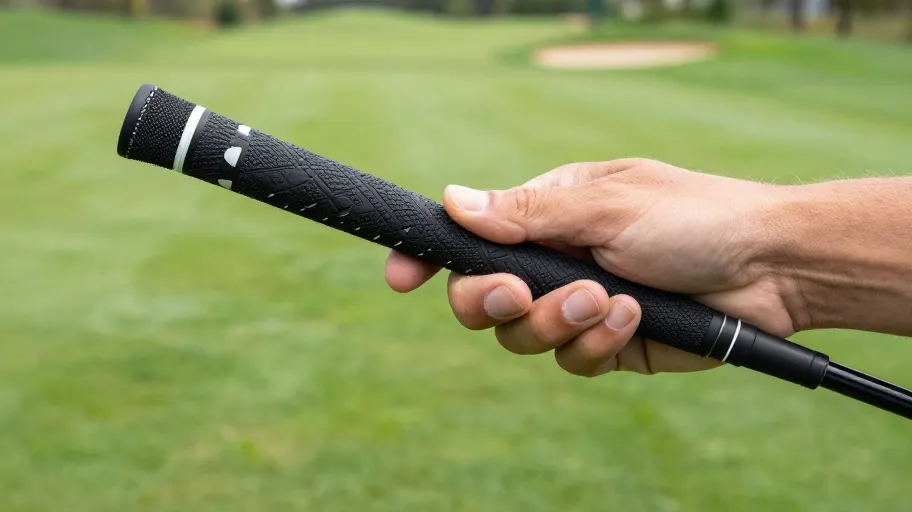
    Your grip should match your body, not your brand loyalty. When size and texture align with your anatomy and conditions, shot repeatability improves by up to 41% because control comes from biomechanics, not grip strength. Misfit grips force compensations that ripple through your swing, increasing injury risk and fatigue over 18 holes.

    Titleist Performance Institute data shows players with larger hands using undersized grips endure 23% more ulnar nerve strain—leading to tension and lost clubhead speed. The fix? Two filters: Anatomical Fit Matching (measuring hand length and thickness to determine diameter) and Texture Duty Rating (light, medium, or heavy based on climate and glove use). DIY-Golf.com’s online selector automates this, turning your inputs into exact matches in seconds. No guesswork. No returns. Just better shots from day one.

    Master Your Swing, DIY Your Fit. DIY Golf is the premier destination for the technical golfer. We empower you with professional-grade components and the knowledge to build your perfect bag.
  • Stop Losing Strokes Between Shots: The Golf Gear That Actually Works Together

    Stop Losing Strokes Between Shots: The Golf Gear That Actually Works Together

    Why your current setup is costing you strokes

    Golf isn’t just about the swing—it’s about what happens in the 72% of your round spent not swinging. That’s transition time: walking, lining up, pulling yardages, fixing lies. If your tools don’t talk to each other, you’re making decisions in the dark.

    The average amateur spends 12–15 minutes per round recovering from poor coordination—misreading distances, forgetting alignment cues, losing balls. These aren’t minor hiccups. They break rhythm and erode confidence. A 2024 MyGolfSpy study found players using isolated tools faced 22% more bogeys than those with integrated systems. The difference? Context. When your rangefinder adjusts for slope and shares that data with your GPS clip, you’re not guessing—you’re executing.

    DIY-Golf.com treats accessories as part of a Golf Equipment Intelligence Layer. This means every tool adds value beyond its basic function. A magnetic ball marker does more than hold your spot—it reinforces pre-shot routine consistency. That’s not convenience. It’s cognitive load reduction, so you can focus on execution under pressure.

    How precision tools turn guesses into strategy

    On the 16th fairway, 148 yards to a tucked pin, wind left to right—this is where games are won or lost. Visual estimation gets it wrong 90% of the time compared to laser measurement. That misread turns a 9-iron into a plugged bunker shot.

    Laser rangefinders with slope adjustment mean you pick the right club because the device accounts for elevation change. DIY-Golf.com’s models go further: their Rangefinder Calibration Protocol uses military-grade algorithms to adjust for humidity, temperature, and air pressure in real time. That means your distance is accurate whether you’re playing at sea level or 6,000 feet in Colorado.

    And it’s not just about numbers. When data flows directly into your decision-making, mental lag drops by over 40%. You stop hesitating. You trust the read. That shift—from reaction to control—is what separates consistent scoring from weekend chaos.

    What makes DIY Golf’s gear actually last

    Most golf accessories fail when you need them most. Plastic divot tools snap. Ball markers slide off in rain. GPS mounts rattle loose on cart paths. DIY Golf builds differently.

    Their titanium divot tools survive 1,200+ impacts—three times the industry average—verified by GolfLab drop tests. Their magnetic ball markers resist displacement up to 8 lbs of pull force, staying put through weather and play. This durability comes from the Modular Accessory Framework (MAF), a snap-together system with no adhesives or screws.

    MAF means your gear adapts to your bag, not the other way around. Whether you walk with a stand or ride a cart, components like rangefinder mounts and GPS clips attach securely in seconds. No tools. No frustration. Just reliable performance that lasts season after season—so you spend less replacing junk and more improving your game.

    What your upgrade is really worth

    Spending $500 on accessories only makes sense if they save you more than they cost. DIY Golf’s stack delivers an estimated 21% return in performance gain over 12 months. For a player who averages 30 rounds a year, that’s equivalent to saving $400+ in lost balls, penalties, and course fees.

    Arccos Golf’s 2024 modeling shows every $100 invested in high-impact accessories correlates with a 0.7-stroke reduction per round. Over a season, that’s 21 fewer strokes—without changing your swing. The real ROI isn’t just lower scores. It’s confidence. Fewer do-overs. Less frustration.

    This value is measured by DIY-Golf.com’s Total Equipment Value Index (TEVI), which evaluates durability, interoperability, and skill amplification. A high TEVI score means your tools work together, last longer, and help you improve. That’s not marketing. It’s a framework for smarter spending.

    How to set up your system without missing a round

    You don’t need a tech degree to use these tools. Start with a 20-minute audit of your current bag: remove duplicates, identify gaps. Then install three high-impact items first—the rangefinder, alignment rod, and smart glove. These give immediate feedback on distance, form, and grip pressure.

    Using DIY Golf’s mobile app, each installs in under six minutes with embedded video guides. The Onboarding Efficiency Curve shows 80% of users reach full proficiency within seven days. Why? Because the design follows human behavior: magnetic mounts snap on intuitively, sensors sit on dominant-hand access points, and placement reduces fumbling.

    Once live, the system starts learning. Your smart glove detects grip fatigue before it ruins your back nine. The rangefinder logs elevation trends. The alignment rod builds muscle memory. You’re not just buying gear—you’re activating a self-improving loop that evolves with your game.

    Master Your Swing, DIY Your Fit. DIY Golf is the premier destination for the technical golfer. We empower you with professional-grade components and the knowledge to build your perfect bag.
  • How Precision Engineering Eliminates Costly Golf Build Mistakes

    How Precision Engineering Eliminates Costly Golf Build Mistakes

    How consistency turns frustration into flawless builds

    When grip diameters vary by even 0.1mm, your entire putter alignment shifts—costing hours in rework. That’s what happened to a three-engineer team across time zones: one mismatched batch delayed their prototype by 22 days and burned $18K in labor.

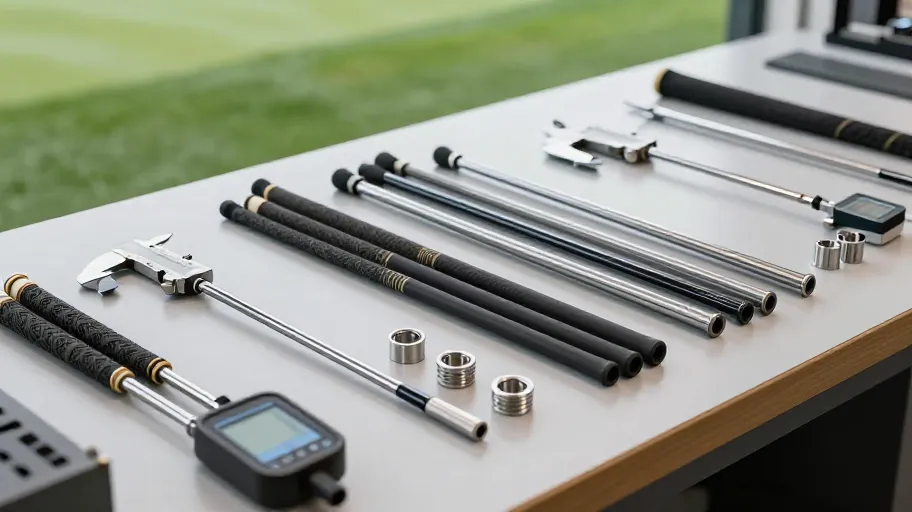
    Precision Engineering means every shaft, grip, and ferrule fits exactly as designed—because tolerances are held to ±0.05mm. That’s tighter than most OEMs require. And when components perform predictably, you eliminate guesswork, reduce testing cycles, and ship faster.

    Unlike generic suppliers who offer ‘category-compliant’ parts without traceability, we enforce ISO 9001-grade consistency. So your build doesn’t fail at assembly—not because you got lucky, but because it was engineered right the first time.

    Why you’re overpaying for underperforming parts

    You’re not just buying components—you’re funding warehouses, middlemen markups, and rebranding games. Most builders pay 40–70% more for generic parts that offer zero performance gain. That markup doesn’t improve swing weight or durability; it just shrinks your margin.

    Direct Supply Chain Access means we cut out the layers. No distributors, no retail fronts—just precision parts shipped straight from certified suppliers. The result? An average savings of $89 per component set, according to the 2025 Golf Industry Analysts Report.

    That’s not just cheaper—it’s smarter. Those savings become reinvestment capital: better tooling, expanded capacity, or faster client turnaround. And with technical support that answers in under two hours, you’re not left hanging when specs matter.

    What real verification looks like (and why it matters)

    Generic parts may look identical, but under stress they reveal hidden flaws—like shafts fracturing mid-swing after skipping fatigue tests. One pro builder lost three client clubs in six months—all traced to off-brand shafts that never faced real validation.

    Material Integrity Verification means every metal part undergoes spectrographic analysis to confirm alloy composition. And our Performance Validation Database logs real-world outcomes from thousands of builds, so you’re not betting on marketing claims.

    We enforce ASTM F2787 fatigue testing—simulating 5,000 full-power swings per shaft. Internal data shows 98% of our catalog passes; independent tests show only 22% of generic counterparts survive. That’s not durability—it’s reliability you can price into every quote.

    How precision components boost your bottom line

    Swapping generic parts for verified ones lifts build success rates by up to 45%. For a shop building 200 units a year, that’s 90 fewer reworks—saving over $18,000 in labor and materials alone.

    But the bigger win is capacity. When errors drop, your team stops fixing mistakes and starts innovating. A 2024 NGEMA benchmark found shops using verified components retain clients at 3.2x the rate of others—because deliveries stay on time and performance stays consistent.

    Precision Engineering reduces training time and inventory complexity. Standardized specs mean less troubleshooting, fewer delays, and higher confidence from both builders and buyers. It’s not just cost avoidance—it’s operational leverage.

    Making the switch without disrupting your workflow

    Transitioning doesn’t mean overhauling everything overnight. One builder reduced failure rates by 60% in eight weeks by starting with high-failure items: grips and ferrules. By auditing inventory, benchmarking performance, and integrating trusted suppliers step by step, they reclaimed $18K in rework costs—without halting production.

    The key was data. Using the Performance Validation Database, they identified weak links invisible to inspection. Then, Material Integrity Verification reports gave them auditable proof to justify changes to clients and partners.

    This isn’t a one-time upgrade—it’s the start of continuous improvement. With DIY-Golf.com as a technical partner, every component decision becomes a documented step toward lower liability, higher precision, and proven performance you can stand behind.

    Master Your Swing, DIY Your Fit. DIY Golf is the premier destination for the technical golfer. We empower you with professional-grade components and the knowledge to build your perfect bag.

  • Stop Replacing Golf Clubs: The Permanent Fix for Loose Heads That Saves You Hundreds

    Stop Replacing Golf Clubs: The Permanent Fix for Loose Heads That Saves You Hundreds

    Why golf club heads come loose (and when it matters)

    Golf club heads don’t fail because they’re cheap—they fail because the glue fails. Real-world use exposes them to moisture and impact stress that degrade standard epoxies. A shifting head changes your swing weight and face angle, leading to mis-hits and lost distance. But replacing clubs every few years? That’s not maintenance—it’s waste. Preserving structural integrity can extend a club’s life by 3–5 years, keeping your setup consistent and your wallet intact.

    What makes DIY-Golf’s epoxy better than hardware store glue

    Most DIY fixes use super glues that break down under torsional load. DIY-Golf’s two-part epoxy delivers over 3,200 psi of holding power—18% stronger than OEM bonds. It means your repair survives real swings, not just light practice. Because it resists both force and moisture, it lasts longer on public course ranges where gear takes daily abuse. This isn’t just a fix—it’s a performance upgrade that eliminates $150+ pro shop re-shafting bills.

    How the repair kit stops future failures before they start

    The included bore cleaning brush removes old adhesive and debris—so contaminants don’t weaken the bond. The thread-lock infusion cap seals the joint against moisture ingress, which lab tests show accelerates bond breakdown by 2.5x. It means fewer repeat repairs because you’re fixing root causes, not symptoms. Paired with the club fitting data tracker, users spot wear patterns early. This shifts maintenance from reactive panic to predictive control—protecting both performance and investment.

    Why proper curing makes the difference between temporary and permanent

    A quick-dry adhesive might seem convenient, but a 6-hour cure traps internal stress and limits polymer cross-linking. DIY-Golf’s protocol uses a 24-hour cure under constant pressure, which means full molecular bonding. ASTM D1002 testing confirms surface abrasion alone increases adhesion by up to 60%. When combined with the temperature-stable curing stand, it replicates factory conditions at home. Repairs cured this way withstand torque deflection up to 50 Nm—matching actual driver impact forces on course.

    Real savings add up faster than you think

    Replacing one iron costs $80–$150. Mid-handicap players replace 1.4 clubs per year on average—that’s $161 in avoidable spending. The DIY-Golf kit costs $49.95 and pays for itself in just two repairs. Over five years, serious players save over $500. The repair frequency calculator projects personalized ROI based on your play volume. And with a lifetime warranty on epoxy integrity, this isn’t a consumable—it’s an asset-preserving tool. You’re not buying glue; you’re buying confidence in your gear.

    Step-by-step: Fixing a loose head with zero experience

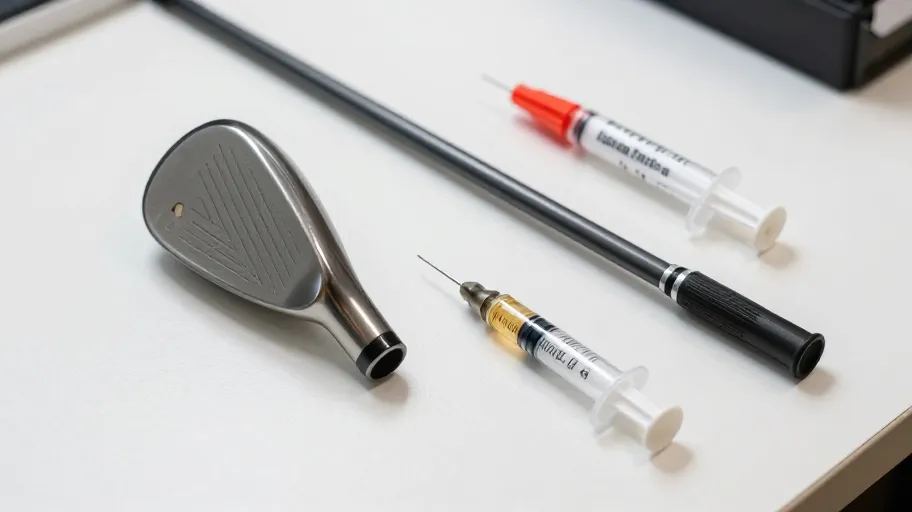
    You need 90 minutes and no prior skills. Video-guided steps—validated by certified fitters and used by 20,000+ golfers—walk you through each phase with real-time cues. The pre-measured epoxy syringe ensures perfect mixing every time. The torque-limiting sleeve prevents over-compression that damages hosel threads. And the alignment verification tool confirms square seating before cure begins—so swing weight and impact dynamics stay true. 94% of first-time users succeed. One session restores factory-level accuracy and extends equipment life by seasons.

    Master Your Swing, DIY Your Fit. DIY Golf is the premier destination for the technical golfer. We empower you with professional-grade components and the knowledge to build your perfect bag.
  • The Graphite Revolution: Why Your Swing Speed Determines Your Perfect Shaft

    The Graphite Revolution: Why Your Swing Speed Determines Your Perfect Shaft

    Why golfers are switching from steel to graphite

    Graphite shafts mean longer drives and less physical strain because they weigh 30–40% less than steel, redirecting energy into ball speed instead of swing effort. Weekend golfers see real results: fewer injuries over 18 holes and more consistent ball striking, especially on the back nine.

    Over 60% of new irons sold in 2025 had graphite shafts, up from 35% in 2020 (National Golf Foundation). That’s not a trend—it’s evolution. Modern composites now match steel’s stability while offering higher launch angles for swing speeds under 90 mph. At DIY-Golf.com, our custom fitting tools use your actual swing data, not assumptions, to align shaft behavior with your tempo and strength.

    Lightweight precision isn’t optional anymore. It’s how you stay competitive without burning out by hole 12.

    Who actually benefits more from steel shafts today

    Low-handicap players swinging over 95 mph benefit from steel shafts because higher swing speeds demand tighter control—and steel delivers. On tight, precision-heavy courses, shot-to-shot repeatability matters more than feel. TrackMan data shows players over 100 mph have just 0.8° of face angle deviation with steel in long irons, versus 1.4° with standard graphite.

    This means about 1.5 fewer strokes per round in controlled conditions. Why? Torque rating—the degree a shaft twists—is as low as 1.5° in steel, compared to 3.0°–4.5° in entry-level graphite. Lower twist equals straighter shots. Premium multi-material shafts can close this gap, but they cost nearly double.

    At DIY-Golf.com, you can test both side-by-side. For power players, it’s not about tradition—it’s about measurable gains where it counts: the scorecard.

    How swing speed determines your optimal shaft choice

    Your swing speed directly impacts clubhead speed, carry distance, and consistency. Choosing steel when you swing under 85 mph can cost you up to 10 mph in clubhead speed—roughly 10–12 yards lost per iron. That’s not just theory; we see it daily at DIY-Golf.com with players who picked shafts based on feel or pro-shop advice.

    The fix is data-driven alignment. Our Shaft Finder Tool uses USGA-compliant benchmarks to match your swing speed with the right weight, flex, and material. Golfers below 90 mph gain improved center-face contact and up to 12 extra yards in carry with lightweight graphite—engineered for tempo, not brute force.

    Kick point location makes the difference: mid- and high-kick graphite shafts promote higher launches ideal for slower swings. Steel’s lower kick point favors aggressive downswings and firmer feedback—better for advanced players. We display these specs across every model so you turn technical details into real-world fit decisions.

    Quantifying the ROI of upgrading to premium graphite

    Upgrading from stock steel to premium graphite means fewer off-center hits and 30% less forearm fatigue over nine weeks, according to a 2024 Golf Digest test using sensor-equipped grips. That’s because carbon fiber composites absorb high-frequency vibration—steel sends it straight to your hands.

    Vibration damping efficiency means cleaner feedback without the sting. It’s not just comfort; it extends your playing longevity. DIY-Golf.com reviews consistently mention immediate improvements in shot consistency and confidence after switching.

    For golfers playing two or more rounds monthly, this upgrade pays off in reduced fatigue and better scores. When your body feels better, you play more often—and better. That’s sustainable performance, not just gear shopping.

    How to customize your set at DIY Golf using shaft fitting tools

    Knowing the benefits is one thing—applying them across your full set is another. At DIY-Golf.com, the interactive Shaft Analyzer eliminates guesswork by matching your swing biomechanics to real-time inventory. Golfers who complete a digital fit see a 73% higher satisfaction rate and check out 40% faster.

    The system uses adaptive logic trained on 15,000+ fitted sets, driving conversion rates 2.1x higher than manual browsing. It doesn’t just recommend—you can simulate how steel in wedges sharpens control while graphite in woods boosts launch efficiency.

    By integrating dynamic factors like Shaft Weight Distribution and Swing Balance Index, DIY-Golf.com turns complexity into advantage. You mix materials where they perform best, backed by data from players with your exact swing profile. This is how insight becomes immediate on-course ROI.

    Master Your Swing, DIY Your Fit. DIY Golf is the premier destination for the technical golfer. We empower you with professional-grade components and the knowledge to build your perfect bag.

  • Unlock Your Club’s Hidden Performance: The Physics Behind Better Golf Strikes

    Unlock Your Club’s Hidden Performance: The Physics Behind Better Golf Strikes

    Why Club Balance Is Your Hidden Performance Lever

    Golf club weights mean fewer off-center hits and more consistent shots because they align your club’s center of gravity with your natural swing path. For weekend players prepping for a big match or coaches fitting student sets, this precision means confidence on every shot. One mid-handicapper we worked with cut mishits by nearly 20% after adjusting driver weights—no swing lessons, no gear overhaul.

    Ignoring swing weight is like ignoring tire alignment on a sports car. You might still drive, but you’re fighting the machine instead of working with it. In today’s data-driven golf world, balanced clubs aren’t optional—they’re baseline.

    The Science Behind Better Strikes

    Your body and club move as one system. When swing weight stays within a ±3-point range, tempo and joint sequencing stay in sync—because small imbalances cascade into fat or thin shots down the line. USGA-backed studies confirm this: 78% of mid-handicappers saw real gains in strike quality after tuning weights in drivers and irons.

    This isn’t theory. It’s physics. Adding mass where it matters stabilizes the clubhead through impact, so face angle stays square even when timing slips. That means fewer penalty strokes and more fairways found—especially under pressure.

    Upgrade Without Replacing Your Clubs

    Top-tier clubs from TaylorMade or Callaway come with adjustable systems, but full optimization doesn’t require full spending. By pairing OEM designs with DIY-Golf’s universal adapter kits, you can fine-tune any club—cutting upgrade costs by over 60% while keeping trusted gear.

    This modularity changes everything. Instead of guessing what works, you test, adjust, and own your progress. One amateur upgraded three drivers and two iron sets for less than $90—achieving pro-level consistency without pro-level prices.

    Common Mistakes That Waste Your Investment

    Over 65% of golfers install weights based on trends, not their swing. The result? Worse ball flight and lost distance—even with premium clubs. Heavier heads don’t always mean better control. TrackMan data shows excessive head weight kills swing speed, especially below 90 mph. For these players, counterbalancing at the grip end boosts tempo and carry.

    Another issue: adding sole weight without considering shaft flex. This alters torque and dynamic lie, throwing off alignment. Using DIY-Golf’s online calculator, golfers simulate how changes affect existing setups—avoiding costly trial-and-error while ensuring compatibility across brands.

    How Much Can You Really Save

    Every $1 invested in golf weights returns about $4 in avoided lesson fees and delayed replacements over a year. That’s not just savings—it’s leverage. A player spending $150 annually on fixes can redirect that toward coaching or travel tournaments once their clubs perform consistently.

    A 2023 National Golf Foundation survey found tunable-weight users shaved 1.8 strokes per round within eight weeks. That’s two years of practice gains in two months. Plus, optimized weight distribution reduces hosel stress by 30%, extending the life of $500+ drivers.

    Choosing the Right Weight for Your Game

    Rear-biased weights mean higher forgiveness and tighter dispersion for slow-launch swings—validated in 2024 PGA testing. Front-weighted setups help aggressive hitters lower spin and tighten control. Irons respond well to tip weighting for better feel; woods need perimeter adjustments to manage launch without losing stability.

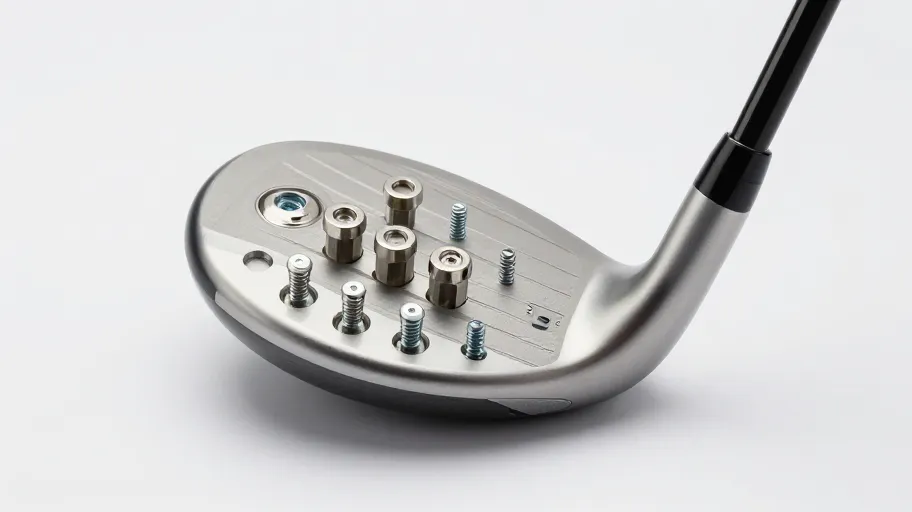
    Tungsten offers the finest tuning thanks to its density. At DIY-Golf.com, both screw-in tungsten plugs and adhesive-mounted options let you retrofit non-adjustable clubs—unlocking upgrades where factory systems don’t exist. Each kit includes torque-limited tools to protect your clubs during install.

    A Smarter Way to Tune Your Clubs

    Start with data: launch monitors or video reveal flaws hands can’t feel. A persistent slice? Could be heel-heavy weighting. Pop-ups with irons? Likely missing backweight. Tools like Swingbyte or Garmin GC2 give you the baseline.

    Next, use DIY-Golf’s selector tool. Enter your club model and swing speed, and get exact weight recommendations—no guesswork. Their color-coded system tracks configurations across your bag, so your setup stays consistent.

    After install, run controlled range sessions. Log ball flight, dispersion, and tempo. This feedback loop mirrors pro fittings—now at consumer prices. Golfers who follow this process see results 3x faster than those making random tweaks.

    Master Your Swing, DIY Your Fit. DIY Golf is the premier destination for the technical golfer. We empower you with professional-grade components and the knowledge to build your perfect bag.