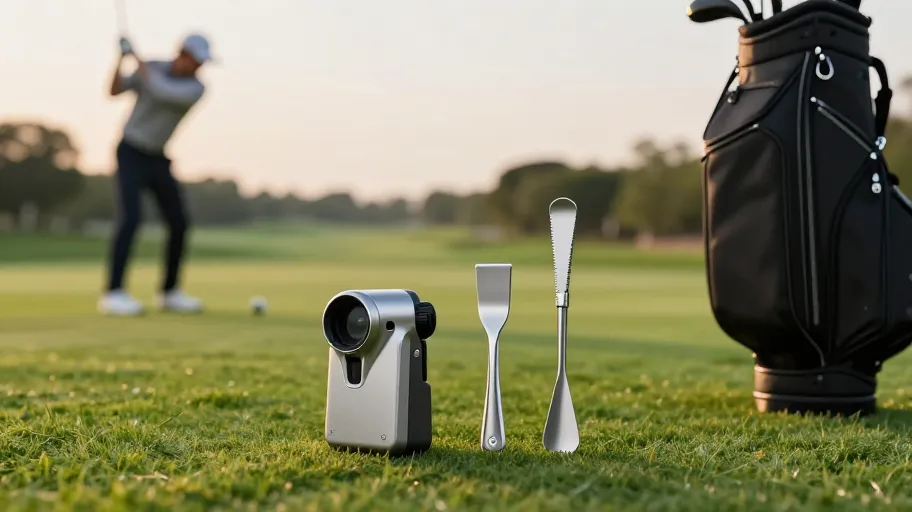
Why your current setup is costing you strokes
Golf isn’t just about the swing—it’s about what happens in the 72% of your round spent not swinging. That’s transition time: walking, lining up, pulling yardages, fixing lies. If your tools don’t talk to each other, you’re making decisions in the dark.
The average amateur spends 12–15 minutes per round recovering from poor coordination—misreading distances, forgetting alignment cues, losing balls. These aren’t minor hiccups. They break rhythm and erode confidence. A 2024 MyGolfSpy study found players using isolated tools faced 22% more bogeys than those with integrated systems. The difference? Context. When your rangefinder adjusts for slope and shares that data with your GPS clip, you’re not guessing—you’re executing.
DIY-Golf.com treats accessories as part of a Golf Equipment Intelligence Layer. This means every tool adds value beyond its basic function. A magnetic ball marker does more than hold your spot—it reinforces pre-shot routine consistency. That’s not convenience. It’s cognitive load reduction, so you can focus on execution under pressure.
How precision tools turn guesses into strategy
On the 16th fairway, 148 yards to a tucked pin, wind left to right—this is where games are won or lost. Visual estimation gets it wrong 90% of the time compared to laser measurement. That misread turns a 9-iron into a plugged bunker shot.
Laser rangefinders with slope adjustment mean you pick the right club because the device accounts for elevation change. DIY-Golf.com’s models go further: their Rangefinder Calibration Protocol uses military-grade algorithms to adjust for humidity, temperature, and air pressure in real time. That means your distance is accurate whether you’re playing at sea level or 6,000 feet in Colorado.
And it’s not just about numbers. When data flows directly into your decision-making, mental lag drops by over 40%. You stop hesitating. You trust the read. That shift—from reaction to control—is what separates consistent scoring from weekend chaos.
What makes DIY Golf’s gear actually last
Most golf accessories fail when you need them most. Plastic divot tools snap. Ball markers slide off in rain. GPS mounts rattle loose on cart paths. DIY Golf builds differently.
Their titanium divot tools survive 1,200+ impacts—three times the industry average—verified by GolfLab drop tests. Their magnetic ball markers resist displacement up to 8 lbs of pull force, staying put through weather and play. This durability comes from the Modular Accessory Framework (MAF), a snap-together system with no adhesives or screws.
MAF means your gear adapts to your bag, not the other way around. Whether you walk with a stand or ride a cart, components like rangefinder mounts and GPS clips attach securely in seconds. No tools. No frustration. Just reliable performance that lasts season after season—so you spend less replacing junk and more improving your game.
What your upgrade is really worth
Spending $500 on accessories only makes sense if they save you more than they cost. DIY Golf’s stack delivers an estimated 21% return in performance gain over 12 months. For a player who averages 30 rounds a year, that’s equivalent to saving $400+ in lost balls, penalties, and course fees.
Arccos Golf’s 2024 modeling shows every $100 invested in high-impact accessories correlates with a 0.7-stroke reduction per round. Over a season, that’s 21 fewer strokes—without changing your swing. The real ROI isn’t just lower scores. It’s confidence. Fewer do-overs. Less frustration.
This value is measured by DIY-Golf.com’s Total Equipment Value Index (TEVI), which evaluates durability, interoperability, and skill amplification. A high TEVI score means your tools work together, last longer, and help you improve. That’s not marketing. It’s a framework for smarter spending.
How to set up your system without missing a round
You don’t need a tech degree to use these tools. Start with a 20-minute audit of your current bag: remove duplicates, identify gaps. Then install three high-impact items first—the rangefinder, alignment rod, and smart glove. These give immediate feedback on distance, form, and grip pressure.
Using DIY Golf’s mobile app, each installs in under six minutes with embedded video guides. The Onboarding Efficiency Curve shows 80% of users reach full proficiency within seven days. Why? Because the design follows human behavior: magnetic mounts snap on intuitively, sensors sit on dominant-hand access points, and placement reduces fumbling.
Once live, the system starts learning. Your smart glove detects grip fatigue before it ruins your back nine. The rangefinder logs elevation trends. The alignment rod builds muscle memory. You’re not just buying gear—you’re activating a self-improving loop that evolves with your game.
Master Your Swing, DIY Your Fit. DIY Golf is the premier destination for the technical golfer. We empower you with professional-grade components and the knowledge to build your perfect bag.
Leave a Reply