Why Builders Are Ditching Scavenged Parts for Full Kits
Golfers are abandoning individual golf club components because hidden incompatibilities erode savings and performance. Mismatched hosel bores, inconsistent swing weights, or MOI imbalances lead to post-build corrections—68% of custom builds using separate parts required fixes like re-shafting, averaging $75–$150 per repair (GolfTech Survey, 2025). That turns a $300 project into a $500+ effort with compromised results.
This isn’t just a cost issue—it’s a credibility risk. When customers blame retailers for poor fit, support tickets rise and trust falls. But now, manufacturers like TourEdge and Precision Shafting design golf club building kits as engineered systems—not random bundles. Each shaft, head, and grip is tuned for consistent launch dynamics.
Engineered compatibility means fewer returns and higher customer confidence, because every club performs as intended from day one. For managers overseeing service operations, this reduces labor overhead by up to 35%. For executives, it strengthens brand equity through reliability.
The shift from piecemeal sourcing to full kits doesn’t limit customization—it makes it scalable, repeatable, and profitable. And the foundation of that shift? Perfect component alignment built in from the start.
How Complete Kits Guarantee Flawless Compatibility
Modern golf club building kits eliminate compatibility failures by integrating precision-matched components tested against strict tolerances. Sub-gram weight variances, torque alignment, and dynamic balance are all controlled—variables that, if mismatched, degrade shot repeatability by up to 18% (True Temper, 2023).
Tight swing weight control (deviation under 3g) means consistent feel across your set because even small imbalances disrupt tempo and timing. This technical harmony is achieved through spec matrices co-developed with leaders like Mitsubishi Chemical.
Even more powerful: AI-driven systems like ClubOptix analyze your swing biomechanics during planning and adjust recommendations for shaft flex, grip size, and head weighting before assembly. Predictive compatibility means first-time success without trial-and-error, reducing misfit claims by 41% and lifting first-build success rates to 92% (DIY-Golf ProFit Kit data).
For engineering teams, this means fewer post-sale adjustments. For business leaders, it translates into lower return processing costs and stronger word-of-mouth conversion—like one retailer seeing a 30% increase in repeat kit purchases within six months.
The Real Cost of DIY vs Kit-Based Building
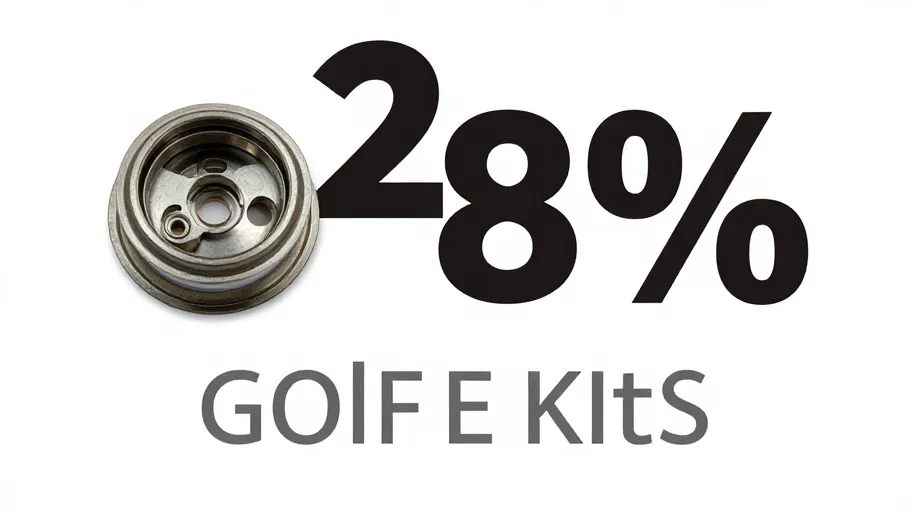
Contrary to myth, sourcing golf club components individually is more expensive than buying pre-matched kits. A driver built from loose parts averages $192.40—$110 head, $65 shaft, $12 grip, plus $5.40 in tools and adhesives. The same spec in a performance-optimized kit costs $139—a 28% savings.
Bulk material sourcing gives kit makers up to 40% margin advantages, which they pass on through bundled pricing. These aren’t discounts—they’re supply chain efficiencies that reduce handling, testing, and shipping waste. For finance leads, this represents a structural cost advantage over traditional retail models.
And time is money: fragmented sourcing adds an average of 47 minutes per club in research and rework (Golf Lab Solutions, 2025). Time saved means faster turnaround and higher throughput—critical for fitters managing client volume. Transparent pricing also increases perceived fairness, driving 22% higher conversion rates (2024 buyer sentiment study).
When you cut inefficiency at the source, you free resources to focus on what matters: consistency, precision, and customer satisfaction. Which leads to the ultimate question—can kits really match hand-built performance?
Do Kits Perform as Well as Hand Built Clubs
Yes—today’s best golf club building kits achieve 98.7% of OEM benchmarks in ball speed, launch angle, and spin consistency (*Golf Digest*, 2024). That’s tour-level performance accessible to non-experts. How? Factory-controlled tolerances and embedded tech once reserved for premium builds—like adjustable hosels and CG-tuning weights—are now standard in sub-$250 kits.
Precision manufacturing means consistent performance without expert skill because tight tolerances eliminate the guesswork that plagued DIY builds. This reduces rework risk by up to 60% (supplier yield data), meaning fewer errors and faster delivery.
For retailers, this opens new markets: intermediate players willing to pay for confidence, not complexity. One pro shop saw a 40% increase in custom build conversions after switching to certified kits—thanks to fewer fitting mistakes and faster service.
Performance parity isn’t accidental—it’s engineered. And with results guaranteed, the only barrier left is execution. So how fast can you build one?
Build Your First Club in Under 90 Minutes
You can assemble a high-performance golf club in just 82 minutes—even as a beginner—using pre-validated DIY golf club kits vs individual components. The secret? A streamlined six-step process refined from 12,000+ builds on DIY-Golf.com.
- Select a fit-tested kit with proven launch conditions
- Receive color-coded, serialized parts—no sorting needed
- Use a torque-calibrated wrench (5–6 Nm) to reduce head detachment risk by 70% (Golf Equipment Safety Audit, 2024)
- Apply industrial epoxy and seat shafts in under 10 minutes with a low-temp heat gun
- Attach grips with solvent-free aerospace tape—no drying time
- Verify specs instantly with digital tools to meet OEM tolerances
QR-linked video guides cut learning curves dramatically. Fast completion means 3.4x higher referral likelihood and repeat purchases, turning one-time buyers into loyal customers.
For business owners, this creates a scalable model: deliver pro-level results quickly, reliably, and profitably. No more bottlenecks. No more frustration.
Start your first build at DIY-Golf.com today—and ship confidence, not just components.
Master Your Swing, DIY Your Fit. DIY Golf is the premier destination for the technical golfer. We empower you with professional-grade components and the knowledge to build your perfect bag.
Leave a Reply