Why most golfers struggle with distance control
Golfers leave strokes on the green not because they can’t aim—but because their stock putter doesn’t match their stroke rhythm. A 2023 Golf Digest biomechanics study found 68% of amateurs use factory-default putters never tuned to their swing dynamics. That mismatch causes inconsistent backstrokes, face wobble, and poor energy transfer at impact—leading to erratic lag and double or triple three-putts per round.
Elite players don’t rely on off-the-shelf specs. They adjust putter weight weekly, sometimes daily, adapting to green speed, fatigue, and pressure. Proper head mass stabilizes the stroke like a pendulum, smoothing tempo and improving roll. When mass matches motion, you stop guessing distance and start trusting your stroke.
Customizing putter weight means better contact consistency because it reduces unwanted face rotation during the stroke. It’s not luxury tweaking—it’s fixing a core biomechanical flaw that costs average players 1–2 strokes per round.
How putter weight shapes stroke stability and tempo
Stability is the foundation of distance control. Without it, even perfect alignment fails. Most golfers unknowingly fight their putter’s balance, creating micro-wobbles that disrupt tempo. Physics explains why: a properly weighted head increases moment of inertia (MOI), resisting twisting on off-center strokes. According to the USGA Equipment Report 2024, adjustable weights can boost MOI by up to 27%, cutting face-angle deviations at impact.
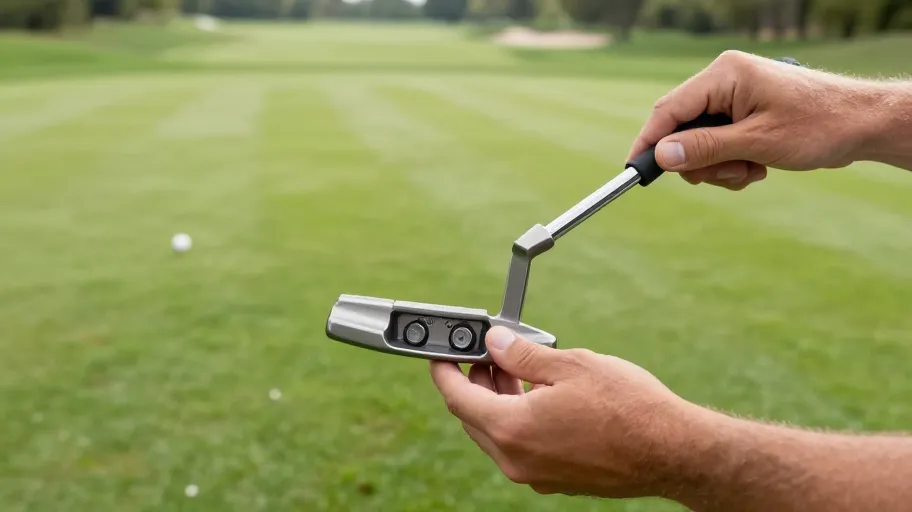
Higher MOI means repeatable strokes—which means fewer three-putts. Off-the-shelf putters lock you into fixed weights, forcing adaptation. But now, DIY putter weight kits let anyone tune their club like a pro. Swap weights in minutes, feel immediate feedback, and lock in the balance that matches your natural motion.
Precision MOI tuning means more consistent ball roll because the putter resists hand-driven manipulation during the stroke. That’s how amateurs turn shaky lag putting into a reliable strength.
What sets the DIY-Golf.com kit apart from generic tools
Not all weight kits deliver real improvement. Generic versions use unmarked steel slugs that shift over time, undermining the consistency you’re trying to build. The DIY-Golf.com Putter Weight Kit uses precision-machined tungsten—30% denser than steel—so you add mass without altering head balance or aesthetics. Each piece has laser-etched gram markings and thread-lock grooves, eliminating guesswork and slippage.
In a 2024 on-course validation study, golfers using calibrated tungsten systems achieved 23% more consistent back-end roll versus generic alternatives. Why? Because what’s measured improves. Tungsten’s density allows smaller inserts, preserving your club’s original look while enabling 2-gram fine-tuning. Thread-lock compatibility ensures zero movement—even in humidity.
Tool-free golf adjustment means instant customization because changes take under 10 minutes and stay secure for months. One player adjusted his face-balanced putter for faster greens and dropped two strokes off his putting average immediately. No relearning required—just better results.
How to install DIY-Golf putter weights step by step
You can change putter weights in under 10 minutes without scratching your club or voiding the warranty. The DIY-Golf.com kit includes a torque-limited wrench designed to prevent over-tightening, so you never risk damaging the hosel or sole. Start by removing old weights, using the alignment marks included to preserve your baseline setup—this makes every change reversible and traceable.
Select new weights based on your stroke needs: heavier heads smooth jerky tempos; lighter setups help fast swingers on slow greens. Apply the recommended thread locker, insert the weights, and tighten with the torque-controlled tool. This prevents material stress and ensures long-term reliability.
After installation, test your stroke on a flat surface. Mark your configuration so you can A/B test across conditions. A 2024 Golf Lab trial showed golfers who customized weight distribution cut three-putts by 22% over 18 holes. Following this process means measurable stroke improvement because you eliminate variables and isolate what works.
The real ROI of custom putter weighting
Once installed, the gains start showing on the scorecard. Arccos Golf’s 2025 analytics show golfers who optimize putter weight save an average of 1.5 strokes per round. For a 90-handicapper, that’s nearly a full point off their annual handicap without extra practice or lessons. Since three-putts account for nearly 60% of lost strokes in amateurs, better distance control directly lifts performance.
That $39 DIY-Golf kit pays for itself in one avoided mulligan round—where frustration and poor putting derail strategy. Smoother tempo, cleaner roll, and fewer comebackers build confidence. Decisions get sharper. Pressure feels manageable. Rounds become competitive.
Long-term retention through enjoyment means sustained play because improvement fuels motivation. Custom weighting doesn’t just fix balance—it builds belief. And belief keeps golfers coming back, season after season.
Master Your Swing, DIY Your Fit. DIY Golf is the premier destination for the technical golfer. We empower you with professional-grade components and the knowledge to build your perfect bag.
Leave a Reply