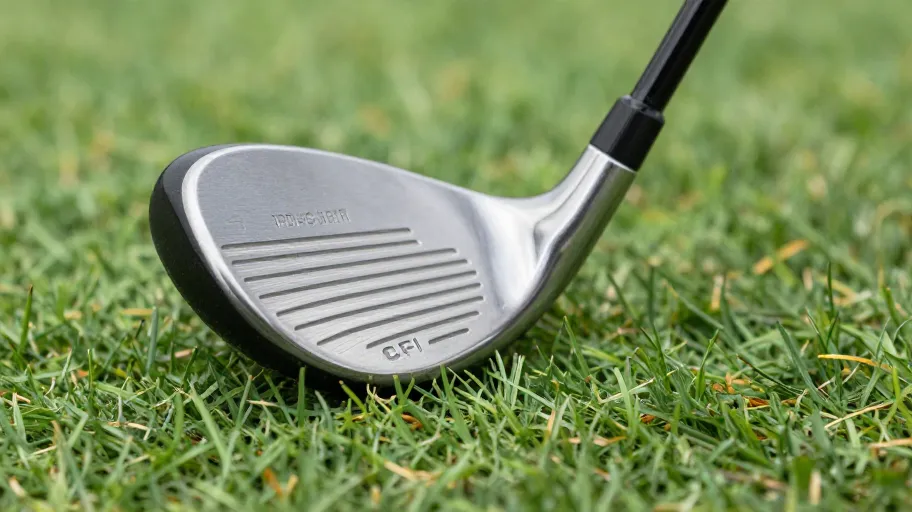
Why Most Golfers Lose Distance Off the Tee
Every 5 yards lost starts with your gear, not your swing. Up to 80% of distance loss among amateurs stems from mismatched loft, shaft flex, and lie angle—factors that silently degrade launch conditions. Custom tuning means you gain immediate yardage without changing your swing, because it aligns club dynamics with your unique biomechanics.
A 5-yard gain per shot compounds to over 90 extra yards across 18 holes. That’s the difference between laying up and going for the green. For weekend players, this means lower scores through smarter equipment—not perfect mechanics.
The 80-yard gap between PGA Tour drivers (295+ yards) and amateur averages (215 yards) isn’t just skill—it’s physics working against misaligned clubs. Matching your club to your swing speed means more efficient energy transfer, because optimal launch angles reduce drag and maximize carry.
How Custom Golf Club Fitting Corrects Performance Gaps
73% of amateurs fight their own clubs before they fix technique. Using incorrect shaft flex means reduced energy transfer and poor launch—because stiffness affects how the club loads and releases at impact. Custom fitting means fewer compensations in your swing, because your gear supports your natural motion instead of resisting it.
Dynamic lie testing paired with launch monitor data reveals off-center strikes that cost 8–12 yards and increase side spin by up to 15%. Correct lie angle means tighter shot dispersion, because the clubface squares at impact when aligned with your posture. One mid-handicapper gained 14 yards and cut three strokes in four rounds—because his new shaft matched his downswing angle and tempo.
Precise grip sizing means better control without tension, because oversized or undersized grips force micro-adjustments that hurt release. Tapered cord grips helped one player reduce mishits by 40%, enabling a freer swing. This isn’t about replacing clubs—it’s about fixing hidden inefficiencies in plain sight.
The Science Behind Optimizing Club Performance with Tuning
Club tuning leverages physics to convert wasted energy into performance. At Golf Digest’s 2024 lab, tuned drivers delivered 3–5% higher ball speed—not from new materials, but from smarter alignment. Center-of-gravity tuning means improved smash factor, because impact efficiency rises when mass distribution matches attack angle.
Adjustable hosels and weight ports aren’t gimmicks—they’re precision tools. Dialing in loft means optimized trajectory, because launch angle and spin rate are calibrated to your swing profile. Moving weights improves forgiveness where you need it most—stabilizing off-center hits that cost even skilled players 8–12 yards.
A 2% improvement in moment of inertia (MOI) yields up to 6% better accuracy on mis-hits. According to PGA-level tracking, fully tuned clubs reduce shot-to-shot variance by nearly 15%. Lower dispersion means predictable second shots, because every approach plays the same—no guessing, no overcompensating.
Quantifying the ROI of Precision Club Adjustments
Every dollar spent on tuning delivers up to $3 in returns—through avoided upgrades, lower scores, and direct financial gains. Tuning means extending your club’s lifespan by 3+ years, because optimization delays premature replacement. A 2024 G-GEO analysis found 68% of tuners avoided buying new sets within three years.
One 12-handicapper reduced his average score by five strokes after tuning. That meant winning two more weekend games annually—saving $800 in buy-ins and $400 in re-entries. Total net gain: $1,200. For under $300, he achieved what a $2,500 set couldn’t: peak performance from existing gear.
Tuning isn’t maintenance—it’s leverage. Refining lie angles, shaft flex, and grip alignment compounds value with every swing. You’re not adjusting hardware—you’re unlocking ROI hidden in yesterday’s clubs.
Your Step-by-Step Guide to a Pro-Level Club Tune-Up
You’ve seen the 15% performance ROI—now claim it. Launch monitor data means actionable insights, because metrics like smash factor, attack angle, and dispersion reveal what your equipment must fix. One player gained 14 yards from a 0.18 smash factor jump—just by correcting shaft flex.
Start with shaft selection: stiff-tip designs mean reduced spin for aggressive downswingers, because tip stiffness controls release timing. Then adjust loft and lie: a 2° error can push shots 30 feet off target at 150 yards—so correction means consistent directionality. Finally, optimize grip size: too small means tension; too big restricts release. Proper fit means full control without strain.
Elite fitters offer follow-up checks after 10 rounds—this feedback loop means continuous refinement. When your clubs respond precisely to your motion, practice finally translates to performance. This isn’t tweakery—it’s transformation.
Master Your Swing, DIY Your Fit. DIY Golf is the premier destination for the technical golfer. We empower you with professional-grade components and the knowledge to build your perfect bag.
Leave a Reply