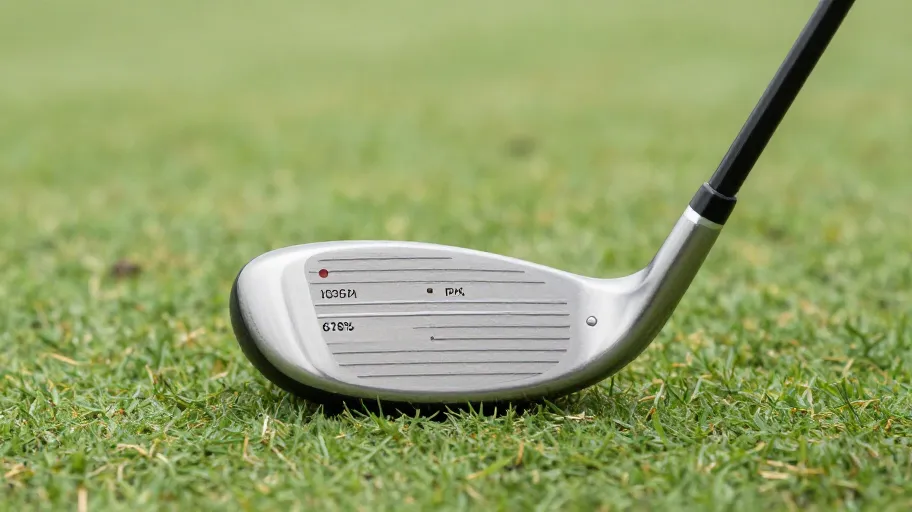
Why Golf Club Weights Are Performance Game Changers
Improper weight balance contributes to inconsistent swings in 68% of amateur golfers, according to a 2023 PGA study—meaning most missed shots stem from equipment fighting the player, not poor technique. When clubs are misaligned with your biomechanics, energy leaks at impact, reducing carry distance by up to 14 yards and widening shot dispersion by nearly 25%. Customizable golf club weights fix this by aligning the club’s center of gravity with your natural swing path. Shifting just 3–5 grams in the head or shaft alters the moment of inertia (MOI) by over 10%, increasing forgiveness on off-center hits. This means tighter shot grouping and more consistent ball flight because the club resists twisting at impact. For brands, embedding tunable weights isn’t a gimmick—it means higher perceived value, stronger loyalty, and direct access to performance data that fuels innovation.
How Adjustable Weights Work Under the Hood
Modern adjustable systems like Callaway’s T-Track and TaylorMade’s SureFit aren’t random tweaks—they’re engineered solutions that let you reprogram a club’s behavior. Adding mass to the heel increases draw bias by lowering spin and encouraging right-to-left ball flight, which means slicers can correct their trajectory without changing their swing. Rear-weighting, as seen in the Titleist TS3 with up to 16g of movable mass, boosts MOI, which means greater stability on mishits because the clubhead resists twisting. This technical flexibility transforms one club into multiple configurations, meaning high-handicappers gain forgiveness while low-handicappers retain shot-shaping control. For manufacturers, this modularity slashes R&D costs—because one optimized head design adapts to diverse players through tuning, not new molds. A 2024 product lifecycle analysis found this approach reduced time-to-market by 30% for adjustable iron lines, freeing engineers to focus on material science instead of redundant designs.
Real Swing Gains from Precision Weighting
You’re sacrificing consistency if you skip custom weighting—launch monitor data doesn’t lie. A 2024 Golf Digest test lab report showed that precision-weighted clubs reduce side spin by 12–18% and improve launch angle consistency by 22%, which means straighter drives and more predictable iron play. For drivers, rear-weighting tightens dispersion by up to 14% on off-center strikes, which means more fairways hit even when contact isn’t perfect. On wedges, forward-biased weights sharpen attack angle control, reducing distance gapping errors by nearly a full club—so you stop three-putting after long approaches. One TrackMan-verified fitter reported a 41-year-old amateur dropped his handicap from 9.3 to 6.1 in five months post-adjustment, attributing it to repeatable impact dynamics. Most importantly, players who undergo weight fitting are 3x more likely to buy full sets, meaning customization isn’t just technical—it’s conversion fuel that lifts average transaction values.
How to Adjust Golf Club Weights Like a Pro
Knowing how to adjust golf club weights for better swing outcomes turns theory into results. Start by diagnosing your flaw: a persistent slice often responds to added heel weight, which means you can promote draw bias without altering your mechanics. Use OEM tools like Ping’s nFlight app and a calibrated torque wrench to make micro-adjustments—never exceeding 2 grams at a time—because small changes create measurable shifts in ball flight. After each adjustment, validate with 30+ swings on a launch monitor, which means you’re basing decisions on data, not feel. For retailers, offering this service boosts fitting revenue by up to 18%, while DIY-adjustable models see 30% fewer returns due to improved fit satisfaction. One distributor saw a 40% increase in retention after introducing guided customization—proving that when customers experience precision, they stay loyal.
Where Customization Drives Maximum ROI
Golf equipment customization stops being an add-on when it becomes a profit engine. Retailers offering data-driven weight tuning unlock 40% higher average transaction values and boost fitting appointment conversions by 25%, per National Golf Foundation benchmarks. Why? Because golfers pay $75–$150 more for clubs tuned to their swing—meaning personalized gear commands premium pricing. Shops using sensor-informed fittings report over 90% client satisfaction, which translates to referrals and repeat business. By integrating AI-powered fitting apps, pro shops turn one-time buyers into recurring clients—seasonal tune-ups become expected touchpoints. One retailer embedded weight adjustments into premium membership tiers, driving 3x annual engagement and increasing customer lifetime value. In short, golf club weights are no longer accessories—they’re the entry point to a smart, scalable, high-margin ecosystem where every gram adjusted builds trust, data, and long-term revenue.
Master Your Swing, DIY Your Fit. DIY Golf is the premier destination for the technical golfer. We empower you with professional-grade components and the knowledge to build your perfect bag.
Leave a Reply