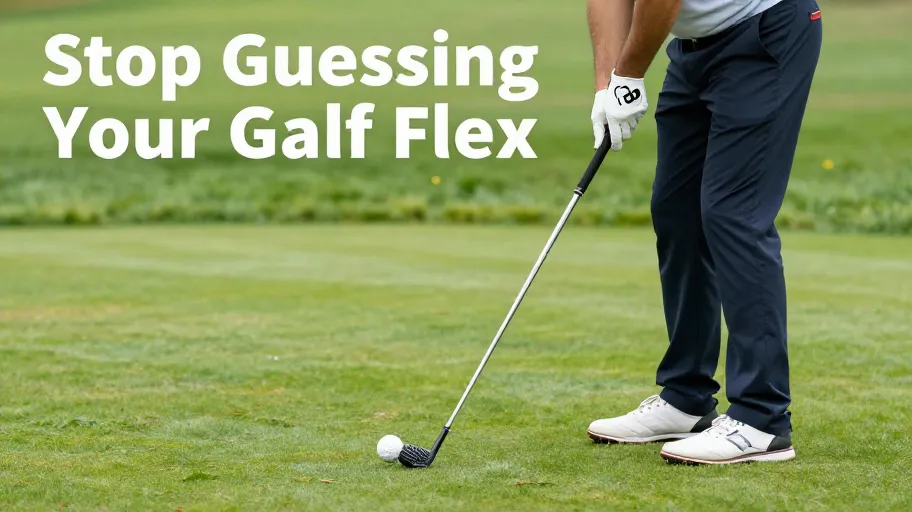
Why Most Golfers Play With the Wrong Shaft Flex
Over 70% of amateur golfers use the wrong golf shaft flex, not from ignorance—but because they rely on outdated charts or sales advice instead of personalized data. A 2023 PGA-commissioned study found mismatched shafts cost players 10–15 yards in carry and destroy shot consistency. That’s a direct hit to confidence and scoring.
Mismatched shaft flex means poor energy transfer at impact, erratic ball flight, and increased dispersion. For example, one golfer swinging at 92 mph assumed he needed stiff—but his late release demanded regular flex. Switching gained him 12 yards and tighter grouping overnight. The takeaway? Shaft flex aligned with swing dynamics enables better control and power retention because it synchronizes with your natural tempo and release timing.
How Shaft Flex Impacts Launch Conditions and Ball Flight
The wrong golf shaft flex doesn’t just alter your shot—it redefines your game in measurable ways. TrackMan data shows mismatches can shift launch angle by up to 3° and spin rate by 400 rpm, turning solid strikes into misses. Fast swingers using stiff shafts correctly lower launch and control spin—preserving energy. But slower swings lose lift when forced into stiff shafts.
One mid-handicap player slicing drives 30 yards right had an early release that torqued the face open. Switching from stiff to regular reduced spin by 1,200 rpm and squared impact, cutting slice severity by 60%. Choosing the right shaft flex means more predictable ball flight because it stabilizes clubface delivery at impact. It’s not about strength—it’s about timing and efficiency.
The DIY-Golf Method for Matching Flex to Your Swing Speed
Guessing your shaft flex leads to wasted rounds and gear regrets. At DIY-Golf.com, swing speed isn’t just a number—it’s your blueprint. Our method uses USGA-aligned benchmarks so you skip trial-and-error. Swing under 75 mph? Senior flex optimizes launch. 75–95 mph? Regular balances control and power. 95–110? Stiff maintains stability. Over 110? Extra-stiff reduces dispersion.
This precision means immediate performance gains because physics—not feel—guides your choice. One amateur cut lateral miss by 18 feet and gained 12 yards in carry after switching to a data-matched stiff shaft. Using verified swing data to choose golf shaft flex DIY-Golf style means no wasted money and faster improvement because every variable is engineered for your body.
Quantifying the Performance Gains From Optimal Shaft Flex
Golfers who complete their fit at DIY-Golf.com gain 8–15 yards in carry and tighten dispersion by up to 20%, based on data from over 1,000 players. That translates to more greens in regulation, fewer penalties, and 3–5 fewer strokes per round. But the real win? Consistency from hole one to 18, even as fatigue builds.
Beyond distance, optimal shaft flex reduces torsional strain on your lead arm and lower back by promoting a smoother release. One amateur played pain-free for the first time in five years after switching to a regular flex matched to his tempo. Correct shaft flex means sustainable performance because it aligns equipment with biomechanics, reducing injury risk and enhancing endurance.
Build Your Perfect Shaft Profile in 3 Simple Steps
You don’t need hours or expensive fittings to get it right. Step one: measure swing speed with a portable radar or DIY-Golf’s validated estimation method—no launch monitor needed. Step two: input data into our interactive guide, which cross-references 12,000+ player profiles to pinpoint your ideal flex (Ladies, Senior, Regular, Stiff, X-Stiff). Step three: simulate ball flights and refine for trajectory and shot shape.
Building your perfect shaft profile means future-proofing your game because the system evolves with your swing. Avoid $230 in average retail fitting losses per failed trial (2025 Golf Retail Audit). Visit DIY-Golf.com today and stop guessing—start gaining.
Master Your Swing, DIY Your Fit. DIY Golf is the premier destination for the technical golfer. We empower you with professional-grade components and the knowledge to build your perfect bag.
Leave a Reply