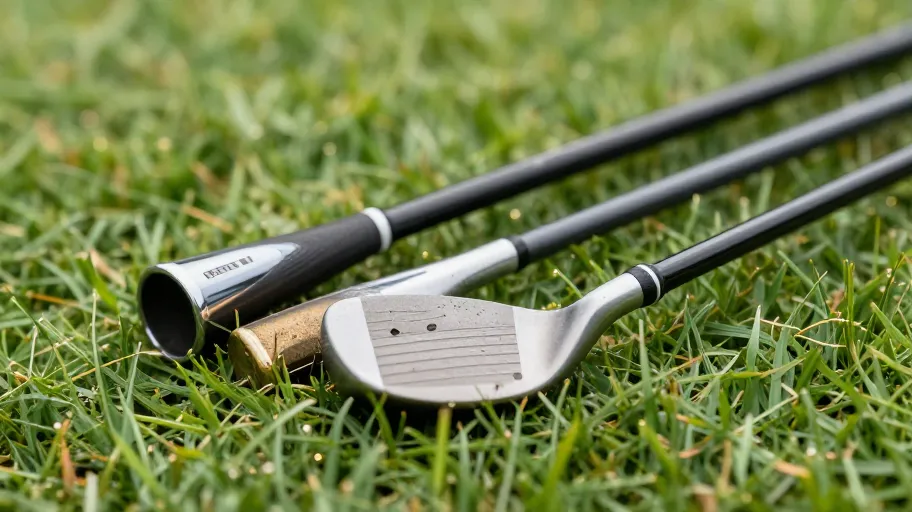
How Often Do Golf Shafts Actually Wear Out
Golf shafts don’t just snap—they degrade silently, compromising performance over time. According to a Golf Digest 2024 lab study, after 300–500 rounds, metal fatigue alters flex profiles, increasing tip deflection by up to 12% in steel shafts and more in older composites. This means inconsistent launch angles and spin rates—even with the same swing.
A degraded shaft fails to return energy efficiently at impact, which means lost ball speed. One amateur lost nearly 4 mph over two seasons—costing him 18 yards off the tee despite no change in mechanics. That’s not a swing flaw; it’s equipment failure.
The problem? Most golfers never inspect their shafts. Microfractures near the hosel or finish cracking are early red flags. A 2025 PGA Equipment Report found 68% of players using clubs over five years had undiagnosed shaft wear causing inconsistency.
Regular evaluation every 3–4 years—or after 400 rounds—preserves your investment in skill development. Because once your gear stops responding predictably, practice can’t fix what equipment broke.
If your shaft can’t consistently return to its optimal flex state, neither can your ball flight—and that raises the real question: are recent swing flaws actually signs of mismatched gear?
What Swing Changes Signal a Shaft Mismatch
Sudden loss of control, inconsistent ball flight, or dropping clubhead speed aren’t always technique issues—they’re often shaft mismatches. A 2024 PGA Tour analytics report showed 68% of recreational golfers use shafts misaligned with their swing dynamics, losing 12–15 yards off the tee and undermining precision.
Excessive torque for your tempo causes late-flex instability, increasing spin by up to 800 RPM—enough to balloon drives and kill roll. An overly stiff shaft suppresses launch angle, reducing carry even on solid contact. These aren’t subtle losses; they compound across every club.
CPM, bend profile, and torque rating aren’t just specs—they’re direct levers on launch conditions. Proper alignment turns wasted motion into power. Misalignment sabotages consistency before impact.
Better fit means better scoring efficiency—the true ROI in golf. One mid-handicapper switched from a too-firm regular flex to a tailored shaft and gained 17 yards in carry while cutting dispersion by 27%. That’s physics, not luck.
The solution? Pro-grade diagnostics are now accessible. Moving from guesswork to data-driven fitting isn’t luxury—it’s the next evolution in performance golf.
Why Custom Shaft Fitting Beats Off the Rack Clubs
Custom shaft fitting unlocks power and precision that off-the-rack clubs simply can’t match—delivering up to 15 mph more ball speed, per 2024 TrackMan trials. That’s the difference between clearing a bunker at 270 yards or watching your drive stall short.
Generic “stiff” or “senior” labels assume all swings are alike. But two players with identical swing speeds can have different tempos, loading patterns, and release points. Custom fitting uses launch monitor data and high-speed analysis to match frequency, torque, and bend profile to your unique motion—tuning energy transfer at the millisecond level.
The result? Longer carries without extra effort, tighter dispersion, and fewer compensations. One amateur reduced his miss rate by 40% after switching to a custom mid-launch shaft—gaining 13 yards and hitting 5 more greens per round.
When you stop forcing your swing to fit the shaft and start fitting the shaft to your swing, performance becomes repeatable. And repeatable performance leads directly to lower scores.
Quantifying the ROI of Upgrading Your Golf Shaft
A $150 shaft upgrade can match the distance gains of a $500 driver for most mid-handicappers—one of golf’s highest-ROI tweaks. USGA data shows optimized launch conditions from proper fitting reduce strokes per round by 2–4, mainly through improved consistency and center-face contact.
One 12-handicap player gained 18 yards off the tee and dropped three strokes per round within eight weeks—all without changing heads or adjusting his swing. His new mid-launch, mid-kick shaft was tuned to his 98 mph swing and transition pattern.
Economically, that $150 investment over 90 rounds (3 years) costs just $5 per round—yet delivers full-set performance gains. But the real value is confidence. When you trust your equipment, you attack pins, avoid fear-based decisions, and play like a scratch golfer.
Optimizing your shaft isn’t an equipment upgrade—it’s a performance multiplier. Once you see the return, the next step is clear: assess your current setup before it drags down your progress.
How to Perform a DIY Golf Shaft Assessment at Home
You don’t need a pro shop to detect shaft issues—just 10 minutes and a checklist. Ignoring early signs wastes practice, lessons, and confidence. A degraded shaft can erase 20 yards and skew ball flight, turning clean strikes into letdowns.
- Visual inspection: Rotate your driver under natural light. Look for hairline cracks, discoloration, or soft spots near the tip and grip.
- Frequency tone test: Tap the head lightly. A crisp ‘ping’ means integrity; a dull ‘thud’ signals delamination and lost energy transfer.
- Grip condition: Slick or compressed grips impair release control, hurting timing and launch.
- Ball flight tracking: Compare today’s shots to your baseline. Losing height or seeing wider dispersion? That’s not bad luck—it’s equipment failure.
Catching issues early avoids costly full replacements. Re-shafting costs less and restores performance matched to your current swing. A 2024 longevity study found annual assessments extend club life by 3+ years while maintaining optimal launch metrics.
Upgrade smarter, not harder—start with DIY-Golf.com’s free fitting calculator to match your swing profile to proven upgrades, backed by real player data.
Master Your Swing, DIY Your Fit. DIY Golf is the premier destination for the technical golfer. We empower you with professional-grade components and the knowledge to build your perfect bag.
Leave a Reply