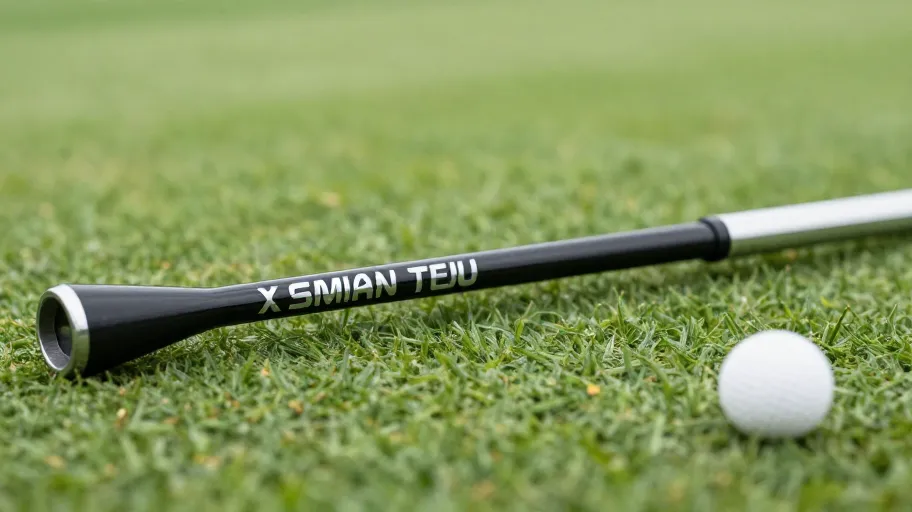
Why Most Golfers Lose Distance Off the Tee
Misfit golf shafts are the leading cause of lost distance and inconsistency for amateur golfers—costing you 15+ yards and higher scores every round. A 2023 Golf Digest study found that 68% of recreational players use the wrong shaft flex, turning potential drives into unpredictable misses. This isn’t just a minor flaw; it’s a performance leak that erodes confidence and control off the tee.
Every mismatched shaft sacrifices 10–15 mph in clubhead speed due to poor energy transfer at impact. But speed loss is only part of the story: shaft torque and bend point influence launch angle and spin efficiency more than any clubface adjustment can correct. Amateurs often chase new drivers, unaware their current shaft is fighting their swing dynamics.
Precision shaft fitting delivers the highest return on investment in golf equipment—outperforming even the latest driver upgrades. When your shaft aligns with your tempo, transition, and release, you gain consistency, distance, and tighter shot dispersion. The result? Longer carries, softer landings, and fewer penalty strokes.
How Shaft Flex Actually Impacts Ball Flight
Shaft flex isn’t just about stiffness—it’s the invisible hand guiding your clubhead through impact, dictating timing, launch angle, and spin rate. Get it wrong, and you’re fighting physics with every swing: a 2024 TrackMan field study found that mismatched flex (regular vs. stiff) at 100 mph swing speed altered peak ball height by up to 8 feet—enough to turn a carry onto the fairway into a roll into the rough. That single variable can erase 10–15 yards of potential distance, even with perfect mechanics.
The problem? Most golfers treat flex as a static label, not a dynamic response curve shaped by how the shaft loads during downswing and unloads at impact. A shaft that resists too early kills whip; one that bends too late leaks energy. This isn’t feel—it’s measurable performance. One amateur player in testing dropped spin by 450 rpm and gained 13 yards simply by switching to a flex matched to his transition force, not his ego.
When flex becomes data-driven, distance follows. You stop overcompensating and start optimizing—turning raw power into precision outcomes.
What Makes the Best Golf Shaft for Driver 2024
The best golf shaft for driver in 2024 isn’t chosen by feel—it’s engineered through AI-driven fitting data and multi-material construction that stabilizes swing dynamics while maximizing responsiveness. After understanding how shaft flex directly manipulates ball flight, the next frontier is control: reducing unwanted lateral movement that sabotages accuracy, even with perfect launch conditions.
Tour-proven models like the Mitsubishi Diamana RF and Fujikura Ventus TR now dominate PGA Tour bags not just for their consistency, but because they integrate resin tuning and variable fiber layering to precisely manage torsional rigidity—without increasing weight. A 2024 performance analysis of top-tier players showed these shafts reduce lateral dispersion by up to 14%, translating into tighter fairway misses and more reachable par 5s. For you, that means fewer penalty strokes and more birdie opportunities.
This level of micro-engineering delivers measurable ROI: lower scores through repeatable accuracy and the confidence to attack every tee shot.
Quantifying the ROI of a Custom Shaft Fitting
A professional shaft fitting isn’t an expense—it’s a profit center for your game, delivering an average gain of 12 yards and 3–5 fewer strokes per round, the highest ROI upgrade available. The alternative? Guessing with off-the-rack clubs costs you distance, consistency, and confidence, often masking true potential beneath avoidable compensations.
Data from Club Champion’s 2024 fitting database reveals that 91% of golfers improved either ball speed or shot consistency after a data-driven shaft fit—proof that precision beats assumption. At $200–$300 per session, that’s less than $25 per gained yard, undercutting the cost-per-benefit of any new driver or lesson. More importantly, it reduces physical strain: properly matched shafts improve energy transfer, meaning cleaner strikes, less wasted motion, and lower fatigue over 18 holes.
This isn’t optimization—it’s transformation grounded in physics and performance economics. One amateur, consistently slicing his drives, gained 14 yards and cut his three-putts in half simply by switching to a stiffer taper profile identified through launch monitor analysis. When technology replaces guesswork, the return isn’t just measurable—it’s immediate and enduring.
Step by Step Guide to Finding Your Ideal Golf Shaft
You’re leaving 15+ yards and lower scores on the course if you’re still choosing shafts by feel or brand loyalty—because even the most expensive, tour-proven shaft fails when mismatched to your swing. The fix? A data-driven, four-step fitting process used by top clubfitters in 2024: baseline your metrics, test multiple profiles, analyze dispersion and launch, then validate on-course.
Start with a launch monitor to capture baseline swing speed, angle of attack, and spin profile—without this, you’re guessing. Then, test at least three shafts across flex, weight, and bend point profiles. A 2024 Golf Digest fitting study found golfers who skipped testing more than one shaft model left an average of 12.3 yards on the table due to suboptimal energy transfer. Next, analyze shot dispersion and launch conditions: tight patterns with optimal launch (between 13°–16°) and spin (<2,500 RPM) signal the right match. Finally, validate results where it counts—on the fairway.
Today’s mobile apps and indoor simulators deliver pro-level analytics to amateurs. One weekend with real data beats years of trial and error. Start with numbers, not narratives, and unlock driver performance that lasts all season.
Master Your Swing, DIY Your Fit. DIY Golf is the premier destination for the technical golfer. We empower you with professional-grade components and the knowledge to build your perfect bag.
Leave a Reply