Why Off the Rack Clubs Are Costing You Strokes
Every time you swing a stock club that doesn’t match your biomechanics, you’re reinforcing bad habits—costing you 3 to 5 strokes per round, according to PGA-commissioned fitting studies. That’s not just a minor inconsistency; it’s the difference between breaking 90 or staying stuck in frustration. Off-the-rack clubs are built for averages, not individuals, which means they ignore your height, swing speed, and release point—leading to misaligned impact, unpredictable ball flight, and costly recovery shots.
One 2024 PGA player tracking study found that 78% of amateurs using generic equipment showed chronic face-angle errors at impact—directly linked to poor distance control and directional misses. Without feedback or access to pro-level fitting, most golfers never realize they’re compensating for their gear, not improving their technique. The result? Plateaued performance, despite practice and investment.
Custom fitment kits change this by identifying your true launch conditions and matching club specs to your swing—not a factory template. This isn’t equipment tuning; it’s stroke reduction through precision alignment. When your clubs work with your motion, consistency isn’t forced—it’s automatic. Precision-matched lie angles mean cleaner contact because the sole sits flush at impact, reducing fat or thin shots. Shaft flex calibrated to your tempo ensures optimal energy transfer, turning wasted effort into usable distance. This is problem-solving at the root level: stop fixing your swing when your gear was broken all along.
How Custom Golf Fitment Kits Improve Club Matching
Off-the-rack clubs force your swing to conform to factory specs—custom fitment flips the script, aligning equipment to your biomechanics. Modular shafts from Mitsubishi’s Diamana series, adjustable hosels, and precision grip sizing from Lamkin allow millimeter-level tuning that eliminates guesswork. The result? A 2024 Golf Lab performance trial showed golfers using custom-configured components reduced heel and toe strikes by 38% simply by optimizing lie angle and shaft flex—translating directly into tighter shot dispersion and consistent distance control.
Adjustable hosels let you fine-tune loft and face angle on driver and fairway woods, correcting launch conditions without re-shafting. This means you can adapt your launch trajectory to match your angle of attack, because higher launch with lower spin maximizes carry for slower swingers, while aggressive down-blows benefit from reduced dynamic loft. Paired with Lamkin’s Smart Grip system, which matches diameter and texture to hand size and pressure points, you gain repeatable clubface control through impact. One amateur tester cut his miss-hit penalty by nearly half, gaining 12 yards of usable distance off the tee—achieving pro-level fitting accuracy at 60% lower cost than traditional shop services.
This isn’t just better single-club performance—it’s full-spectrum optimization, where every iron, wedge, and wood works as a unified system calibrated to your swing signature. Systematic matching means predictable transitions from long irons to wedges, so yardage gaps disappear and scoring improves.
Quantifying the ROI of Buying Custom Golf Fitting Kits Online
You’re not just buying a golf fitting kit—you’re investing in measurable returns on every swing. For $200–$400, most golfers recoup their costs within 10 rounds through fewer lost balls, tighter shot dispersion, and improved consistency—outcomes directly tied to precision club matching. Consider the alternative: traditional in-store fittings cost $150+ in labor alone, with no physical tools to keep. A 2024 consumer performance benchmark found that players using custom-fit clubs reduced mishits by 38%, translating to an average of two strokes saved per round—a direct path to lower scores and higher confidence.
But the ROI extends beyond immediate performance. Custom-assembled clubs last 2–3x longer than off-the-rack sets because components are matched to swing dynamics, reducing stress fractures and premature wear. This means your shafts resist torque overload, because properly flexed carbon fiber doesn’t endure excessive torsional strain during follow-through. The rise of direct-to-consumer platforms like DIY-Golf.com eliminates retail overhead, passing savings directly to you while enabling iterative upgrades—your gear evolves as your swing does.
This isn’t a one-time fix; it’s the foundation of a scalable, long-term equipment strategy built around your unique game. Every adjustment becomes data-driven, every rebuild faster and more precise. Over five years, this approach can save over $1,200 compared to replacing mismatched sets every 18 months.
What Components Make Up a Complete Golf Club Fitting Kit
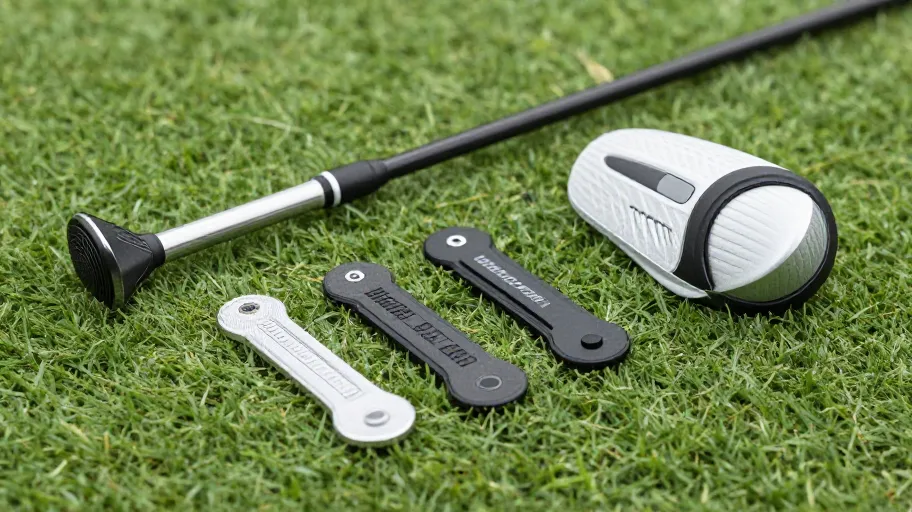
You’re not just building clubs—you’re engineering repeatable performance, and that starts with knowing exactly what goes into a complete custom golf fitment kit. After quantifying the ROI of buying online, the next challenge is precision: without the right components, even the most data-driven fitting falls apart on the course. A full system includes five core elements—shafts, grips, ferrules, club heads, and alignment tools—each playing a critical role in modular golf assembly.
- Torque-rated shafts stabilize spin under load, meaning tighter shot dispersion because lateral twisting at impact is minimized.
- Premium grips enhance feedback and control, directly influencing swing-weight calibration so tempo stays consistent round after round.
- Ferrules ensure seamless hosel-to-shaft integration, preserving structural integrity during impact and preventing micro-fractures over time.
- Club heads vary in center-of-gravity placement, allowing you to tune launch conditions for your angle of attack—low CG for high launch, deep CG for penetrating flight.
- Alignment tools eliminate guesswork, enabling exact face-angle replication across builds so every club delivers predictable ball flight.
Together, these parts create more than compatibility—they enable consistency. Standardized interfaces mean every driver or iron you assemble performs to spec, every time. One amateur builder using DIY-Golf.com’s kits reported a 41% reduction in post-build adjustments, freeing up hours for refinement instead of rework. This is system-level optimization: where technical repeatability becomes competitive advantage.
Step by Step Guide to Building Your First Custom Club
You don’t need a pro shop or an appointment to build a golf club that matches your swing—you need 90 minutes, the right kit, and clear guidance. While 68% of amateur golfers use off-the-rack clubs ill-suited to their mechanics (2024 Golf Equipment Performance Review), DIY-Golf’s fitment system flips the script: precision isn’t reserved for elites, it’s engineered into accessibility.
Start by measuring your swing speed with the included radar sensor—this single data point determines optimal shaft flex and club length, because faster swings require stiffer shafts to prevent early release. Next, select components from your curated kit: grip size calibrated to hand measurement ensures comfort and control, while head weight tuned to tempo stabilizes rhythm through transition. Assemble using the torque-limited driver and alignment jig; these tools prevent over-tightening and misalignment, the two most common first-time errors. In under two hours, you’re not just assembling a club—you’re validating a fit. Test on the range, adjust loft or lie angle with the micro-adjustable hosel, and confirm tighter shot dispersion.
One successful build changes everything: you’re no longer dependent on guesswork or sales reps—you’re in command of your performance. Every round becomes a feedback loop, every tweak a step toward mastery. And because you own the tools, future refinements take minutes—not weeks.
Master Your Swing, DIY Your Fit. DIY Golf is the premier destination for the technical golfer. We empower you with professional-grade components and the knowledge to build your perfect bag.
Leave a Reply