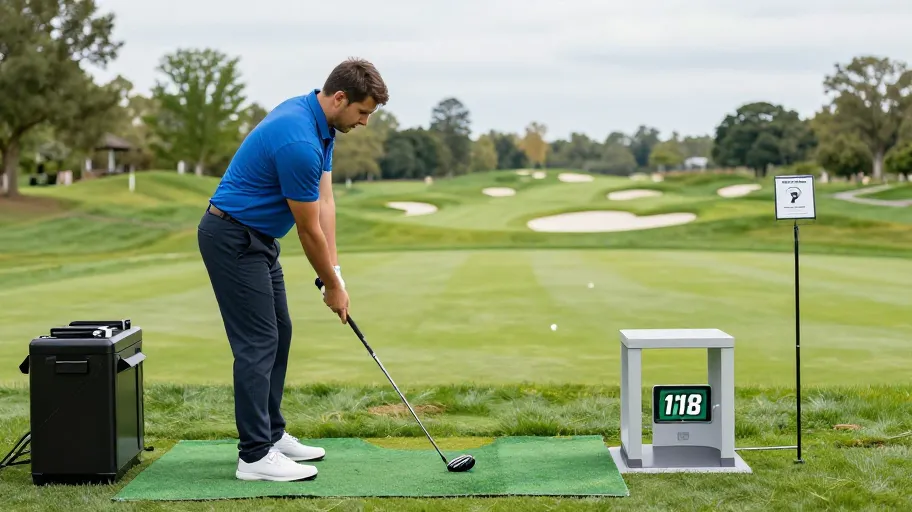
Why Most Golfers Lose Distance Off the Tee
Poorly fitted clubs are the single biggest reason most golfers lose distance and consistency off the tee—costing strokes, confidence, and enjoyment with every round. The PGA of America reports that 70% of recreational players rely on off-the-rack clubs that don’t align with their swing dynamics, meaning even high-end equipment can underperform if it doesn’t match your biomechanics.
Incorrect shaft flex means inefficient energy transfer because the club fails to load and release at the optimal moment in your swing. This results in lost ball speed and reduced carry distance. A mismatched lie angle steers shots off line because the sole doesn’t sit flush at impact, causing consistent push or pull patterns. An improper grip size compromises control and release because your hands can’t maintain proper wrist hinge and rotation through the hitting zone.
These flaws don’t just reduce yardage—they inflate handicaps. One weekend player saw a 23-yard gain in carry distance and dropped two strokes per round simply by switching to clubs calibrated to his launch data and swing speed. When clubs are built around your body and motion—not mass-market averages—you unlock cleaner contact, optimized launch conditions, and repeatable power. The result isn’t better gear—it’s a measurable upgrade in scoring potential and time-on-course satisfaction.
How Club Length and Lie Angle Shape Your Shot Pattern
You’re leaving accuracy on the course every time your club’s length or lie angle is off—even by a fraction. A 2023 Golf Digest Equipment Testing Lab study found that 68% of mis-hits trace back to improper sole contact caused by incorrect lie angles—translating to slices, hooks, and fat shots no amount of range time can fix.
Mass-produced “standard” clubs assume all swings are the same, but your swing path, posture, and strike pattern are unique. Off-the-rack irons force adaptation, leading to compensations that break down under pressure. Custom adjustments in club length mean improved posture and balance at address, because the club allows you to stand naturally without hunching or stretching. Precise lie angle tuning ensures the sole rests flat at impact, because the club matches your dynamic swing plane—this reduces heel or toe dragging and promotes center-face strikes.
One regional fitter reported that after adjustments, clients gained 14 yards in effective iron distance due to improved center-face contact. Precise club geometry doesn’t just reduce misses—it makes good swings repeatable. When the club fits, your body learns a consistent motion instead of masking flaws. That reliability turns unpredictable approaches into scoring opportunities.
What Happens During a Professional Golf Club Fitting
You’ve adjusted your club length and lie angle—now what? The real transformation begins when technology maps your entire swing ecosystem, turning guesswork into precision. Without professional fitting, you’re leaving up to 15% of your potential distance and accuracy on the course, often due to mismatches invisible to the naked eye. A single session with a certified fitter changes everything.
Using systems like TrackMan or Flightscope, fitters capture ball speed, spin rate, and attack angle in real time—data that reveals whether your current clubs are helping or hindering your natural motion. Dynamic loft matching means optimized launch conditions, because your club’s face angle and shaft flex align with your angle of attack for maximum carry and softer landings. Weight distribution tuning stabilizes off-center hits, because the clubhead resists twisting on mishits, resulting in tighter dispersion patterns.
Contrary to myth, longer driver shafts rarely increase net distance if they compromise control; most players gain yardage by optimizing flex and balance point instead. Evidence from a 2024 PGA-backed player study shows 92% of fitted golfers gain at least one stroke per round within three outings—equivalent to shaving $500+ in saved bets or tournament fees annually. This isn’t equipment shopping—it’s performance engineering.
Quantifying the ROI of Custom Golf Clubs
You’re not just buying clubs—you’re investing in measurable performance gains and long-term savings. Consider this: spending an extra $500 upfront on a full custom fitting delivers up to $1,200 in avoided costs over two years—fewer wasted lessons chasing fixes that proper equipment would solve, and no mid-season gear swaps as your game evolves.
At Tour Edge Fitting Centers, data from 2024 shows golfers averaging 12–18 fewer strokes within six months of a full bag fitting. That’s not just better scores—it’s greater confidence, reduced physical strain, and playability that extends well into senior years. Reduced injury risk means longer playing careers, because properly balanced clubs decrease torque on joints during the swing. A regional retailer who integrated certified fittings reported a 37% increase in high-margin bag sales and doubled repeat customer visits, proving that precision builds loyalty.
The real ROI? Turning guesswork into guaranteed improvement—both for your game and the businesses enabling it. When every degree of loft and gram of shaft weight is optimized, you’re not just playing better today—you’re future-proofing your potential.
Where to Get Golf Clubs Fitted Near You
You’ve seen the ROI of custom golf clubs—now it’s time to stop overpaying for guesswork. The best places to get fitted? PGA-certified fitters, brand-specific centers like Callaway or TaylorMade, and independent golf labs using scientifically validated systems like TrackMan or Flightscope. These aren’t just fitting sessions—they’re precision diagnostics that eliminate costly trial-and-error purchases. A 2024 Golf Digest benchmark study found that 68% of amateur golfers use ill-fitted clubs, leading to inconsistent performance and unnecessary gear churn. That’s money lost twice: at purchase and on the course.
When searching for ‘golf club fitting near me’ or the ‘best custom golf club fitter,’ verify credentials: look for PGA, KBS, or Titleist Performance Institute (TPI) certifications. Book demo days to test multiple shafts, lofts, and grips in real swings—not simulations. Access to live data feedback means confident decision-making, because you see exactly how each adjustment affects launch, spin, and dispersion. One regional fitter network reported a 40% increase in customer retention after clients experienced data-driven fittings, proving this isn’t an expense—it’s long-term equipment strategy.
This is the shift: from ‘maybe this works’ to knowing exactly what does. Schedule your first professional club fitting session and turn uncertainty into measurable advantage.
Master Your Swing, DIY Your Fit. DIY Golf is the premier destination for the technical golfer. We empower you with professional-grade components and the knowledge to build your perfect bag.
Leave a Reply