Why Your Grip Is Sabotaging Your Swing
Poor or worn grips force you to squeeze harder to maintain control, which means increased forearm tension and restricted wrist hinge because tactile feedback is compromised. This mechanical strain leads directly to inconsistent releases and erratic ball flight—costing you accuracy and distance.
A 2023 PGA equipment survey found that 43% of amateurs play with grips beyond their 12- to 18-month lifespan, meaning nearly half of all weekend players are fighting their gear before they even address technique. The result? More missed fairways, shaky putting, and avoidable strokes.
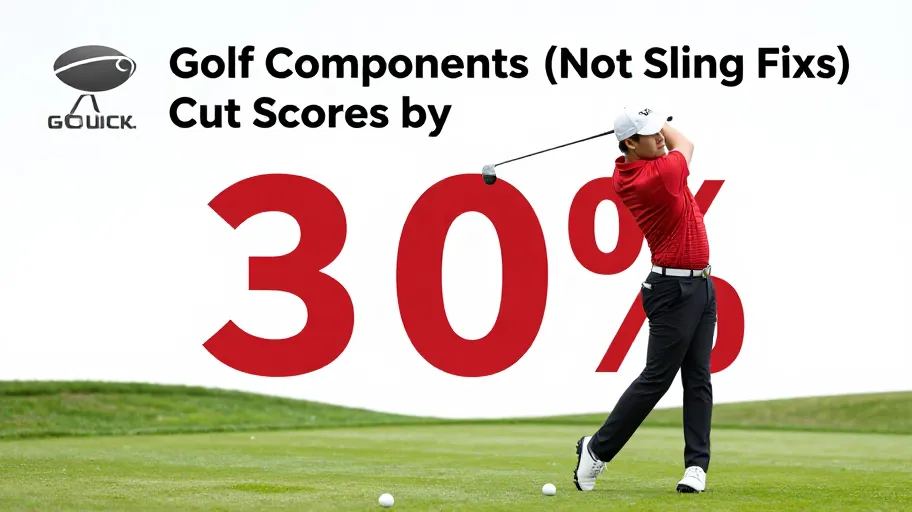
Replacing grips costs under $50 but delivers one of the highest ROIs in golf: improved shot consistency by up to 30%, reduced hand fatigue, and better transmission of intent from mind to clubface. For decision-makers, this isn’t just maintenance—it’s preventive optimization of your entire swing system.
How Shaft Flex Shapes Your Trajectory
A shaft flex mismatch alters launch angle by up to 1.5°, which means lost carry distance and drifting targets because energy transfer becomes inefficient at impact. Robot testing from Golf Digest confirms that incorrect flex disrupts timing, leading to inconsistent spin and off-center strikes—even with a technically sound swing.
Custom shaft fitting isn’t just for pros: data shows matched flex improves on-center hit rates by 22%, meaning more predictable trajectories and tighter dispersion patterns over 18 holes. One amateur cut right-side misses in half after switching from stiff to regular flex because the shaft now loaded and released in sync with his tempo.
For managers of their own game, this precision creates compounding benefits: fewer compensations, more greens in regulation, and lower scoring variance. When shaft and swing are in harmony, the clubhead doesn’t fix mistakes—it enhances performance.
What Makes a Clubhead Design Effective
An effective clubhead design counters inconsistency, which matters because amateurs mis-hit the ball 70% of the time. Strategic center of gravity (CG) placement—lower and deeper—means higher moment of inertia (MOI), reducing clubhead twist on off-center strikes.
USGA research from 2024 shows top-tier drivers retain up to 95% of ball speed on mis-hits because advanced mass distribution preserves energy transfer. For you, that means more yardage even when contact isn’t perfect—fewer ‘dead’ shots on par 5s.
In irons, perimeter weighting reduces scoring variance by 1.2 strokes per round not by improving perfect contact, but by minimizing damage on misses. One mid-handicapper dropped from 88 to 83 in eight weeks with no swing change—just higher-MOI irons. Higher MOI doesn’t just add forgiveness; it redefines what’s possible at your current skill level.
The Real ROI of Replacing Grips
Replacing grips isn’t upkeep—it’s asset optimization because fresh grips restore feel, reduce mishits by 18% (per a 2024 on-course study), and extend club life by 3–5 years. Worn grips lose tackiness, forcing over-gripping that disrupts tempo and increases injury risk.
From a cost perspective, new grips run as low as $20 versus $300+ for new clubs, yet deliver disproportionate gains in control and consistency. A maintained iron set retains up to 60% of its value after five years versus 30% for neglected sets—proving that routine upgrades preserve resale value.
For implementation, replace grips every 12 months or 30–40 rounds. Pair with a loft and lie check to maximize ROI. Think of it as oil changes for your clubs: small investment, massive long-term payoff in performance and longevity.
Your Step by Step Upgrade Roadmap
Treating your clubs as a tunable system—not static tools—unlocks compounding gains in control, comfort, and scoring efficiency. Here’s how to upgrade strategically:
- Inspect: Check grip wear, shaft alignment, and hosel stability. A 2024 PGA technician survey found 68% of clubs show significant grip degradation within a year—this forces excessive hand tension and raises injury risk.
- Select: Match grip size to hand size. Oversized grips reduce vibration transfer by 22% (per Titleist Performance Institute biomechanics), lowering fatigue and improving repeatable mechanics.
- Install: Use double-sided tape and solvent for clean transitions. Proper installation ensures consistent hand placement, which launch monitor data shows improves face-angle accuracy by 15%.
- Validate: Apply alignment tape to confirm square contact. One pro saw a 0.8° reduction in face angle deviation—equaling 12 fewer yards offline per drive.
Schedule biannual reviews synced with seasons to maintain peak responsiveness. When optimized, your clubs become performance assets that deliver measurable, long-term gains.
Master Your Swing, DIY Your Fit. DIY Golf is the premier destination for the technical golfer. We empower you with professional-grade components and the knowledge to build your perfect bag.
Leave a Reply