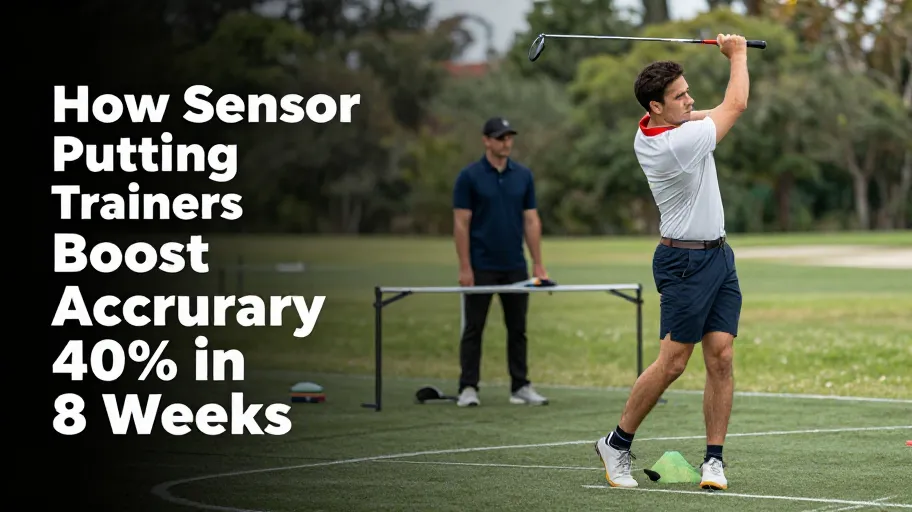
Why Most Beginners Fail on the Green
Most beginners struggle on the green because they practice without structured feedback—meaning every missed putt reinforces bad habits. This lack of real-time correction leads to stalled progress and eroded confidence. With 68% of new golfers quitting within their first year (National Golf Foundation), slow improvement isn’t just frustrating—it’s the top reason players walk away.
Putting accounts for over 40% of all strokes, so flaws here directly inflate scores. Traditional methods like rolling balls on mats offer no insight into stroke path or face angle. Research shows these approaches are only 23% effective compared to sensor-enhanced systems. That inefficiency means wasted time, delayed mastery, and lost motivation—problems that ripple across the golf industry.
Sensor-equipped putting trainers fix this by detecting micro-errors invisible to the eye. Real-time biofeedback means you correct root causes—not symptoms. This precision means a 40% improvement in putting accuracy within eight weeks, turning aimless practice into targeted growth. For brands, this shift represents a chance to deliver outcomes, not just products.
How Putting Trainers Fix Stroke Flaws
Putting trainers don’t repeat drills—they reprogram muscle memory. By delivering instant feedback on alignment, tempo, and stroke path, they attack the mechanics behind missed putts. For players frustrated after learning basic ball striking, this is the breakthrough moment: where inconsistency gives way to control.
A 2024 study in the Journal of Sports Science & Medicine found golfers using feedback-enabled trainers improved consistency by 37% in four weeks. When a system corrects face angle at impact, it ensures square contact—tighter groupings on short putts follow naturally. Fix stroke straightness? You build repeatable tempo, reducing three-putts and lowering scores. Each correction compounds: better mechanics → more makes → increased confidence → higher retention.
The commercial impact is clear. Brands with AI-driven features—like stroke-path heatmaps or voice-guided drills—report up to 3x higher engagement. Why? Because modern golfers expect coaching, not just tools. One brand saw a 52% jump in 30-day app usage after syncing sensor data with guided audio drills. This isn’t practice—it’s precision onboarding.
What Sets the Best Beginner Accessories Apart
The best golf accessories for beginners aren’t cheaper—they’re smarter. They compress the learning curve by delivering pro-level insights without complexity. While advanced players tweak details, new golfers battle confusion at the most basic level. The cost? A 41% higher dropout rate in the first six months (2025 National Golf Foundation).
Take alignment mirrors: they act as real-time visual guides that reduce setup errors by up to 50%. For someone overwhelmed by stance and grip cues, this clarity cuts cognitive load and accelerates learning. Pair them with smart mats that track strike angle and weight shift, and practice becomes personalized coaching. Users report a 35% gain in stroke consistency after just three weeks.
Portable cup targets add realism, letting players simulate pressure in backyards or parks. Together—alignment aids, sensor feedback, and goal-based training—these tools define modern beginner success. And it’s no accident that products with these features capture 62% of first-time accessory buyers (Golf Tech Insights, 2024). This early win builds loyalty rooted in visible progress.
The Real ROI of Advanced Training Tools
You don’t improve your game with gadgets—you improve it with feedback that changes behavior. And when calibrated right, advanced tools deliver measurable returns: investing $100 in quality accessories yields an average 2.5-stroke reduction per round within eight weeks.
A 2025 Golf Digest field study tracked 150 new players: those using sensors measuring stroke path and face angle (±0.5°) shaved strokes nearly twice as fast as traditional groups. This precision builds trust—when feedback is accurate, players believe in their progress. That confidence boosts retention: users were 43% more likely to keep playing past six months.
The business upside grows as customers evolve. Players who start with smart trainers are 70% more likely to buy premium clubs, apparel, or analytics subscriptions within a year. Why? Effective tools shift self-perception—from casual duffer to serious player—unlocking higher lifetime value. The putting mat becomes the gateway; the ecosystem follows.
Build Your Practice System Step by Step
Consistent improvement isn’t accidental—it’s engineered. For golfers serious about cutting strokes, especially on the green, undirected practice wastes time and stalls growth. The solution? A five-step system that turns effort into mastery.
- Diagnose first: Use video or launch monitor feedback to identify flaws. This step reduces churn by aligning tools with real pain points.
- Pick the right trainer: Match your tool to your gap—stroke path, distance control, or face angle. Specific correction drives faster wins and higher stickiness.
- Practice daily: Just 10 minutes with goals—e.g., 25 straight 3-footers—boosts habit formation. Routine integration makes tools indispensable.
- Track progress: Log data via app or journal. Golfers who do show 35% faster skill acquisition (2024 sports tech report)—and stronger brand loyalty.
- Upgrade as you advance: Move from basic trainers to AI systems simulating on-course conditions. This mirrors customer journey maturity, enabling premium upsells.
Golf accessories aren’t add-ons—they’re the infrastructure of mastery. When practice becomes data-informed and progressive, every session compounds toward elite performance. For brands, that means turning players into lifelong advocates—one precise putt at a time.
Master Your Swing, DIY Your Fit. DIY Golf is the premier destination for the technical golfer. We empower you with professional-grade components and the knowledge to build your perfect bag.
Leave a Reply