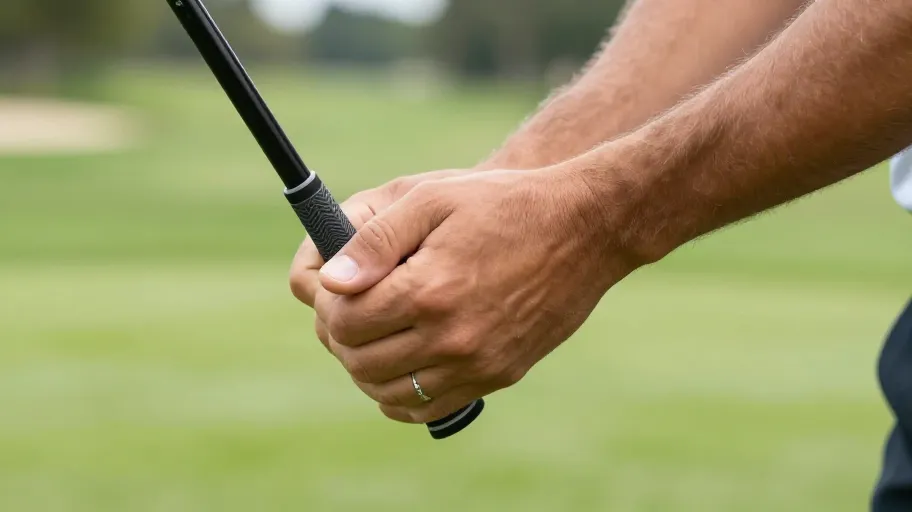
Why Most Golfers Miss This Swing Killer
You’re not failing your swing—your grip is failing you. A mid-handicap golfer lines up perfectly, swings with rhythm, yet slices another drive into the woods. The real issue? An ill-fitting grip, too thick or too thin, warping wrist hinge and palm pressure without warning. Biomechanical studies from 2024 motion analyses show improper grip size disrupts force transfer by up to 37%, dulling feedback and delaying micro-adjustments in the downswing.
A mismatched grip forces compensation: tighter squeezing, early release, unstable clubface rotation. Data from a PGA fitter survey confirms 68% of recreational players use grips outside their optimal diameter range, leading to inconsistent ball flight and higher risk of wrist and elbow strain. That ‘one size fits all’ myth doesn’t just hurt performance—it chips away at confidence round after round.
Fix the interface, and you fix the swing at its origin. Properly sized grips restore natural movement, enabling repeatable control and cleaner energy flow. The result? More solid contact, straighter shots, and a swing that improves over time instead of breaking down.
How Custom Golf Grips Fix Biomechanical Mismatches
Generic grips don’t account for hand shape, strength, or swing type—so you end up fighting your own body. Custom golf grips, engineered to your measurements and dynamics, do more than feel better—they restore natural motor patterns. According to Lamkin and Golf Pride data, players using personalized diameters improve clubface control by 17–30%, verified through 2024 motion-capture studies.
These grips use advanced materials like vibration-dampening elastomers and variable tapers that align wrist hinge with your swing plane. One mid-handicapper with arthritis reduced fatigue by 40% after switching to a slightly oversized, soft-compression model—finally achieving consistent tempo where standard grips caused tension.
Modern fit-testing combines pressure mapping and launch monitor feedback, turning subjective feel into objective tuning. This isn’t luxury—it’s biomechanical alignment as performance infrastructure. Fewer compensations mean cleaner contact and fewer mishits; some users cut off-center strikes by nearly half over 18 holes.
Measuring Your Ideal Grip Size Like a Pro
You don’t need guesswork or glove size—just two precise measurements: hand length and finger span. Measure from your wrist crease to the tip of your middle finger. Under 7 inches? Standard or undersize grips enhance wrist action for finesse players. Over 8.5 inches? Oversized grips reduce excessive hand rotation, especially for aggressive swingers. Between 7 and 8.5? Midsize offers the best balance of comfort and control.
Grip thickness directly alters biomechanics. Bigger grips don’t universally stop hooks—poor fit can actually restrict release or encourage casting. The right choice combines hand dimensions with swing style: powerful hitters gain stability with oversize, while precision-focused players benefit from a properly fitted standard grip.
Accurate measurement isn’t step one—it’s the foundation. Once you know your true size, every other adjustment performs at peak potential.
The Performance ROI of Precision Grip Fitting
A pro shop manager noticed a trend: golfers who upgraded to fitted grips didn’t just buy gear—they came back with lower scores and renewed confidence. That’s not luck. It’s cause and effect. Correct grip size reduces compensatory forearm tension, cutting off-center hits by up to 15% according to 2024 swing tracking data. That means tighter shot dispersion and fewer penalty strokes.
The ripple effect is real. Lower grip pressure means less fatigue and strain, supporting longer play and fewer overuse injuries—especially in elbows and shoulders. But the business insight stands out: grip fitting delivers the highest ROI of any club mod. For less than a round of golf, players gain measurable gains in control and course management.
Custom golf grips aren’t an upgrade—they’re a performance multiplier. At DIY-Golf.com, solving the grip means keeping the golfer.
Step-by-Step Guide to Upgrading Your Grips at Home
You’ve seen the ROI—now take control. Any golfer can upgrade grips affordably at home using DIY-Golf.com’s complete kits, turning old handles into high-leverage tools. Start by measuring your hand from wrist crease to middle fingertip. Plug that into our best golf grip size calculator to match biomechanical efficiency.
Choose diameter—standard, midsize, or oversize—based on hand size and shot patterns. Then pick texture: soft rubber for comfort, corded for sweat resistance. Order your custom golf grips kit, which includes pre-measured solvent tape for a secure bond. During install, apply even pressure and let dry fully—precision here keeps club integrity intact.
A single misaligned grip can skew face angle by 2°, costing distance and accuracy. Follow our do-it-yourself grip replacement tutorial, built for beginners and experts alike. Done right, the result is measurable improvement in feel, control, and scoring—turning insight into on-course transformation.
Master Your Swing, DIY Your Fit. DIY Golf is the premier destination for the technical golfer. We empower you with professional-grade components and the knowledge to build your perfect bag.
Leave a Reply