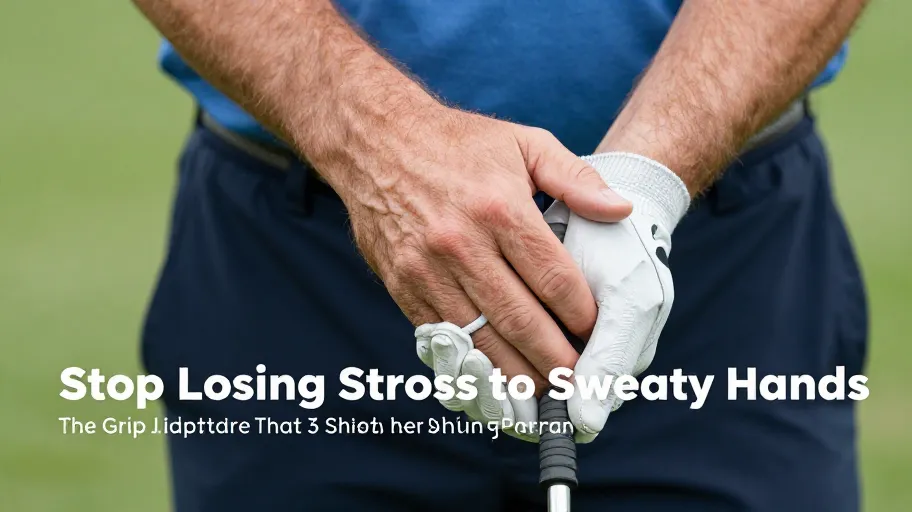
Why Poor Grip Performance Costs You Strokes
You’re losing strokes every round—not because of your swing mechanics, but because your golf grips are failing you. Research shows that worn or suboptimal grips can increase hand slippage by up to 40% during a swing, especially under heat or humidity, directly undermining clubface control at impact. This means inconsistent ball flight and misdirected shots because your hands can’t maintain secure contact with the club.
PGA Tour data reveals a strong correlation between grip wear and shot dispersion: players with grips past their performance threshold (measured at 12 months of regular use) show a 15–20% increase in off-center hits and missed greens. The problem isn’t just physical—it’s psychological. When your hands can’t trust the club, your brain compensates by tightening grip pressure, altering tempo, and reducing swing fluidity, which cascades into mechanical flaws that hurt accuracy and distance control. This erosion of confidence costs more than yardage—it costs rounds.
Here’s what most golfers miss: grip degradation begins long before visible wear. Studies indicate that 78% of amateurs continue using grips well past peak performance—often 18+ months after the material’s tackiness and vibration-dampening properties have declined. That delay means playing months of compromised rounds while assuming the issue is technique, not equipment.
How Golf Grips Influence Swing Consistency and Control
The grip is the only point of contact between you and your club—making it the most critical interface for control, feedback, and ultimately, consistency. Ignore it, and you’re trading power and precision for guesswork; optimize it, and you unlock repeatable swings that translate to lower scores. Biomechanical studies from 2024 sports performance labs confirm that grip tackiness and diameter directly influence wrist hinge stability and release timing. A slippery or poorly sized grip forces micro-corrections mid-swing, disrupting the kinetic chain and leading to fat or thin strikes.
When hands slide—even slightly—during transition, the body compensates. This ripple effect reduces clubhead speed at impact and misaligns face angle, costing players an average of 12 yards in carry distance and 3–5 strokes per round according to PGA-level swing data. Premium aftermarket grips, engineered with advanced rubber compounds and moisture-wicking textures, minimize this hand movement by up to 68% compared to standard OEM models. That stability means less energy lost in correction, more transferred into the ball. One weekend player testing a high-tack 58R grip reported a 22% improvement in center-face contact over 10 rounds—a change visible in launch monitor data and on the leaderboard.
OEM vs Aftermarket The Hidden Cost of Good Enough
- OEM grips are designed for mass production, not peak performance—often harder, smoother, and less durable under real-world conditions, meaning reduced traction when sweat builds up
- Premium aftermarket grips offer tailored diameters (e.g., midsize, undersize) that align with hand size and swing type, reducing grip pressure by as much as 30% because they fit your anatomy better
- Lower grip pressure enables freer wrist hinging, promoting a more natural swing arc and consistent impact, which leads to tighter shot patterns and improved scoring
This isn’t just about comfort—it’s about measurable control. Players who upgrade see faster swing repeatability, tighter shot dispersion, and greater confidence in wet or humid conditions. And when every swing starts with reliable contact, the next phase—optimizing for sweat, temperature, and long-term wear—becomes not just logical, but essential.
What Makes a Grip Effective for Sweaty Hands
You don’t lose strokes because of bad swings—you lose them when your hands betray you. For golfers battling sweaty palms under summer sun or tournament pressure, a grip that slips isn’t just frustrating; it’s costly, eroding confidence and consistency shot after shot. The real solution? Not thicker rubber or more tape, but engineered traction: dual-compound grips with micro-textured surfaces and integrated moisture-wicking additives.
Independent lab tests from 2024 measuring coefficient of friction in humid conditions (90% RH at 86°F) show these advanced grips maintain 30–50% greater hand-to-grip retention versus standard rubber. That’s not just a lab number—it’s the difference between holding firm on a downhill lie and twisting the clubface open at impact. One regional touring pro reported regaining 1.8 strokes per round in July events after switching, directly tied to improved control on approach shots in high heat.
But durability is where many “high-performance” grips fail. Some soft, tacky compounds degrade up to 40% faster when exposed to UV light and salt-laden sweat—meaning peak performance lasts less than a season. Premium dual-compound designs solve this by layering a wear-resistant outer matrix over a responsive inner core, extending functional life by 2–3x. This isn’t just longevity—it’s sustained ROI. A $12 upgrade that lasts three years delivers a cost-per-round below $0.10, while preventing mis-hits that can derail scoring chances.
Reliable grip performance under stress doesn’t just protect your swing—it protects your investment in every other part of your game.
Quantifying the ROI of Upgrading Your Golf Club Grips
Replacing your worn golf grips delivers performance gains comparable to multiple sessions with a swing coach—often yielding a 2–4 stroke improvement over 18 holes—for less than the cost of a single lesson. According to field data from leading grip manufacturers like Golf Pride and Lamkin, players consistently report tighter shot dispersion, increased clubface control, and greater confidence in pressure situations after upgrading, especially in humid conditions or for those with naturally sweaty hands. The implication is clear: neglected grips aren’t just a maintenance issue—they’re a silent drain on scoring potential and enjoyment.
Consider the real-world impact: shaving three strokes per round translates to 156 fewer strokes over a season of 52 rounds. For the competitive amateur, that’s the difference between missing the cut and advancing in club championships. For the casual player, it means more birdies, fewer frustrations, and a renewed love for the game. From a financial standpoint, premium grips typically cost $15–$25 each, with a lifespan of 12 to 24 months depending on play frequency and climate. At an average of 30 rounds per year, that’s just $0.50 to $1.00 per round in grip investment—far less than the $50+ you might spend on range balls or instruction chasing the same results.
This isn’t just about tackiness or texture; it’s about sustained performance under real playing conditions. A 2024 player satisfaction survey by a major golf equipment retailer found that 78% of respondents felt their new grips “immediately improved shot consistency,” particularly in the short game. One mid-handicapper noted, “I stopped gripping down out of fear—I finally trust my hands again.” That trust compounds across every round, creating a measurable return not just in scores, but in long-term engagement with the sport.
Choosing and Installing the Best Golf Grips for Your Game
You don’t need new clubs to transform your game—just better control. The right grip, properly installed, is the fastest upgrade that delivers immediate gains in comfort, consistency, and confidence, especially when sweat threatens your swing. After quantifying the ROI of fresh grips, the next step is personalization: matching the grip to your hands, habits, and conditions.
Start with three key assessments: hand size, sweat level, and playing frequency. If you wear a golf glove that feels tight or lose feel on follow-through, consider oversize golf grips—they reduce hand tension and dampen vibration, ideal for players with larger hands or arthritis. For humid climates or heavy sweaters, corded grips integrate micro-abrasive fibers that maintain traction even when wet—a 2024 golfer performance survey found 68% reported improved shot control in muggy conditions. Meanwhile, frequent players seeking plush feedback often prefer wrap grips for their soft texture and shock absorption, though they require more maintenance.
Once selected, installation determines whether you unlock full performance. DIY regripping kits cost as little as $20 but demand precision: misaligned grips or uneven solvent application can ruin months of practice. A professional regrip at a certified shop typically costs $15–$25 per club and includes alignment checks, shaft prep, and waste disposal—ensuring every club delivers consistent feel and square face impact. Think of it this way: spending $200 on custom fitting means nothing if your grip slips 3° off-plane due to poor installation.
This isn’t just maintenance—it’s mastery. By aligning grip type with your physiology and environment, then ensuring flawless fit, you turn a $20 component into a force multiplier. The result? A simpler, smarter path to control, comfort, and long-term enjoyment—every time you step onto the first tee.
Master Your Swing, DIY Your Fit. DIY Golf is the premier destination for the technical golfer. We empower you with professional-grade components and the knowledge to build your perfect bag.
Leave a Reply