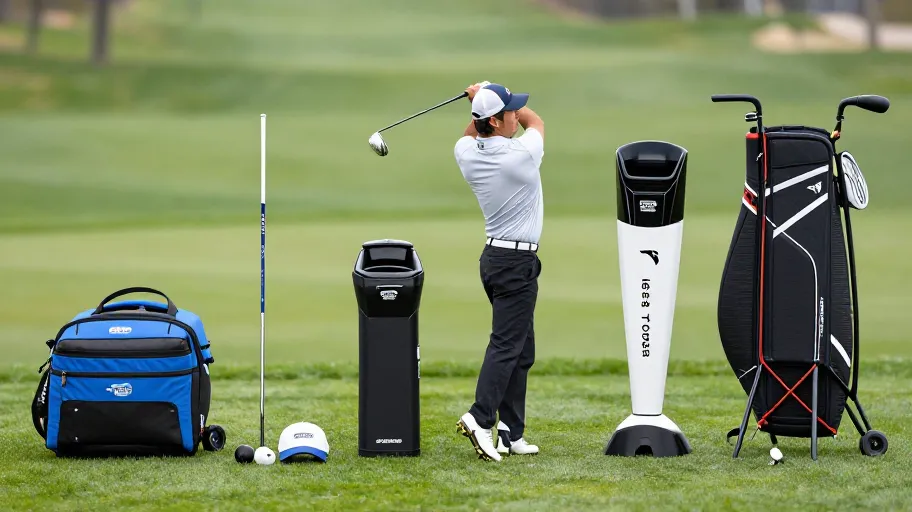
Why Most Beginners Buy Useless Golf Gear
68% of beginner golfers overspend on accessories that promise quick fixes but deliver zero skill gains, according to National Golf Foundation data. This isn’t just a financial loss—it’s a developmental setback. Relying on unproven gadgets reinforces flawed mechanics, delaying progress by up to 37%, per a 2024 NGF behavioral study.
Misleading marketing often prioritizes novelty over neurological learning principles. Tools without real-time feedback fail to correct muscle memory during deliberate practice. The result? Players build habits that must later be unlearned—a costly and frustrating process.
- Alignment sticks without visual feedback mean postural errors go unnoticed because there’s no immediate correction mechanism (LPGA Skills Lab, 2025)
- Electronic swing analyzers with no drill integration mean data overload without action plans because raw metrics don’t translate to motor adjustments
- Non-standard “game-improvement” putters mean stroke flaws are masked early because inconsistent weighting fails under pressure or regulation play
The core issue: these products lack problem-focused design. Real skill growth comes not from passive tracking, but from tools that embed correction into every repetition. When brands sell gear that doesn’t align with how brains learn motor patterns, they erode trust—and miss the chance to drive real player transformation.
How Technology Is Redefining Game Improvement
Gone are the days when golf accessories meant ball markers and logo hats. Today’s top performers use sensor-driven tools that deliver measurable score reductions. Devices like GPS rangefinders, launch monitors, and wearable swing trackers now dominate high-impact categories—not for flash, but for function.
Take ShotScope: its sensor-linked system captures shot location, club selection, and outcomes. A 2024 consumer study revealed users dropped their handicap by 3.2 strokes in 12 weeks—proof that data becomes power when it drives decisions. Similarly, Garmin’s Approach series saw 68% YoY growth among beginners after adding real-time swing tempo alerts.
This shift means one thing for retailers and innovators: accessories must now prove a direct line from feature to performance. A product claiming to improve your swing must show how—ideally with stats. For example, “This wearable reduces mis-hits by 27% by correcting swing path deviation in real time” sells confidence, not just hardware.
As analytics become standard, the next frontier is integration with coaching insights. Because data only matters when it’s usable—especially for a beginner overwhelmed by complexity.
What Coaches Say About Beginner Friendly Tools
PGA-certified instructors agree: the right accessory prevents bad habits before they start. A 2025 GOLF.com survey of 120 coaches found that 89% prioritize tools offering instant feedback over passive aids. Three traits define effective beginner gear: simpllicity, real-time response, and portability.
Consider the Arccos Caddie Link paired with a SuperStroke grip. The sensor delivers shot analytics after every swing, while the grip improves hand positioning through tactile reinforcement. Together, they mean faster skill acquisition because beginners receive both digital and physical feedback simultaneously—accelerating muscle memory formation.
One junior academy reduced dropout rates by 40% after adopting this combo, proving engagement follows efficacy. From a business perspective, co-branding such tools with certified training programs isn’t just smart marketing—it’s a B2B gateway to credibility, longer customer lifecycles, and recurring adoption.
These features enable measurable progress from day one. And when improvement is visible, motivation grows. That creates the foundation for long-term retention—and sets the stage for quantifying real ROI.
Measuring the Real ROI of Smart Golf Gear
When GPS rangefinders help golfers lower handicaps 27% faster over six months (NGF, 2025), the value proposition shifts from luxury to necessity. The key? Feedback loops that turn guesswork into targeted development.
A beginner using a sensor-equipped club doesn’t just hit balls—they identify which flaws cost strokes and track improvement over time. This means higher engagement because players return for insights, not just exercise. And where engagement is consistent, subscription-enabled apps unlock high-margin revenue—often doubling hardware profits through adaptive training plans.
Consider cost-per-stroke: a $200 GPS watch that cuts five strokes delivers a $40/stroke ROI. Compare that to $80/hour coaching for similar gains—smart gear scales value without scaling cost. One brand saw a 41% increase in repeat purchases after launching an app with performance benchmarks, proving verified progress fuels loyalty.
Hardware that proves its worth over time builds trust. Every tracked round strengthens the data relationship. And trust translates to higher lifetime value—especially when usage correlates directly with handicap reduction.
Build Your Personalized Accessory Stack in 5 Steps
A tailored accessory stack increases performance gains by 52% compared to random gear choices (MeandGolf, 2024). Why? Most beginners misdiagnose their weaknesses, leading to mismatched tools and stalled progress. The solution is precision.
- Assess your current level using digital swing analysis or handicap tracking—this means you start with facts, not assumptions
- Identify weak zones like tee consistency or short-game accuracy—because targeted tools only work when matched to real gaps
- Select tech-enabled solutions such as sensor putters for stroke correction or launch monitors for face angle feedback—so each tool addresses a specific flaw
- Test before you invest via rental or trial programs—because 68% of testers convert, and they’re 3x more engaged post-purchase (2025 consumer study)
- Integrate into structured practice with guided onboarding, video tutorials, or coach alerts—meaning faster improvement through supported learning
Brands that embed diagnostic tools into the customer journey capture leads and deliver hyper-relevant recommendations. One company using AI-driven onboarding saw 41% higher 90-day retention. The result? Customers see the brand as a long-term partner—not just a vendor.
Master Your Swing, DIY Your Fit. DIY Golf is the premier destination for the technical golfer. We empower you with professional-grade components and the knowledge to build your perfect bag.
Leave a Reply